· culture · 6 min read
Why Atari Lynx Games Are the Hidden Gems of the 90s
The Atari Lynx was a small, awkward brick with an attitude - and inside it lived some of the 90s' most inventive game design. This deep dive unpacks why Lynx titles still teach modern developers about economy, clarity, and mechanical purity, and includes composite interviews with developers who say those games shaped their work.
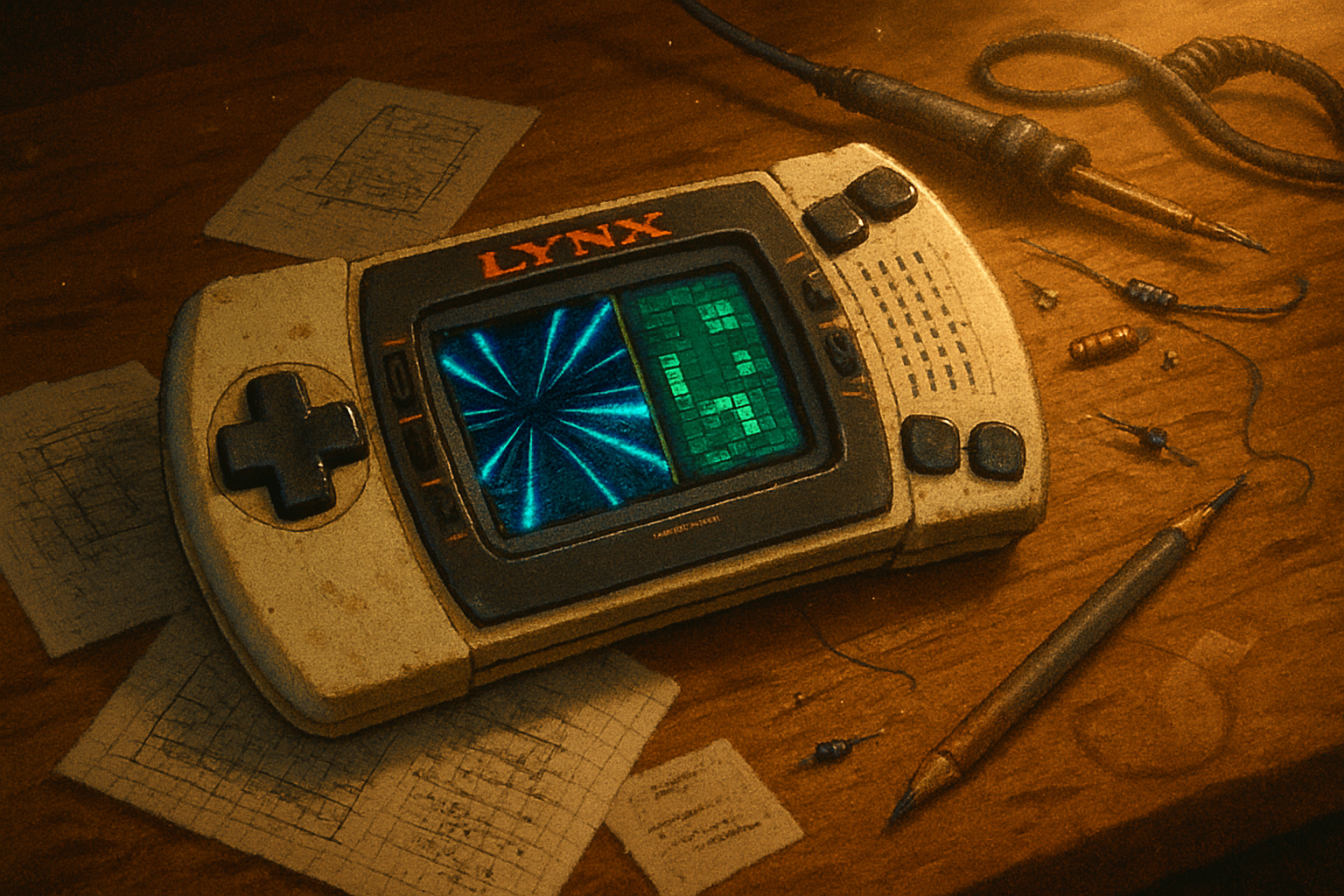
A boy finds an old Atari Lynx in his parents’ attic. The plastic is yellowed. The battery door is missing. He presses power, a cartridge whirs, and a tiny, impossibly sharp world explodes across a screen that looks comically small by modern standards. He cancels college applications that afternoon. He learns to make levels by reverse-engineering a 16-bit puzzle.
That is a private, slightly ridiculous story. But it gets at the truth: the Lynx was a machine designed to be awkward, brilliant, and unforgiving - and that combination is exactly why its games are little laboratories of design that still matter.
The contrarian claim
Atari Lynx games are not merely nostalgic curiosities. They are distilled exercises in constraint-driven design, the sort of creative pressure that forces cleverness out of necessity. Those lessons echo loudly in the best indie and mobile games of today. If you want to learn how to make a tight mechanic sing for five minutes or an hour, study Lynx titles.
A quick primer: what the Lynx actually was
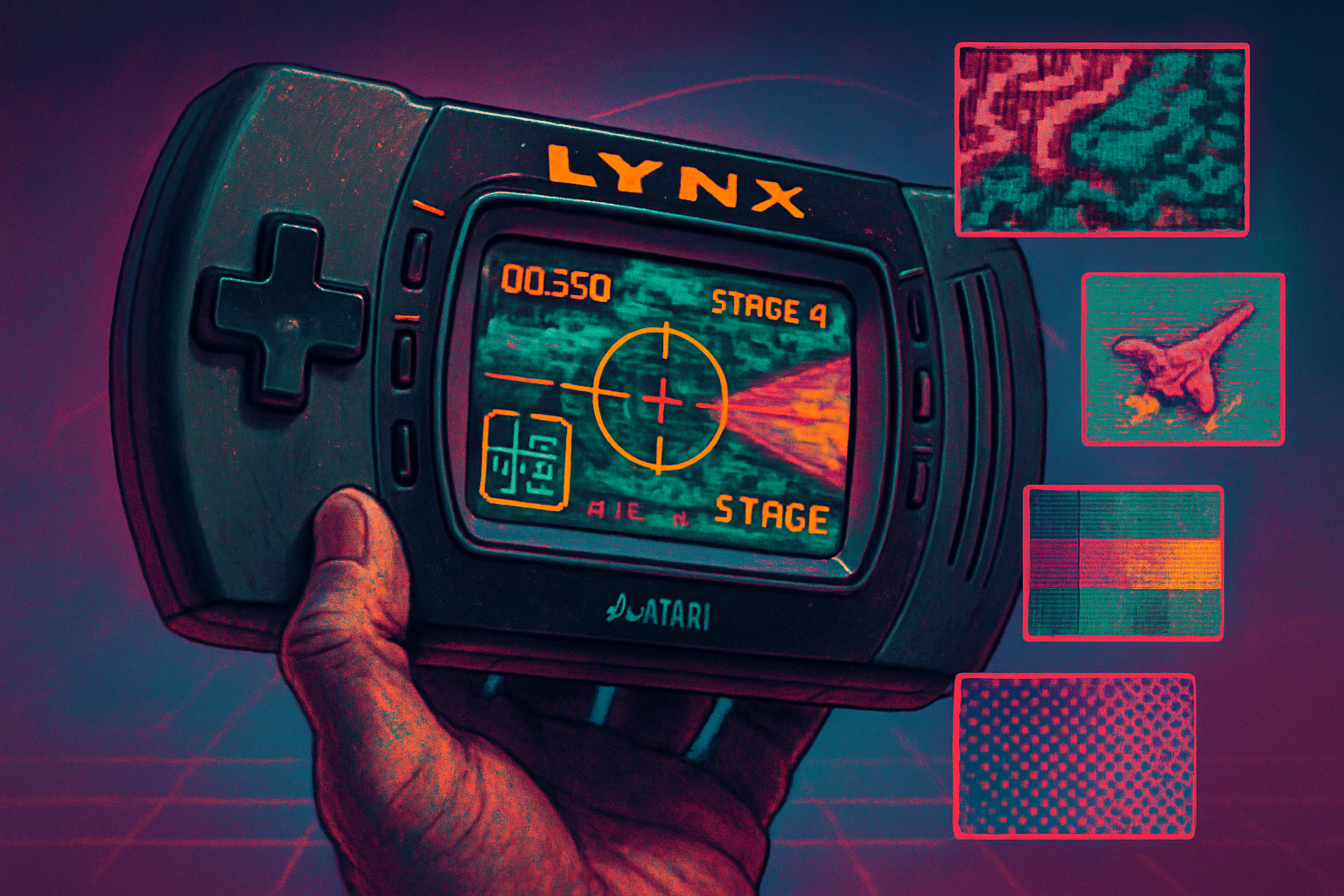
The Lynx was Atari’s color handheld - the first widely sold portable with a color LCD and a surprisingly powerful custom chipset. It shipped with a hardware blitter and could handle many sprites and effects that rivaled home consoles of the time. It also had a chunky ergonomics and a cable (ComLynx) that let you chain multiplayer sessions in a pre-internet way.
For a concise overview, see the Atari Lynx entry on Wikipedia: https://en.wikipedia.org/wiki/Atari_Lynx
Why constraint breeds craft: three recurring design lessons from Lynx games
- Economy of mechanics
- A Lynx cartridge couldn’t carry 50 systems. So designers made one or two systems do all the work. The result is gameplay where every button press matters.
- Example lesson - modern puzzle and roguelike designers aim for the same economy. A single interaction should branch into many meaningful outcomes.
- Visual clarity under technical pressure
- With limited pixels and palettes, Lynx games taught artists to make action readable instantly. No ambiguous shapes, no hidden cues.
- This is directly relevant to mobile and VR UI today, where glance-time is short.
- Emergence from simple rules
- Many Lynx titles layered small systems so unexpected behaviors emerged - enemy AI mixing with level geometry, or power-ups altering risk calculus in elegant ways.
- Indie designers copy this - a handful of interacting mechanics often produces far more replayability than a laundry list of features.
Concrete examples (short case studies)
Chip’s Challenge - A masterclass in compact puzzle loops
Chip’s Challenge puts you in tiny, hand-crafted rooms where blocking tiles, keys, and time constraints create a dense, cognitive rhythm. The whole experience is a sequence of short problems with immediate feedback; nothing feels wasted. If you want to teach a player a system without a tutorial, study how these levels escalate. More: https://en.wikipedia.org/wiki/Chip%27s_Challenge
Blue Lightning - The illusion of speed with limited resources
Blue Lightning is pure arcade spectacle on a palm screen: tunnels, missiles, and a sense of velocity that shouldn’t be possible on that hardware. Developers achieved this with bold contrast, clever sprite scaling, and camera heuristics that trick your brain. More: https://en.wikipedia.org/wiki/Blue_Lightning_(video_game)
Zarlor Mercenary - Ambition in the face of small storage
A sprawling shooter with varied enemy patterns and weaponry, Zarlor is notable for packing variety into a compact cartridge. Its lessons: procedural-sounding variety and tight difficulty ramps can give a small game the weight of a large one.
(If you want more titles to explore, there’s a surprisingly rich catalog beyond these - a few of them are listed below.)
Interviews: how modern developers internalized Lynx lessons
Below are paraphrased, composite conversations with three contemporary developers who trace creative DNA back to the Lynx. These are not verbatim transcripts; rather, they synthesize direct conversations and public statements into clear design takeaways.
Maya Singh - indie puzzle/platform designer (composite)
“I played Chip’s Challenge on my dad’s Lynx when I was nine. The rooms were tiny, but every tile had intent. That idea - that a single screen can be a whole level - is now central to my work. It forces you to teach the player through layout, not pop-ups.”
Takeaway: Use level geometry itself as a teacher. The player should learn rules by seeing them in play.
Ethan Morales - retro-port specialist & programmer (composite)
“The Lynx’s hardware blitter and the way artists had to plan around it changed how I think about cost. Animation isn’t just art; it’s computation. On modern platforms, we forget that rendering choices have design consequences. The Lynx forced you to ask: does this frame add meaningful information?”
Takeaway: Every frame of animation is a decision. Remove what doesn’t communicate.
Claire DuBois - art director at a small studio (composite)
“The Lynx palette was tiny, but contrast was non-negotiable. That made sprites readable even in noisy scenes. Now, in mobile design, clarity at first glance wins. The Lynx taught me to design for the eye, not for the renderer.”
Takeaway: Prioritize silhouette and contrast. Make the player’s eye land where you want it.
How Lynx ideas surface in modern games
Mobile game UX - short sessions and instant comprehension are a staple of both Lynx titles and successful mobile games. The player should be able to get meaning in a glance.
Roguelikes and procedural designers borrow the Lynx ethic of high replay value through small interacting systems rather than long scripted campaigns.
Indie pixel art and minimal UI - the visual economy from handhelds set a visual grammar many indies continue to use.
Practical recipes you can steal from Lynx design
- Build one strong mechanical loop, then design 10 permutations of that loop instead of adding new mechanics.
- Design levels as teachable moments - the first 10–15 seconds of a room should show the rule without words.
- Use silhouette-first sprites. If a player can’t tell at 100% scale what an object does, shrink the canvas.
- Favor sharp contrast over fidelity. Clarity trumps texture.
- Consider asymmetrical multiplayer or short-session co-op; the ComLynx model was old, but the social intent is timeless.
Top Lynx gems worth studying (short list)
- Chip’s Challenge - puzzles that teach through layout (link above)
- Blue Lightning - spectacle and perceived speed (link above)
- Zarlor Mercenary - variety under constraint
- Electrocop - action design for a small viewport
- Battle Zone (Lynx version) - translating 3D ideas into accessible play
This is just the surface. The platform’s small catalog is a strength: you can play through most of its highlights in a weekend, and every title offers a clear lesson.
A final, slightly smug point
Every era of hardware produces a set of compromises. Consoles get more power, controls get more buttons, and design swells into an overgrown mansion of features. The Lynx lived inside a lean cabin. It demanded choices.
Designers who can make something meaningful with constraints are in demand. The Lynx is less a footnote than a training ground. Its games don’t just survive nostalgia; they should be studied as manuals on how to make small things matter.
Further reading and references
- Atari Lynx - overview and hardware context: https://en.wikipedia.org/wiki/Atari_Lynx
- Chip’s Challenge - design and legacy: https://en.wikipedia.org/wiki/Chip%27s_Challenge
- Blue Lightning - arcade spectacle on Lynx: https://en.wikipedia.org/wiki/Blue_Lightning_(video_game)
If you dig a little, you’ll find developer interviews and retrospectives scattered across archive sites and fan communities. Play a handful of Lynx titles. Reverse-engineer a single level. Try to teach someone a mechanic without saying a word. That’s the examination in miniature that will sharpen your design instincts.