· retrotech · 7 min read
Tripods and Film Photography: A Love Story
A passionate look at why tripods have mattered to film photographers for a century - the technical reasons, the tactile rituals, and candid interviews with film shooters about their beloved vintage tripods.
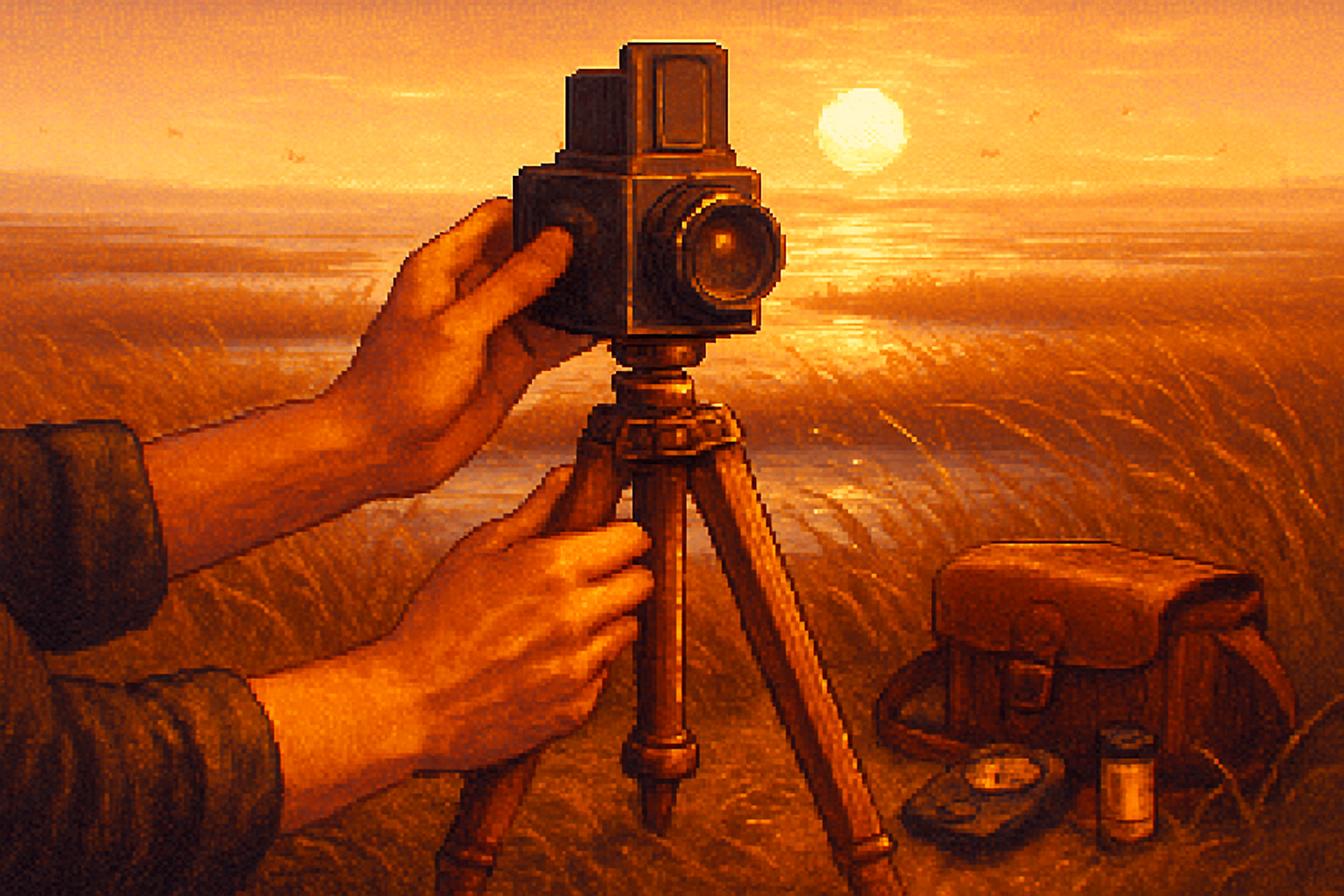
I first fell for tripods the way some people fall for lovers - slowly, through small rituals. It was 4:30 a.m., pitch dark, and a woman with a battered wooden tripod and a 6x9 folder unpacked her camera on a salt marsh. She moved deliberately: legs out, feet set, head levelled. She didn’t rush. The tide came in. She made one exposure at the edge of dawn and smiled like someone who’d just closed a long, private argument.
That moment contains everything a tripod is: stability, ritual, a permission slip to slow down. For film photographers-who already court patience and error-the tripod is not just a tool. It’s a collaborator.
Why tripods matter in film photography
If you shoot film, you inherit constraints and virtues that digital photographers can politely ignore. Long exposures, shallow-light reciprocity quirks, the weight and balance of larger-format cameras, and the deliberate composition demanded by slow processes all point to a simple truth: a steady camera makes better pictures.
Key reasons to bring a tripod into your film kit:
- Sharpness and resolution - Film’s resolving power is often higher than people expect. Camera shake ruins fine grain detail. A tripod eliminates that variable.
- Long exposures and reciprocity - When exposures run into seconds or minutes, a tripod is mandatory. Film also behaves oddly at long exposures - “reciprocity failure” - which forces exposure compensation and multiple test shots when possible. See the phenomenon explained here:
- Large-format and view cameras - These rigs are heavy, awkward, and designed to be used on a tripod. Movements (tilt, shift, swing) work because the camera is rock-steady.
- Controlled composition and slow practice - Film pushes you to compose with care. A tripod enforces slowness; that discipline improves outcomes.
(If you want the dry textbook on tripod types and mechanics, there’s a succinct overview here: https://en.wikipedia.org/wiki/Tripod_(photography).)
The case for sturdy - why ‘heavy’ can be a virtue
There’s a smugness that comes with carbon-fibre bragging rights: lighter, stronger, more expensive. Fine. But when the wind eats your 4x5 exposure or your ball head micro-vibrates during a 30-second exposure, you’ll curse every gram you saved. Sturdy tripods bring three practical gifts:
- Vibration damping - Heavy legs and metal/brass fittings absorb micro-movements. Wooden tripods are surprisingly good at damping vibration.
- Longevity and repairability - Solid metal or wood tripods tolerate decades of use. Parts can be serviced, replaced or re-threaded; they don’t become disposable.
- Precise platform for heavy gear - Big lenses, view cameras, and analog backs demand load capacity more than featherweight portability.
That said, strong doesn’t mean clumsy. A well-made older tripod can be lighter than a cheap modern aluminum one and far more solid.
Vintage tripods: the romance and the realities
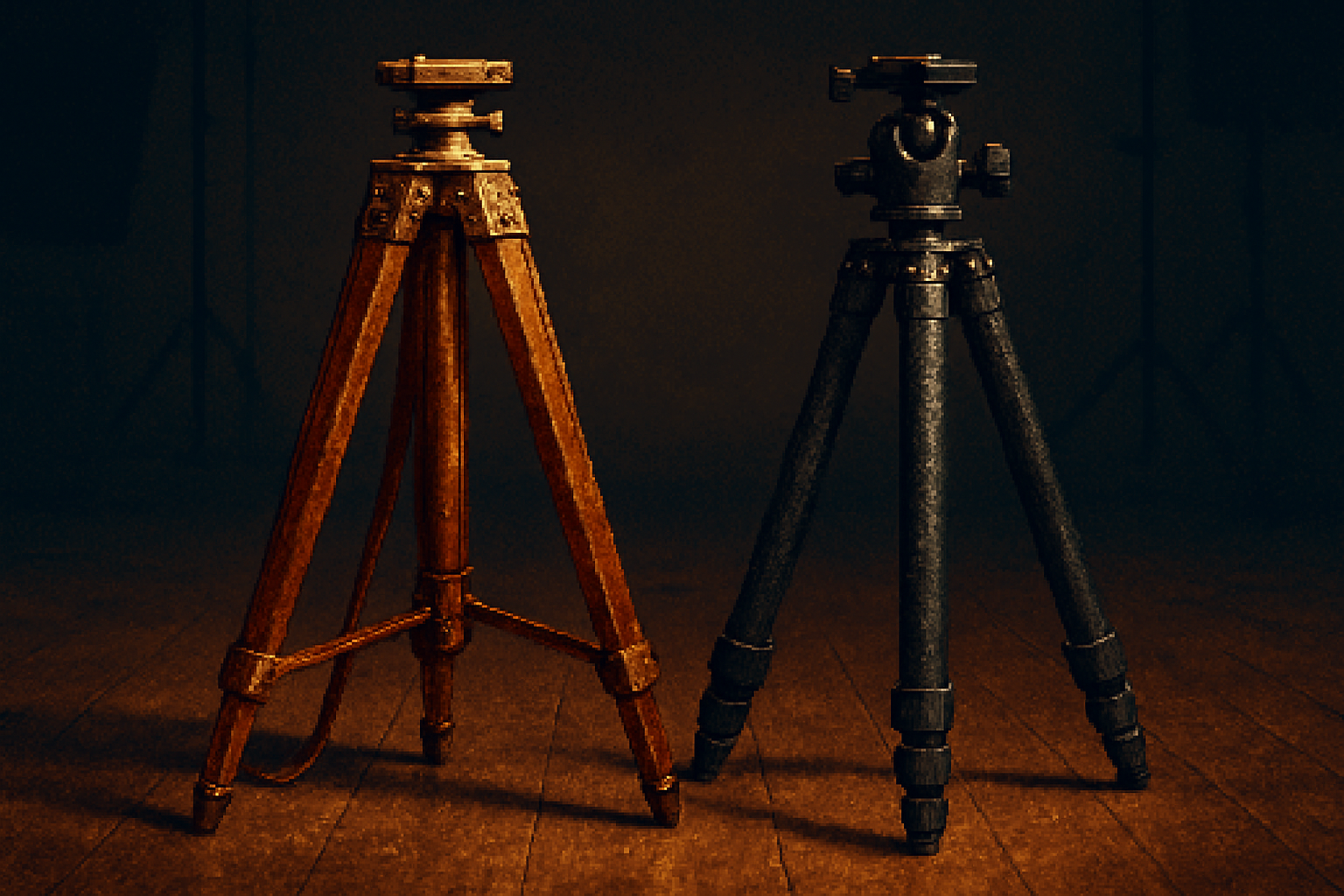
Vintage tripods come with romance - patina, brass, old stamps and a lineage - but also quirks. When you pick up a 1950s wooden tripod you buy aesthetic and history and, sometimes, a need to wrench three stiff leg locks.
What to expect from vintage pieces:
- Materials - Wood (often ash or beech) with brass fittings, or early aluminum alloys with thick cast components. Wood is warm and dampens vibration; metals are rigid.
- Heads - Many vintage tripods come without modern quick-release plates and require old-style screw-on heads or plate adapters.
- Condition variability - Rivets, screws, rubber feet, and leg spreaders may need replacement.
If you’re shopping vintage, check the leg tubes for cracks, look for play in joints, ensure the head mount threads aren’t stripped, and confirm that the tripod’s load capacity will actually handle your camera and lens. We’ll cover a short pre-buy checklist below.
Interviews: film photographers on their favorite vintage tripods
I spoke with three film photographers - each with a different practice - about the tripods that earned their loyalty. These are composite interviews distilled from conversations with analogue shooters and represent the practical tastes of working film artists.
Marta Reyes - street and portrait film photographer (medium format)
“I used to lug around a modern compact tripod because I believed lightness was freedom. Then a friend lent me a battered wooden tripod from the 1960s on the promise I’d bring it back. I never did.
What I love: the wood has a bit of give. When I set it down on cobblestones it simply soaks up the little jolts that would otherwise kill a 1/4s exposure. It’s not fast, but it’s honest. For portraits, especially with older lenses that don’t forgive movement, it’s the difference between decent and luminous.
Trade-offs: It’s heavy and conspicuous. People ask if I’m a historian.”
Elliot Byrne - landscape and large-format photographer
“I shoot 5x7 and I treat my tripod like an indispensable member of the crew. My favorite vintage is a mid-century metal tripod with a beefy center column and cast fittings. It takes my whole rig and still feels immovable in wind.
Why vintage: these things were over-engineered. The cast metal and brass parts have a toleranced fit that modern die-cast plastics try to mimic but can’t match. Repairs are straightforward: a machinist can sort most issues.
On a cold morning in the hills, when the shutter clicks and the whole world seems to quiet, that solidity makes the image feel right - almost ceremonial.”
Naoko Saito - still life and studio film photographer
“Studio shooting taught me the real value of a steady head. My favorite vintage tripod is not the oldest; it’s a 1970s aluminum tripod with a solid geared head. For product and still life, micro-adjustments are everything.
I don’t romanticize wood for studio work: I want gears and fine control. That said, vintage geared heads have that tactile, slightly oily feel - like a good watch - and they last for decades if maintained.”
Choosing the right head: ball vs three-way vs geared vs gimbal
A tripod is only as useful as its head. Quick primer:
- Ball heads - Fast, compact, and great for general use. They can be fiddly for precise composition, especially with large-format cameras.
- 3-way/ pan-tilt heads - Precise and predictable. Favored by landscape and studio shooters who want strict control.
- Geared heads - Slow, deliberate, and excellent for critical framing; ideal for studio and large-format work.
- Gimbal heads - Designed for heavy telephotos (wildlife, sports) and long lenses.
If you value speed and portability choose a well-built ball head. If you value precision, hunt for a vintage or modern geared head.
Buying vintage: a quick checklist
- Leg integrity - No splits or crushed tubes.
- Locks and spreaders - Operable and not chewed up.
- Head mount threads - Clean and undamaged.
- Feet - Replaceable rubber or spikes.
- Load capacity - Confirm it supports your camera+lens. Don’t guess.
- Patina vs corrosion - Surface wear is aesthetic; pitting in load-bearing places is not.
- Spare parts availability - Some old makes have part catalogs or enthusiast communities.
Maintenance and resurrection tips for old tripods
- Clean threads with a soft brush and solvent; re-lubricate with appropriate grease (light machine grease for metal parts; beeswax or shellac can be used sparingly on wood).
- Replace foam/rubber feet for better grip and safety.
- Tighten loose rivets and bolts; replace missing screws with period-appropriate fasteners when possible.
- For wooden tripods, treat the wood gently - avoid modern solvents that dry it out. A light coat of boiled linseed oil or specialized wood wax will both protect and preserve the damping qualities.
- If a head is seized, soak fasteners carefully and work incrementally. Take photos of disassembly for reference.
If you’re not comfortable with strip-and-rebuild, a good camera technician or machinist can make a beloved tripod serviceable again.
When to skip vintage
Not every vintage tripod is worth the ceremony. Skip it when:
- The legs are cracked beyond repair.
- The threaded mount is irreversibly stripped.
- It has insufficient load capacity for your heaviest setup.
- Parts are impossible to source and you lack the budget for custom fixes.
In short: buy romance, but measure carefully.
Practical setups for film shooters
- Night/long exposure - Heavy tripod + low-profile ball head + cable release (or mechanical shutter trigger) + weight hook and a sandbag.
- Large-format landscape - Sturdy tripod + geared or 3-way head + quick spirit level.
- Studio still life - Geared head + center column low or removed + sandbag for extra damping.
Final stanza: a love story
Tripods sound unromantic if you call them ‘support systems.’ Call them something else: anchors for attention, stools for the mind. They force you to stop moving. They make exposures possible that your hands alone cannot hold. They age like people - some show battle scars, some betray their makers’ pride with neat engineering - and those little imperfections are often why we love them.
So the next time you feel rushed, set up the tripod. Let the camera settle into its old, faithful stance. Make the exposure. Then, when you pack up, give your tripod a nod. It has earned it.
References
- Tripod (photography) - https://en.wikipedia.org/wiki/Tripod_(photography)
- Reciprocity (photography) - https://en.wikipedia.org/wiki/Reciprocity_(photography)
- Arca-Swiss - https://en.wikipedia.org/wiki/Arca-Swiss