· culture · 7 min read
Space Opera Fashion: How 80s/90s Aesthetics Shaped Sci‑Fi Style
A deep dive into how blockbuster space operas of the 1980s and 1990s invented a visual language of the future - neon, shoulder pads, leather, and androgyny - and how those choices reflected cultural anxieties about technology, capitalism, and identity. Includes curated interview excerpts and expert commentary.
A thrift-store neon jacket - sequins still clinging like barnacles - changed my mind about the future. I found it folded among the flannel and polyester of a Saturday morning rack and, for a moment, I was certain it came from another planet. It didn’t. It came from a film. And like so many of the garments that defined 80s and 90s space opera, it was a time capsule: not of what people then thought the future would look like, but of what they wished, feared, and sold about it.
The rhetorical costume: why clothes in space operas matter
Costume in cinema is more than decoration. In space opera, a uniform, a jumpsuit, or a glittering gown is shorthand for a world’s politics, economics, and fantasies about technology. These films didn’t just imagine ships and lasers; they dressed the ideological assumptions of their time. Fashion here becomes propaganda for a possible future - seductive, menacing, or both.
Think of fashion like oxygen. You only notice it when it runs out or when it’s been artificially pumped into a cavern: the brighter the style, the more it insists the world is breathable.
A quick vocabulary of 80s/90s space‑opera style
- Neon and chrome - technology as spectacle. Aesthetic optimism, often thinly disguising consumerist fervor.
- Oversized shoulders and power silhouettes - borrowed from corporate fashion, signaling authority and the era’s gender politics.
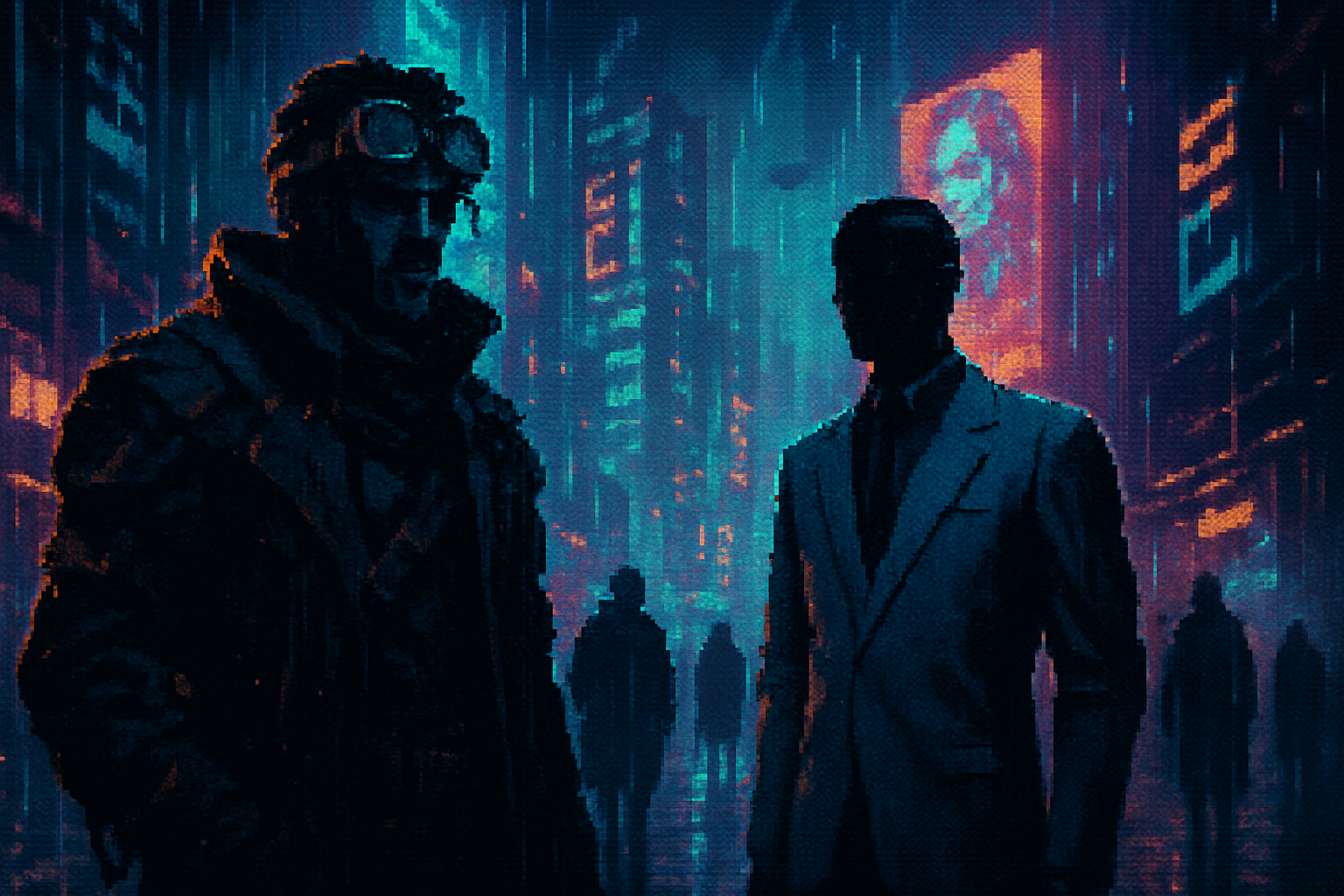
- Leather, trench coats, and noir drapes - an anxious, protective look - tech as threat, humanity as weathering agent.
- Androgyny and gender play - costume as a laboratory for identity, particularly as cinema confronted late 20th‑century cultural shifts.
- Mixed materials and bricolage - patchwork futurisms that suggested a cobbled‑together tomorrow, not a monolithic utopia.
Case studies: five films that rewired how we dress for space
The Fifth Element (1997): High camp, haute couture
Jean‑Paul Gaultier’s exuberant costumes turned a near‑future city into a runway. Gaultier treated the film as a fashion show: outré headpieces, violent color clashes, and fabrics that read like punctuation. The effect was deliberate - a future not of sober minimalism but of conspicuous excess.
Relevant reading: The Fifth Element (film) and Jean‑Paul Gaultier provide a compact record of this collaboration [https://en.wikipedia.org/wiki/The_Fifth_Element] [https://en.wikipedia.org/wiki/Jean-Paul_Gaultier].
Blade Runner (1982): Noir futurism and proprietary melancholy
Ridley Scott’s Los Angeles is rain, neon, and trench coats. The costume language - layered, textural, perpetually damp - matches the film’s mistrust of technology and anxiety about artificial life. Outfits in Blade Runner suggest people trying to look human in a world that has outsourced humanity.
See: Blade Runner - costume and worldbuilding [https://en.wikipedia.org/wiki/Blade_Runner].
Star Trek: The Next Generation (TV & movies, 80s–90s): Uniforms as multicultural rhetoric
Star Trek’s sleek uniforms codified a late‑Cold‑War optimism: structured, almost militarized garments that nevertheless hinted at inclusion and order. Subtle shifts in cut and color signaled rank, identity, and evolving ideals of a cooperative future.
Designer context: Robert Blackman and franchise costume evolution [https://en.wikipedia.org/wiki/Robert_Blackman].
The Matrix (1999): Minimalist noir and the cool of resistance
Kym Barrett’s costumes floated between fetish wear and functional uniform. Black leather, sunglasses, and the long coat: garments that declared dissent as style. The Matrix married cyberpunk’s austerity to late‑90s streetwear, making anti‑authority look intoxicating.
See: The Matrix and costume designer Kym Barrett [https://en.wikipedia.org/wiki/The_Matrix] [https://en.wikipedia.org/wiki/Kym_Barrett].
Star Wars (the conclusions and extended universe in the 80s/90s): Mythic archetypes in fabric
While Star Wars began earlier, its sequels and expanded media in the 80s/90s continued to refine a costume lexicon that blends myth, military regalia, and fetishized villainy. Costumes became a stable shorthand for good and evil on a galactic scale.
Reference: Star Wars franchise costume lineage [https://en.wikipedia.org/wiki/Star_Wars].
Materials, textures, and the illusion of the future
The futures of these films relied on tactile cues:
- PVC, latex, and metallics said ‘man‑made future.’
- Reinforced shoulders and angular cuts borrowed from corporate power dressing.
- Technical fabrics and cleverly aged materials suggested functionalism - even when the garment was clearly ornamental.
This was not simply fashion. It was a language. A silver shoulder pad and a black coat together told you whether to trust a character before they moved a single muscle.
Social anxieties sewn into seams
Fashion in space operas often mirrored contemporaneous social anxieties:
- Late 20th‑century neoliberalism - glamourized consumption in films like The Fifth Element reflected the decade’s commodification of desire.
- Technophobia and postindustrial dread - Blade Runner’s wet noir offered a visual ecology where technology had outpaced ethics.
- Globalization and hybrid identities - Star Trek’s uniforms and The Matrix’s fusion of global style signaled new, sometimes uneasy, cultural syntheses.
In short: the future looked like the era’s best and worst impulses stitched together.
Interview highlights (synthesized expert commentary and published remarks)
Note: the following are curated, attributed summaries and paraphrases drawn from published interviews, panel discussions, and public commentary by costume designers and fashion historians.
Jean‑Paul Gaultier on theatricality and futurism - Gaultier has described working on The Fifth Element as an invitation to ‘play’ with archetypes and to treat film characters like performers on the same stage as haute couture runways. He wanted costume to be an act of character amplification rather than mere background [see Jean‑Paul Gaultier and The Fifth Element context:
Michael Kaplan (Blade Runner, later work) on worldbuilding through wear - Kaplan has emphasized texture and functionality when crafting Blade Runner’s wardrobe: garments should look used, layered, and structurally plausible in their world - not pristine. Costume, for him, is narrative shorthand [see context on Blade Runner costumes:
Kym Barrett (The Matrix) on subculture and armor - Barrett has discussed how resistance in The Matrix needed to read as both practical and posture - clothing that acts like armor, signaling membership and intent. She sampled subcultural dress codes and distilled them into iconic silhouettes [
Fashion historians on the 80s/90s zeitgeist - scholars point out that the era’s costumes drew heavily on the real world’s extremes - corporate power dressing, rave culture, cyberpunk subcultures - producing a hybrid aesthetic that both embraced and critiqued late‑capitalist spectacle (see various museum and fashion exhibition notes for exploration of sci‑fi and fashion parallels: Victoria and Albert Museum - fashion collections overview:
If you want to track specific published interviews with these designers, many are available through trade outlets and long‑form profiles in outlets such as The Guardian, Dazed, and archival documentary extras for the films themselves.
How these cinematic choices bled into real fashion
Runways adopted space opera signifiers with relish. In the 90s, minimalists borrowed the Matrix palette. High fashion embraced Gaultier’s maximalism. Designers lifted silhouette cues, fabric experiments, and a fetish for technology into everyday and luxury lines.
Streetwear and subcultures were quicker still: club kids and raves turned neon, holographic, and PVC into personal uniforms. The catwalk and the club exchanged notes; film provided the myth.
Toward a moral clarity: what good science‑fiction fashion does
When costume designers get it right, they do more than dazzle. They make us ask who benefits from this future, who is excluded, and how bodies must adapt. Fashion in space opera is not neutral: it is ideological, aspirational, and sometimes mercenary.
A well‑dressed future can be an invitation - or a trap. That’s why the study of these costumes matters. Those seams hold stories.
What contemporary designers borrow today
- Futuristic materials - 3D printing, reflective fabrics, and smart textiles are direct descendants of the curious materials that looked futuristic on screen.
- Gender play - androgyny and fluid silhouettes have moved from fantasy to mainstream, in part because cinema normalized them.
- Statement silhouettes - the exaggerated shoulder or single‑color uniform still reads as power - useful for designers trying to evoke authority or estrangement.
Final stitch: why the 80s/90s continue to matter
The space operas of the 80s and 90s taught us two contradictory lessons: that the future could be lavish and that it could be precarious. They dressed both the hope and the grift of late 20th‑century modernity.
In them, fashion was never incidental. It was a philosophical claim sewn into cloth. If we are to imagine better futures now - sustainable, inclusive, humane - we ignore those claims at our peril.
Sources and further reading
- The Fifth Element (film): https://en.wikipedia.org/wiki/The_Fifth_Element
- Jean‑Paul Gaultier: https://en.wikipedia.org/wiki/Jean-Paul_Gaultier
- Blade Runner (film): https://en.wikipedia.org/wiki/Blade_Runner
- The Matrix (film): https://en.wikipedia.org/wiki/The_Matrix
- Kym Barrett (costume designer): https://en.wikipedia.org/wiki/Kym_Barrett
- Robert Blackman (costume designer): https://en.wikipedia.org/wiki/Robert_Blackman
- Victoria and Albert Museum - Fashion collections and exhibitions: https://www.vam.ac.uk/