· culture · 7 min read
Reviving the Game Gear: How Modern Technology Could Breathe New Life into Classic Games
The Sega Game Gear was a brilliant, flawed handheld - underappreciated at the time, beloved by a stubborn minority now. This essay lays out how remakes and remasters, powered by modern hardware, AI upscaling, and smart accessibility design, could restore its best games for a new generation without betraying their soul.
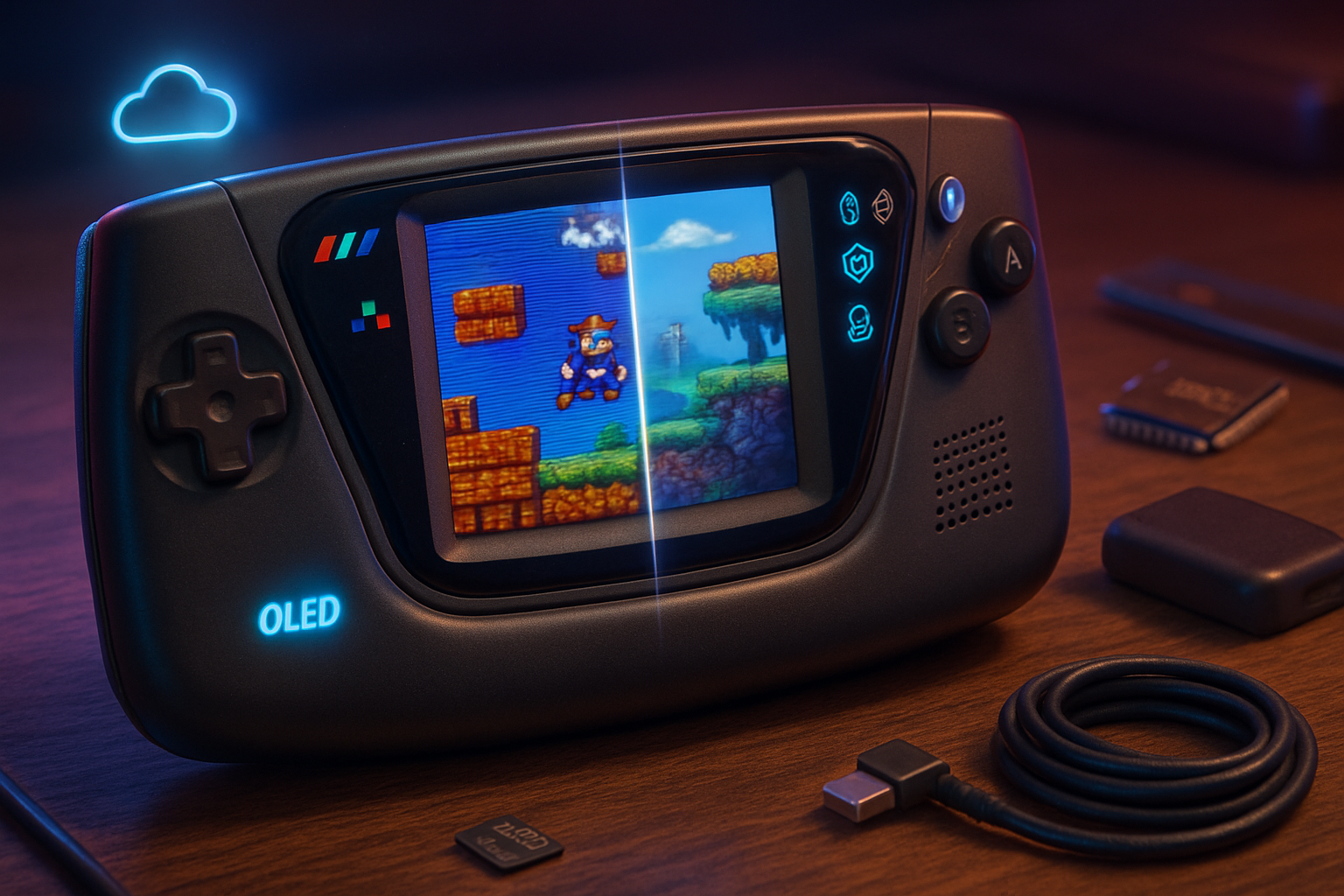
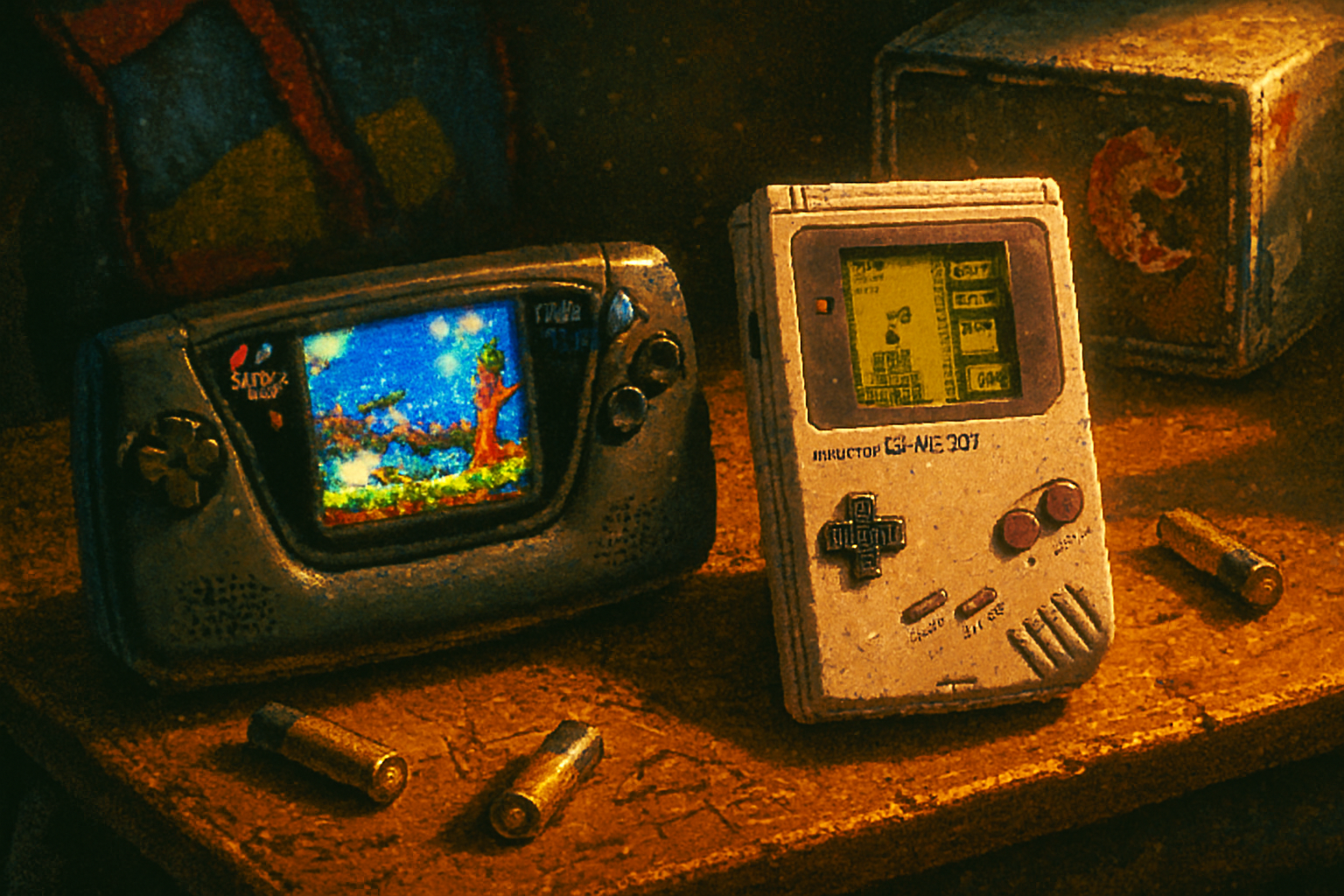
I remember the first time I saw a Game Gear under a blanket, blue screen glowing like a secret altar. We were on a family road trip; the Game Boy’s sardonic battery economy had already sentenced us to quiet. The Game Gear was loud, gaudy, and unapologetically colorful - a tiny, defiant carnival that ran for all of three hours before the battery gods punished it.
That contradiction - dazzling ambition and practical failure - is exactly why Game Gear deserves a modern second act.
Why the Game Gear still matters
The Game Gear was not merely Sega’s answer to Nintendo’s Game Boy. It was a statement: a full-color handheld that tried to be a home-console experience in your lap. It lost on battery life and market share, but it won a catalog of odd, excellent games and an aesthetic vocabulary that never got a fair shot.
- It pushed color and resolution at a time the market accepted monochrome compromise.
- It hosted experiments and licensed oddities that feel fresher now than they did then.
(Short reference: the Game Gear’s history and hardware are usefully summarized on its Wikipedia page: https://en.wikipedia.org/wiki/Sega_Game_Gear.)
What a revival should solve
Modern tech can fix the Game Gear’s sins without rewriting its memories. A revival needs to do three things well:
- Preserve - offer a cartridge-perfect, pixel-perfect faithful mode.
- Enhance - provide a contemporary, optional presentation that respects the game’s design while improving ergonomics.
- Expand - add accessibility, social features, and modular improvements that weren’t possible in 1990.
Below I sketch practical, specific ways to achieve those outcomes.
Hardware routes: remakes, clones, and FPGA love
There are three sensible hardware strategies, each with trade-offs:
Boutique modern hardware (Analogue-style) - Devices like the Analogue Pocket show the appetite for premium retro hardware that plays cartridges or FPGA cores with ultra-clean output and modern displays (
FPGA-based clones - FPGA allows cycle-accurate hardware implementation that’s safer legally than piracy and purist-friendly for collectors. It gives
Software emulation and mobile/console ports - The cheapest route, and the one that reaches the most players. Modern emulators (RetroArch and friends) already run Game Gear titles well (
Three display modes: Purist, Remastered, and Remix
A practical product should offer three presentation modes - pick your truth.
Purist / Classic Mode
- Pixel-perfect rendering at the original resolution, accurate refresh timing, optional scanline shaders.
- Accurate audio emulation and original difficulty levels.
- For preservationists and speedrunners.
Remastered Mode
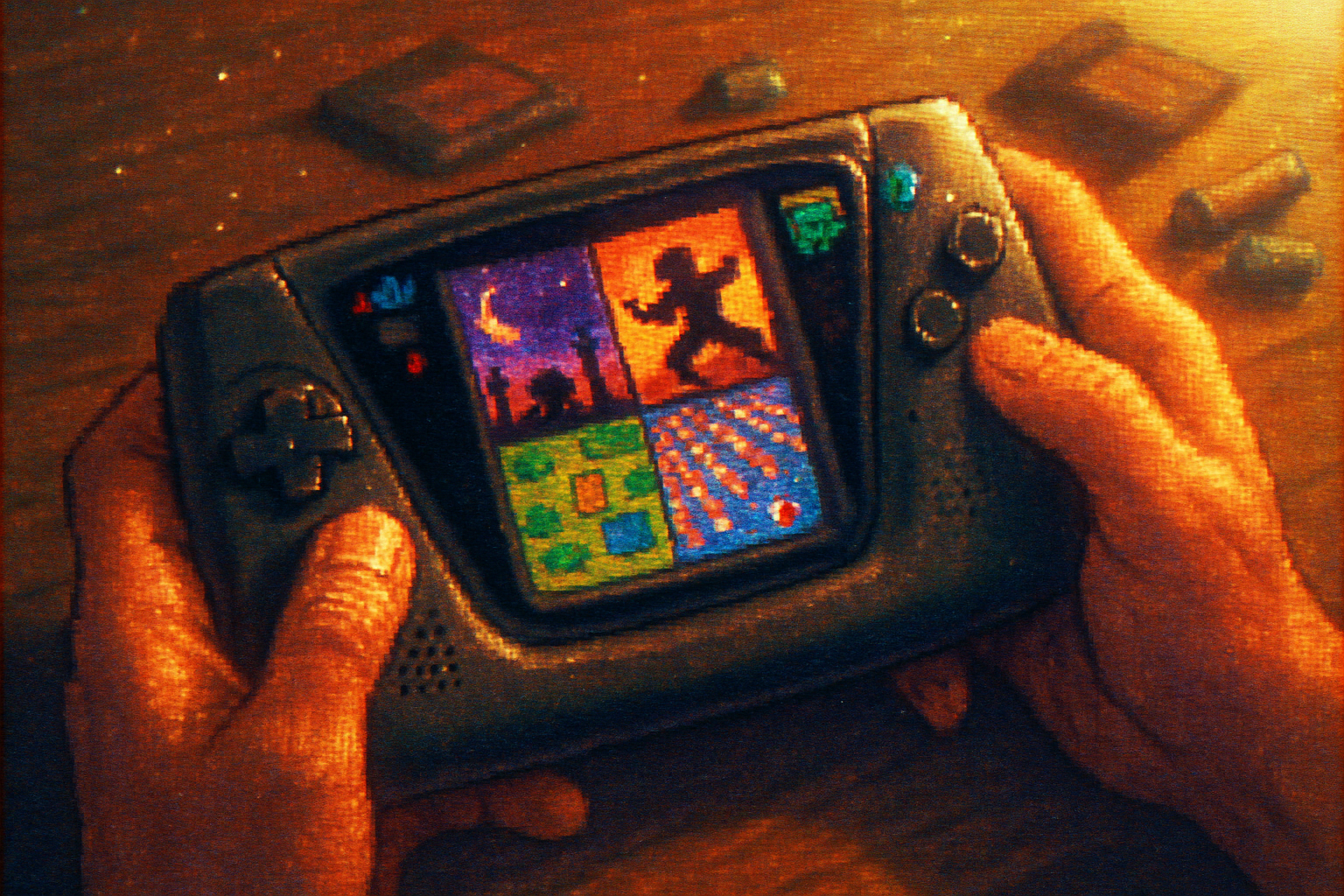
- Upscaled sprites, blended backgrounds, palette correction, improved fonts and menus.
- Higher-resolution assets where practical - redrawn UI, re-lettered dialogue boxes (retain original phrasing but improve legibility).
- Options - 60 fps smoothing, anti-tear v-sync on modern displays.
Remix / Expanded Mode
- Full HD or vector-backed backgrounds, optional 2.5D transformations, new animated cutscenes, reorchestrated music.
- Quality-of-life (QoL) features enabled by default - save states, rewind, variable difficulty, hint systems, and optional checkpoints.
A few notes on fidelity: never force a remaster on players. Purists must be able to switch back to the original feel with one button press.
Graphics: How to honor pixels without looking cowardly
There’s a cheap, easy trap: upscale everything with an algorithm and call it modern. There’s also the romantic trap: redraw everything and risk losing the game’s identity.
Smart middle way:
- Asset triage. Identify what must stay (character sprites, hitboxes) and what can be reinterpreted (backgrounds, UI, cutscenes).
- Hybrid rendering. Use shader-based pixel-perfect mode for gameplay and switch to vector/higher-res backgrounds for exploration or cinematics.
- AI-assisted upscaling for textures and backgrounds. Tools like ESRGAN variants can produce plausible high-res art from low-res inputs, but use an artist to clean artifacts.
- Keep aspect ratio options. Game Gear’s native 3:2-ish screen doesn’t map to modern 16:9 displays elegantly; offer pixel-accurate borders, fullscreen with tasteful fills, and a “nostalgia wrap” that imitates the original bezel.
Case study: Sonic Mania (https://en.wikipedia.org/wiki/Sonic_Mania) succeeded because it honored physics and level design while giving lovingly redrawn higher-resolution sprites and modern effects. That balance is the model.
Sound: from beeps to emotional orchestras (without dishonoring chiptune)
Game Gear’s PSG/chip sound is part of its soul - it’s not a defect to be erased. A good approach:
- Offer three audio tracks - Original chip PSG, clean sampled/synth layer (faithful, modern synths), and full orchestral/reorchestrated option for credits and cutscenes.
- Provide toggles for stereo/mono mixing, volume normalization, and a selectable DSP that simulates authentic speaker characteristics.
Remastering audio is cheap relative to full graphics work and yields a big perceived improvement.
Gameplay and modern convenience features
The original physical constraints of the Game Gear imposed hard design choices: short levels to save batteries, punishing lives systems, awkward input schemes. Modern re-releases have room to be kinder.
Must-have QoL features:
- Save states and multiple manual save slots.
- Rewind with configurable length.
- Difficulty settings that don’t arbitrarily remove core mechanics - “Assist” modes that keep content intact but reduce penalties.
- Input remapping, controller latency compensation, and optional aim-assist where appropriate.
- Online leaderboards and asynchronous multiplayer challenges.
Consider adding an optional “director’s cut” mode that restores cut content or unlocks prototype stages discovered via archival work.
Accessibility: not an afterthought
Accessibility is not a checkbox; it’s a design pillar. Practical, impactful measures:
- Color-blind friendly palettes and “high contrast” modes. Many Game Gear palettes fail for deuteranopia; provide tested alternatives.
- Remappable controls with one-button modes for single-stick play.
- Subtitles for all speech and optional text-to-speech for menus and UI.
- Adjustable audio EQ and volume normalization.
- Haptic reduction or vibration intensity sliders.
These changes increase audience and are cheap to implement relative to core redesign.
Legal, community, and ethical constraints
A revival faces licensing thickets. IP, music, and third-party sports or movie licenses can be riddled with expired contracts. Two paths exist:
- Official licensed remasters - costly, messy, but legit. They can use original assets and marketing muscle.
- Curated collections + fan partnerships - work with the community, commission remasters for orphaned titles, or license code from surviving devs.
Transparency matters. If a company uses fan code or community documentation, credit and compensate contributors.
Business models that make sense
- Curated digital collections - themed packs (platformers, beat ’em ups, licensed titles) sold individually or as a subscription.
- Premium boxed remakes - deluxe physical editions with booklets, posters, and optional cartridge compatibility for collectors.
- Episodic remasters - small, focused projects (e.g., remaster the best 10 titles first) that fund further work.
Sonic Mania was a proof-of-concept: pairing indie studio passion with IP holder backing can produce both critical and commercial success.
A plausible roadmap (practical steps)
- Catalog and prioritize - pick 8–12 “Crown Jewel” titles for early work.
- Secure rights - resolve music and IP cleanly before code work begins.
- Build a modular engine - support Classic/Remastered/Remix modes as toggles.
- Commission art/audio teams for background and orchestration work while retaining sprite fidelity.
- Release a quality collection with QoL and accessibility features; iterate based on community feedback.
Risks and pitfalls
- Over-remastering - losing the core feel of a game in pursuit of visual perfection.
- Legal debt - ambiguous rights can torpedo a project mid-development.
- Fan expectations - some players will demand pixel perfection; others will want modern bells and whistles. Design for toggles.
Conclusion: not nostalgia, stewardship
Reviving the Game Gear is not about nostalgia goggles or cosmetic surgery. It’s stewardship: giving imperfect, creative work a respectful option to live again in a world that can fix its fractures. Modern GPUs and neural nets can smooth pixels and textures, but the most important technology is humble: choices. Give players choices. Let them switch modes. Let the games be both museum pieces and living things.
If done properly, a Game Gear revival could be a model for how to treat portability-era classics: preservation first, improvement optional, and always, always reversible.
References
- Sega Game Gear - Wikipedia: https://en.wikipedia.org/wiki/Sega_Game_Gear
- Sonic Mania - Wikipedia (example of faithful-but-bold remake): https://en.wikipedia.org/wiki/Sonic_Mania
- Analogue Pocket - boutique retro hardware example: https://www.analogue.co/pocket
- RetroArch - cross-platform emulation frontend: https://www.retroarch.com