· culture · 8 min read
Game Boy vs. Phone: The Battle of Portable Gaming Nostalgia
The Game Boy taught a generation to value constraints; the smartphone taught another how to monetize attention. In this contentious comparison we weigh tactile joy, creative constraint, ownership, discoverability, and what we’ve sacrificed in the name of portability.
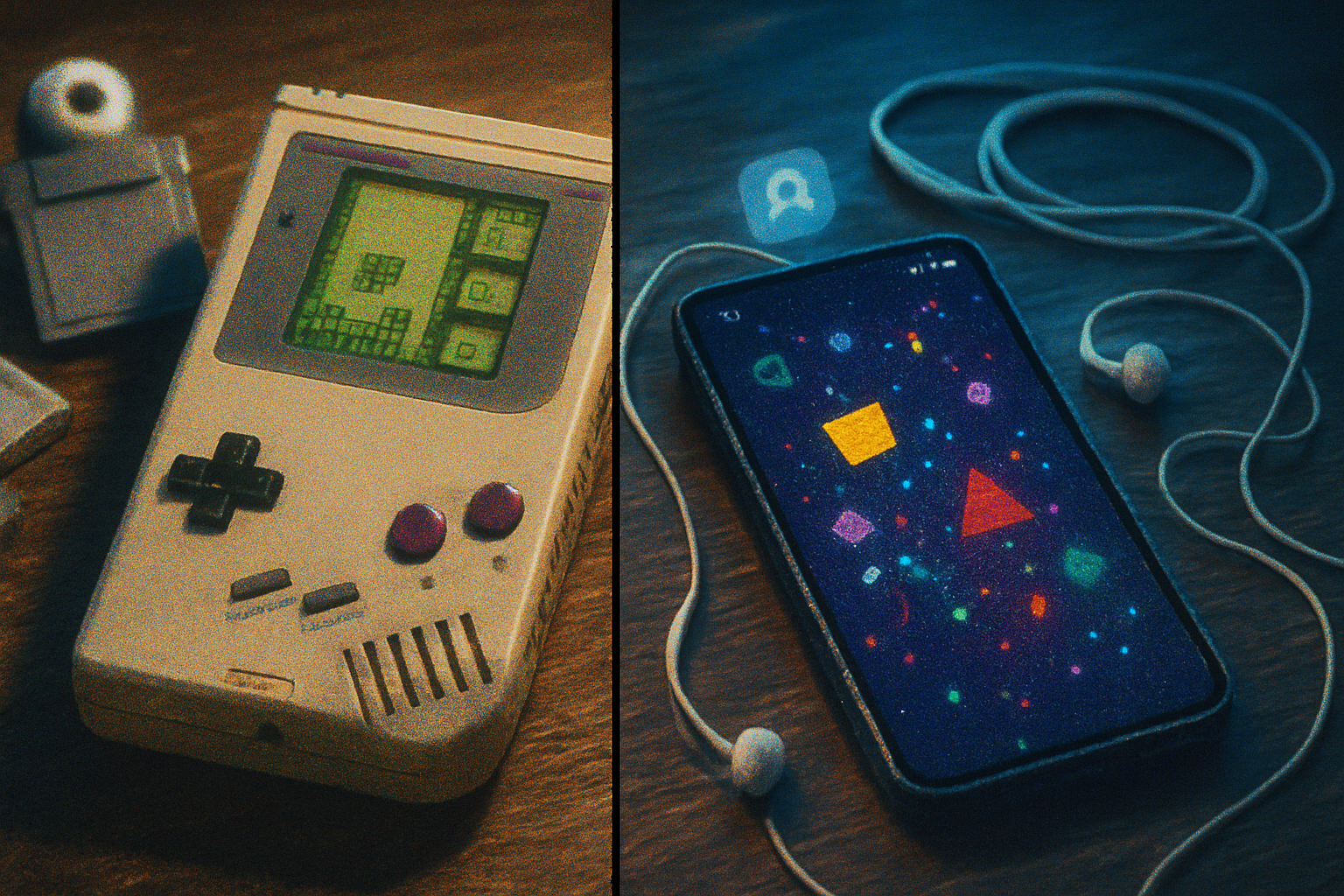
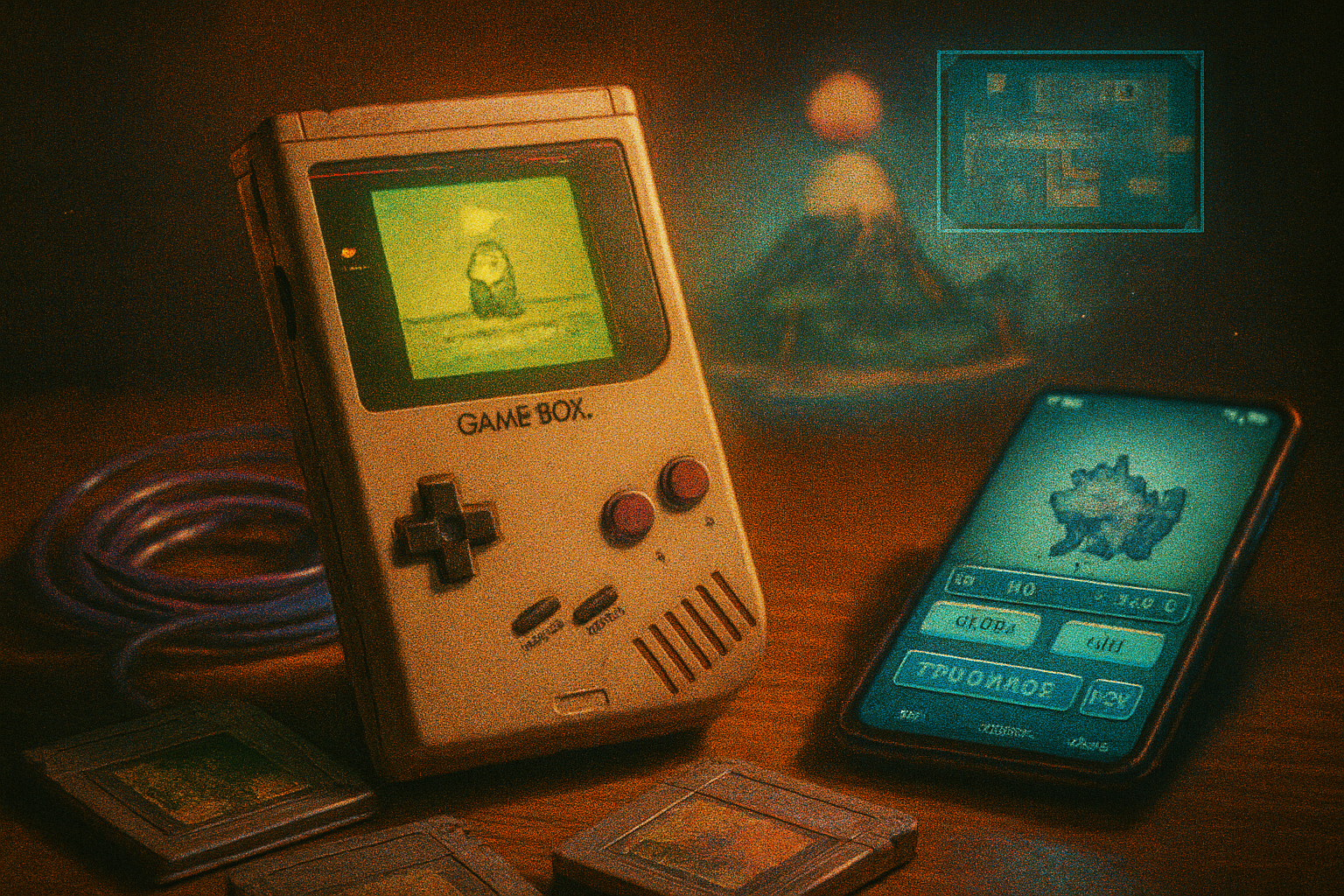
I remember the exact sound: a tiny, euphoric chime as a Pokémon wandered into my party and the Game Boy’s screen, washed in green, felt like the whole world reduced to a pocket-sized universe. There was no cloud save, no microtransactions, no app store. There was only that cartridge clip and a stubborn black-and-white glow.
Forty years of portable gaming later, most kids (and many adults) carry something that can run photorealistic games, stream movies, and micro-target ads depending on their thumb movements. The argument - often spoken over the clack of a mechanical keyboard or the double-tap of a home button - is both sentimental and economic: which is better, the Game Boy’s delightful simplicity or the dizzying variety and power of the smartphone?
This isn’t merely nostalgia dressed up as critique. It’s a debate about what game design looks like under restraint, what we get when distribution is frictionless, and what we lose when profit models change the rules.
The Game Boy’s case: constraints breed charm
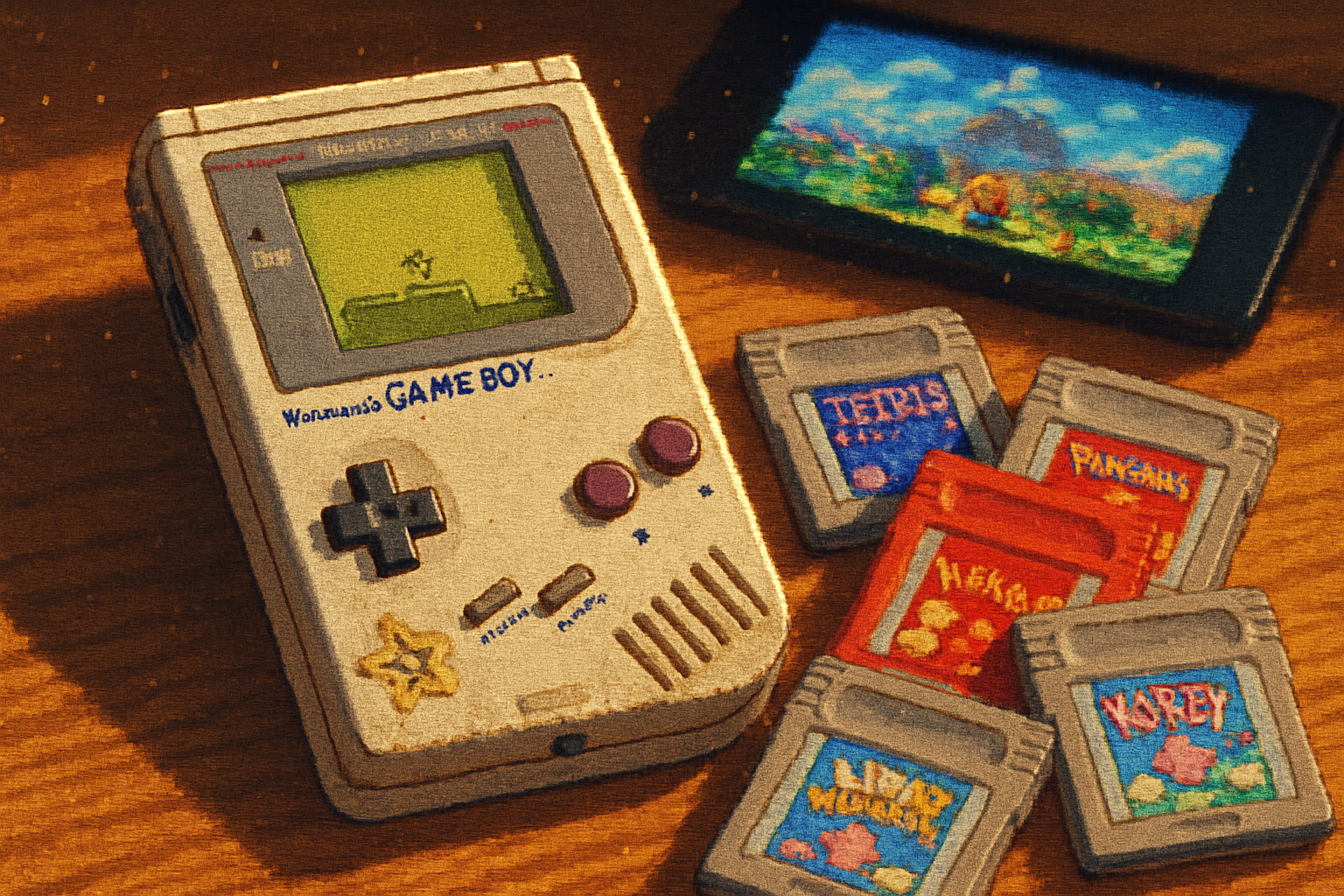
The original Game Boy (1989) was absurdly underpowered even for its time: four shades of green, a tiny dot-matrix screen, and a CPU that would be embarrassing in a toaster by today’s standards. Yet it produced masterpieces and cultural phenomena - most notoriously Tetris and Pokémon Red/Blue - that still hold up.
Why did so many great games come from such a limited platform?
- Focus and clarity. With only two face buttons and a D-pad, designers had to make every input meaningful. There was no scope creep. Gameplay was distilled to its essentials.
- Iteration speed. Cartridges and short play sessions encouraged rapid, repeatable experiences. Tetris is perfect because it’s tiny and infinite.
- Physicality and ownership. Cartridges are objects. You could trade them, lend them, misplace them and then rediscover them in the attic. That tangibility contributes to memory.
- Creative constraints. Limits force inventiveness. The pixel economy - every sprite, sound, and memory slot is precious - led to aesthetic choices that became iconic.
Hardware quirks contributed to identity. The Game Boy Camera is a brilliant, peculiar artifact of the era: low-res selfies that feel like a Polaroid crossed with a Tamagotchi. The machine’s imperfections were part of its soul.
The smartphone’s case: complexity, power, and ubiquity
Modern phones are Swiss Army knives: they are fast consoles, wallets, cameras, and social platforms rolled into one. Mobile gaming is massive - the largest segment of global games revenue - and has evolved from casual time-wasters into serious platforms for deep, complex experiences as well as social ecosystems (Statista on mobile gaming revenue).
Smartphones win on several counts:
- Technical power. AAA-style visuals, networked multiplayer, persistent worlds, AR, and advanced physics are all feasible.
- Distribution and discoverability (for better and worse). The app stores let millions download games instantly. Indie developers can reach an audience they never could with physical cartridges.
- Monetization engines. Free-to-play models, season passes, and live ops let developers fund long-term development.
- Social layers and connectivity. Live chat, aggressive push notifications, and cross-platform play turn games into communities.
And creatively? Some mobile titles harness the platform’s strengths beautifully: games like Monument Valley, which uses touch and simplicity to create a moving experience, or ports of premium indie games such as Stardew Valley that bring deep mechanics to the phone.
Controls and tactile truth
You can play Zelda on a GBA emulator with an on-screen D-pad. It won’t feel the same. Physical buttons provide a precision and a feedback loop your thumb remembers - that satisfying click has muscle memory behind it. The Game Boy’s hardware demanded bodily skill; it made mastery feel mechanical.
Phones have tried to compensate - controllers, haptics, gyroscopes - but touch is still an abstracted control surface. It’s flexible, yes. But it rarely offers the same kind of precise, subconscious feedback as a physical button.
Battery, durability, and the romance of resilience
Game Boys were tanks. They drank AA batteries, but they could be resurrected with a fresh set, blunt force, or duct tape. They survived playgrounds and puddles. They had physical failure modes you could diagnose with a screwdriver.
Smartphones are fragile, expensive, and entangled with a thousand services. Lose a phone and you don’t just lose a game cartridge; you lose your identity in an ecosphere of logins, purchases, and cloud saves. The Game Boy’s simplicity made loss cheaper and nostalgia easier to reclaim.
Libraries, preservation, and ownership
Owning a cartridge feels different from licensing a title in an app store. Game Boy games are artifacts; they persist. ROMs and emulation exist precisely because the physical media is limited and aging - but they also reveal a messy moral landscape (video game emulators).
Mobile games, by contrast, can vanish with an update or a studio’s closure. The live-service economy requires players to stay online, subscribe, or accept ads. You don’t own the game in any traditional sense - you rent access.
That has cultural consequences. When a Game Boy classic survives on a shelf, it becomes a shared reference point. When a mobile title sunsets, a portion of digital culture expires with it.
Monetization: attention markets vs. upfront purchases
If Game Boy games were a village fair - one-time purchase, handshake exchanges in the playground - mobile games are Wall Street. The app stores optimized for engagement, not necessarily for player well-being.
Pros of mobile monetization:
- More revenue can mean more investment in long-term content.
- F2P models lower the barrier to entry and expand audiences.
Cons:
- Predatory practices exist - loot boxes, pay-to-win, manipulative reward loops.
- Games designed for retention often prioritize dopamine over fun.
This is the crux of the controversy. The smartphone unlocked broader creativity and scale, but it also opened the door to business models that actively exploit human psychology.
Discoverability, curation, and the tyranny of the feed
The Game Boy’s limitations meant discovery happened through magazines, word of mouth, and shelf browsing - slow, messy, and sometimes serendipitous.
App stores are curated by algorithms and charts. That democratizes access but also concentrates attention. Thousands of gems drown in a sea of clones, hypercasual knockoffs, and ad-laden scams. The phone is great at finding what’s popular, less great at helping you find what’s rare.
The social dimension: link cables vs. persistent networks
Connecting Game Boys required a link cable and proximity. The connection was deliberate. You met someone, swapped cartridges, learned secrets.
Phones provide instant global connectivity, at the cost of intimacy. You can play together across continents, yes - but the social mechanics are aggregated into guilds, leaderboards, and feeds. The friendship could be real or a spoof account and you’ll only know with time.
Aesthetic consequences: art shaped by constraints
There’s a design lesson here: constraints produce style. Limitation forces designers to concentrate on what matters. Low-res sprites and chiptune music are not just technological byproducts; they are aesthetic choices born from scarcity.
Conversely, unlimited power creates its own problems. When you can do everything, the risk is doing nothing distinctive. The glut of visual fidelity can hide sloppy design choices that would be glaring on a smaller canvas.
Who wins? The values test
This debate isn’t about objective superiority. It’s about priorities.
- If you prize durability, ownership, tactile mastery, and creative constraint - the Game Boy wins.
- If you value variety, technical ambition, social scale, and instant access - the smartphone wins.
But the real answer is not binary. The Game Boy’s influence is alive in mobile indies that choose constraints intentionally. Monument Valley traded graphical horsepower for geometric elegance. Developers often use the smartphone’s strengths - touch, sensors, connectivity - to create new forms that would have been impossible on old hardware.
The moral: nostalgia with teeth
Nostalgia flattens complexity. The Game Boy was not a utopia: it was limited, imperfect, and exclusionary in its own ways. Mobile gaming is not a dystopia: it has enabled millions to play games that never would have seen the light on cartridges.
What deserves criticism is not modernity itself but the systems we accept uncritically. Monetization strategies that harvest attention deserve the same blunt appraisal we give to any industrial design that harms users. Preservation policies that render digital art ephemeral deserve legislative and cultural remedy. And emulation debates deserve nuance: both preservationists and copyright holders have legitimate stakes.
At the end of the day, our handhelds tell a story about what we value. Do we value constraints that sharpen craft? Or do we value platforms that scale communities and creative ambition? There is no single, noble answer. But there is one incontrovertible fact:
When somebody next to you whispers ‘gotta catch ’em all’ into a cartridge, and your friend tugs their phone from their pocket to squad up in a global raid, both are practicing the same human art: bending a small, portable device into a world-sized obsession.
And that - whether bathed in green or backlit by OLED - is worth defending.