· culture · 7 min read
Revisiting Classic Game Boy Titles: What Holds Up and What Doesn’t?
A deep, candid look at which Game Boy classics still sing in 2026 and which feel like relics best admired behind glass. Practical advice for new players, a short starter list, and reasons to hunt down - or skip - each title.
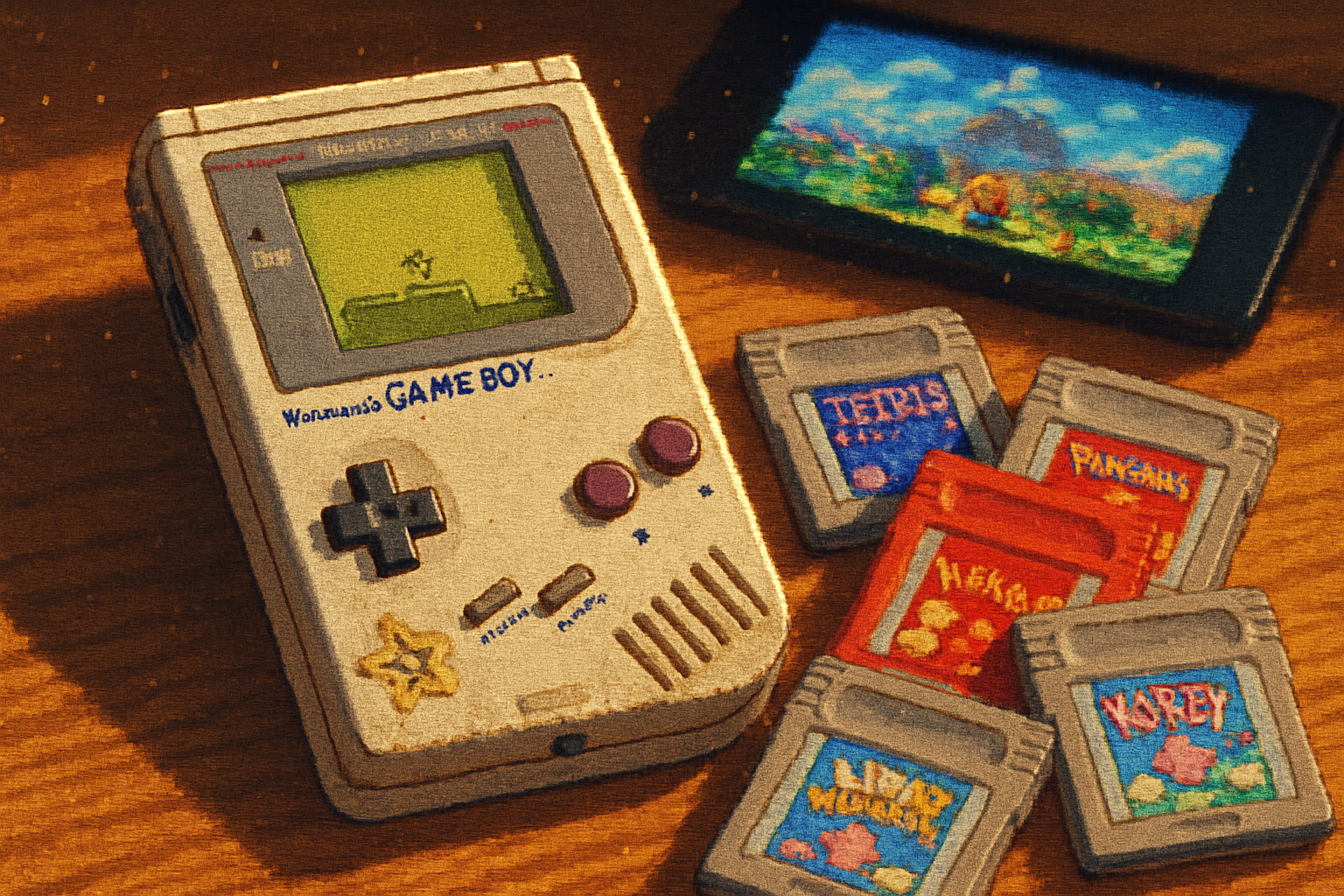
I remember the smell: cheap plastic, a trace of cassette tape nostalgia, and the first time I swapped a battered Game Boy battery cover with a friend in the schoolyard so we could trade Pokémon. The pixels were blocky, the screen a washed-out fog, the speaker a tin can - and yet, for a generation, these little machines were entire universes.
Game Boy games live in two overlapping eras now: the era they were made for, when tiny constraints bred creative solutions; and the era we live in, where our expectations about interfaces, save systems, and fairness have changed. Some cartridges survive the jump. Others don’t. This is a practical tour for new players who want the joy without the juvenile frustrations.
How I judge if a Game Boy game “holds up”
Not every old game needs to be a modern masterpiece. But some qualities age poorly and others age well. When I say a game “holds up,” I mean it still delivers value without demanding a nostalgia filter.
- Gameplay purity - Is the core loop still fun? (e.g., Tetris)
- Readability & UX - Can you tell what’s happening on a 160×144 monochrome screen without squinting forever?
- Accessibility of time sinks - Are long grinds or cumbersome mechanics enjoyable, or are they just busywork?
- Design resilience - Do levels, puzzles, and enemy design reward thought rather than exploiting hardware quirks?
- Audio & personality - A tinny chiptune can charm - or grate.
These criteria will guide the verdicts below.
Timeless - these still sing
Tetris (Game Boy)
Why it holds up: The single pure idea - stack shapes to clear lines - is elegant, immediate, and addictive. The Game Boy version shipped with the system and did something crucial: it made Tetris portable and social via the link cable. The minimal UI means the hardware doesn’t obscure the design.
Why you should play it: If you want a lesson in how a single mechanic can support infinite play, this is it. It’s still one of the best “time suck” toys.
Reference: https://en.wikipedia.org/wiki/Tetris
Pokémon Red/Blue (and Yellow)
Why it holds up: The sense of discovery and the social layer - trading and battling friends - remain powerful. Building a team and exploring the world are still compelling.
Where it shows its age: Grinding is relentless, the lack of modern quality-of-life conveniences (no PC auto-sorting, slow menus, the clumsy linking mechanic) is more noticeable when you’re not seven and trading for that rare Abra.
Who I recommend it for: Players curious about cultural history or the first taste of a monster-collection game. Consider the remakes (FireRed/LeafGreen) if you want the same world with smoother ergonomics.
Reference: https://en.wikipedia.org/wiki/Pok%C3%A9mon_Red_and_Blue
The Legend of Zelda: Link’s Awakening (original GB)
Why it holds up: A surprisingly literate and inventive little Zelda that packs memorable dungeons, clever puzzles, and eerie mood into a tiny cartridge. The original’s design decisions - compact, interlocking puzzles and strong item-driven gameplay - translate well to modern play.
Modern note: The 2019 Switch remake is gorgeous and faithful in spirit, but the original still charms with austere puzzles and an uncanny dream logic.
Reference: https://en.wikipedia.org/wiki/The_Legend_of_Zelda:_Link%27s_Awakening
Kirby’s Dream Land
Why it holds up: Bright, brisk, and forgiving. Kirby introduced approachable platforming that still teaches design economy: short levels, generous lives, and an eminently likable protagonist.
Who it’s for: New players and kids. If you want challenge, look elsewhere; if you want clean, cheerful play, Kirby’s classic is still delightful.
Reference: https://en.wikipedia.org/wiki/Kirby%27s_Dream_Land
Wario Land: Super Mario Land 3
Why it holds up: This is where the Game Boy began to grow up. Wario’s gameplay loop rewards exploration and experimentation; the game leans into finding secrets and using abilities creatively. It ages well because it offers optional depth rather than mandatory suffering.
Reference: https://en.wikipedia.org/wiki/Wario_Land:_Super_Mario_Land_3
Aged, but with redeeming reasons to play
Metroid II: Return of Samus
Why it’s mixed: The atmospheric exploration and the very idea of hunting and evolving aliens are cool and influential. But the sheer sameness of many areas and the drab visuals make it a slow hike.
How to experience it: Play it if you adore Metroid’s DNA and want to trace its lineage - otherwise try the modern remake [Metroid: Samus Returns] (3DS) for a more comfortable experience.
Reference: https://en.wikipedia.org/wiki/Metroid_II:_Return_of_Samus
Castlevania series (Game Boy entries)
Why it’s mixed: The franchise’s portable outings are uneven. Some - like Castlevania II: Belmont’s Revenge - have surprising ambition and solid design. Others feel like half-realized attempts to transplant the NES experience into a machine that wasn’t built for it.
Who should play: Fans of the series or completionists. If you just want excellent action-platforming, there are better old-school options elsewhere.
Reference: https://en.wikipedia.org/wiki/Castlevania_(Game_Boy_series)
Super Mario Land
Why it’s mixed: This is Mario, but not as you know him. The levels are short and experimental; the game throws weird enemies and boss concepts that make sense on a tiny screen. That novelty is charming. But compared to Super Mario Bros. or Super Mario World, it’s a thin slice.
When to skip: If you want crisp, masterful Mario platforming, play the SNES or NES classics instead.
Reference: https://en.wikipedia.org/wiki/Super_Mario_Land
What really doesn’t hold up (unless you’re nostalgic or a historian)
Titles that traded substance for technical stunts
- Early licensed games that are little more than poor control schemes and repetitive combat. Many tie-in cartridges were rushed and designed to sell, not to endure.
- Some action games ported from more powerful hardware that tried to “shoehorn” big sprites and complex levels into four shades of gray. The result - cramped hitboxes and muddled visuals.
Examples: Several obscure NES-to-Game-Boy ports and licensed titles fall in this camp. They’re valuable as artifacts but rarely fun for modern play.
Practical ways to play Game Boy games today
- Original hardware - The purest experience. Game Boy, Game Boy Pocket, or GBA (backward compatible) with an appropriate cartridge. Batteries and faded screens are part of the ritual.
- Re-releases & remakes - If available, remakes or ports often retain the game’s spirit while fixing UX sins (e.g., Link’s Awakening remake). These are great entry points.
- Legal digital services - Where offered, digital ports or licensed emulations are convenient. Availability changes with platform licensing, so check official stores.
- Emulation - Use it cautiously and legally. Emulation can restore colors, increase resolution, and add save states - all of which make older games more accessible. But respect developers and copyrights.
Quick buying guide for the new player
- Want the purest nostalgia? Buy a working Game Boy or GBA SP and original cartridges.
- Want convenience and QoL? Look for official remasters/remakes or legal digital ports.
- Want to sample before committing? Watch a few playthrough clips - you’ll quickly see if the core loop captivates you.
A short starter list (one-liners)
- Tetris - Unfailing, elegant, immediate.
- Pokémon Red/Blue - Cultural cornerstone; patient players rewarded.
- Link’s Awakening - Compact Zelda at its most inventive.
- Kirby’s Dream Land - Gentle, cheerful platforming.
- Wario Land - Secret-filled and cleverly designed.
- Metroid II - Important for lore; play the remake for comfort.
Final verdict
Some Game Boy games are architectural: their ideas are so tight that the hardware is irrelevant. Others are historical curiosities - fascinating to behold, but not something you’d choose today unless you’re studying design or indulging nostalgia.
If you’re new: start with Tetris and Link’s Awakening or Kirby for playability, then try Pokémon for cultural context. Keep your expectations calibrated: charm often coexists with clunk. And if a game pains you with ancient UX, know that a modern re-release or remake will usually give you the fun without the friction.
Play the ones that still surprise you. Ignore the others and don’t feel guilty. The past deserves both reverence and critique.