· retrotech · 6 min read
Revisiting NeXT's Legacy: Why It Still Matters to Today's Innovators
NeXT wasn't just a niche computer company; it was an experiment in taste, developer experience, and long-term platform thinking. Its mix of craft, conviction, and hubris left a codebase that built the web and an ethos that still matters to startups today.

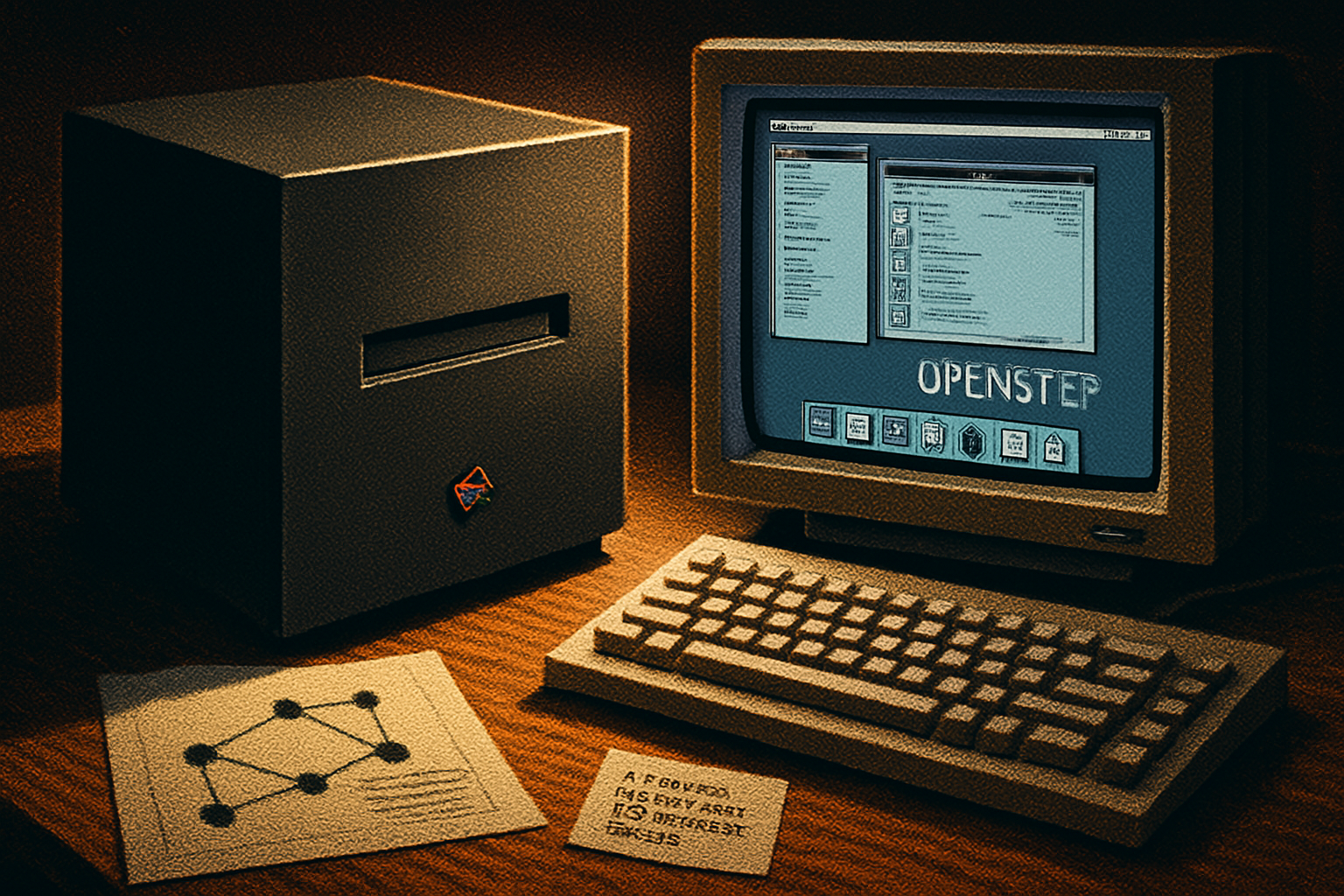
It began with a cube on a college professor’s desk and, for a few stubborn years in the late 1980s and early 1990s, a team that politely refused to accept the industry’s aesthetic and engineering compromises. The NeXT Computer was expensive, rare and - to many of its contemporaries - impractical. But it did something more useful than sell mass-market boxes: it showed what happens when you design a product around the people who build software rather than the people who buy hardware.
That cube produced the first web server that birthed the World Wide Web, an object-oriented OS whose descendants power iPhones, and a set of developer tools so fastidious they almost read like a manifesto. The story of NeXT is not a hallelujah to triumphant business strategy; it’s a study in product conviction, technical artistry, and the cost of being ahead of your time.
What NeXT actually built - a quick tour
Before we extract lessons for founders today, here’s what made NeXT remarkable in concrete terms:
- NeXTSTEP - an operating system built on a Mach kernel with BSD underpinnings, pairing a sophisticated object-oriented framework (Foundation and AppKit) with a polished GUI.
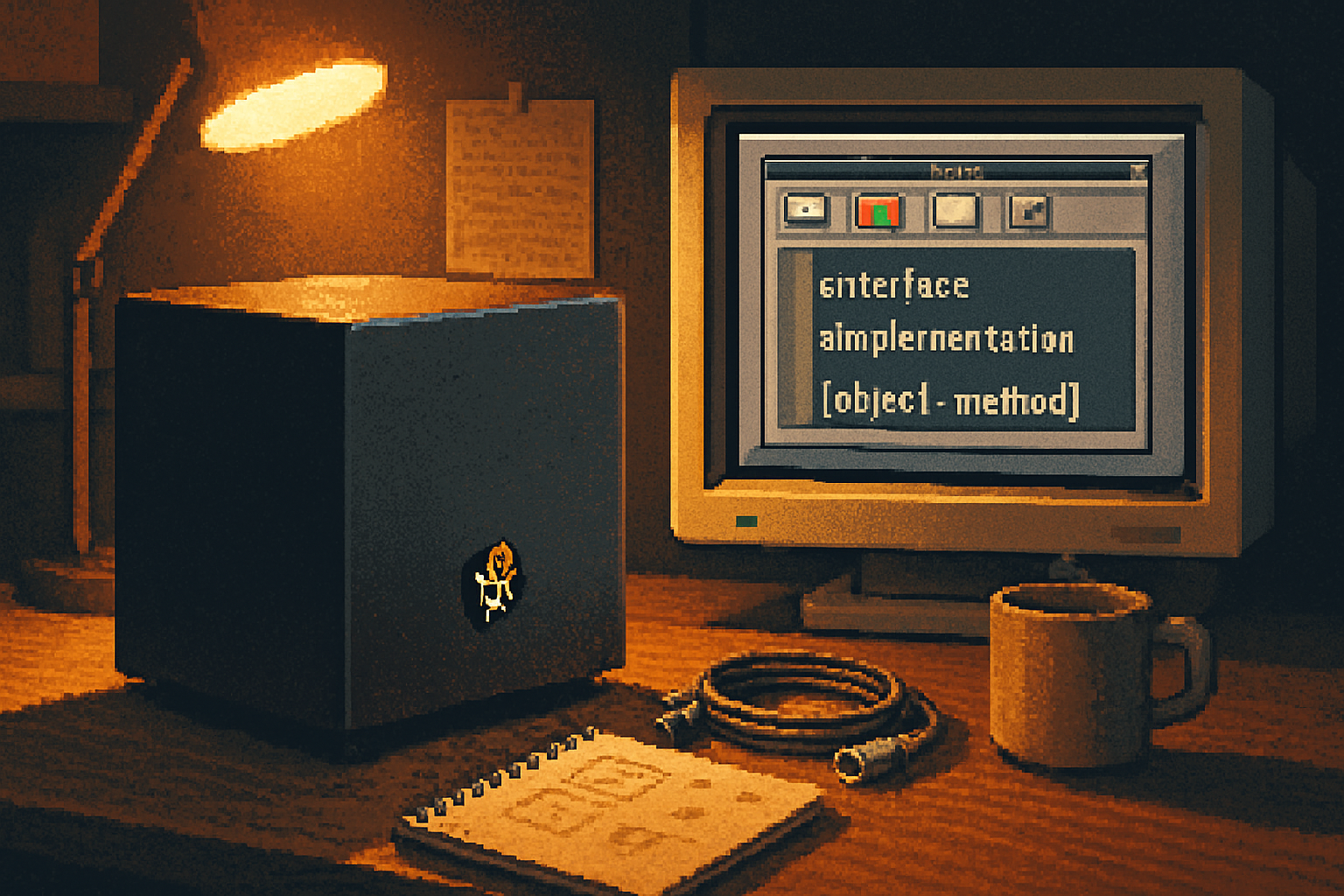
- Objective-C - the primary language for NeXT’s frameworks, blending C with Smalltalk-style messaging. It framed API design around objects and messages in a way that would later inform Cocoa and iOS.
- Interface Builder - one of the first visual UI layout/connection tools that let developers compose interfaces graphically and wire them to code. It turned UI work from a grind into a craft.
- Display PostScript - high-fidelity on-screen graphics borrowed from the printing world, making WYSIWYG interfaces natural and precise.
- Developer tooling & documentation - NeXT shipped disk-based documentation, sample code, and an IDE lineage that evolved into Apple’s Xcode.
- Real-world impact - Tim Berners-Lee created the first web server and browser on a NeXTcube, and Apple’s acquisition of NeXT in 1997 injected NeXTSTEP’s DNA into macOS and iOS.
NeXT wasn’t merely clever engineering; it was an argument about where value should be placed: developer time, interface quality, and platform coherence.
The core principles worth stealing
NeXT’s story isn’t a relic. It’s a set of design decisions and cultural commitments that can be translated into startup playbooks today.
1) Developer experience is product market fit
NeXT built for the developer first. An integrated environment - readable frameworks, clear APIs, visual UI tools - reduced friction for creating software. Developers on NeXT got an exponential productivity multiplier; the product created its own evangelists.
Modern translation: Invest in DX (developer experience) early. If your product is programmable, composable, or will be extended, make the people who ship code fall in love with your platform. Good DX compounds; bad DX is a tax.
2) Vertical integration - but with a cost calculation
NeXT controlled hardware, software, and dev tools. That control let them optimize experience in ways commodity PC makers couldn’t. The result: a coherent, polished environment.
Modern translation: Vertical integration provides unique experiences (see Apple, Tesla). But it demands deep technical investment and narrows your market if pricing or supply can’t scale. Know whether you’re building a bespoke instrument for a niche virtuoso or a commodity appliance.
3) Build frameworks, not features
NeXT’s value came from frameworks (AppKit, Foundation) that standardized how software got written. Frameworks captured patterns and made future development faster.
Modern translation: Prioritize composable primitives and extensible APIs. A successful framework can outlive any single app and create long-term defensibility.
4) Don’t confuse craft with vanity
NeXT’s hardware was exquisite and pricey. That craft signaled intention and quality, but it also limited reach.
Modern translation: Exceptional craft communicates value. But vanity features that don’t increase the core value proposition-especially early-can kill growth before your product finds users.
5) Timing matters as much as quality
NeXT’s tech was futuristic; the market wasn’t always ready. The cube was too expensive for universities at the scale NeXT hoped and too idiosyncratic for corporate IT.
Modern translation: You can be technically right and commercially wrong. Validate not just the need for the idea but the market’s readiness for your pricing, distribution, and integration model.
6) Stories and mission are leverage
Steve Jobs sold an idea of higher-order computing - tools for thinkers, educators and creatives. That narrative attracted an audience who wanted to belong to something better.
Modern translation: Positioning matters. The narrative around your product amplifies technical advantage. But it must align with deliverable value, or the gap becomes a credibility deficit.
Concrete lessons for today’s entrepreneurs
Here are practical, actionable principles you can steal from NeXT and apply to modern startups.
- Prioritize developer happiness metrics - time-to-first-success, number of documented examples for common tasks, and ease of debugging. These metrics predict adoption.
- Build a small set of high-quality primitives (APIs, UI components, CLIs). Ship opinionated defaults that prevent footguns.
- Make tooling part of the product. IDEs, CLI tools, sample apps - they lower the activation energy.
- Decide early whether you’re optimizing for vertical integration or horizontal scale. Your choice affects hiring, partnerships and how you measure success.
- Put a moat around the part that matters - frameworks, data models, unique hardware-software interactions - not superficial UI polish alone.
- Be honest about price elasticity. If you’re baking in premium materials or experiences, ensure your go-to-market targets customers who actually pay for that extra margin.
- Maintain a culture of craft but use craft to serve utility. Craft as vanity breaks; craft as utility sells.
What modern companies already borrow (often unknowingly)
- Apple’s Cocoa frameworks are direct descendants of NeXTSTEP. NeXTSTEP influence
- IDEs like Xcode and Interface Builder’s paradigms inform modern visual UI editors and low-code tools.
- Many modern “developer-first” companies (Stripe, Vercel, Twilio) succeed because they obsess over DX - the same axis NeXT optimized.
A compact playbook: 10 questions to ask before you emulate NeXT
- Who is the primary user - developer, end-user, or integrator?
- Does the experience require vertical control to be defensible?
- What primitives will developers bake into their products from your platform?
- Where does your revenue need to come from-hardware, subscriptions, services?
- How elastic is your pricing for your target market?
- Can a small set of APIs unlock network effects?
- What does first-time success look like in 10 minutes on your platform?
- Which parts of the product must be perfect at launch, and which can iterate publicly?
- What narrative will attract early adopters and sustain morale?
- How will you measure developer delight and product utility?
Answer these honestly. A NeXT-style bet requires discipline: craft without pettiness, vision without delusion.
A cautionary aftertaste
NeXT teaches an uncomfortable lesson: technical excellence and beautiful design are not sufficient for commercial success. Market fit, distribution, pricing, and timing are equally decisive. NeXT’s acquisition by Apple turned what was a commercial stumble into an architectural inheritance that transformed the mainstream. That’s not a license to be willfully eccentric; it’s an invitation to pair ambition with ruthless market clarity.
Final thought
The NeXT cube sits at the intersection of charisma and craftsmanship: a reminder that platforms are social objects as much as technical ones. If you’re building the next developer platform, designer tool, or integrated product, don’t just compete on features. Build what makes people want to come back, build what lets them build faster, and tell a story that makes the friction worthwhile.
Build for the people who build. They will build the rest for you.
References
- NeXT (Wikipedia): https://en.wikipedia.org/wiki/NeXT
- NeXTSTEP (Wikipedia): https://en.wikipedia.org/wiki/NeXTSTEP
- Objective-C (Wikipedia): https://en.wikipedia.org/wiki/Objective-C
- Tim Berners-Lee (Wikipedia): https://en.wikipedia.org/wiki/Tim_Berners-Lee
- NeXT acquisition by Apple (Wikipedia): https://en.wikipedia.org/wiki/NeXT