· retrotech · 7 min read
Rethinking Retro Gaming: The Amiga 500 as a Blueprint for Sustainability
The Amiga 500 is more than a nostalgia machine. As a low-power, repairable, community-supported platform it's a surprisingly modern example of sustainable design. This article examines how keeping machines like the Amiga 500 alive reduces e-waste, conserves resources, and preserves cultural value - and offers practical steps and policy ideas to scale the model.
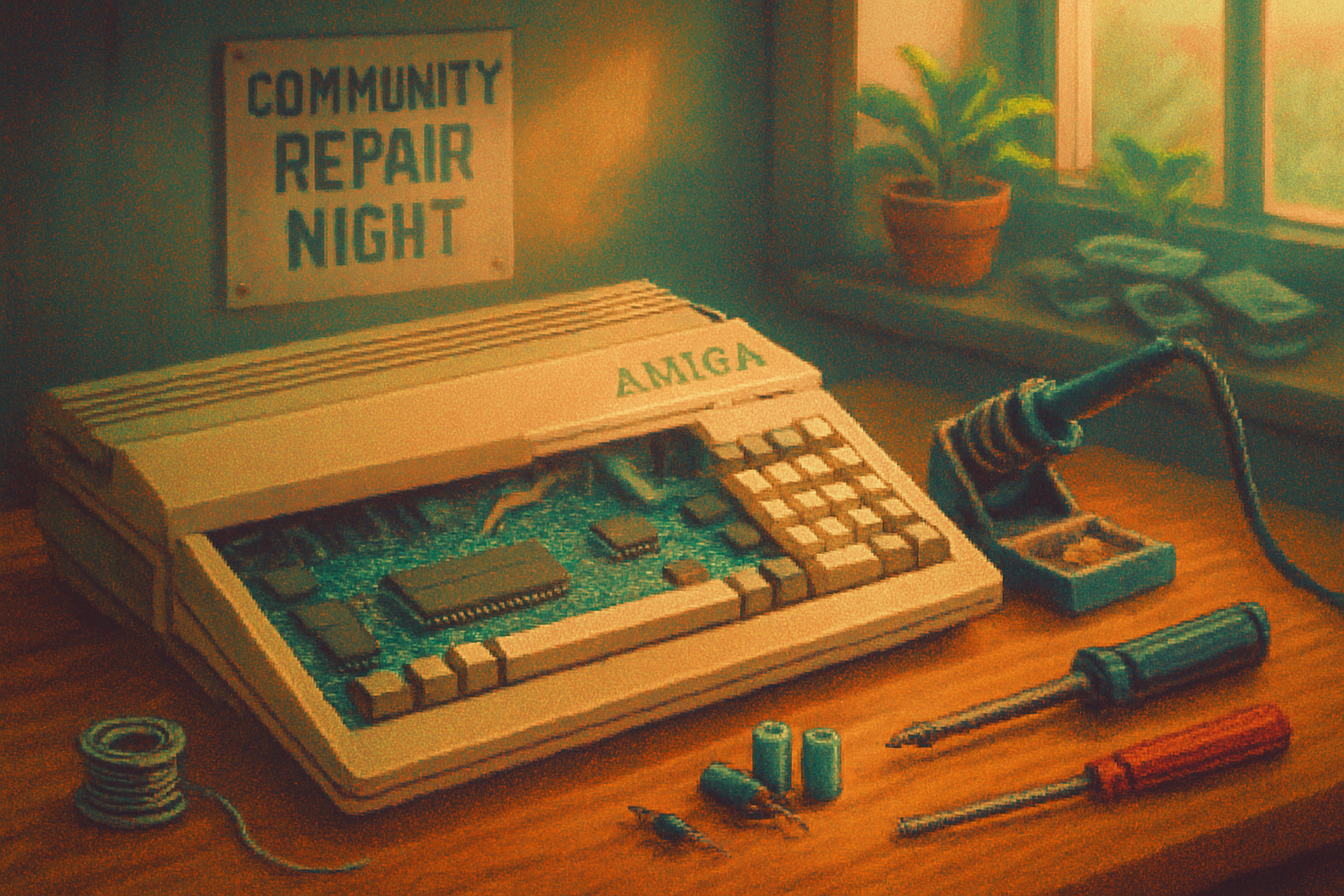
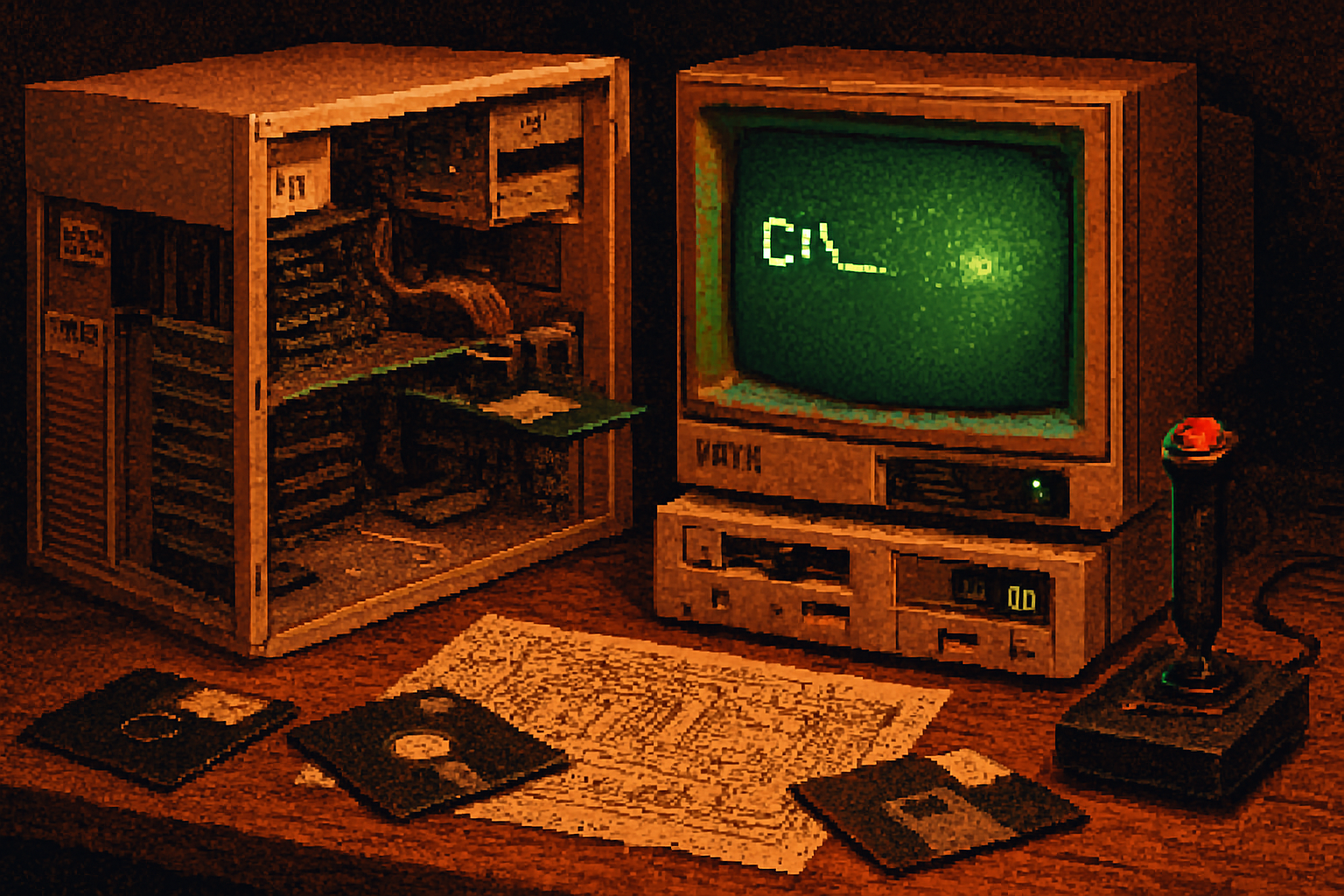
I found mine under a stack of VHS tapes and a box of ’90s high school memorabilia. It smelled faintly of dust and a childhood spent in neon. I plugged it in. It booted. No cloud updates, no forced patches, no obsolescence countdown - just the slow, confident chime of a machine that still worked after decades.
That moment is why the Amiga 500 matters. Not merely as a museum piece or a nostalgia prop, but as a working example of something the modern consumer electronics industry no longer builds: durable, repairable, decently power-efficient hardware that thousands of people can keep alive with parts, community knowledge, and a little elbow grease.
The ugly arithmetic: e-waste and why it matters
We talk a lot about the glamour of new devices and the convenience of streaming, but we rarely do the arithmetic of what we throw away. Global e-waste runs into tens of millions of tonnes annually and is the fastest-growing waste stream on the planet. Electronic devices bury complex mixes of precious metals, plastics, and toxic materials - all of which cost energy, water, and lives to extract and process.
- The United Nations’ Global E-waste Monitor highlights the scale and trajectory of the problem - millions of tonnes of discarded electronics each year and a recycling capacity that lags demand
- The human costs are real - improper recycling exposes communities to heavy metals and toxic chemicals, as documented by health agencies and environmental NGOs
New consoles are not innocents here. Manufacturing modern gaming hardware consumes large quantities of rare earths and other mined materials, and the iterative cadence of yearly upgrades and refreshes accelerates obsolescence. The result is a treadmill: we buy, we discard, and the planet pays.
Retro as a small but real climate and waste intervention
The claim isn’t hyperbolic: using, repairing, and extending the life of existing electronics is a concrete way to reduce resource extraction and waste. ‘Use longer’ is one of the simplest, highest-leverage ways to cut the lifecycle environmental cost of electronics.
Retro platforms like the Amiga 500 offer a surprising set of advantages in that equation:
- Longevity by design - many machines were built with replaceable components, modular boards, and service manuals that communities still share.
- Low power draw - older hardware typically consumes far less electricity than modern consoles blithely designed to run 4K, ray-traced games, and online services.
- Community repair - decades of collective knowledge (schematics, tips, replacement boards) means fixes are often straightforward and inexpensive.
- Cultural value - preserving software libraries, demos, and hobbyist ecosystems conserves intangible heritage that would otherwise be lost.
None of this is to romanticize. The supply of original components dwindles, and not every retro project is greener - shipping a single replacement board from across the world or manufacturing new clones has an impact. But the net effect of keeping machines in active use is almost always to reduce the need for a new device.
Why the Amiga 500 is a useful blueprint
The Amiga 500 is a particularly clear case because it sits at the sweet spot of cultural significance, repairability, and a living community.
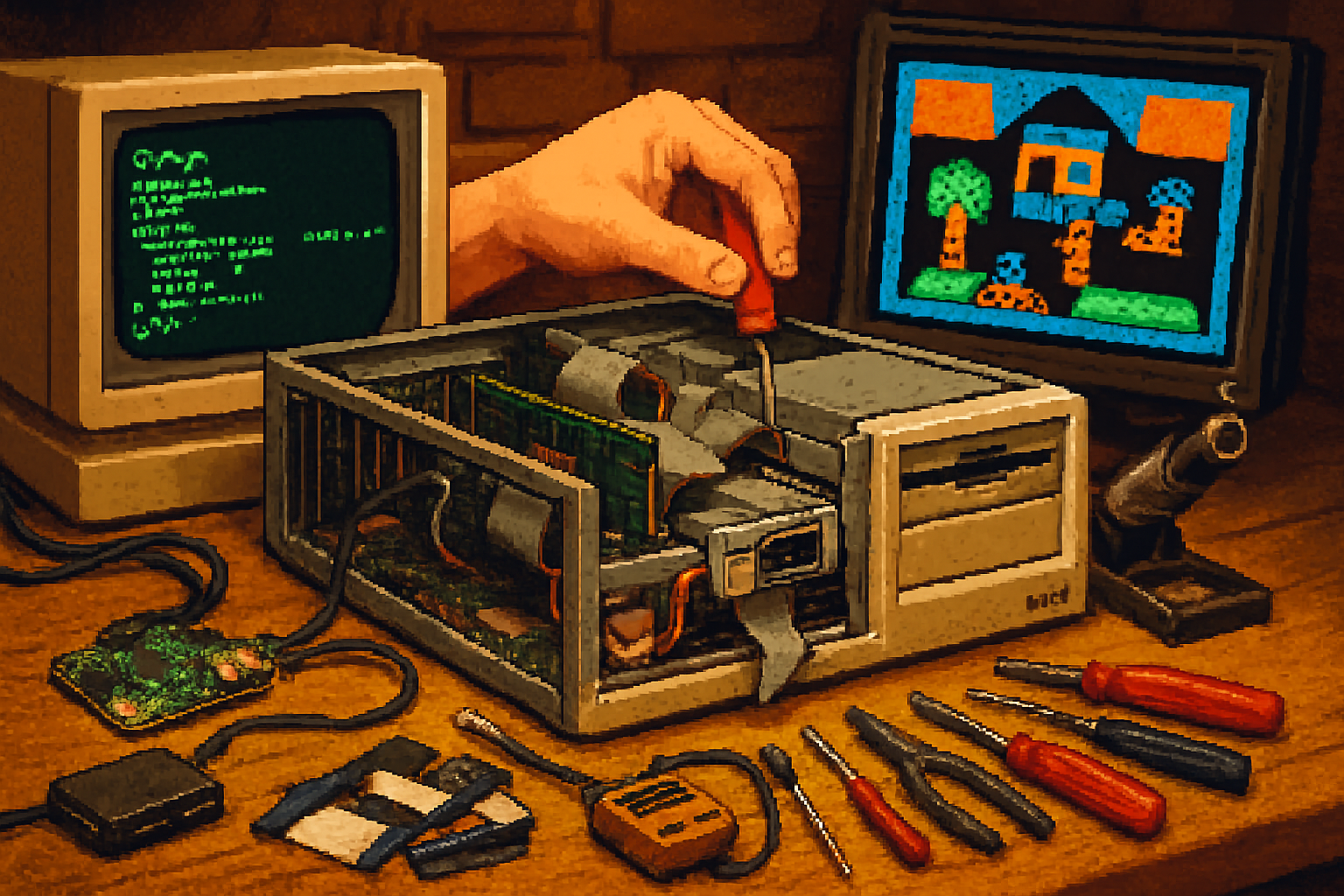
- Repairability and modularity - the A500’s daughterboards, sockets, and discrete chips make many faults fixable with solder, capacitors, or a compatible replacement board. The community has developed guides for common repairs.
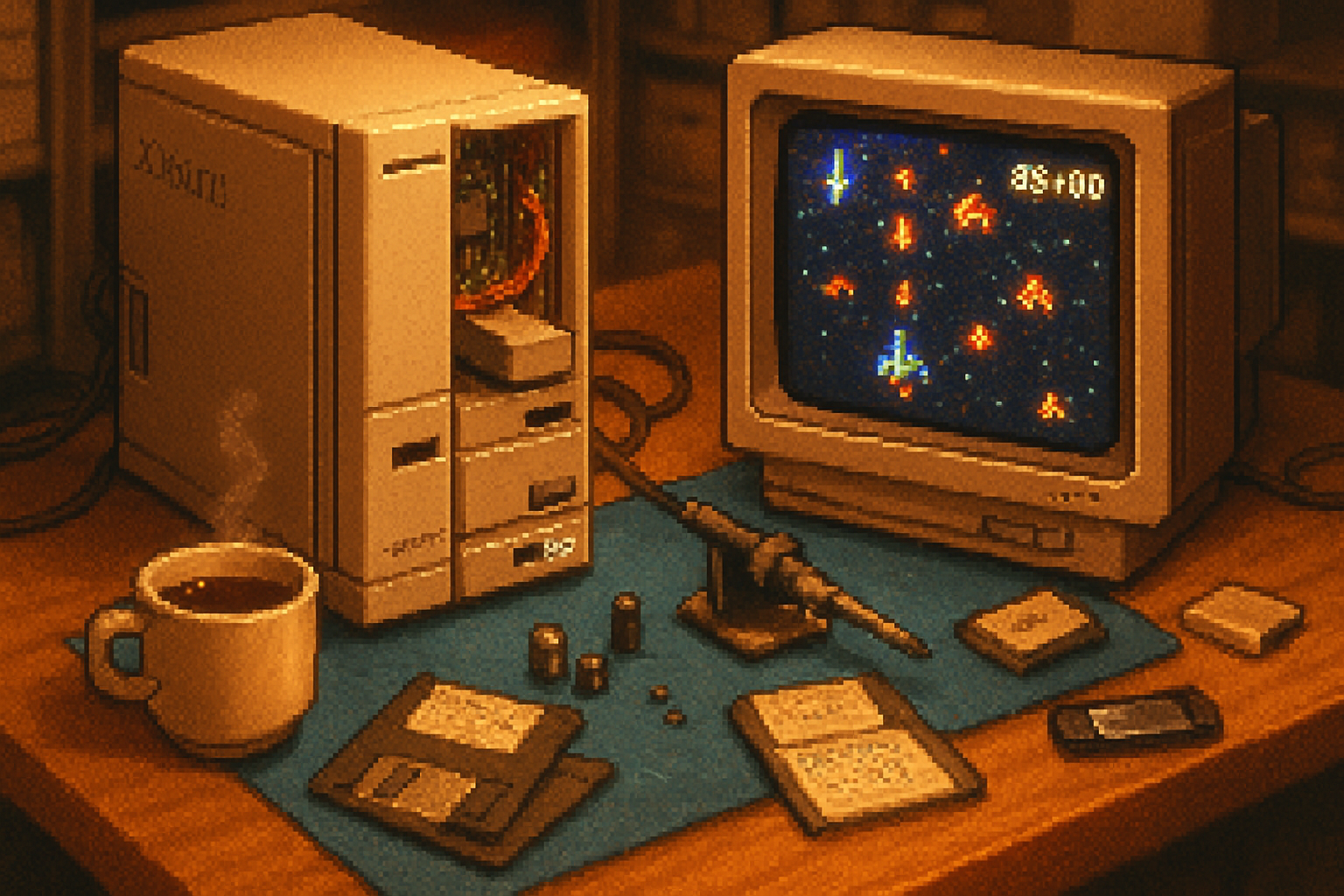
- Low-barrier upgrades - floppy drives can be replaced with USB-based emulators (e.g., Gotek-based solutions), hard drives can be emulated with SD cards, and compact flash adapters exist to modernize storage without replacing the whole machine (see the
- Community and knowledge preservation - decades of forums, guides, and archives (for example,
- FPGA and emulation alternatives - projects like
In short: the Amiga 500 shows how a device can outlive its corporate lifecycle through community stewardship. That stewardship is a form of circular economy in miniature.
Practical steps to keep retro gear out of the landfill (and working)
If the goal is real-world waste reduction rather than performative collecting, here are concrete, tactical steps individuals and communities can take:
- Learn two basic repairs - capacitor recapping and power-supply replacement. These fixes revive a surprising number of dead boards.
- Use floppy emulators (Gotek/FlashFloppy) and SD-card adapters to replace fragile drives and media.
- Swap instead of buy new - source used power supplies, connectors, and boards through community exchanges before ordering new replacements.
- Host or join repair cafés and retro meetups. Knowledge transfer matters as much as parts.
- Document and archive software legally where possible. Use community archives and donate software to preservation projects like Archive.org when licensing permits.
- If you must manufacture replacements, favor small-batch runs and community-driven PCBs rather than large-scale, single-use plastics.
Emulation vs. Hardware: the sustainability trade-offs
Emulation gets some things right. A single low-power board running multiple retro cores can replace dozens of original machines, reducing the need to ship and maintain original hardware. FPGA solutions like MiSTer aim for cycle-accurate reproduction with far better energy efficiency.
But emulation also erases a tactile ecosystem: original controllers, displays, and media are part of the cultural artifact. For preservationists, physical hardware plus accurate imaging of disks and tapes is essential. The sustainable path balances both: preserve images and software in emulators; keep a rotation of original machines in working condition for cultural and educational use.
Scaling the model: policy and cultural shifts
Individuals patching capacitors are noble, but the real leverage comes from policy and industry shifts:
- Right to Repair - stronger laws and standards to ensure manuals, parts, and schematics are available to consumers and independent repairers (see
- Standardization of modular components - designing for disassembly and modular upgrades increases useful lifetimes.
- Incentives for refurbishment - tax breaks or procurement rules favoring refurbished hardware in schools and public institutions.
- Support for preservation projects - public funding for software and hardware archiving as cultural heritage.
These changes make the Amiga model less exceptional and more mainstream.
Cultural value is part of sustainability
Sustainability isn’t only about kilograms of material saved - it’s also about what we value and choose to keep. The Amiga 500 is a cultural node: a place where art, music (the tracker scene), demos, and community engineering met. Preserving that ecosystem preserves a form of collective memory and technical literacy that is useful, inspiring, and frankly cheaper than making a new device from scratch.
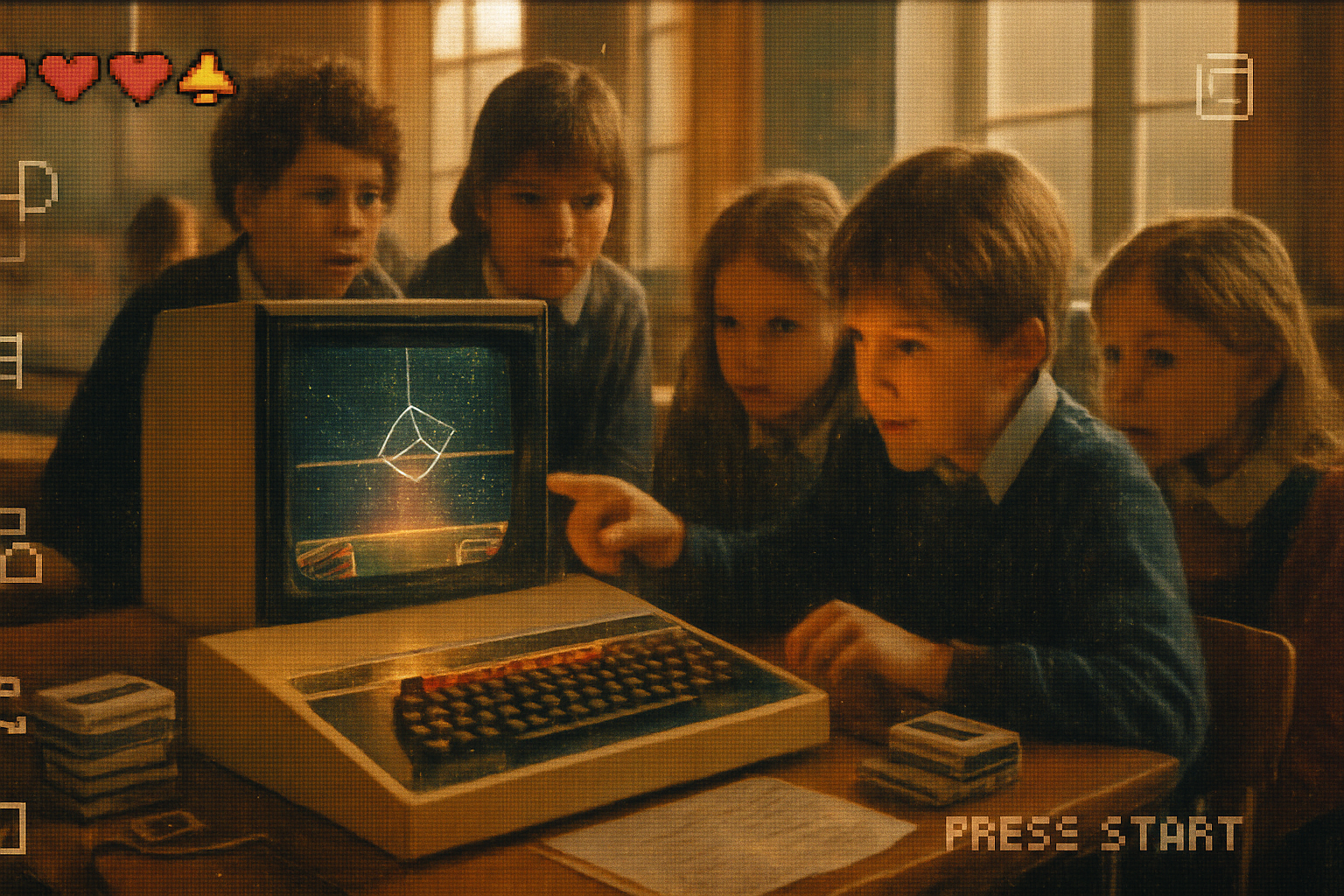
Imagine a classroom learning programming on hardware that can be opened, understood, and repaired without proprietary SDKs and opaque service agreements. That’s a different kind of sustainability: intellectual, civic, and human.
Conclusion - a modest manifesto
The Amiga 500 won’t stop climate change. It won’t single-handedly end e-waste. But it does something almost all new devices fail to: it invites care. It is repairable, comprehensible, and loved. That combination is a form of sustainability that scales when adopted as a cultural norm.
If you care about reducing waste, conserving resources, and preserving cultural history, buy less new hardware. Repair what you have. Share what you know. Plug your vintage machine in and listen to that confident little chime - it’s the sound of a durable object refusing to be disposable.
References and further reading
- Global E-waste Monitor (United Nations/ITU) - overview and data: https://www.itu.int/en/ITU-D/Environment/Pages/E-waste/The-Global-E-waste-Monitor-2020.aspx
- WHO on health and e-waste: https://www.who.int/news-room/fact-sheets/detail/children-and-electronic-waste
- Gotek/FlashFloppy project (floppy emulator): https://github.com/keirf/flashfloppy/wiki/Gotek
- MiSTer FPGA project (hardware emulation): https://misterfpga.org/
- Amiga community resources: https://amiga.org/, https://www.lemonamiga.com/
- Archive.org for software and preservation: https://archive.org/
- iFixit - Right to Repair resources and guides: https://www.ifixit.com/