· retrotech · 7 min read
BBC Micro: The Unsung Hero of the 80s Gaming Revolution
How a staid government-backed microcomputer, given to schools and shown on TV, quietly shaped game design in the 1980s - through hardware quirks, powerful BASIC, and a clutch of brilliant, often overlooked titles.
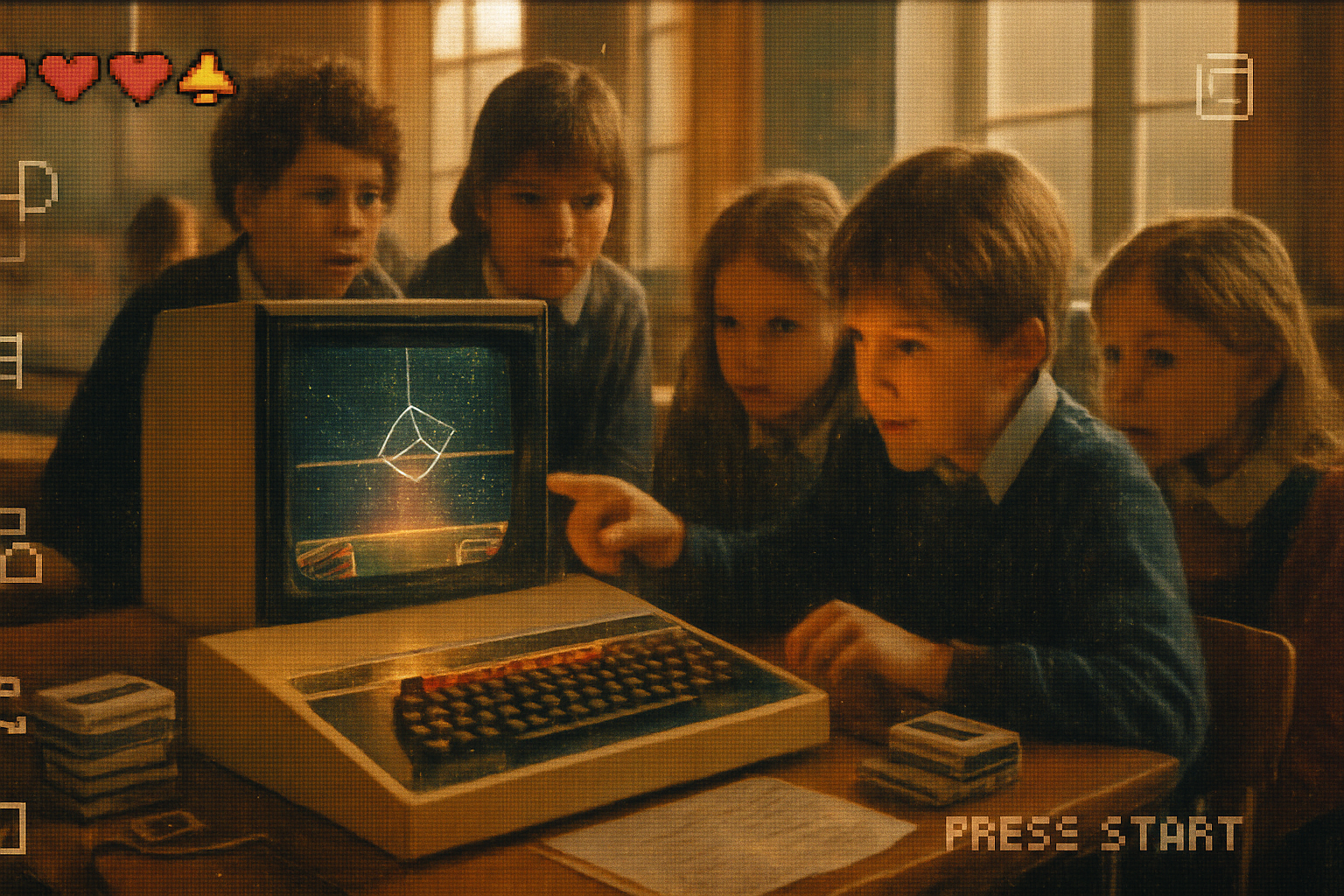
In the spring of 1984 a dozen kids in a back-row classroom crowded around a beige box with woodgrain sides. They were supposed to be learning BASIC; instead, a boy had typed a few lines, hit RUN, and the classroom suddenly contained a black, ragged starfield and a tiny wireframe ship. The screen pulsed; the sound came from that small built-in speaker. It was Elite - and for a lot of those children, the BBC Micro had just become a gateway to a different kind of imagination.
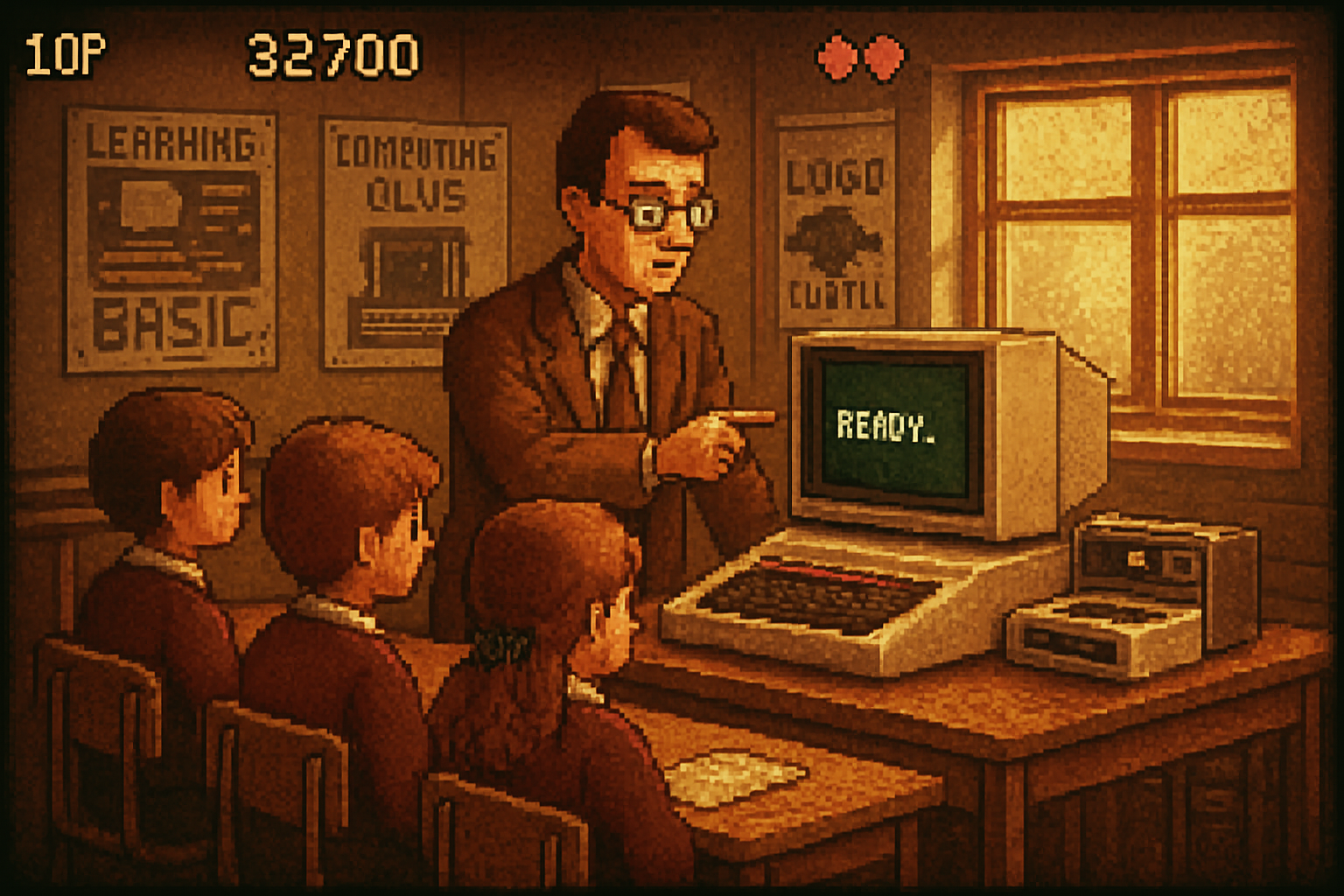
What surprises a lot of younger readers today is how unsentimental the BBC Micro’s victory was. This was not the coolest home computer by raw specs, nor the slick marketing darling in the way Commodore or Atari sometimes were. The BBC Micro arrived as part of a government-backed literacy project and was stuffed into schools across the U.K. That placement-tedious to some, providential for others-turned out to be a key vector by which a generation of programmers, designers, and players learned to think about games.
The setup: why the BBC Micro mattered (and why you probably ignore it)
- It was a government-friendly, education-first machine deployed in classrooms as part of the BBC Computer Literacy Project. That wasn’t glamorous, but it meant that hundreds of thousands learned to program on the same platform. BBC Computer Literacy Project.
- The hardware was pragmatic and developer-friendly. BBC BASIC shipped on the ROM and included structured programming features, integer-only speed modes and fast machine-code hooks. That made the Micro both a teaching tool and a surprisingly powerful games platform. BBC BASIC.
- Acorn and Acornsoft cultivated a small but ferocious software ecosystem. Because the machine was common in schools, there was a ready audience and an army of amateur coders who could graduate to commercial titles. Acorn Computers, Acornsoft.
In short: unlike many other platforms of the era, the BBC Micro didn’t just sell hardware to gamers - it sold the tooling and training that produced them.
The misconception: you think the BBC Micro was irrelevant to games
That belief rests on two things: the global popularity of machines like the Commodore 64, and the thunder-crash myth that only flashy graphics matter. But measure influence in design ideas and people, not megapixels. The BBC Micro was a crucible for thinking differently about scope, systems and player agency.
Consider this: Elite - the space sim that launched a thousand later games - debuted on the BBC Micro. Its procedural universe, open-ended play and risk/reward trading loop would echo through decades of design. It wasn’t just a technical feat; it was a proof that small code could host big ideas. Elite (video game).
The lesser-known titles that quietly rewired design thinking
Here are four games often overshadowed by mainstream 8‑bit icons - but which contain ideas that ran like secret leaks into later game design.
Elite (1984)
- Why it’s not “lesser-known” - everyone knows the name. But most people don’t appreciate the context: Elite arrived on the BBC Micro first, and its procedural generation techniques let a tiny machine simulate a vast galaxy without needing terabytes of ROM. That economizing of content and the sense of emergent play fired designers’ imaginations about scale and replayability.
Repton (1985)
- At first blush this is a tidy block-pushing puzzle game. Under the surface - clever use of tile-based constraints, elegant level design, and an unapologetic focus on tight, repeatable mechanics. Repton’s levels forced players to think several moves ahead and introduced design patterns - boulders that fall, timed hazards, maze logic - that you can see echoed in modern puzzle-platformers. Repton also illustrated how community content (level editors and sequels) could keep a franchise alive on a modest platform.
Exile (1988)
- Less famous than Elite, Exile is more interesting to designers. It combined a sprawling, explorable world with a real physics model and emergent object interactions - things like movable terrain and ragdoll-ish enemies that responded believably to forces. It hinted at the kinds of simulation-first concerns that would later power indie favorites and sandbox games. Exile.
The Hobbit (1982, BBC Micro ports)
- A text-adventure with rich parser responses and NPCs who acted on their own schedules. The Hobbit pushed narrative responsiveness and character simulation in ways that suggested interactive fiction could be more than canned responses; it could be a living, changing story. These are early explorations of systemic narrative that modern narrative designers still attempt to tame. The Hobbit (video game).
Each of these games shows a different way the BBC Micro bred ideas: procedural scale, tight mechanical puzzles, physics and simulation, and dynamic narrative.
The BBC Micro’s technical contributions - not flashy, but quietly lethal
- BBC BASIC - A powerful built-in language that wasn’t just for children. It provided structured programming constructs and fast tight loops; many young developers cut their teeth on it and learned to optimize - a skill that became essential when pushing games to the hardware limits.
- Memory and expansion features - sideways RAM and the platform’s expansion model meant coders could experiment with overlays, custom graphics modes, and machine-code routines - techniques that translated to clever engine work and compact data structures.
- The schooling effect - when a nationwide curriculum standardizes a platform, you don’t just get buyers - you get cohorts of people who can read each other’s code, exchange improvements, and iterate. A BBC Micro in every school turned hobbyist programming into a career pipeline.
How the BBC Micro shaped developers and industry norms
A device shapes the craftsman. If you learned to program on a machine that demanded optimization and rewarded cleverness, you develop habits: reuse, componentization, elegant economy of design. Those habits migrated into the commercial scene.
- Many early UK developers came from a British schoolroom tradition. Their games favored design clarity and lean, focused mechanics over flash. That sensibility is visible in the DNA of later British studios and indie design.
- The Micro’s presence in education made computing respectable. That legitimacy created a market for regional publishers and more risk-taking projects - the ones that didn’t need to sell millions to matter.
Counterarguments (and why they miss the point)
Yes, the Commodore 64 sold more units and had better sound chips. Yes, American and Japanese systems dominated console culture. But influence isn’t raw sales. It is people, ideas and the migration of those ideas into new contexts. The BBC Micro seeded designers who later built games on other platforms; it taught an ethic of resourceful engineering and an appetite for systems-driven play.
If you only evaluate the Micro by global market share, you’ll miss how it became an incubator for game thinking.
Legacy: where the BBC Micro’s fingerprints still show
- Procedural ambition - Elite’s minimal-but-grand galaxy is a direct ancestor of modern procedural worlds like No Man’s Sky and countless roguelikes.
- Puzzle design lineage - Repton’s focus on small rule-sets and emergent difficulty lives on in contemporary indie puzzle titles.
- Simulation-first thinking - Exile’s physics and emergent object behavior anticipated the sandbox and systemic games we now take for granted.
- Educational pipelines - The idea that schools can produce future developers is now an accepted truth - the BBC Micro was an early large-scale experiment in that space.
Final verdict: unsung, not unimportant
The BBC Micro is the anti-celebrity of 1980s gaming. It wasn’t the flashiest, loudest, or most heavily marketed machine. But it was - dangerously and effectively - a teacher.
Its true victory wasn’t hardware sheen; it was the apprenticeship it offered. The machine taught a generation to think in constrained systems and to prize clever design over theatrical polish. And those habits traveled with its graduates, becoming part of the grammar of game-making.
So call it unsung if you like. But if you grew up playing a game that prized systems, restraint and emergent possibilities, there’s a good chance some lonely beige computer in a British classroom did the early teaching.
References
- BBC Computer Literacy Project - https://en.wikipedia.org/wiki/BBC_Computer_Literacy_Project
- BBC Micro - https://en.wikipedia.org/wiki/BBC_Micro
- BBC BASIC - https://en.wikipedia.org/wiki/BBC_BASIC
- Elite (video game) - https://en.wikipedia.org/wiki/Elite_(video_game)
- Repton (video game) - https://en.wikipedia.org/wiki/Repton_(video_game)
- Exile (video game) - https://en.wikipedia.org/wiki/Exile_(video_game)
- The Hobbit (video game) - https://en.wikipedia.org/wiki/The_Hobbit_(video_game)