· retrotech · 6 min read
Login to the Past: Remembering the Unique Features of Hotmail
A nostalgic deep-dive into the features that made Hotmail a webmail revolution - the cheeky HoTMaiL name, the 'Free Web-Based Email' promise, colorful themes, early filters and spam defenses - and how those design choices shaped the inboxes we use today.
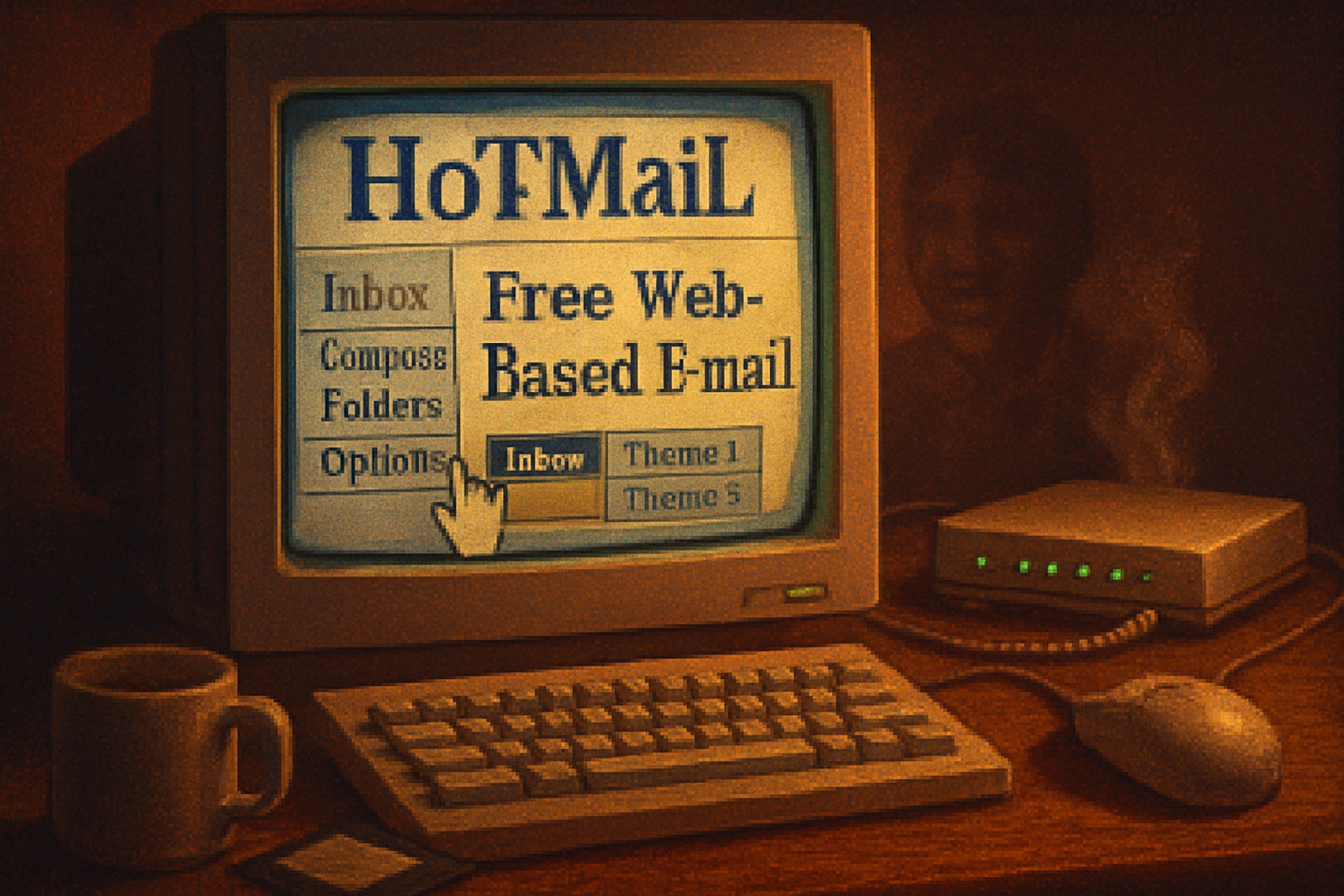
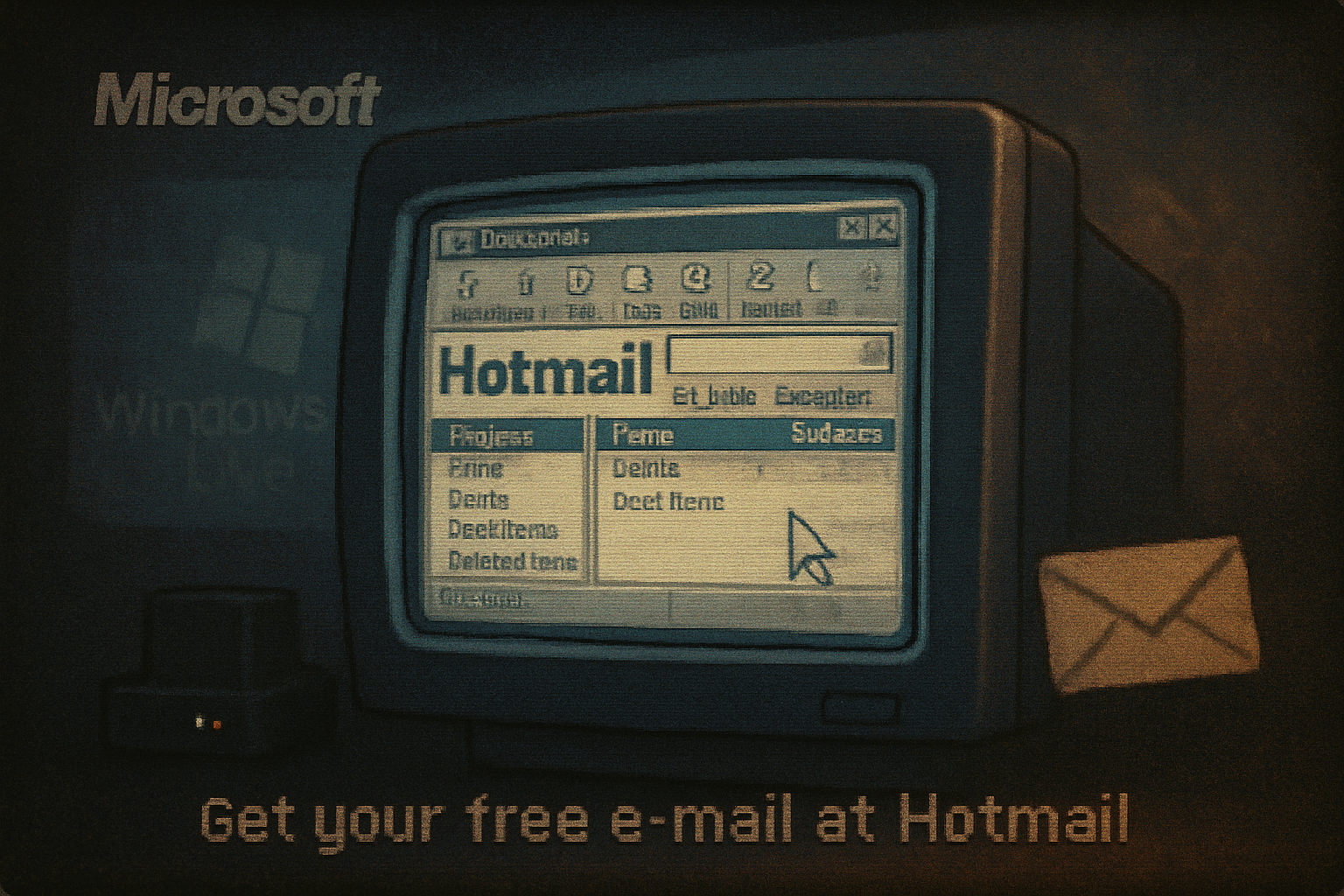
July 4, 1996. The date reads like a holiday and it was treated like one by millions of people who discovered they no longer needed an ISP‑tied address to send mail. You could open a browser on any computer, type in a user name, and - as if by sorcery - access your mail from anywhere. Hotmail, stylized as HoTMaiL to wink at HTML, wasn’t just an app. It felt like emancipation.
That feeling - lightweight freedom wrapped in cheap exhilaration - is the story of Hotmail’s design decisions. Those choices were not inevitable; they were bold, user-first, and a little theatrical. They seeded expectations that modern webmail still fulfills.
The brief, glorious origin
Hotmail launched on July 4, 1996, founded by Sabeer Bhatia and Jack Smith and marketed explicitly as “free, web‑based e‑mail” - a line that did work as both a promise and an incantation. Within 18 months Microsoft bought the service for roughly $400 million, folding it into MSN and eventually rebranding it through the years into Windows Live Hotmail and, by 2013, Outlook.com [1][2].
Sources
- Hotmail history and acquisition: https://en.wikipedia.org/wiki/Hotmail
- Outlook.com announcement and transition context: https://blogs.office.com/2013/02/19/hello-outlook-com/
The features that felt like magic (and why they mattered)
Here are the Hotmail features that looked like small conveniences at the time but later became expectations.
1) “Free. Web‑based. Email.” - a new contract with users
Hotmail’s tagline was more than marketing. It changed the implicit contract of email:
- No ISP lock-in. Your address went with you.
- No local client required. A browser was your mailbox.
- Near instant setup and immediate gratification.
Why it mattered: Email stopped being tethered to your home or office. The web as platform won an early, massive validation - a premise that underpins Gmail, Yahoo Mail, and Outlook.com today.
2) HoTMaiL and the blithe attention to branding
The odd capitalization - HoTMaiL - shouted its secret: HTML. It signaled that emails could be richer than plain text and that the web could be playful. That playfulness made Hotmail feel modern and consumer‑friendly, not bureaucratic.
Takeaway: Personality sells. When an interface feels human, people trust it.
3) Colorful themes and early personalization
Hotmail let users pick visual themes and personalize display elements. This was cosmetic, sure, but massively important psychologically. Suddenly an inbox could be your space, not just a utility.
Modern descendant: From Gmail’s themes to custom backgrounds in Outlook, personalization reduced cognitive friction and increased daily engagement.
4) Simple contact lists and folders - basic information architecture
Hotmail offered folders, address books, and basic filters. Nothing revolutionary by today’s standards, but crucially, these features were web‑native and easy to use.
Why this mattered: People learned mental models for organizing mail within the browser. That UX momentum made it easier for later services to introduce more advanced features without scaring users.
5) Spam protection - the binary problem of unwanted mail
As adoption exploded, spam followed. Hotmail invested in automatic filtering, blacklists, and evolving heuristics to keep junk out of the inbox. Microsoft kept improving these systems as part of the Hotmail lineage, folding lessons into later services [2].
Why it mattered: Spam is the single greatest assault on email usability. Early, visible anti‑spam measures made webmail viable for mainstream users.
6) Lightweight sign‑up and instant accessibility
Hotmail’s low friction - no heavy verification, no software to install - normalized the idea that signing up for email should be a two‑minute transaction. That convenience was contagious.
Modern descendant: OAuth sign‑ups, one‑click accounts, and mobile onboarding follow the same rule: minimize friction.
7) Integration with other services (messaging, storage, identity)
Post‑acquisition, Hotmail became part of a wider Microsoft ecosystem (MSN Messenger, later Microsoft services). Hotmail foreshadowed how email could be an identity hub - a place where notifications, logins, and communication converge.
Why this mattered: Today your email address is often your universal identifier; Hotmail helped make that normal.
A compact timeline of impact
- 1996 - Launch as HoTMaiL - web‑based, free, accessible anywhere [1]
- 1997 - Microsoft acquisition - mass distribution and integration began [1]
- 2000s - Iterative improvements - themes, anti‑spam tools, richer UIs
- 2005–2013 - Windows Live Hotmail era; transition into Outlook.com and modern webmail principles [2]
Why Hotmail’s design choices still matter
Think of Hotmail as the street where the modern email neighborhood grew up. It built the sidewalks (browser access), the lamps (spam filters), and the color of the houses (themes and personalization). Each choice nudged user expectations in ways both obvious and subtle:
- People expect email to be free at the consumer level.
- They expect to access their mail from anywhere and from any device.
- They expect meaningful protections against spam and phishing.
- They expect a personal, customizable interface that fits - rather than fights - daily life.
When Gmail launched in 2004 with more storage and strong threading, it inherited the playbook Hotmail helped write and added new chapters. Competition didn’t negate Hotmail’s influence; it proved the model.
Aesthetics matter. So do limits.
Two caveats. First, aesthetics aren’t decoration - they are a form of communication. Hotmail’s themes told users: this is approachable. Second, being first doesn’t mean flawless. Hotmail had UX rough edges, security foibles, and scalability headaches as millions swarmed the service. Those failures were as instructive as its successes.
The emotional legacy - why we remember it
Nostalgia for Hotmail isn’t only about forgotten UI quirks. It’s about the feeling of suddenly not being bound to a single machine or internet provider. It’s the small, sharp joy of typing a new handle and seeing it accepted. It’s also the mild contempt for the pop‑ups and occasional spam that taught us to appreciate sophisticated filters.
If email is like breathing, Hotmail was the moment we collectively realized the room could have windows.
Takeaways for designers and product people
- Solve a real pain with bravado - Hotmail promised freedom and delivered a simple, usable path.
- Make identity portable - Users resent lock‑in more than they praise clever vendor lock‑in.
- Give users personality - Small customization options increase attachment and retention.
- Prioritize trust - Spam filters, security, and predictable behavior build the long game.
Final thought
Hotmail’s archive resides not only in a Wikipedia page or a Microsoft blog. It lives in the way you reflexively reach for a browser to check a message, in the address you use as a login, and in the expectation that email should be effortless and personal. When you “login to the past,” you’re reconnecting with the moment the inbox stopped being an appliance and started being a place you could call your own - messy, sometimes infuriating, and indispensably yours.
References
- Hotmail - Wikipedia: https://en.wikipedia.org/wiki/Hotmail
- “Hello, Outlook.com” - Microsoft Office Blog (2013): https://blogs.office.com/2013/02/19/hello-outlook-com/