· retrogaming · 7 min read
Legal Gray Areas: Is Using NES Emulators Ethical?
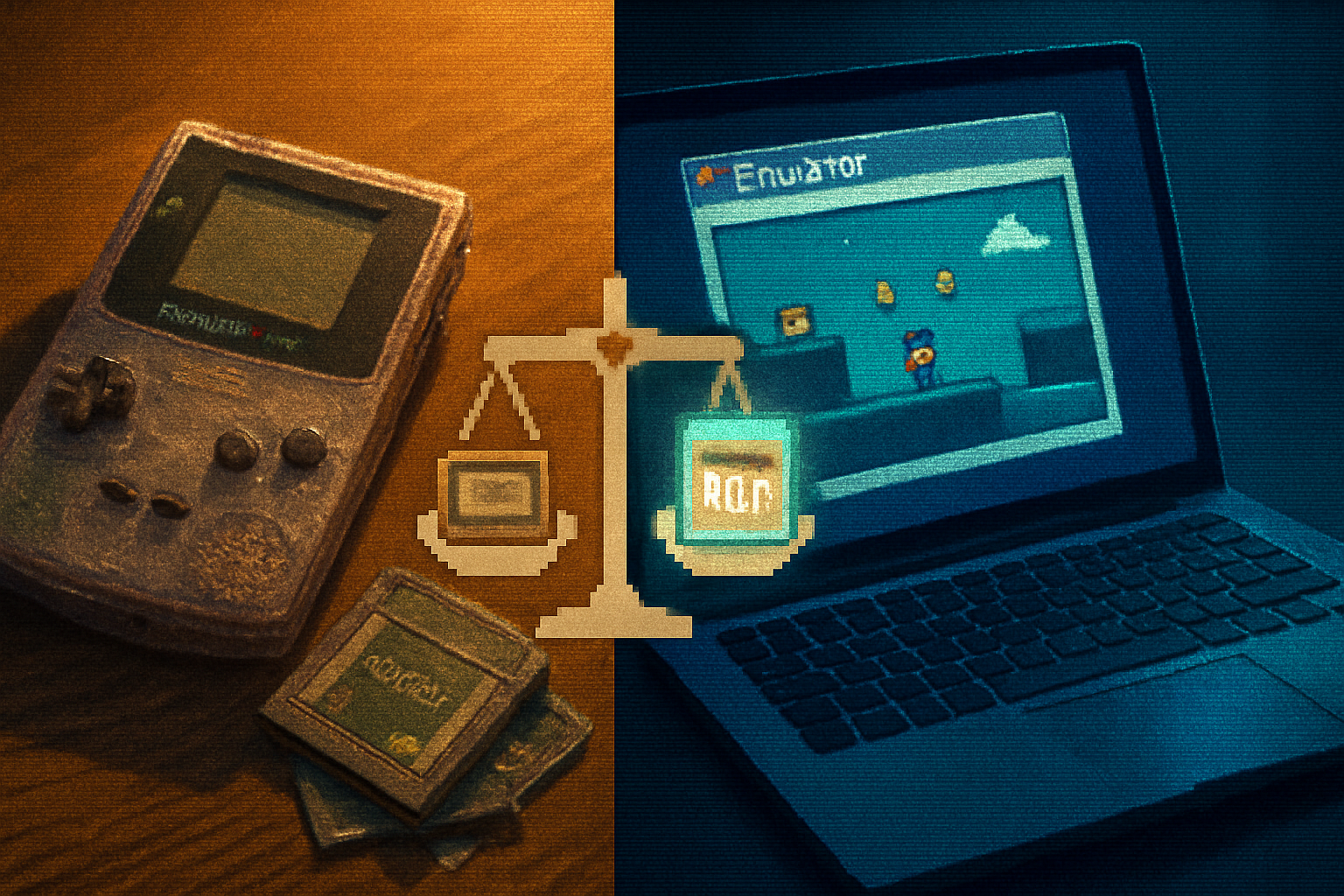
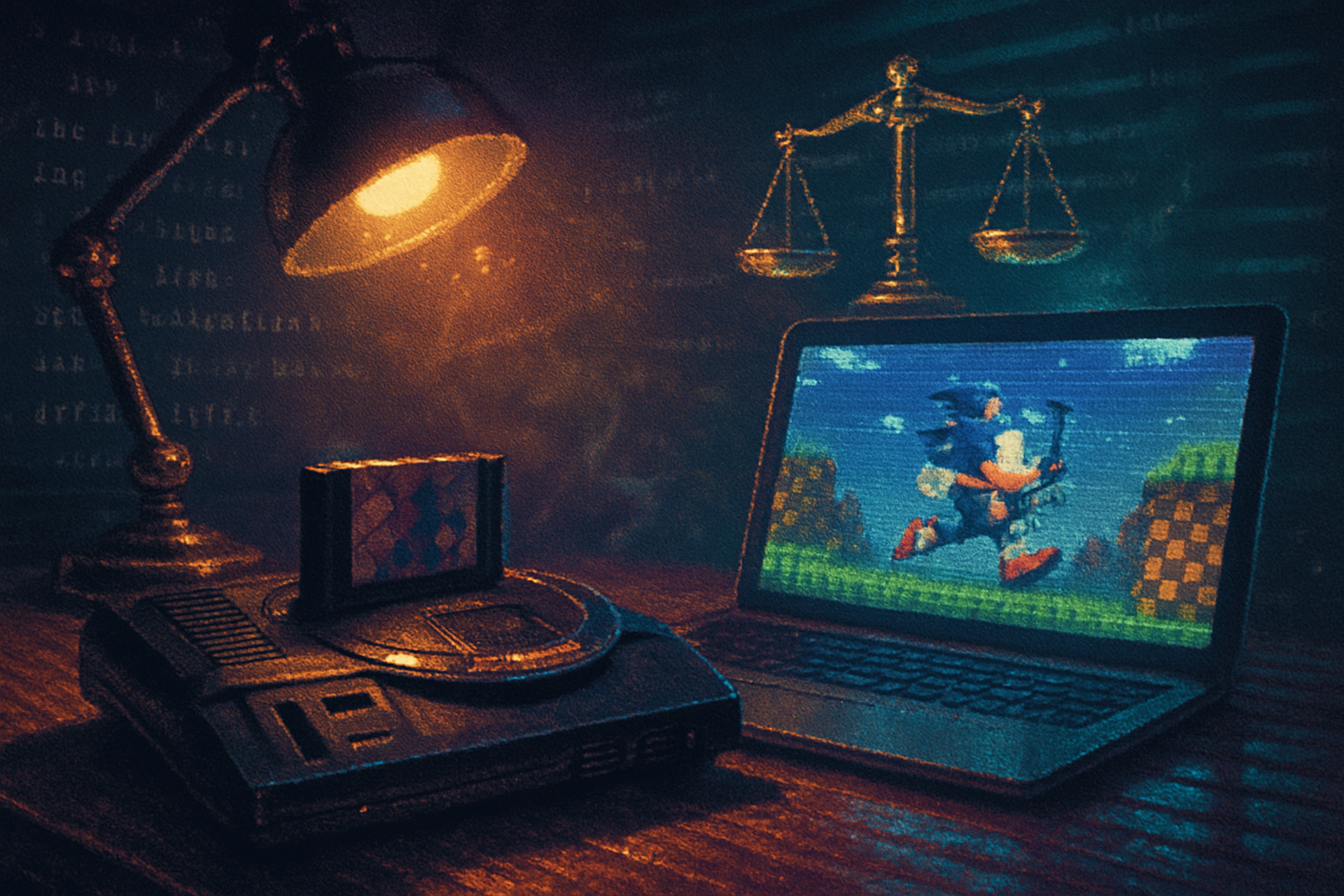
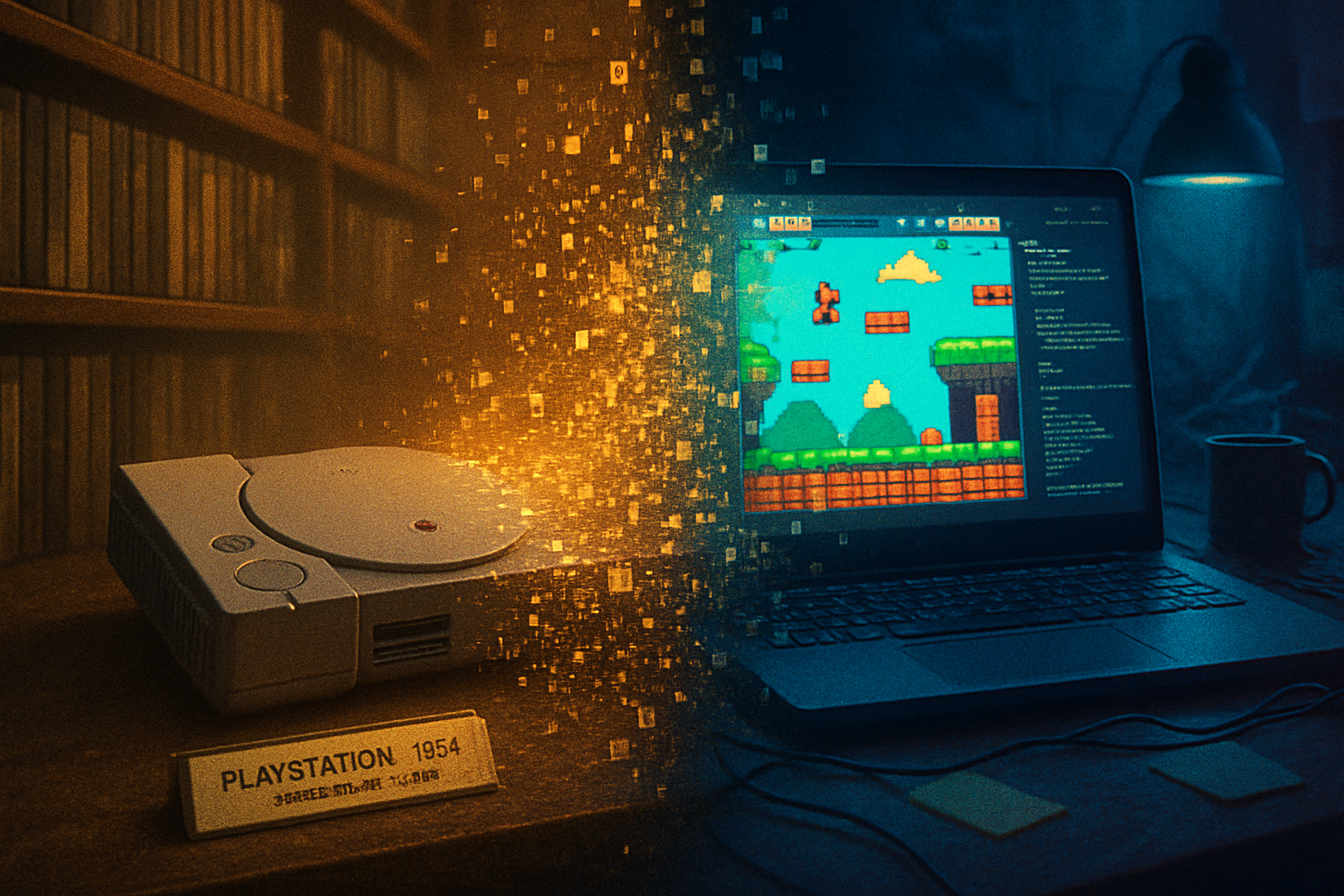
Emulation sits at an odd intersection: a technological miracle for preservation and nostalgia, a legal landmine for rights-holders, and an ethical Rubik’s cube for players. This article untangles the law, the ethics, and the real-world effects of using NES emulators and ROMs.
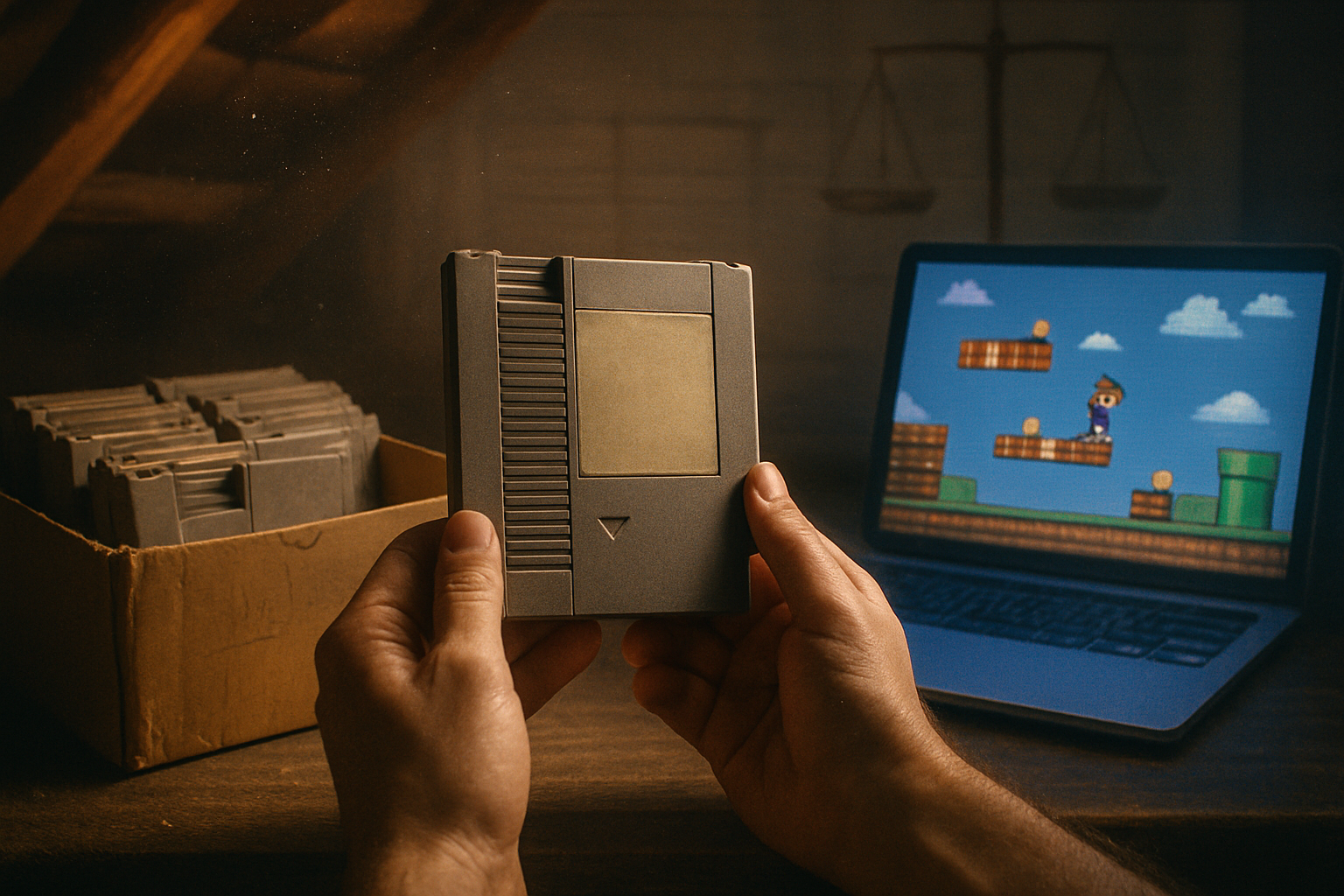
It begins with a box in the attic.
You blow dust off a battered gray rectangle, slip a cartridge into its slot, and for a blessed twenty minutes you’re eight bits and invincible again. Or - because you don’t own a working NES anymore - you open an emulator on your laptop, load a ROM, and the same tune plays. Two identical experiences. Very different legal and moral atmospheres.
Emulation is a small miracle. It’s also a legal and ethical Rorschach test: what you see depends on your history, your wallet, and how loudly you value cultural preservation vs. property rights.
What an emulator actually is (and what a ROM is)
- An emulator is software that imitates hardware. It tricks a modern computer into behaving like an NES so old game code will run.
- A ROM is a digital copy of the game’s cartridge data - essentially a bit-for-bit snapshot of the original.
Emulators themselves are often clean-room, original code. ROMs are usually copies of copyrighted works. That difference is the fulcrum of legality.
The law - messy, precedent-driven, and jurisdiction-specific
There is no simple “emulation is legal” stamp. Different courts and statutes address separate pieces of the puzzle:
- Reverse engineering - U.S. case law has at times protected developers who reverse-engineer hardware or software to make interoperable products. Landmark examples include Sega v. Accolade and Sony Computer Entertainment v. Connectix. Those rulings recognized that copying portions of code temporarily for the purpose of understanding interoperability can be fair use or permissible under specific circumstances (
- Copyright and distribution - Copying and distributing ROM files is generally straight-up copyright infringement. Uploading a ROM and hosting it for download is materially different from writing emulator code.
- The DMCA and circumvention - The DMCA forbids bypassing technological protection measures in many cases. There are, however, periodic exemptions (determined by the Library of Congress) that carve out narrow allowances for preservation and research under constrained conditions. See the Library of Congress’s rulemaking and documentation for 1201 exemptions (
The upshot: writing or using an emulator that doesn’t distribute copyrighted code can be lawful. Distributing ROMs without permission is usually not.
Notable cases - what they actually teach us
Sega v. Accolade (1992) - Accolade reverse-engineered the Sega Genesis to make games compatible. The Ninth Circuit found that intermediate copying used solely for reverse engineering and developing compatible products could be fair use. The opinion is narrower than some enthusiasts claim, but it established a precedent favoring interoperability in certain contexts.
Sony v. Connectix (2000) - Connectix produced Virtual Game Station, a PlayStation emulator. Sony sued. The Ninth Circuit favored Connectix, holding that reverse engineering to produce a compatible emulator could be fair use. However, the case turned on specific facts: how Connectix obtained and used Sony’s BIOS and what portions were copied.
These cases protect types of reverse engineering and interoperability - not wholesale piracy.
Ethics vs. Legality: The moral landscape
Law and ethics overlap but are not the same. Here are the main ethical arguments on both sides.
Why emulation (and ROM use) feels ethically defensible
- Preservation and access - Many NES-era games are orphaned. Companies cease production, cartridges degrade, and some titles vanish except as rumors. Emulation keeps games playable - a kind of cultural preservation akin to libraries digitizing fragile books.
- Historical and educational value - Emulators let scholars, designers, and players study game design, bugs, and the art of early software engineering.
- Consumer fairness - If you legitimately bought a game decades ago and you can’t practically play it (broken hardware, no re-releases), making a backup or using a ROM feels like restoring a purchased right.
Why emulation (particularly downloading ROMs) looks unethical - and often is
- Lost revenue and enforcement - When companies still monetize a property (re-releases, collections, licensing), unauthorized ROM distribution can undercut legitimate sales and harm developers or rights-holders.
- The rule-of-law argument - Deliberately downloading a copyrighted file that the rights-holder hasn’t authorized is theft by another name, regardless of sentimental justification.
- Uneven impact - While giant companies like Nintendo are wealthy, many IPs are owned by small studios or individual creators who depend on licensing revenue. Blanket rationales like “they’re big corporations” don’t morally absolve piracy.
Ethically, emulation itself is neutral. The moral question centers on how ROMs are obtained and whether your action harms creators or primarily aids preservation.
The “I own the cartridge - is it okay to download the ROM?” question
This is the grey zone everyone wants solved in a paragraph. The honest answer: it depends, and in U.S. law it’s not settled.
- Making a personal backup may seem reasonable, but U.S. copyright law doesn’t grant an unambiguous, blanket “backup” right for games the way some believe. Section 117 of the Copyright Act allows copying of computer programs in narrowly defined circumstances, but courts have not produced a neat, general-purpose exception for cartridge-to-ROM copying.
- Different countries treat backups differently; some have statutory allowances or more robust private copying exceptions.
- Importantly - downloading a ROM from an online repository is almost always distribution-based infringement even if you own a cartridge, because the uploader likely had no right to distribute it.
So: if you can legally dump your own cartridge (technically copying the ROM from hardware you own), you’re in a safer - though not perfectly safe - ethical and sometimes legal position than downloading a file someone else uploaded.
The real-world effects on developers and industry
- Big companies vs. independent creators - When Nintendo aggressively pursues ROM sites, the headlines make Nintendo the villain. But many IPs are owned by mid-sized publishers or independent designers. Unauthorized distribution can make it harder for smaller owners to profit when they do attempt reissues.
- Preservation infrastructure - Museums, academic archives, and hobbyists often shoulder preservation work. Commercial entities do not always have an incentive to preserve obsolete titles, yet they control the rights. That tension leaves a preservation gap that emulation pragmatically fills.
- Market signals - Robust demand shown by emulator usage can persuade rights-holders to release official ports or compilations (see the rise of “mini consoles,” digital re-releases, and remasters). But it can also create a parallel market that weakens incentives for reissue if owners think widespread free availability reduces revenues.
Practical ethics: a decision checklist for players
If you like the idea of playing old NES games but want to stay on the right side of law and ethics, consider this checklist:
- Do you own the game cartridge or a legitimate digital license? If yes, consider dumping your own ROM for personal use rather than downloading from a file site.
- Is the game commercially available (re-release, Virtual Console, Switch Online, NES Classic)? Buy it there - that directly supports rights-holders.
- Is the game effectively abandoned and unreachable by any legal means? If so, favor archiving initiatives (libraries, museums) or participate in legal preservation efforts rather than public distribution.
- Avoid uploading ROMs or using public ROM repositories; distribution is where legal and ethical trouble concentrates.
- Support preservation advocacy - push for DMCA exemptions for libraries and scholars, and for clearer legal frameworks that allow cultural preservation without encouraging theft.
Legal alternatives and ways to support preservation
- Buy official re-releases and collections when available. They’re expensive at times, but they send clear market signals.
- Use legal subscription services (e.g., Nintendo Switch Online’s retro library). They’re imperfect, but they fund rights-holders.
- Support archives and museums doing preservation work. Lobby for better legal exemptions for archival copies under the DMCA and national laws (Library of Congress 1201 rulemaking).
- For the technically inclined - create and keep your own dumped copies for personal use only, and avoid contributing to distribution networks.
Final verdict - short, uncomfortable, and practical
- Emulators are ethically neutral tools. They can be used legally and can serve the public good when directed at preservation and research.
- Downloading ROMs you do not own from public repositories is both illegal in most jurisdictions and ethically dubious - it’s distribution of someone else’s copyrighted work without permission.
- Copying a cartridge you own for personal archival purposes leans toward ethically defensible, but the law is messy and jurisdiction-dependent.
If you prize games as cultural artifacts, join preservation efforts, buy reissues when they exist, and be honest with yourself about whether your actions are preserving culture or simply satisfying instant gratification at someone else’s expense.
The attic is bittersweet. We should keep what we can. But “because I love it” is not an automatic defense for distributing someone else’s livelihood.
Further reading
- Library of Congress - Triennial Section 1201 Rulemaking and Exemptions: https://www.copyright.gov/1201/
- Sony Computer Entertainment America v. Connectix Corp.: https://en.wikipedia.org/wiki/Sony_Computer_Entertainment_America_v._Connectix_Corp.
- Sega v. Accolade: https://en.wikipedia.org/wiki/Sega_Ent._Ltd._v._Accolade,_Inc.
- Electronic Frontier Foundation - Interoperability and reverse engineering resources: https://www.eff.org/issues/interop
- The Verge - coverage of Nintendo’s legal actions against ROM sites: https://www.theverge.com/2018/2/14/17012790/nintendo-rom-sites-legal-action-love-roms-retro