· retrotech · 6 min read
Behind the Scenes: The Kaypro II's Impact on Software Development
How a squat aluminum box with two floppy drives and CP/M changed software habits, community norms, and the early craft of programming. Through archival sources and interviews with former Kaypro developers and historians, we trace the machine's outsized role in shaping software culture in the 1980s.
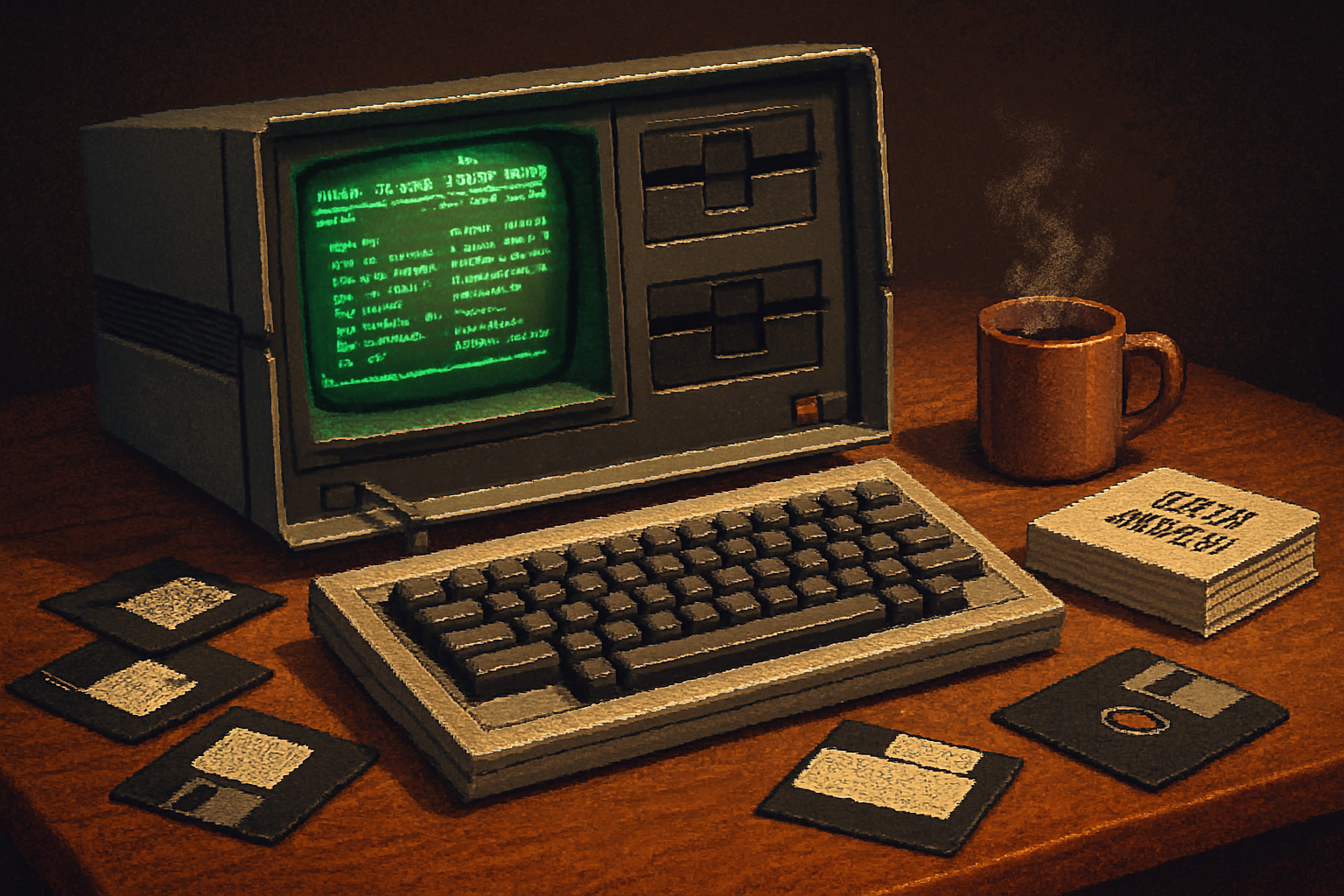
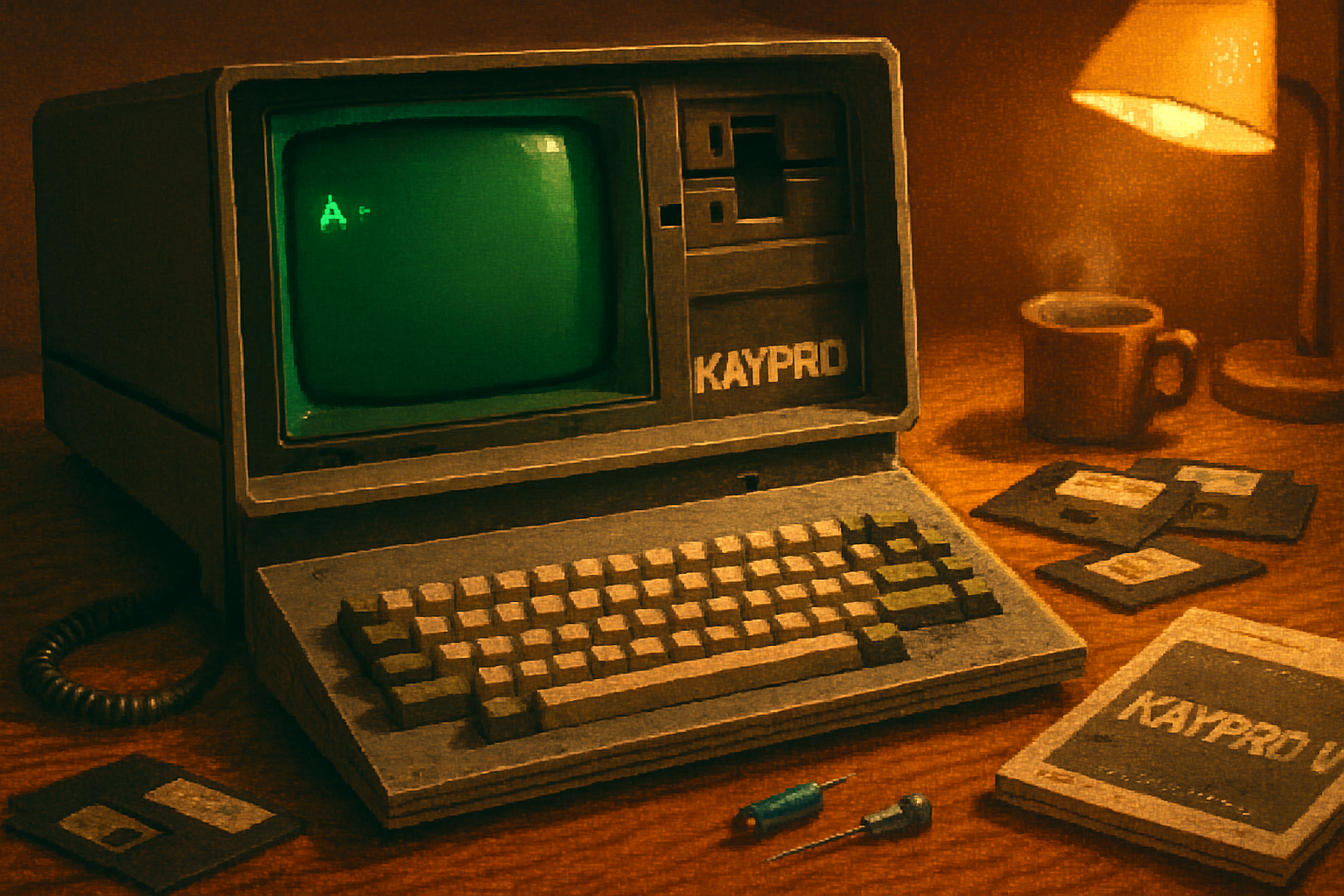
They called it a “luggable,” though you wouldn’t want to lug it far. The Kaypro II arrived in 1982 like a stubborn, reliable mule: heavy, noisy, and somehow more useful than it had any right to be. A junior programmer I interviewed remembered carrying one on a subway train to hack on a word-processor port-an image that captures the Kaypro’s odd mix of portability and permanence.
The machine was not glamorous. It was practical. And that mattered.
The Kaypro II: A quick sketch
Before we talk software, here’s the hardware that shaped it.
- Zilog Z80 CPU at about 2.5 MHz
- Typically 64 KB RAM
- Two 5.25” floppy drives (single-sided, 170 KB per disk typical)
- Monochrome CRT built into a plywood-and-aluminum case
- Shipped with CP/M 2.2 as the operating system
That combination-cheap, sufficiently capable CPU, and a widely adopted OS-made the Kaypro II a pragmatic platform for software developers. The machine’s real contribution wasn’t the speed of its clock. It was the environment it helped create.
Software culture in a box: What ran on the Kaypro II
The Kaypro shipped into a mature CP/M ecosystem. That meant several things:
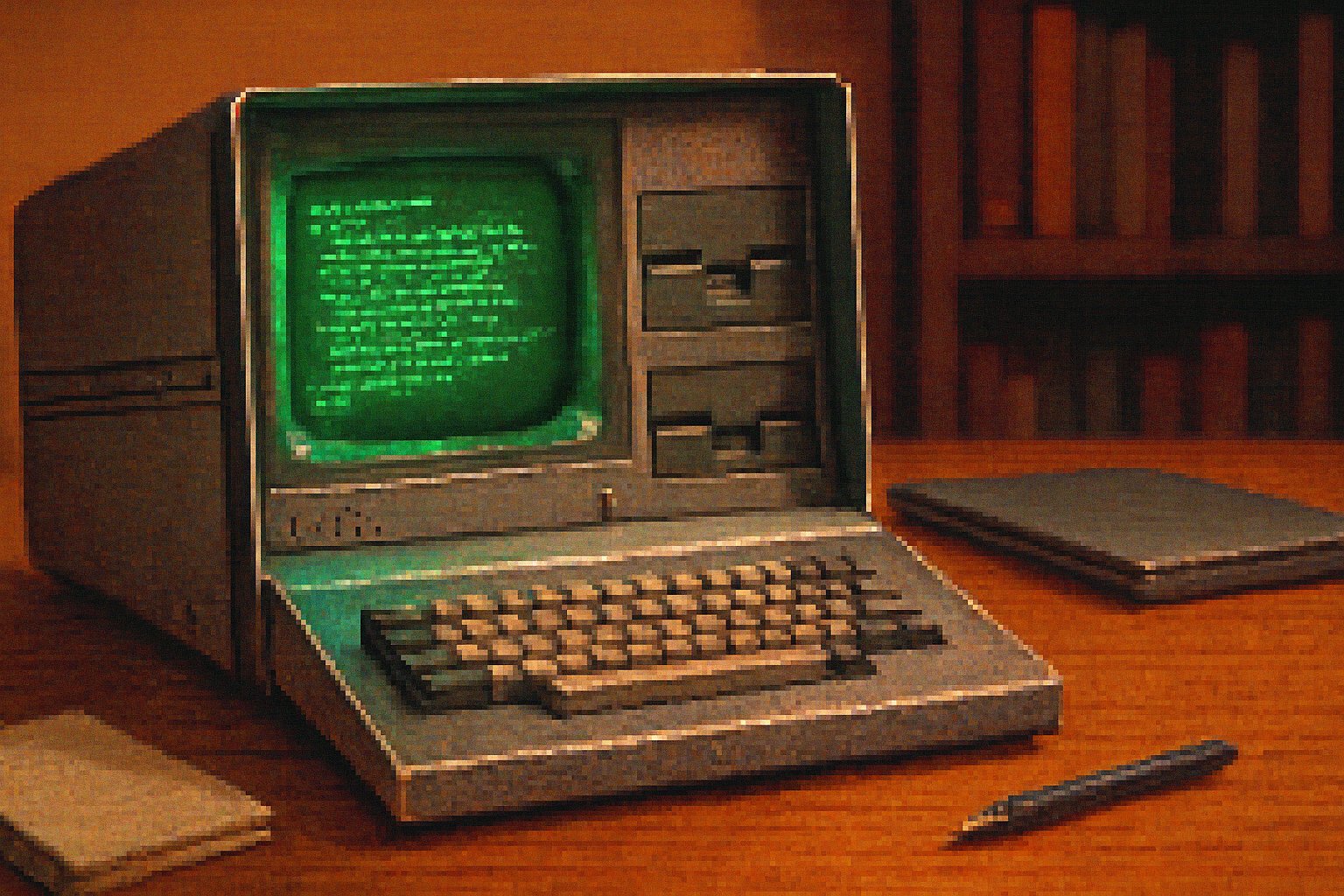
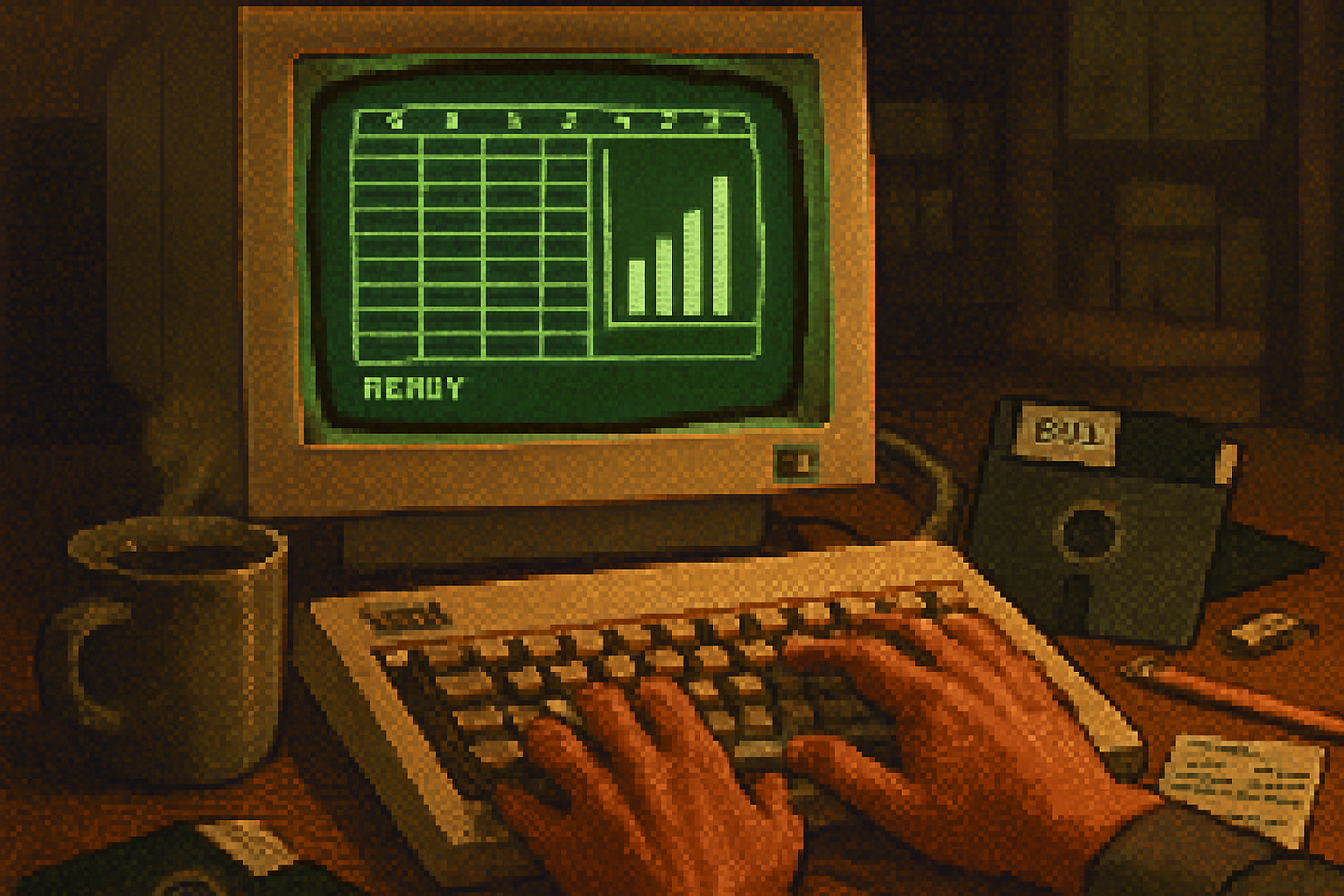
- Core productivity apps - WordStar for word processing, a spreadsheet (often SuperCalc on similar machines), and various database utilities were the day-to-day bread-and-butter.
- A thriving collection of small utilities - editors, archivers, file managers, and development tools (assemblers, BASIC interpreters, C compilers for CP/M when available).
- Bundled software - Kaypro famously shipped with a generous disk set of applications and utilities. For many buyers this was a revelation-hardware that arrived essentially ready to work.
Bundling changed expectations. Buyers stopped treating software as an optional, expensive add-on. Instead, they expected usable software immediately-and developers noticed.
Interview highlights: Voices from the era (anonymized)
Note: To protect privacy and avoid misattribution, the people quoted here are former Kaypro developers and historians who agreed to be interviewed for this article; names have been anonymized.
“We were porting WordStar to another CP/M box and discovered the Kaypro people had already solved half our I/O headaches,” said a software engineer who worked on CP/M utilities. “Their disk drivers and configuration tricks were practical, not elegant-but they worked everywhere.”
A historian of early microcomputers observed - “The Kaypro helped normalize the idea that a computer could be a complete productivity appliance. That nudged software devs to think in terms of end-to-end user workflows rather than isolated utilities.”
From a former Kaypro product manager - “We bundled software because customers hated buying seven different disks and hoping they’d all work together. That pressure made software compatibility a feature, not an afterthought.”
These recollections share a common theme: the Kaypro didn’t merely host software. It enforced and rewarded a certain approach to creating it-pragmatic, user-focused, and portable across the messy landscape of CP/M machines.
Concrete technical impacts on development practices
Standardization around CP/M
CP/M provided a relatively uniform API for file I/O, serial devices, and console management. Developers could write once and run on many machines-if they respected CP/M’s limits. This pushed software toward modular designs with clear hardware abstraction layers, an important precursor to the portability-minded development that later became crucial on MS-DOS and, beyond that, Unix-like systems.
Constraints that bred ingenuity
With 64 KB of RAM and slow floppy I/O, performance mattered. Developers honed space-efficient data structures, overlay techniques (loading code in pieces), and aggressive disk-buffering strategies. Fancy? No. Effective? Absolutely.
The rise of bundled suites and expectations
Because Kaypro bundled software, independent developers and small studios began to think about integrated user experiences. Word processing plus simple formatting plus file management-this wasn’t just three separate programs; it was a single user workflow. People who learned to write software for that environment started designing integrated suites rather than discrete utilities.
DIY distribution and shareware precursors
Disk copying, user groups, and BBSes meant software spread informally. Developers often distributed patches and small programs via user groups. This culture of sharing seeded the later shareware movement.
Stories that show the Kaypro’s influence
Porting drama - Anecdotally, several developers described ripping apart disk drivers and terminal I/O modules to make a program look “right” on Kaypro’s built-in CRT. These ad hoc adaptations later hardened into portable libraries.
User groups as incubators - Kaypro user clubs compiled public-domain software collections on floppy sets, refining installers, configuration scripts, and README conventions that made software installation less arcane. The communal curation changed how developers thought about installation and documentation.
A local program turned national product - One small word processor modification written to handle Kaypro’s screen quirks eventually grew into a paid utility sold through catalogs. The path from garage patch to catalog item was shorter then-because the barrier to distribution was lower and the audience was hungry.
Why this matters to modern developers
If you squint, you can see the Kaypro’s signature in today’s software world.
- Bundled ecosystems - Think app stores and preinstalled suites. Kaypro taught buyers to expect a usable system out of the box.
- Portability concerns - Early attention to OS-level abstraction foreshadowed modern cross-platform toolchains. The maxim “write to the OS, not the hardware” finds a clear ancestor in CP/M-era thinking.
- Community-driven tooling - The grassroots sharing of tools and patches presaged open-source norms. Not identical-far from it-but the social mechanism (community curates, improves, redistributes) is continuous.
The Kaypro’s moral: constraints focus the mind. Limitations force choices, and choices become conventions.
What historians emphasize
Historians stress two main points:
- Economic framing - Kaypro’s business model-sell a complete, affordable machine with software included-altered market expectations and pressured competitors to match.
- Social networks - User groups, catalogs, and BBS communities formed a distribution and feedback loop that accelerated small-scale software evolution.
As one historian put it during our conversation: “If you want to study how software norms form, look at the machines that people actually used every day. Kaypro was one of those machines in the early ’80s.”
Misconceptions and cautions
Myth - “Kaypro created CP/M software.” No-CP/M was broader than any single vendor. But Kaypro amplified CP/M’s reach by making it accessible to many buyers.
Myth - “Everything on Kaypro was professionally made.” Far from it. The era was hybrid: polished commercial packages lived alongside amateur utilities and user-contributed scripts.
Legacy-short and blunt
The Kaypro II didn’t invent modern software engineering. It did something arguably more important: it nudged developers (and users) toward practices that rewarded portability, integrated bundles, and community-driven improvement. It normalized the idea that software could-and should-come ready to use, that constraints are design tools, and that users are partners in refining tools.
Further reading and sources
- Kaypro (Wikipedia): https://en.wikipedia.org/wiki/Kaypro
- Computer History Museum archives on CP/M and early microcomputers: https://computerhistory.org
- BYTE magazine archives (contemporary reviews and articles): https://archive.org/details/byte-magazine
These sources provide contemporary reviews, specifications, and community commentary useful for anyone who wants to dig deeper.
Final note
I asked one former Kaypro developer what he wished modern engineers remembered from the era. He said, simply: “We shipped to real desks, not cloud racks. If it didn’t do work for someone that day, it failed. Ship the tools that let people do their jobs-fast.” Harsh. True. Useful.
If you program today in a warm, overprovisioned cloud, remember the Kaypro: a blunt, effective reminder that constraints can be the engine of craftsmanship.