· retrotech · 5 min read
ICQ Web Pages: An Archaeology of Early Digital Identities
Before feeds and profiles, there were ICQ pages - glittering, jagged, and earnest little self-portraits posted by modem-lit teenagers and earnest amateurs. This piece digs into what those pages reveal about how we shaped identity online, what we lost when platforms centralized, and what modern users can reclaim.
If you remember the rasp of a 56k modem and a sound that made your parents ask if the phone was broken - that distinctive ICQ “uh-oh” beep - you remember the moment the internet stopped being a place and started to feel like a person.
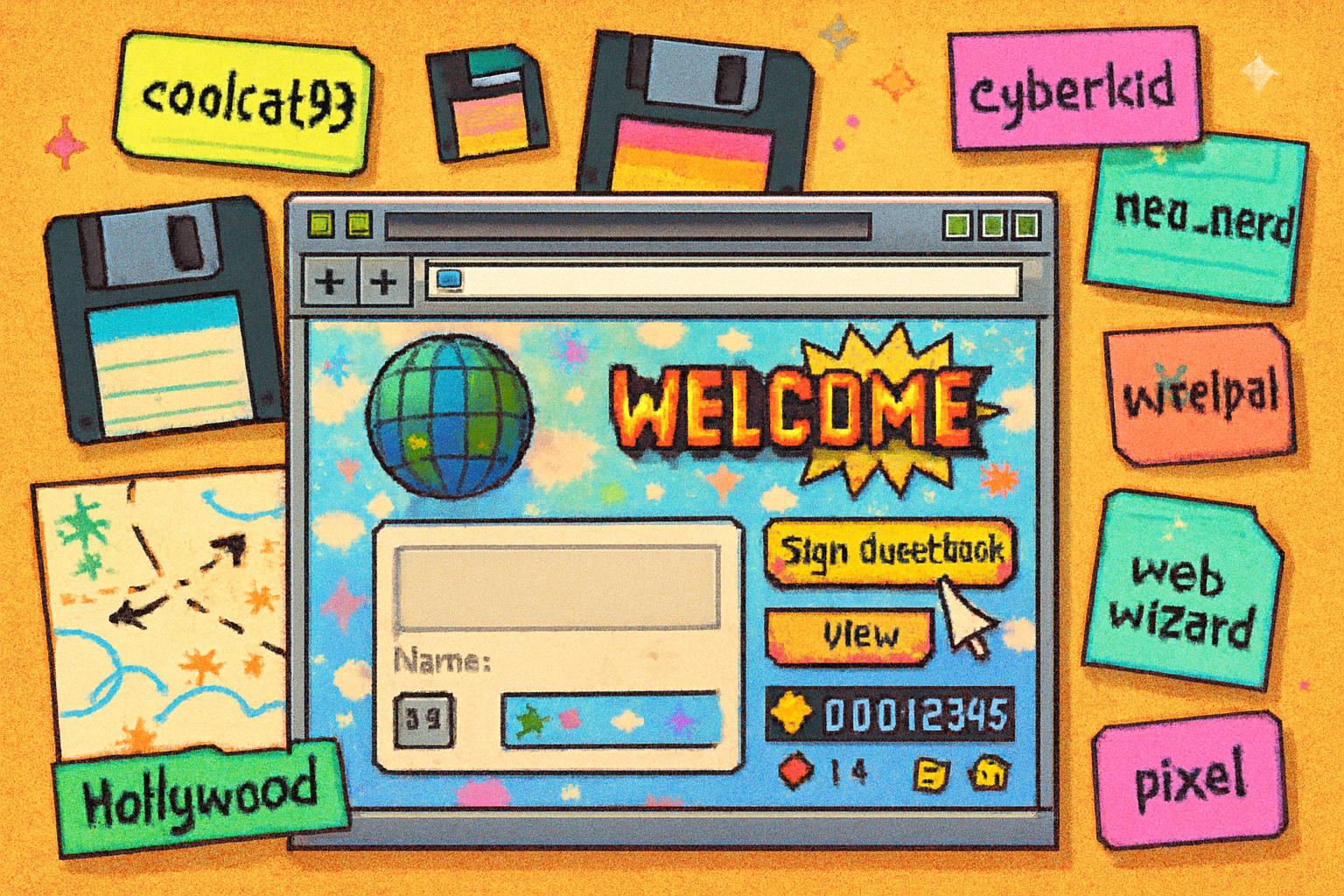
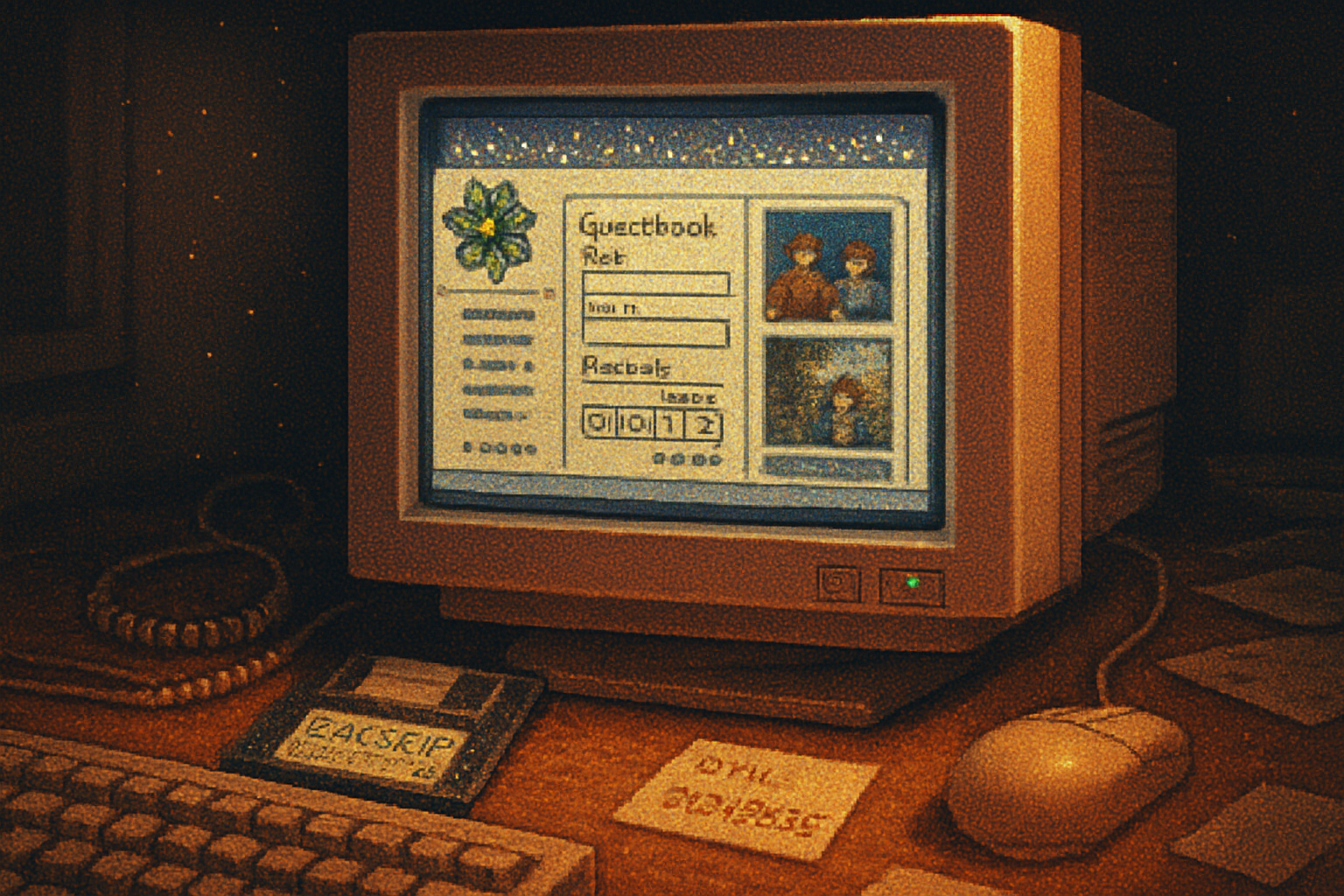
In the late 1990s, ICQ users (UINs were your numeric name) didn’t just message each other. Many put up tiny, idiosyncratic web pages: a banner claiming eternal fandom for some band, a guestbook begging for validation, a visitor counter ticking toward imagined fame. These were not polished portfolios. They were scrappy shards of self.
A small excavation: what were ICQ web pages?
ICQ began in 1996 as an instant messaging client from Mirabilis and quickly became a cultural fixture for early adopters of the net [https://en.wikipedia.org/wiki/ICQ]. Alongside presence, away messages, and contact lists, users were offered space - however limited - to publish a personal mini-page or link to a homepage. Those pages were shorthand: a photo, a handful of GIFs, an ICQ number glorified like an address.
Common artifacts you’ll see if you time-travel through snapshots:
- Guestbooks filled with one-line epigrams and usernames.
- Visitor counters that turned attention into a score.
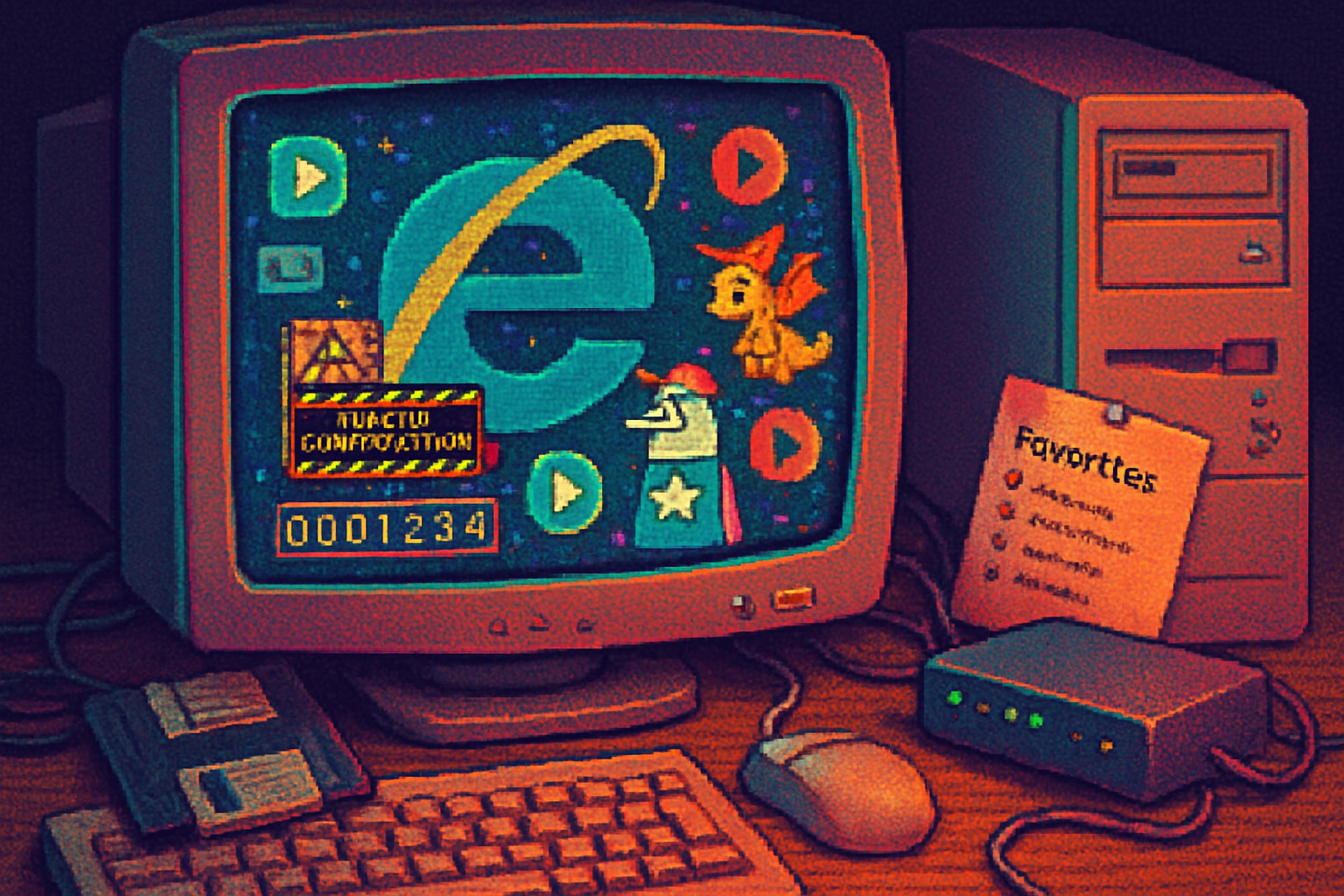
- «Under construction» GIFs and spinning wheels like medieval banners.
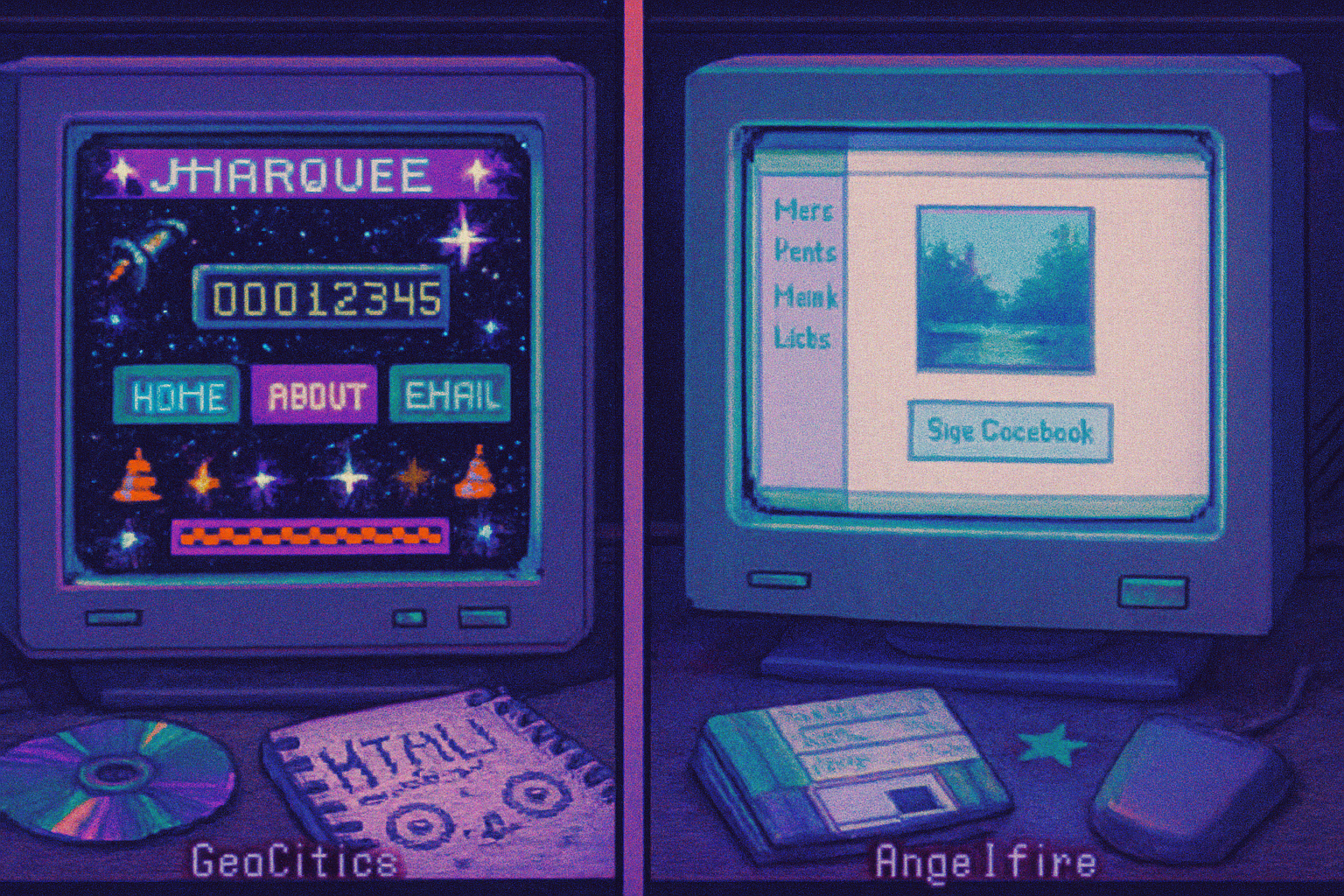
- Band logos, HTML tables used as design, and an alarming number of glitter graphics.
If you want a comparative museum piece, look at GeoCities, where whole neighborhoods of identity were built on similar primitives [https://en.wikipedia.org/wiki/GeoCities]. The tone and tools were the same; the canvas slightly different.
Why these little pages matter: three cultural functions
Identity as bricolage. Users assembled identity out of cheap materials - a horizontal rule here, a MIDI background there. It was craftsmanship more than curation. The result was honest and messy.
Ritualized reputation. Guestbooks and counters converted social presence into tangible artifacts. You could measure popularity, ask for friends, and archive compliments - or criticisms - in plain HTML.
Experimentation with self. For many, the web page was a practice field - flirt with a persona, try a joke, keep a diary in public. It was low-stakes performance because the audience was niche and the tools were clumsy.
These functions are not quaint. They map directly to modern phenomena: profiles on Instagram, the performative theater of TikTok, and the reputation economies of Twitter/X.
The affordances that shaped expression
Technology matters. The forms of selfhood we built were constrained by what the tools allowed.
- Limited templates and crude HTML favored declarative statements (“I love X”) over nuanced argument.
- Slow connections and simple graphics meant few videos and lots of static imagery.
- Platformscoped identity (your UIN, your guestbook) encouraged local tribes rather than broadcast megaphones.
Put simply: the medium insisted on certain manners. When your toolset includes a guestbook and a blinking GIF, narcissism looks different.
What archaeology reveals about early users - and about us
We can learn three uncomfortable truths by sifting through these pages:
- People wanted a place that was theirs. Ownership (a URL, an image, a guestbook) matters more than we sometimes admit.
- Self-presentation was experimental and iterative. Early web authors tolerated contradiction. They could be earnest and ironic on the same page.
- Visibility was social, not algorithmic. You were visible to your circles, which shaped behavior differently than today’s shock radius.
Scholars from Sherry Turkle [https://en.wikipedia.org/wiki/Sherry_Turkle] to Howard Rheingold [https://en.wikipedia.org/wiki/Howard_Rheingold] traced how these spaces taught users to speak and imagine in public. The early web trained a generation to perform care for a small community; modern platforms train us to perform spectacle for an anonymous crowd.
The handicap of centralization: what we lost
When platforms centralized - consolidating identity into single, algorithmic feeds - they offered scale in exchange for control. The trade-offs were subtle but profound:
- Loss of granularity - profiles flattened layered selves into a single transactional identity.
- Loss of ownership - your content and relationships migrated into platform silos.
- Incentives changed - attention per click replaced neighborly reputation as the primary reward.
This is not a nostalgia-driven condemnation. Centralization brought discoverability, speed, and safety features. It also normalized surveillance-native design.
What modern users can reclaim from ICQ-era lessons
The archaeology of tiny pages gives us practical principles for the present.
- Own a corner. Buy a domain. Even a simple HTML page under your control is freedom insurance.
- Favor slow publics. Build small groups where conversation has memory and context - a newsletter, a forum, a Discord with rules.
- Be durable and disposable. Keep a public archive of durable statements and a sandbox for experiments that can fail and be discarded.
- Make reputation legible. Use attestations and explicit signals (recommendations, testimonials) rather than opaque follower counts.
- Design for repair. Keep backups. Use simple, exportable formats (Markdown, HTML). It’s the anti-algorithmic hygiene routine.
Practical blueprint: a Minimal ICQ-Inspired Home on Today’s Web
If you liked the spirit of those old pages and want to recreate it without the glitter, here’s a compact plan:
- Buy a domain and host a single static site (no CMS lock-in).
- Add a short “about” (one paragraph) and a “current” block - what you’re reading, building, thinking.
- Put a guest-like mechanism - a comment archive or a sign-up list for small circles.
- Include a tiny rotating gallery - an image, a micro-essay, a link you recommend.
- Keep an archive page where you journal failures and experiments (dated, searchable).
This is intentionally low-tech. Low friction, low surveillance, high dignity.
A final, practical provocation
Early ICQ pages were ridiculous, tender, and unforgivingly human. They taught users that identity was something you built with your hands, not a widget offered by a corporation. That lesson is the important one.
If we accept that platforms will centralize attention, the counter-move is to build and habitually maintain our small, owned spaces. Make them messy. Make them beautiful. Make them yours.
References
- ICQ - Wikipedia: https://en.wikipedia.org/wiki/ICQ
- GeoCities - Wikipedia: https://en.wikipedia.org/wiki/GeoCities
- Sherry Turkle - Wikipedia (Life on the Screen): https://en.wikipedia.org/wiki/Sherry_Turkle
- Howard Rheingold - Wikipedia: https://en.wikipedia.org/wiki/Howard_Rheingold
- danah boyd - Wikipedia (networked publics): https://en.wikipedia.org/wiki/Danah_Boyd