· retrotech · 7 min read
From Pixels to Pioneers: The Untold Stories of ZX Spectrum Game Developers
How a handful of bedroom programmers turned a cramped 48K machine into a creative factory. A close look at the conditions, craft and culture that produced ZX Spectrum classics-drawn from archival interviews, magazines and the developers' surviving work.
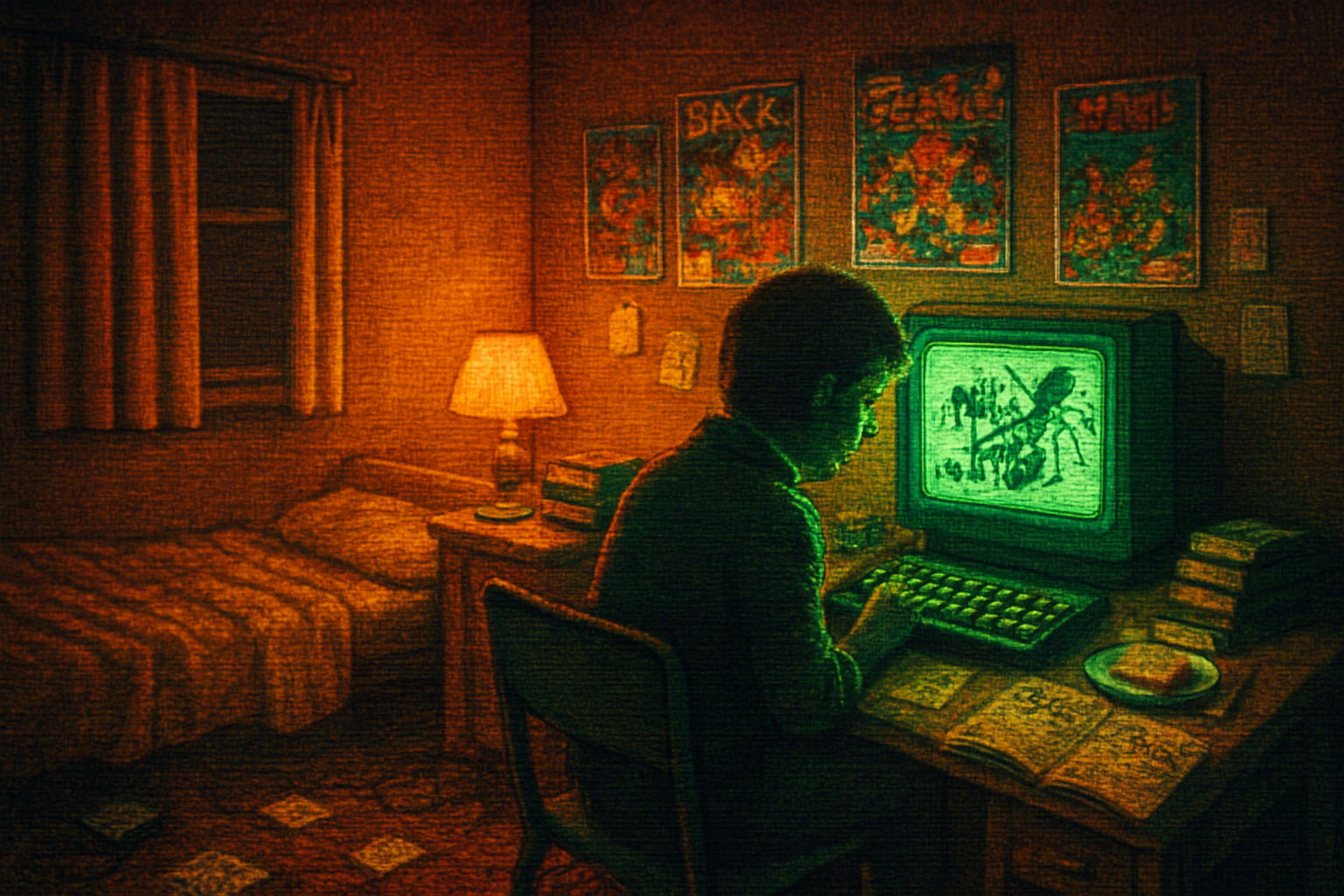
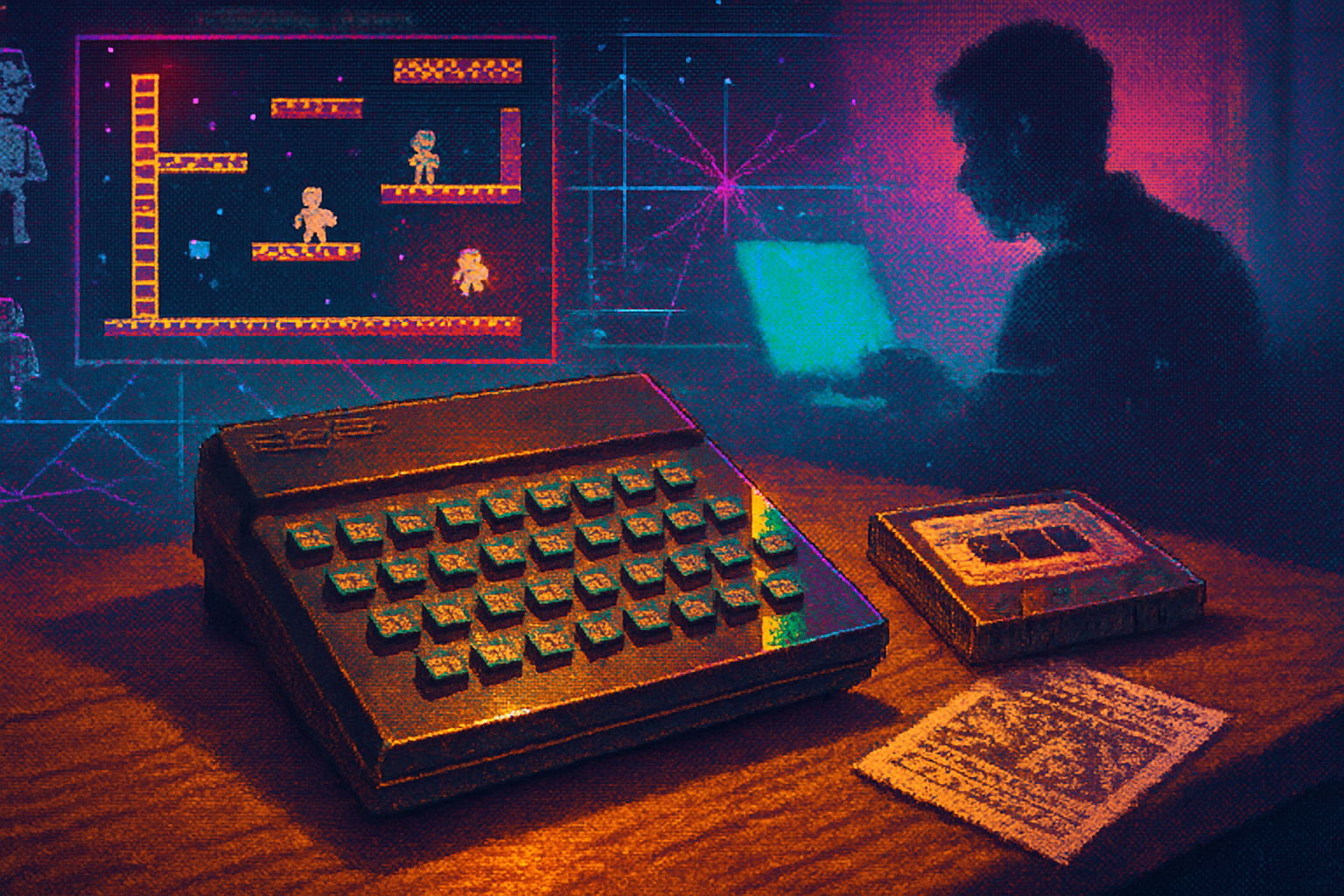
It begins with a cassette tape clicking in a cheap tape deck, a squall of noise, and the patient, ritualistic reading of a magazine while a bar crawls across a monochrome screen. If you grew up with a ZX Spectrum, you know the little ceremonial agony: ten minutes of hiss for ten seconds of joy. That hiss is the background music of a revolution.
A thousand small people made a big machine famous. Not executives in suits. Not polished focus groups. Men and women hunched over soldering irons, a roll of solder in one hand, a BASIC manual in the other; or simply a teenager with a copy of Sinclair BASIC and a stubborn refusal to accept the machine’s limitations as fate. The Spectrum didn’t just sell cheap computing. It created the conditions for an explosion in individual authorship.
Why the Spectrum mattered - and why those stories still sting
The Sinclair ZX Spectrum was brutally modest: a 3.5 MHz Z80A CPU, 48K of RAM in the common models, a display of 256×192 pixels, and a colour model that used 8×8 attribute blocks. It was also cheap and ubiquitous in the UK, which made it an incubator.
- Cheap hardware → low barrier to entry.
- Small memory → ruthless, elegant engineering.
- Tape distribution and magazines → direct feedback loops between creator and player.
The consequence: authorship. A game could be coded by one person, given a name, and appear in shops the next year. That intimacy means the ZX Spectrum’s history is full of vivid, human stories-eccentric, brilliant, sometimes tragic. These are not tales about corporate strategy; they are stories about taste, stubbornness, and the stubborn refusal to accept “good enough.” (Technical details: see the ZX Spectrum entry and the notorious colour “attribute clash” for context.)
Sources: ZX Spectrum - Wikipedia, Attribute clash - Wikipedia.
The bedroom as studio: lives and careers in miniature
There are two myths to kill up front:
- The Spectrum era wasn’t uniformly cosy. Deadlines, sleeplessness and commercial pressure were real. Authors often had to negotiate with publishers who knew how to sell but not code.
- Not every brilliant coder became famous or wealthy. Fame was fickle; distribution, marketing and luck mattered.
What did a typical developer’s day look like? It varied. But certain patterns repeat across archived interviews and magazine features:
- Work started small - prototypes in Sinclair BASIC, then a rewrite in Z80 assembly when the game needed speed.
- Creativity was often driven by constraint. With 48K of RAM you learned to be both miserly and leisured-every byte counted, every frame was precious.
- Feedback was instant and brutal. Letters in magazines like Crash and Sinclair User could make or break reputations; a glowing review sold copies, a scathing one sent developers back to the drawing board.
The pattern produced careers of a peculiar kind. Some developers parlayed Spectrum success into long-term game businesses. Others burned bright and then vanished, unwilling or unable to adapt to new platforms and new market structures.
Reference: Crash (magazine) - Wikipedia.
Tools, tricks and the art of cheating the machine
Constraints breed tricks. Here are the recurring technical and artistic hacks that made the Spectrum sing:
- Assembly vs BASIC - BASIC was great for prototyping. Assembly (Z80) was where the final magic lived. Rewriting in assembly often halved memory usage and multiplied frame rate.
- Attribute tricks - Color was expensive and blocky. Clever palettes, dithering and sprite designs turned “attribute clash” into an aesthetic rather than a bug.
- Memory overlays and bank switching - On 128K models developers used bank switching to squeeze larger games out of the hardware.
- Soundwork - On 48K Speccies, sound was a fiddly art-beeper routines could produce surprisingly musical effects. Later, the AY-3-8912 chip in 128K models unlocked real synthesis.
Concrete examples of these techniques appear over and over in developer write-ups: economy of code for large levels, custom bitmap font systems to save RAM, and ephemeral build tools created in BASIC that vanished after the final ROM.
See: ZX Spectrum - Wikipedia.
Distribution and the economics of fame
The market was a wild mix: high retail turnover, lots of small publishers, and a tidal wave of tape-based titles. A few distribution realities shaped careers:
- Cover-mounted tapes, mail-order ads and bedroom label operations meant small teams could reach a national audience.
- Magazine reviews were cultural gatekeepers. A small studio could go from obscurity to bestseller within a month on the back of a page-one review.
- Royalties were uneven. Many developers traded long-term rights for short-term advances.
If there’s a moral here it’s transactional: talent alone didn’t buy longevity. Business sense, timing and a thick skin mattered.
Three close-up portraits (not hero worship, just evidence)
Below are three developer stories that illustrate different outcomes. These portraits are drawn from archival interviews, magazine features and the surviving games themselves.
Sandy White - architect of vertigo
Sandy White is the designer of Ant Attack (1983), an isometric marvel that turned the Spectrum into an angled 3D playground. The game is famous for its daring use of pseudo-3D at a time when most home computers were clinging to flat scrolling.
What stands out: a willingness to think spatially within tight memory constraints. The game’s ambition-three-dimensional navigation, AI-like behaviour for its giant ants-was a demonstration that small teams could create experiences that felt much larger than their byte count.
Read more: Ant Attack - Wikipedia.
Jeff Minter - the psychedelic loner who became a cult institution
Jeff Minter (Llamasoft) is now famous for a career that stretches far beyond the Spectrum. On the Spectrum he produced fast, colour-hungry arcade conversions and original arcade-likes, often with an absurdist, animal-centric twist.
Why he matters here: Minter represents a type of developer who could carve a lifelong niche from idiosyncratic taste. His early work demonstrates how personal passion-strange, neon-flavored, rhythmically frantic games-could become a marketable brand.
Read more: Jeff Minter - Wikipedia.
Matthew Smith - obsessive craft, mercurial career
Matthew Smith wrote Manic Miner (1983) and Jet Set Willy (1984), titles that helped define what a platformer could be on the Spectrum. The games are compact but rich-fast controls, tight level design, memorable audio-visual signatures.
Smith’s career reminds us that authorship is not merely technical skill. Personality, personal problems and industry pressures shaped trajectories as much as code.
Read more: Matthew Smith - Wikipedia.
(These profiles are sketches, not hagiographies. For deeper primary material, seek the original interviews archived in retro-gaming magazines and modern retrospectives.)
What developers from the era will tell you if you listen
Synthesizing archival interviews and retrospective features, a few recurrent themes emerge:
- “Ship the fun, not the feature.” If a mechanic makes the game more fun, keep it; if not, cut it quickly.
- “Optimise early, not late.” The best Spectrum games are exquisitely shaped by early memory discipline.
- “Polish matters.” Strong animation frames, responsive controls and a memorable first level compensated for any graphical limitations.
Those are not technical commandments so much as behavior patterns. They explain why, decades later, many Spectrum games still feel alive.
Lessons for creators today
Modern developers have enormous resources. That makes the Spectrum lessons both quaint and brutal:
- Constraint forces decisions. Removing options clarifies priorities.
- Ownership of craft matters. When a single person owns design, code and sometimes art, the result can be singular-and idiosyncratic.
- Feedback channels change everything. The magazine-letter era was brutal but honest. Today’s immediate analytics are different, but the core truth is the same - players respond to clarity of intent.
If you want a pithy takeaway: make something you can finish. Then finish it well.
Where to dig deeper (primary sources and retrospectives)
- ZX Spectrum general history and specs: ZX Spectrum - Wikipedia
- On colour and graphical limitations: Attribute clash - Wikipedia
- Developer and game pages: Ant Attack - Wikipedia, Jeff Minter - Wikipedia, Matthew Smith - Wikipedia
- Contemporary magazines: Crash (magazine) - Wikipedia
Final scene: the tape deck is quiet, but the work lives on
Open any modern indie bookshelf and you’ll see the Spectrum’s descendants: small teams, singular tastes, ruthless constraints. The hardware is gone; the habits it encouraged-tiny teams taking big chances-are not. The Spectrum didn’t only make games. It made authors.
If you love games as objects of personality-irritating, brilliant, stubborn-follow the cassette hiss. You’ll find people who refused the bland consolations of scale and instead built worlds in 48K.