· retrotech · 7 min read
The Forgotten Games of the Atari 800: Hidden Gems that Deserve a Comeback
Dust off the cartridge dust: beneath the blocky graphics and bleeps of the Atari 800 lie radical ideas that modern indies could revive. This deep dive picks seven underrated Atari 8‑bit titles, why they mattered then, and how smart remakes could make them sing for a new generation.
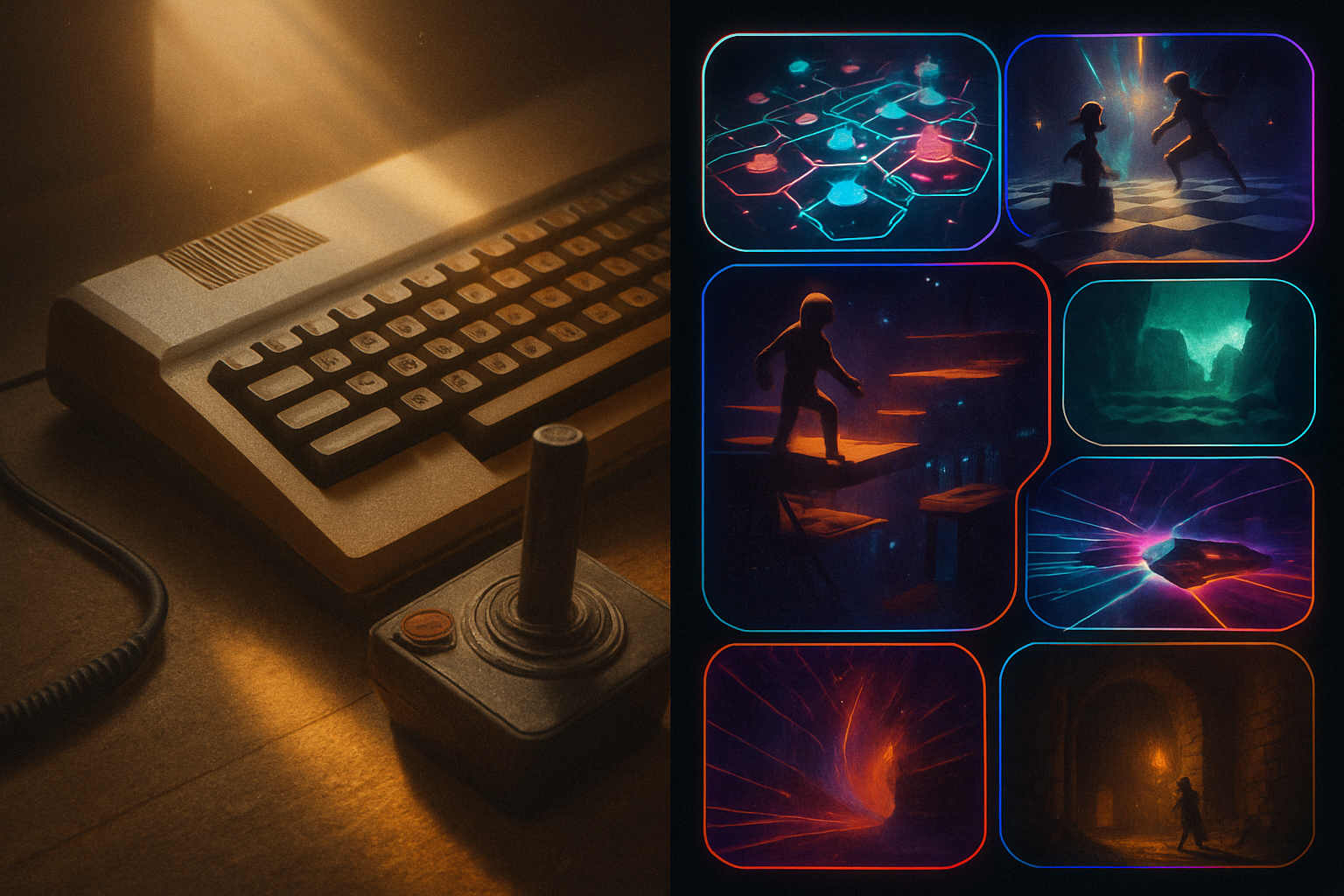
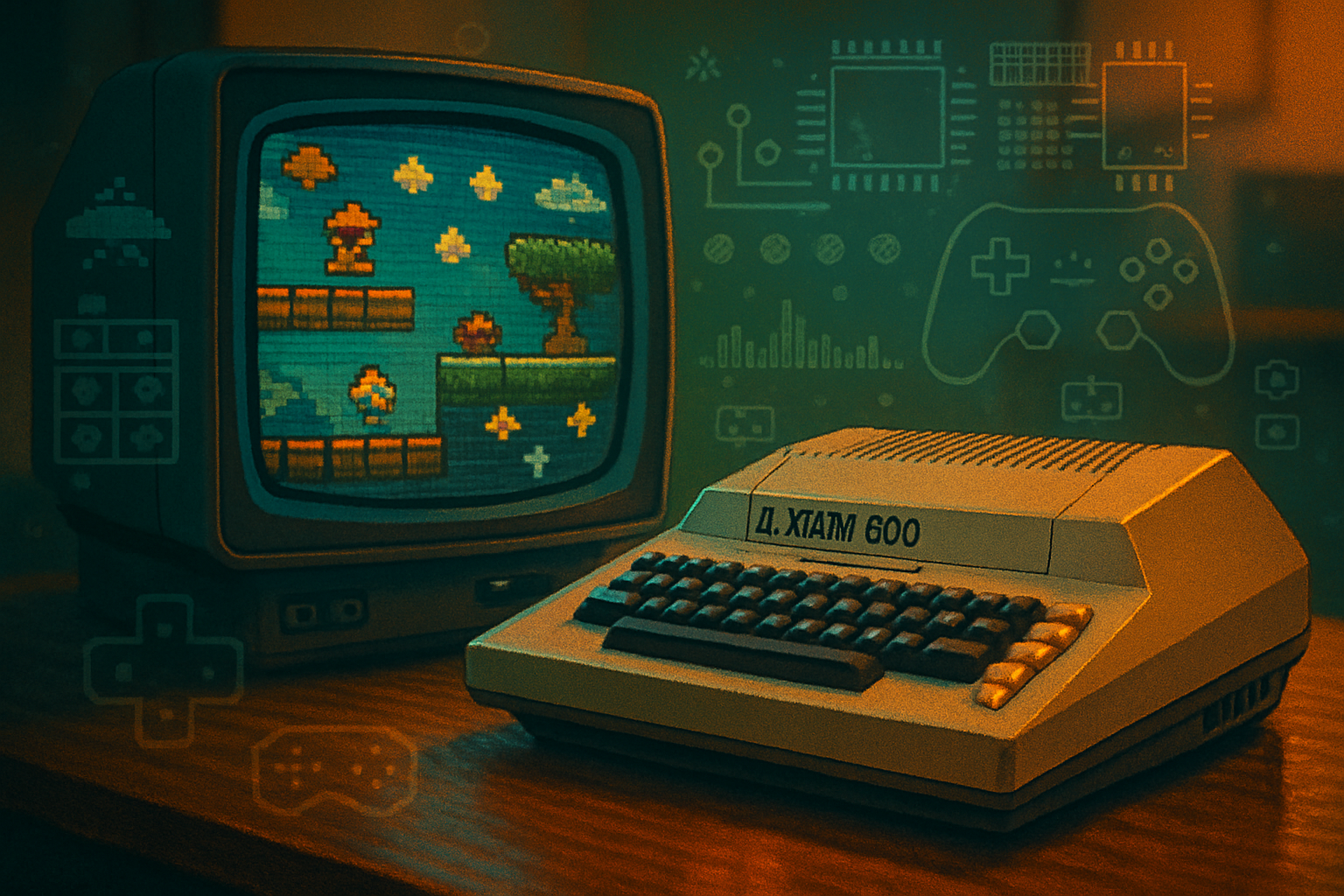
It was hiding under a box of tax returns: an Atari 800, beige and stubborn, with the smell of decades built into its plastic. I booted up a cartridge, and a half‑forgotten idea - a tiny, brilliant gameplay pivot - clicked into place like a well‑worn key. That plastic box didn’t just hold nostalgia. It held prototypes for modern genres.
The Atari 8‑bit line (the 400/800 family) didn’t just churn out ports and cheap thrills. It incubated experiments: asymmetric multiplayer economies, real‑time chess with explosions, single‑screen platformers with uncanny design elegance. Many of those experiments got overshadowed by arcade ports and marketing noise. But the underlying ideas? Still potent.
Below: seven underrated Atari 800 (Atari 8‑bit) titles that deserve modern remakes or sequels - not as museum pieces, but as reimagined games that learn from the originals and push forward.
Why revisit Atari 800 games now?
- The modern indie scene loves ideas over assets. Many Atari titles were idea‑first games.
- Nostalgia is a market, but clever remakes can reach players who never touched an 8‑bit machine.
- Technical limitations forced designers to focus on mechanics and pacing; those are timeless.
Think of old Atari games like prototypes in a dusty lab - crude in execution, but often decades ahead in concept.
1) M.U.L.E. - The market, but stranger
Why it mattered
M.U.L.E. (1983) turned economics into a social, competitive, and occasionally vicious multiplayer game. Players colonize a planet, buy land and M.U.L.E. bots, and compete for resources. Its genius is asymmetry: cooperation and cutthroat competition are baked into the same economy.
- Reference: M.U.L.E. on Wikipedia
What a remake could do
- Deepen the economy - persistent player markets, auctions, and online leaderboards.
- Keep local multiplayer but add asynchronous online play and matchmaking.
- Add procedurally generated planets and seasonal events.
- Art style - stylized sci‑fi - think retro‑futurism with modern UI clarity.
Why it’ll sell
M.U.L.E. is essentially an intense party‑economy simulator. In an era of collaborative competitive games (among us?-minus the murder), a polished M.U.L.E. could thrive as both couch chaos and online strategy.
2) Archon - Chess with explosions
Why it mattered
Archon (1983) grafted action directly onto a chessboard. Units move like chess pieces, but when two meet the conflict resolves in a skill‑based real‑time duel. It was a brilliant hybrid: elegant strategy plus moment‑to‑moment dexterity.
- Reference: Archon (video game) on Wikipedia
What a remake could do
- Expand factions with distinct playstyles and asymmetric abilities.
- Offer ranked online duels and spectator modes (Archon esports? Absurd, but fun).
- Add a level progression system so unit duels feel meaningful outside a single match.
- Visuals - high‑contrast, mythic, with modern particle effects for combat clarity.
Why it’ll sell
Archon anticipates MOBA and tactical duel design. Reimagined as seasonable competitive play with a narrative layer, it could attract both strategy purists and action players.
3) Miner 2049er - Platforming with intent
Why it mattered
Miner 2049er (1982) was a level‑by‑level platformer built around traversal puzzles: cover every platform to clear the stage while avoiding enemies. It’s a pure, compact design that values pattern recognition and memory over twitch reflexes.
- Reference: Miner 2049er on Wikipedia
What a remake could do
- Maintain bite‑sized level design but layer in modern metroidvania progression.
- Add co‑op and speedrun modes with built‑in leaderboards.
- Keep crisp, readable pixel art, but add dynamic lighting and parallax.
Why it’ll sell
Small levels suited to mobile or quick sessions, with depth for speedrunners and explorers. The original’s purity is a rare commodity in contemporary platformers.
4) Rescue on Fractalus! - Atmosphere over fireworks
Why it mattered
Released by Lucasfilm Games in 1984, Rescue on Fractalus! insisted on tension. You’re a pilot flying in jagged, claustrophobic terrain, uncertain who - or what - is waiting in the rocks. It married limited HUDs, surprising enemy behavior, and dread.
- Reference: Rescue on Fractalus! on Wikipedia
What a remake could do
- Lean into audio and spatial design - procedural terrain, dynamic enemy psychology.
- Use modern physics and shaders to render otherworldly cliffs while keeping limited HUDs for tension.
- Introduce narrative fragments and moral choices - who do you rescue and why?
Why it’ll sell
Horror and tension sell. A modern take could sit between classic space sim and indie horror - atmospheric, slow‑burn, and unnerving.
5) Ballblazer - Competitive sports, reinvented
Why it mattered
Ballblazer (1984) was a neon battle of vehicles pushing a ball into a goal - essentially proto‑sports with emergent moments and machine‑learning AI quirks. It had kinetic feel and instant readability.
- Reference: Ballblazer on Wikipedia
What a remake could do
- Expand into team sports with distinct vehicle roles, procedural arenas, and seasonal tournaments.
- Add physics that reward skill but allow spectacular mistakes.
- Visuals - neon minimalism with crisp silhouettes (think modern arcade esports).
Why it’ll sell
Sports games thrive on quick matches and mastery curves. Ballblazer’s core is accessible but deep - perfect for pickup matches and competitive seasons.
6) Caverns of Mars - Tight arcade design
Why it mattered
Caverns of Mars (1981) is a tight vertically scrolling shooter with memorable level gimmicks and an escalating risk/reward loop. It exemplifies how focus and restraint can make tiny games feel enormous.
- Reference: Caverns of Mars on Wikipedia
What a remake could do
- Keep short, tense runs but add progression meta - ship upgrades, unlockable paths.
- Use modern audio design and environmental storytelling to make each cavern distinct.
- Add rogue‑lite elements to boost replayability.
Why it’ll sell
Short runs, high tension, and the satisfaction of improvement - recipe for modern roguelike arcade success.
7) Temple of Apshai - Creaky RPG roots with charm
Why it mattered
The Temple of Apshai (1980–82) was one of the early graphical CRPGs. It traded detailed rules for mood and exploration. The original’s clunky combat and limited UI are historical, but its top‑down dungeon exploration still resonates.
- Reference: Temple of Apshai on Wikipedia
What a remake could do
- Reimagine it as a narrative‑driven dungeon crawler with modern QoL and tactical depth.
- Preserve the weirdness - odd artifacts, ambiguous decimals of lore, and a slightly uncanny tone.
- Visuals - hand‑painted tiles mixing classical fantasy with an uncanny 80s techno edge.
Why it’ll sell
Players love roots of genres when they’re treated with care. A respectful but inventive Temple could be both a tribute and a fresh experience for RPG fans.
How to remake without betraying the originals
- Preserve the core loop. If the joy came from asymmetric tension (M.U.L.E.) or the uncanny atmosphere (Fractalus), keep that as the centerpiece.
- Modernize interfaces and controls ruthlessly. Old UIs are unforgiving. Fix that.
- Use optional depth. Add layers for players who want them, but don’t force complexity on newcomers.
- Respect pacing. Atari games often had tight, disciplined loops. Dragging them out kills the charm.
- Embrace cross‑platform - these ideas can live on consoles, PC, and mobiles - each with tailored UI and session length.
Business realities (a brutally honest aside)
Nostalgia alone won’t pay developers’ rent. But smart remakes can:
- Launch as premium indie titles with optional cosmetics or expansions.
- Use seasonal content and leaderboards to keep communities active.
- Partner with publishers who understand retro audiences (or crowdfund - many retro remakes found success that way).
Don’t over‑monetize. These are cult classics; price gouging kills goodwill fast.
Closing: Why this matters beyond ‘retro’
The Atari 800 wasn’t a golden age because its graphics were pretty. It mattered because designers were solving gameplay problems with imagination and constraint. Those solutions - asymmetric economies, action‑strategy hybrids, small‑scale platform puzzles, atmospheric tension - are fresh ideas in 2026, not curios.
If you’re a developer: look through those dusty cartridges. You’re not stealing nostalgia; you’re rescuing overlooked mechanics and polishing them into something that can feel necessary again.
If you’re a player: demand more than remasters. Demand reinvention that respects the original’s brain.
The Atari 800 left us more than pixelated ghosts. It left prototypes for games that never happened - until now.
References
- M.U.L.E.: https://en.wikipedia.org/wiki/M.U.L.E.
- Archon: https://en.wikipedia.org/wiki/Archon_(video_game)
- Miner 2049er: https://en.wikipedia.org/wiki/Miner_2049er
- Rescue on Fractalus!: https://en.wikipedia.org/wiki/Rescue_on_Fractalus!
- Ballblazer: https://en.wikipedia.org/wiki/Ballblazer
- Caverns of Mars: https://en.wikipedia.org/wiki/Caverns_of_Mars
- Temple of Apshai: https://en.wikipedia.org/wiki/Temple_of_Apshai