· retrotech · 6 min read
From Classroom to Coding: How the Acorn Electron Inspired a Generation of Programmers
How a cheap, stubborn little computer and a stack of magazines turned thousands of British kids into lifelong programmers - and why that still matters today.
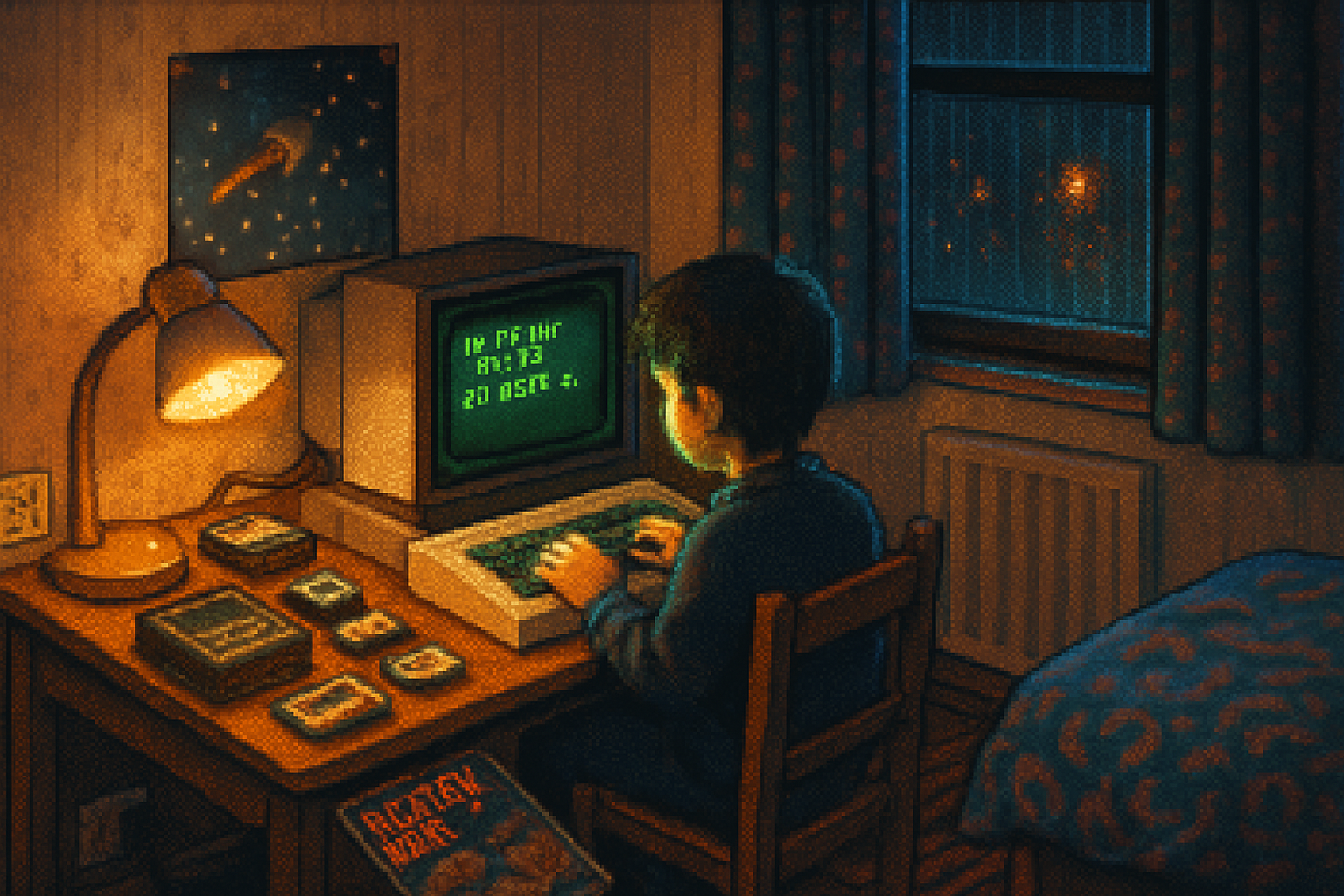
When I was nine I learned to wait. Not for toys or pocket money, but for the hiss and clack of a cassette deck to stop and, with a guilty pop, deliver a line of BASIC that might - if the stars aligned - turn a blinking cursor into a working game.
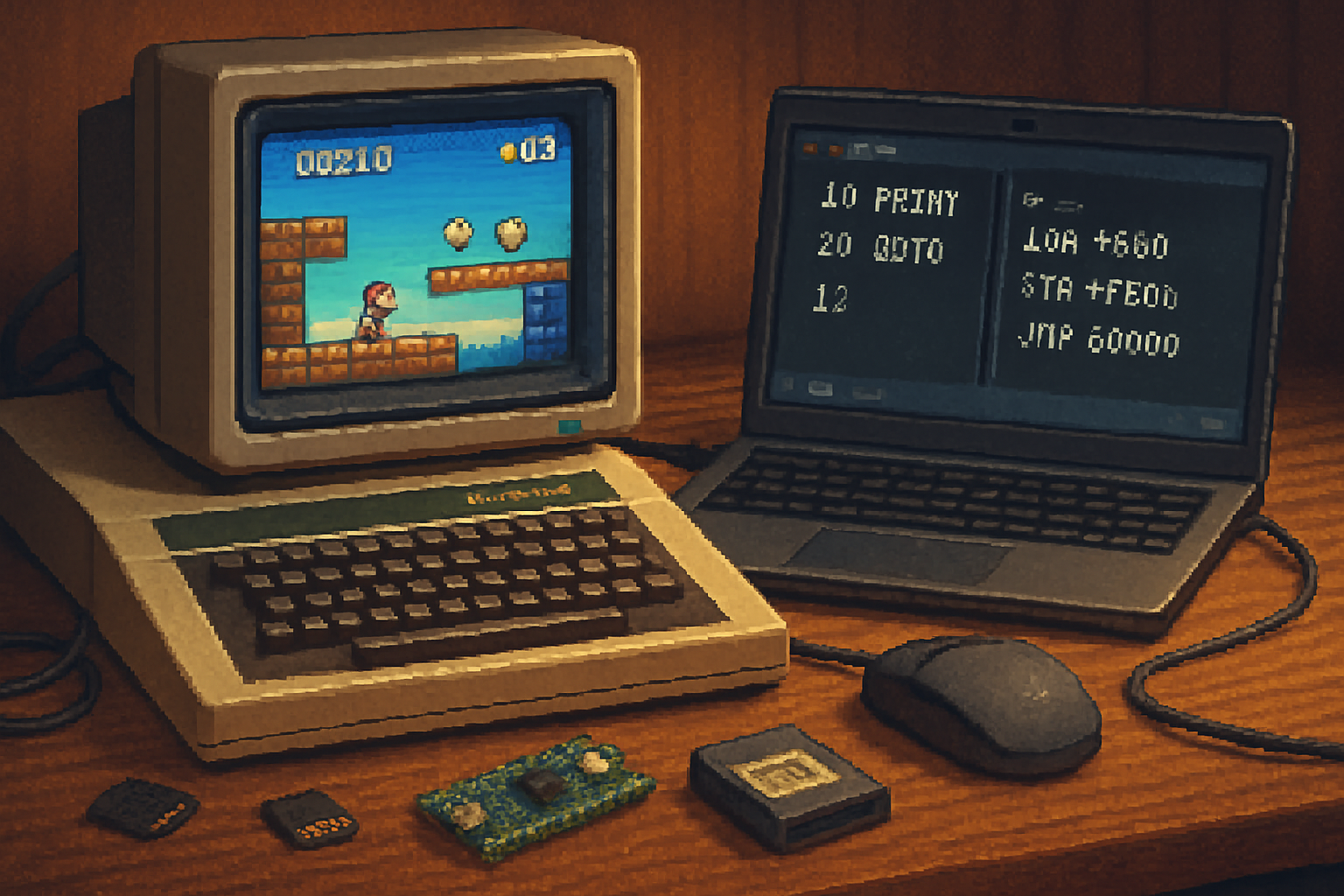
That sound marked a rite of passage across many British living rooms in the 1980s. The Acorn Electron was not glamorous. It was cheap. It was sometimes slow. It crashed with the same proud regularity as teenage mood swings. And that made it perfect schoolroom material. It demanded attention, coaxed improvisation, and taught one transparent truth: code is less about glamour and more about getting things to stop failing.
The machine and the moment
The Acorn Electron arrived in 1983 as a slimmer, less expensive sibling to the BBC Micro - Acorn’s attempt to put computing into schools and homes. If you want a concise technical rundown, see the Acorn Electron page on Wikipedia for specs and chronology: https://en.wikipedia.org/wiki/Acorn_Electron. The Electron was, bluntly, a domesticated BBC Micro: many of its capabilities were the same, but its compromises (memory, I/O quirks) turned constraints into curriculum.
Context matters. The Electron landed squarely inside the BBC’s broader push to teach computing literacy in Britain, so schools, magazines and clubs all amplified its reach. That ecosystem made it possible for children to move from passive consumers to active creators.
The rituals that taught people to think like programmers
There are certain rituals every Electron alumnus remembers:
- Type-in listings from magazines like Acorn User - you typed, you cursed, you debugged, you played. (See https://en.wikipedia.org/wiki/Acorn_User.)
- Cassette tapes - slow, temperamental, intimate. Your program lived on audio until you coaxed it into silicon.
- After-school computer clubs where you swapped tricks and secretly competed to produce the smallest, cleverest programs.
These rituals taught much more than syntax. They trained habits:
- Read the machine. Learn to infer what the hardware expected from a cryptic error.
- Start small. A three-line program that did one thing well was more valuable than an unfinished epic.
- Debug mercilessly. Typing errors meant the difference between victory and retyping an hour of code.
Pared-back hardware forced learners down to basics: variables, loops, conditionals - and often assembly language for speed. The Electron didn’t let you hide behind libraries. You learned what the machine could do and how to make it do it.
Vignettes: how the Electron became a career launchpad
The following are composite, anonymized sketches based on dozens of real stories from the UK retro-computing scene. They’re not fables. They’re archetypes.
The Bedroom Game Developer
As a teenager he sold a handful of cassette games for a few pounds each. The games were tiny, clever, and full of bugs that he discovered and fixed because his customers wrote to him. That feedback loop - build, ship, fix - taught product thinking earlier than any MBA class could. He later co-founded a studio that shipped console titles and still tells junior devs: “Ship fast. Learn faster.”
The Systems Architect
She used the Electron’s tight memory as a daily exercise in economy. For her, optimization was aesthetic. Years of squeezing functionality into a few kilobytes made low-level engineering feel like sculpture. That discipline later translated to building efficient backend systems at scale, where resources are again a fetish.
The Educator and Community Builder
He turned frustrations into a local after-school club. He taught BASIC to kids who wouldn’t otherwise see a keyboard. The club fed into university CS programs and then the civil service, and later he wrote educational curricula inspired by those messy, joyful first lessons.
Each path is different. Each begins with the same stubborn teacher: a limited computer that refused to do anything out of the box.
What the Electron taught that modern devices often do not
Modern tools are powerful. They’re accessible. They’re forgiving. That’s mostly good. But the Electron forced learners to stare into the machine’s guts. That forced intimacy yields several lasting virtues:
- Hardware empathy - understanding how memory, CPU cycles, and I/O affect software design.
- Debugging stamina - learning to diagnose errors without a modern IDE holding your hand.
- Resource-frugality - shipping meaningful features without an infinite dependency tree.
These virtues translate directly into careers. Many Electron graduates became engineers who optimised systems, reduced costs, and built resilient software rather than brittle stacks glued together with frameworks.
Concrete career impacts (how early habits map to modern roles)
- Assembly and constrained BASIC → embedded systems, firmware engineering.
- Releasing small commercial cassette programs → product management, indie studios, startups.
- Running school clubs and typing lists → teaching, developer advocacy, community roles.
One vivid example: firmware engineers occasionally tell me they still think about cycle counts as if they’re back on a 6502. That’s not nostalgia; it’s a cognitive toolkit inherited from those early months debugging the Electron.
Lessons for educators and parents today
The Electron’s secret wasn’t nostalgia. It was an environment that encouraged hands-on failure and iteration. Modern equivalents can and should replicate that:
- Give learners constraints. A Raspberry Pi or micro:bit with a small display and limited storage forces cleverness. (See the Raspberry Pi Foundation for modern hardware options: https://www.raspberrypi.org/.)
- Emphasize low-level understanding. Teach what happens when you press Enter, not just what framework to type into a shell.
- Encourage sharing and critique. Magazines were slow feedback loops. Immediate peer review is faster and sometimes kinder - but it must be real.
Above all: prioritize expression over polish. The Electron generation produced messy, joyous programs that actually did something.
Where nostalgia ends and utility begins
We can romanticize the past until it blooms into caricature. The Electron was limited. It could be frustrating. But limitations are great teachers. Today’s educational technology often sanitizes struggle to preserve self-esteem. That’s well-meaning. It’s also a problem. Real engineering is discomfort, not a comfort zone.
If you want programmers who can fix things at 3 a.m., give them a stubborn machine and an uncensored debugging session. If you want engineers who can design for constraint, give them projects with real limits. And if you want resilient creative people, give them an audience - even if that audience is just the small circle of friends who’ll tell them where the bugs are.
Takeaways
- The Acorn Electron mattered because it forced hands-on engagement with constraints. It didn’t coddle.
- Learning on constrained machines produces durable technical instincts - thrift, low-level fluency, and debugging grit.
- Today’s educators can capture that same value with small, hackable devices and a culture that rewards iteration over perfection.
Further reading
- Acorn Electron (technical and historical overview): https://en.wikipedia.org/wiki/Acorn_Electron
- Acorn User magazine (context for type-in programs and community): https://en.wikipedia.org/wiki/Acorn_User
- Raspberry Pi (modern, teachable hardware inspired by the same spirit): https://www.raspberrypi.org/
In the end, the Electron’s legacy is simple and sharp: it taught a generation to argue with machines until they yielded. That argument - messy, iterative, stubborn - is how code, careers, and communities are built.