· retrotech · 6 min read
From Chat Rooms to Social Media: The Evolution of Online Communication
AOL Instant Messenger didn't just let people chat - it taught an entire generation how to manage presence, curate identity, and expect instant attention. This post traces AIM’s features (away messages, buddy lists, screen names) and shows how they seeded the behaviors and UX patterns of modern social platforms.
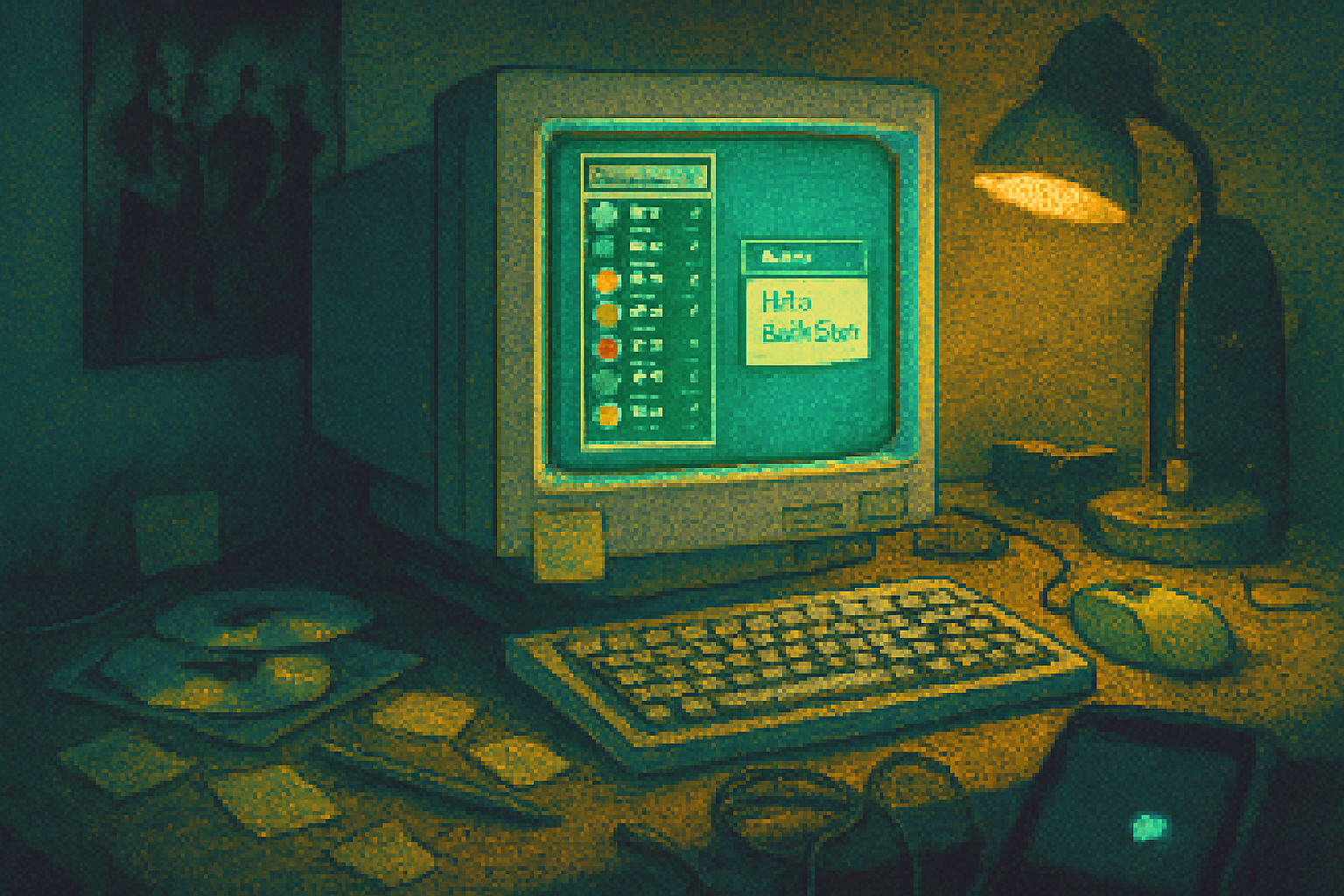
I was 14 when I first saw an AIM away message that read: “Gone to the mall. Be back before your playlist forces me to change my life.” It was three lines of text, a small theatrical gesture, and the entire emotional economy of adolescence condensed into 128 characters.
That little flash of personality - public, ephemeral, performative - is the origin story for a surprising amount of what we call “social media” today. AIM wasn’t just a chat client. It was a training ground for millions in how to craft an online self, manage relationships in public, and negotiate presence in real time.
The golden era: AIM in a few honest facts
- Launched by AOL in 1997, AIM quickly became the default online social environment for teens and early adopters through the late 1990s and early 2000s. Wikipedia: AIM
- AOL officially retired AIM in 2017, but its influence survived long after its servers went dim. The Verge: AIM shut down
- Think tanks and cultural critics later called AIM the rehearsal space for how people would act on MySpace, Facebook, Twitter, and later messaging platforms. The Atlantic on AIM’s legacy
AIM’s attraction was simple. It made the internet feel like a living room: visible, noisy, immediate. But the features - small, mundane, terribly human - are where the real story is. They were prototypes. They were experiments that stuck.
Feature by feature: How AIM taught the web to behave
Away messages → status updates, bios, and micro-essays
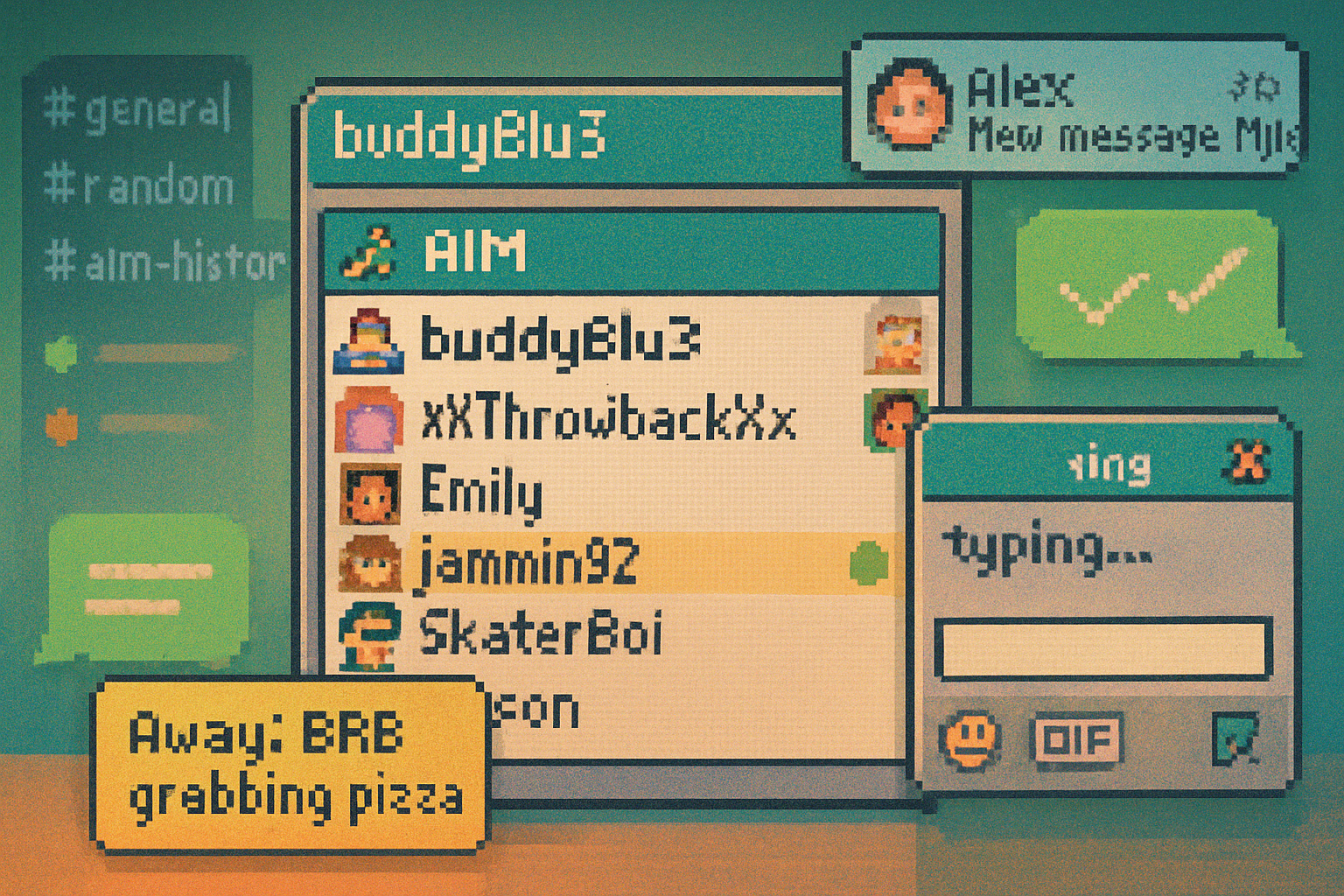
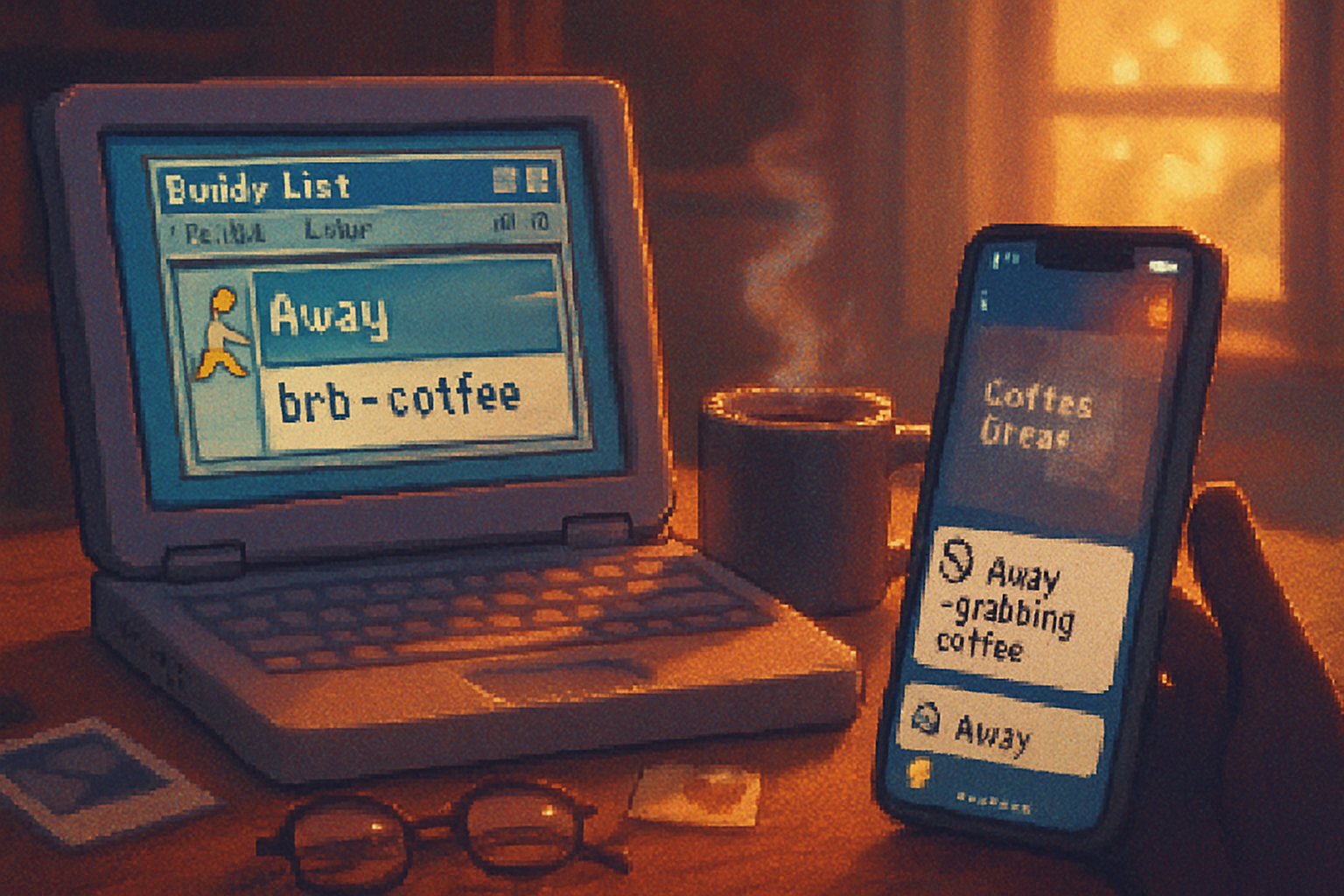
An “away message” in AIM was often more than a logistical note. It was a short piece of performative writing that said: “I exist, I feel, I’m available on my terms.” People used quotes, lyrics, cryptic poems, and subtle provocations. They curated mood.
Fast forward: Facebook statuses, Twitter bios, Instagram captions, Slack status messages - all descendants of that small theatrical act. The away message normalized the idea that you could broadcast a tiny personality snapshot to your social graph and expect it to do social work for you.
Buddy lists → curated social graphs
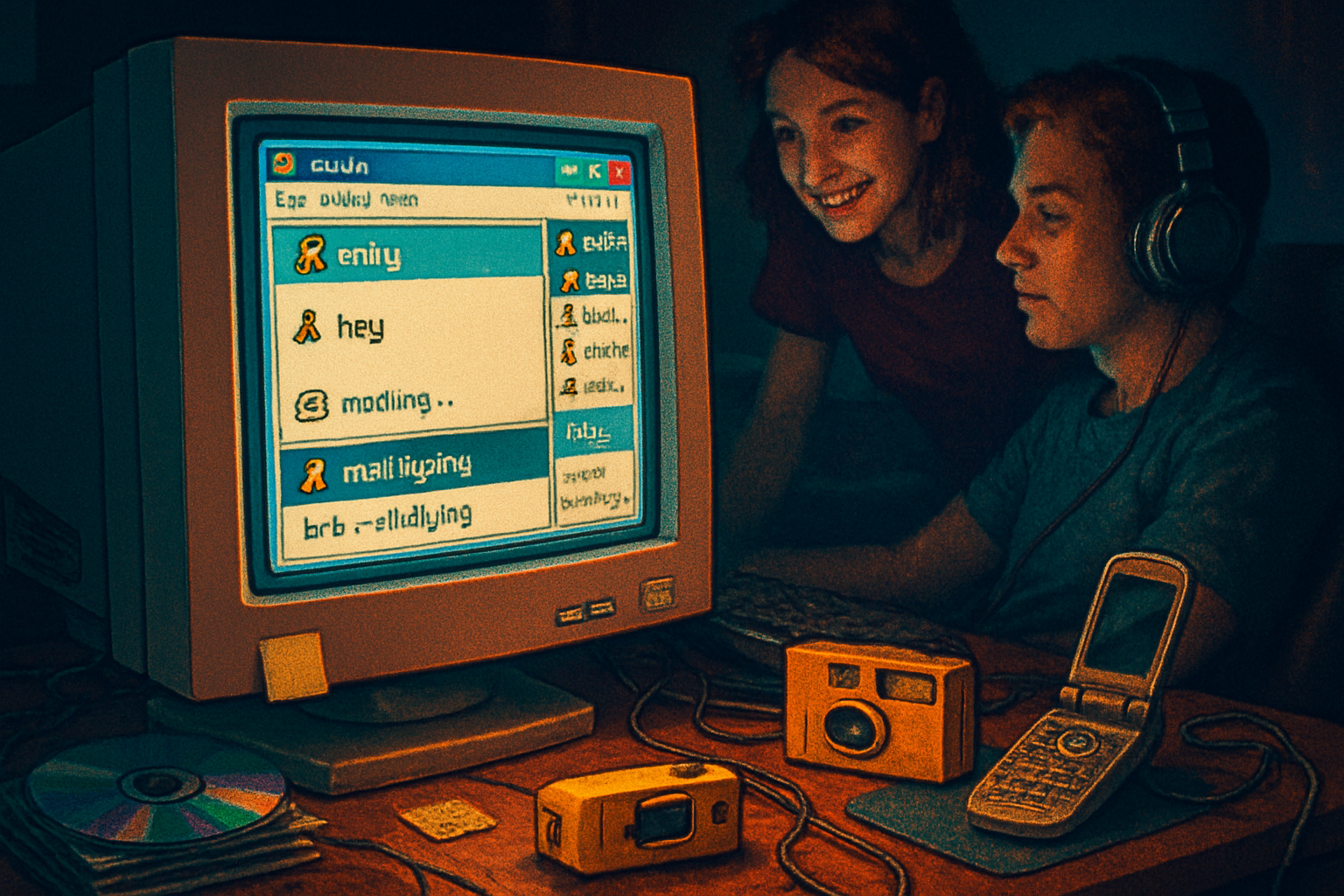
AIM’s buddy list forced users to choose who mattered. You grouped friends, removed people you were avoiding, and publicly showcased your social circle with awkward, revealing transparency. It was the first mainstream interface that made the social network a visible artifact on your screen.
That visible curation echoes in modern friend lists and follower counts. MySpace’s Top 8, Facebook’s friend requests, Instagram follows - these are structurally the same impulse as dragging a name into a list and choosing the colors of your online living room.
Screen names and identity play → handles, brands, and drag personas
Choosing a screen name was a creative act - often anonymous, often aspirational. You could be “xXSk8rBoiXx” or “sophisticated_caffeine” and tell a story without giving phone numbers or school names. That freedom trained people to inhabit curated personae.
We see the same cartography today in usernames on Twitter, Twitch handles, and avatars in Discord. The performance of identity, once a niche pastime, is now the main event of many platforms.
Presence indicators, typing notifications, and the expectation of immediacy
Seeing a green dot next to a name, or “User is typing…” introduced new social pressure. Suddenly, silence was meaningful. People learned to read presence and non-response as social signals.
This behavioral conditioning is the backbone of modern attention dynamics: “last seen” on WhatsApp, active now on Instagram, green dots on Messenger, and read receipts everywhere. The technology taught us that availability is a datum and that being instantly reachable has social cost.
Nudge, file transfer, buddy icon - small features, big echoes
The AIM nudge and buddy icon were cheap, tactile ways to get attention or signal mood. File transfer and webcam integrations foreshadowed the multimedia sharing era. Each small affordance taught us a social trick that turned up in later products in more sophisticated forms.
Cultural consequences: Why these UX choices matter
AIM did more than ship features. It reshaped norms.
- The public-private blur - Away messages were public but personal. Buddy lists were private choices that became public signals. That ambiguity is everywhere now - from public tweets that feel intimate to DMs that leak into timelines.
- The etiquette of immediacy - We learned to expect quick replies. When the reply did not come, we invented reasons: “they’re busy,” “they’re ignoring me,” “their mom unplugged the modem.” The emotional workout of modern ghosting began here.
- Performance and curation - We were taught to present, to edit, to stage. Social platforms reward polished moments. AIM trained us to do that with less polish and more sincerity.
Concrete lines of inheritance to modern platforms
- Facebook - friend lists, status updates, profile pictures, and the obsession with being “online” are direct heirs to AIM’s social grammar.
- MySpace - flamboyant self-expression and curated friend ranks amplified the buddy-list aesthetics.
- Twitter - the concision and performative quip, the public micro-message, echo away messages and status lines.
- Slack / Teams / Discord - in workplaces and communities, the presence indicators, away statuses, and ephemeral DMs are AIM practices repurposed for productivity and fandom.
For retrospectives on this lineage, see the reporting by NPR and The Verge.
What AIM taught us that modern platforms forgot (or weaponized)
We learned the power of ephemeral, low-fi self-expression. But we also learned how to monetize attention.
- Lost nuance - AIM’s small audience circles allowed for intimacy. Modern platforms scale opacity; a joke that would land in a buddy list can be misread by algorithmic audiences.
- Weaponized presence - Where AIM’s green dot was an informational convenience, the same indicator now contributes to anxiety and surveillance. Platforms monetize your attention - they didn’t then.
- Archival vs ephemeral - Early IM felt ephemeral (unless you saved logs). Today nearly everything is archived, searchable, and subpoena-able. The social price of permanence is enormous.
A short manifesto: What we should reclaim from AIM
- The humility of small audiences. Not every social interaction needs to perform for a mass.
- The right to controlled ephemerality. Let us opt out of permanent records when appropriate.
- Interfaces that teach, not punish, for being human. Presence should be a signal, not a shackle.
Conclusion: AIM as a prototype, not just nostalgia
AIM was less a product than a laboratory. It taught millions how to be online, how to stage a self, and how to read tiny signals between messages. The platforms we use today are richer and more powerful, but they also inherited AIM’s lessons in ways the original designers probably never imagined.
So the next time your green dot stares back at you and the typing bubbles appear like an accusation, remember: somewhere, a 14‑year‑old is still composing an away message to explain the terrible poetry of being alive. We built the expectation of immediacy. We can design its relief.
References
- “AOL Instant Messenger” - Wikipedia: https://en.wikipedia.org/wiki/AOL_Instant_Messenger
- “AOL’s AIM is officially gone after 20 years” - The Verge: https://www.theverge.com/2017/12/15/16777458/aol-aim-shut-down-20th-anniversary
- “AOL Instant Messenger Is Officially Dead” - NPR: https://www.npr.org/2017/12/16/570838482/aol-instant-messenger-is-officially-dead
- “AIM and the Origins of Social Media” - The Atlantic: https://www.theatlantic.com/technology/archive/2017/12/aim-aol-instant-messenger/548813/