· culture · 7 min read
From Analog to Digital: A Nostalgic Journey Through Voice Recording Technology
A sentimental and technical tour from Edison's tinfoil phonograph to pocket digital recorders and smartphones - exploring how voice recording gadgets evolved, what we lost and gained, and how to preserve the fragile audio threads that tether us to the past.
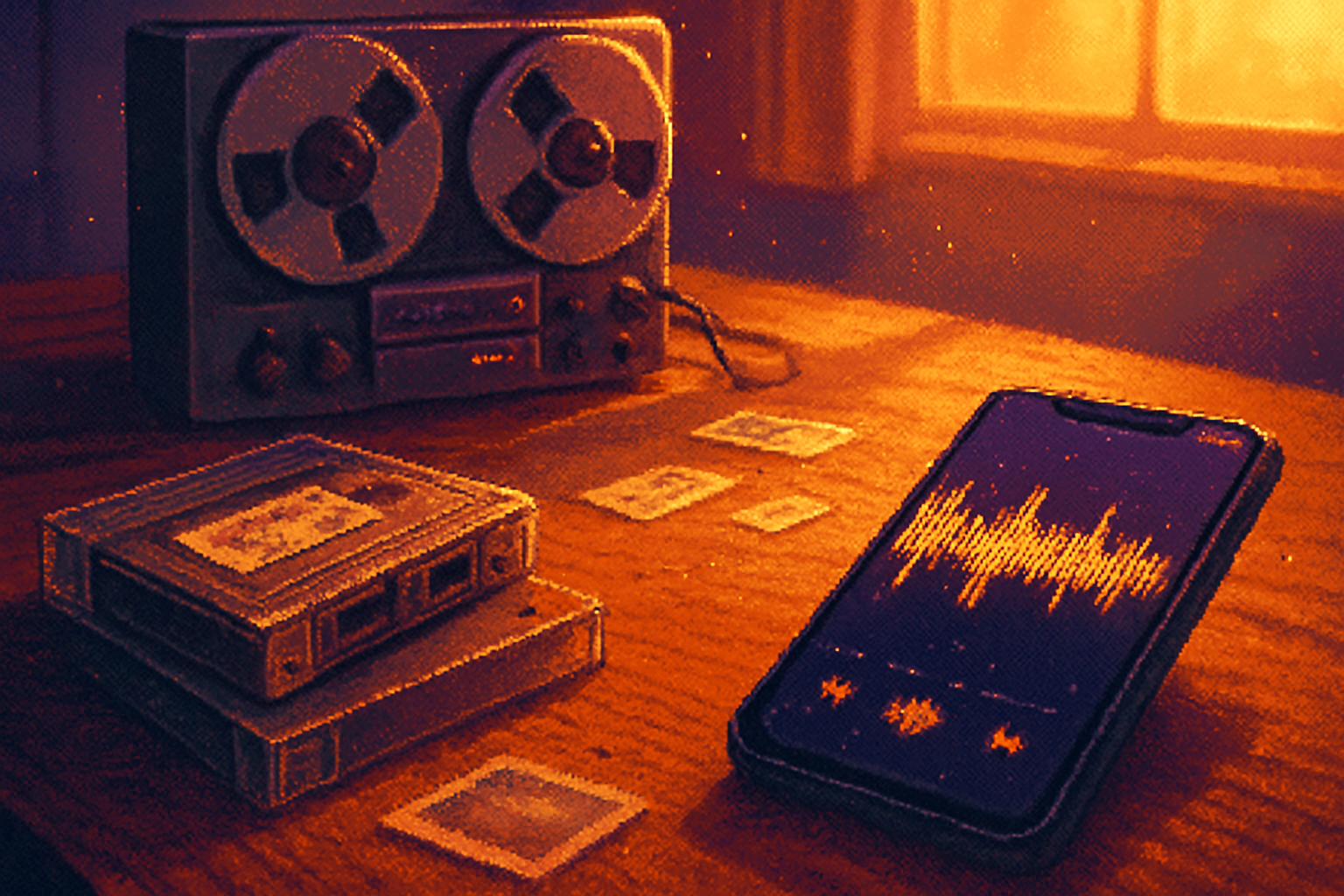
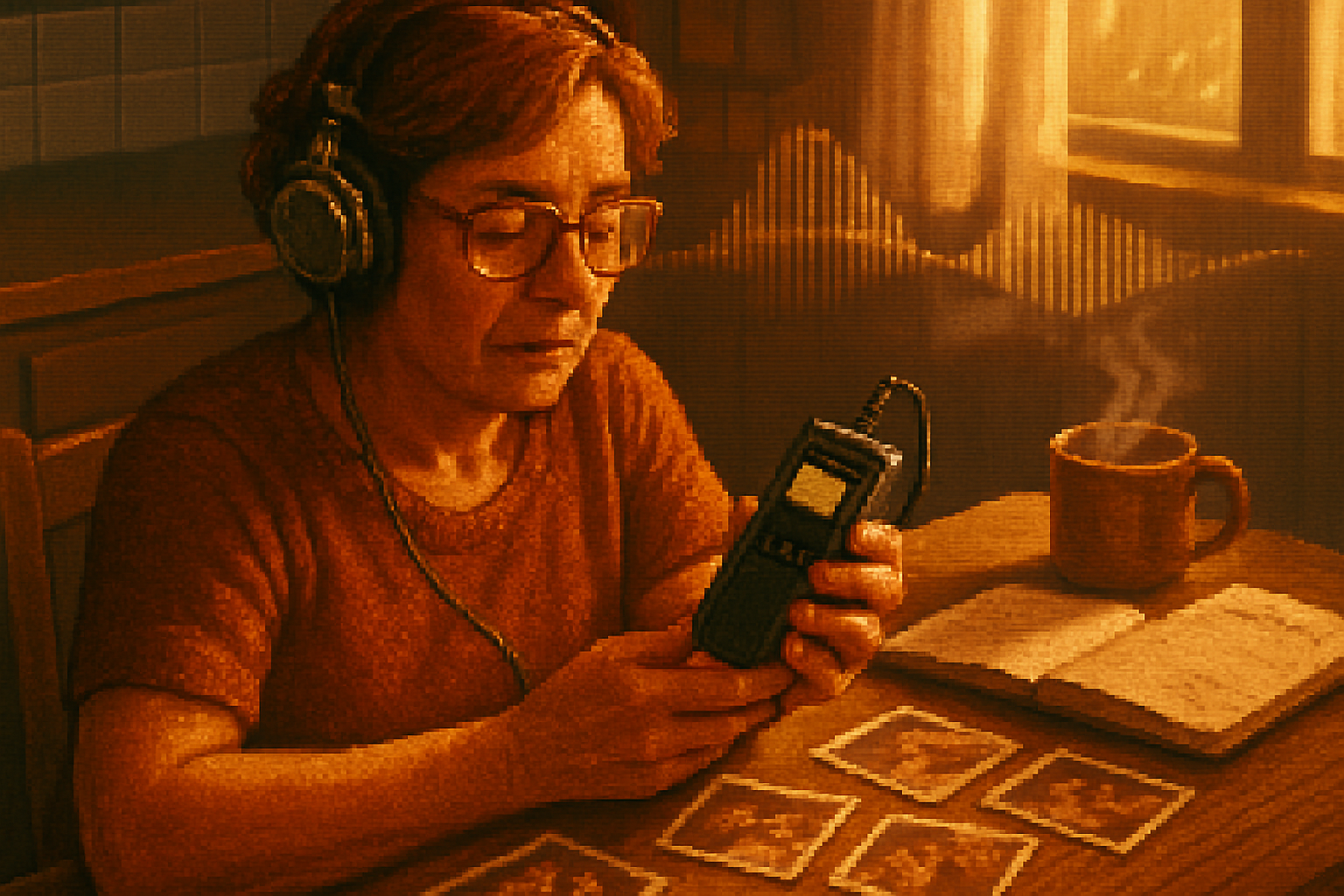
I found the cassette in a shoebox beneath a stack of unpaid bills: a scuffed plastic rectangle labeled in careful blue ink - “Grandma, 1982.” The player was long gone. The cassette, improbably, had survived. I could almost hear her voice: the way she laughed, the staccato puff of her cigarette between sentences, the odd little gospel tune she hummed at the end. I imagined, briefly and vividly, pressing a needle to grooves, watching a magnetic tape whirl past, the whole fragile story reduced to a hiss and a few seconds of clarity.
That moment - holding a relic that carried someone’s life in a loop of iron oxide and plastic - is why the history of voice recording matters. It’s not just technology. It’s memory prosthetics, identity archives, courtroom evidence, and shaky, glorious proof that once we were alive.
A short history (a timeline you can hold in your hand)
- 1877 - Phonograph (Thomas Edison). Sound captured as indentations on a rotating cylinder; playback was mechanical and intimate. Britannica on Edison and the phonograph.
- 1890s–1920s - Shellac discs and commercial recording. Industrialization of recorded sound; records became the mass medium for music and speech.
- 1928–1940s - Magnetic wire, then tape. Magnetic recording moved from crude wire to higher-fidelity magnetic tape. Magnetic tape history overview.
- 1963 - Compact Cassette (Philips). Small, cheap, and ubiquitous. The cassette democratized private recording - diaries, demos, lectures. Compact Cassette - Wikipedia.
- 1967 - Microcassette recorders appear for dictation and journalism. Smaller motors, slower speeds, different biasing.
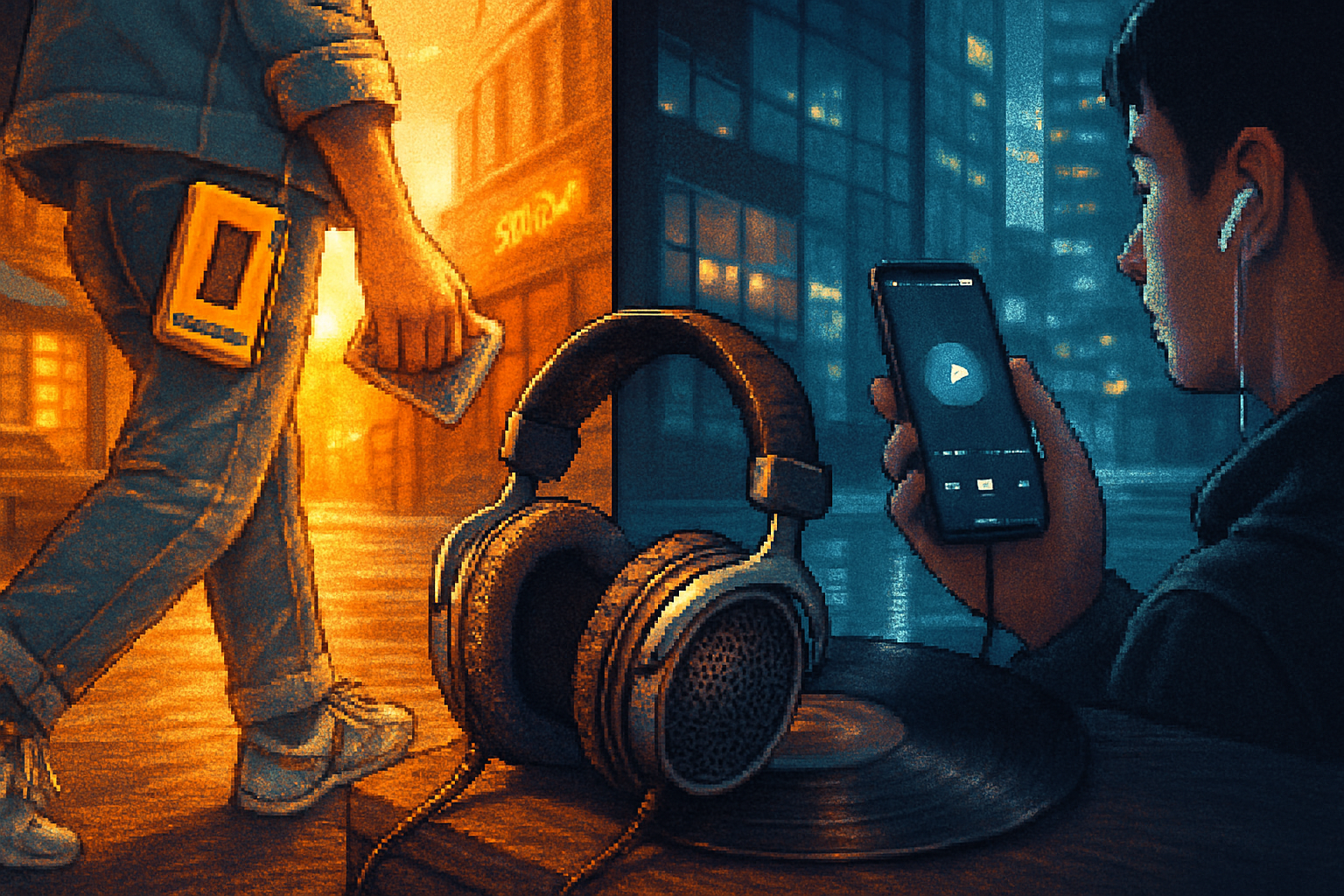
- 1979 onward - Portable cassette players and recorders (e.g., Sony Walkman lineage) put recording and playback in pockets.
- 1986–1990s - DAT (Digital Audio Tape) and MiniDisc - digital formats that flirted with professional fidelity but failed mass market dominance.
- 1990s - The MP3 revolution and the first wave of solid-state recorders. Compression made storage efficient; distribution exploded. MP3 - Wikipedia.
- 2000s - Flash-based recorders, USB interfaces, integrated laptop/phone recording. Pocket devices begin to outstrip legacy formats in convenience.
- 2010s–today - Smartphones as primary recorders; cloud storage and streaming make audio instantly shareable and, paradoxically, more ephemeral.
Each step isn’t just a technical upgrade. Each is a cultural pivot.
Why format changes matter - more than electrons and iron oxide
Think of recorded voice as a kind of social oxygen. When the pipework changes, some rooms keep breathing and others suffocate.
- Democratization - The compact cassette put recording power into ordinary hands. Before cassettes and cheap microphones, recording was studio-bound. Afterward, field interviews, family diaries, and bootleg concerts proliferated.
- Portability - When devices moved from desks to pockets, spontaneity increased. The off-the-cuff confession, the accidental masterpiece, the witness testimony - all became easier to capture.
- Fidelity vs. Accessibility - High-fidelity formats (DAT, lossless files) preserved nuance; cheap formats (cassettes, MP3) widened participation. That trade-off is almost always moral as well as technical.
- Decay and obsolescence - Analog tape physically degrades; digital files risk bit rot, format obsolescence, and metadata loss. Both threaten the continuity of memory.
Stories technology enabled
- Oral history and ethnography - Fieldworkers like Alan Lomax captured regional music and dialects with portable recorders, rescuing traditions that might have been lost.
- Journalism and citizen reporting - Portable recorders made it possible for witnesses to record events, sometimes producing evidence that reshaped public narratives.
- Music demos and DIY culture - Before home studios were trivial, cassette demos created local scenes and launched careers.
The technical guts (the readers who love specs, pay attention)
- Analog - Sound waves magnetize iron oxide particles on tape or move a stylus in a groove. Continuous signal, subject to noise (hiss), wow and flutter (speed instability), and physical decay.
- Digital - Sound is sampled at discrete intervals (sampling rate) and quantized (bit depth). Common archival settings: 44.1–96 kHz sampling, 16–24 bit depth. Lossless formats like WAV or FLAC preserve fidelity; MP3 compresses and discards information to save space.
Practical rule of thumb: If it matters historically or emotionally, digitize in a lossless format at a high sampling rate and keep good metadata.
Digitization - a pragmatic preservation checklist
- Assess - Identify format (cassette, reel-to-reel, DAT, MiniDisc, etc.). Prioritize brittle or unique materials.
- Clean and repair - For tapes, gently clean players, bake moldy/brittle tapes if recommended by conservators. (Warning: baking tapes is a specialist task.)
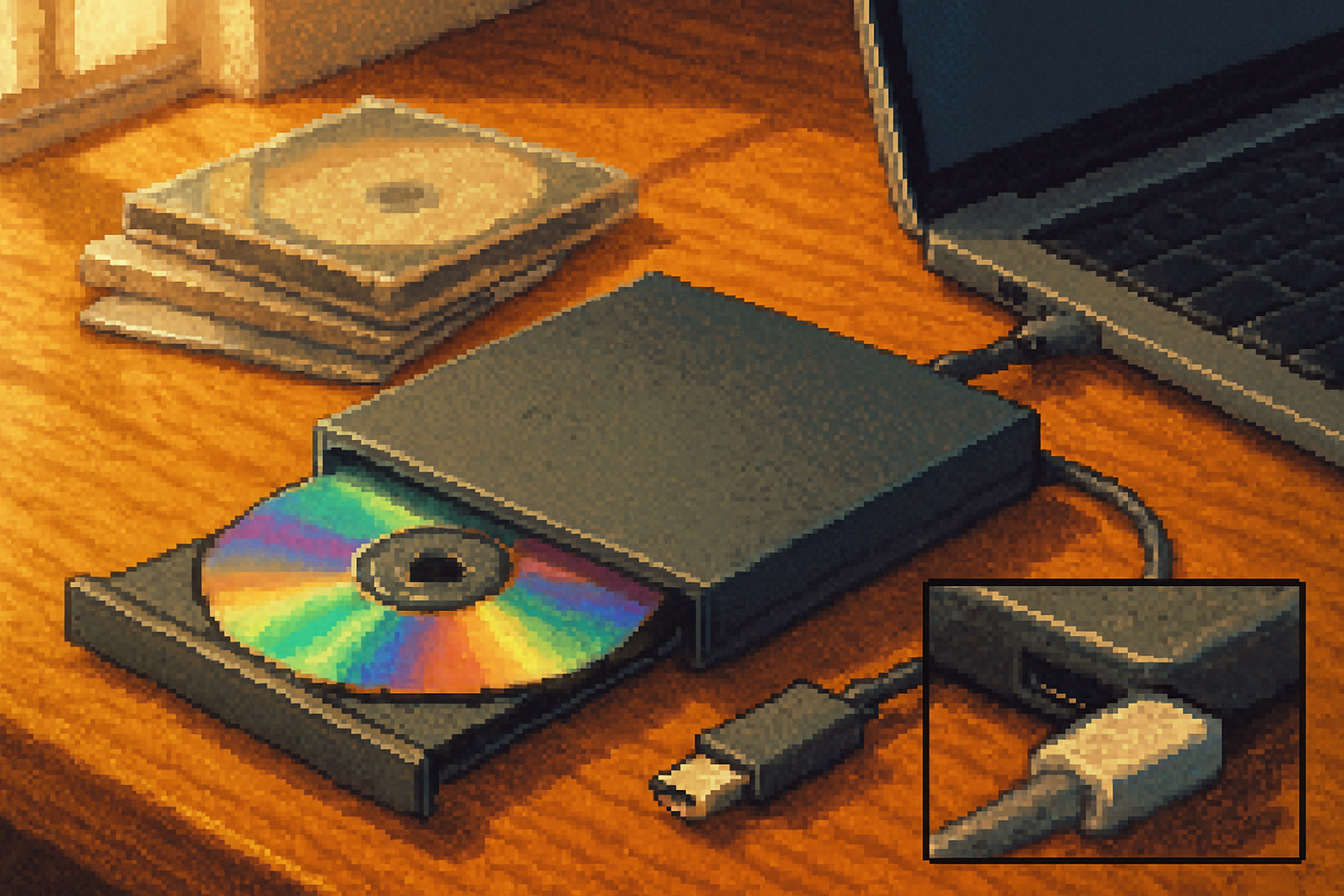
- Use decent hardware - Good tape decks, clean heads, stable motors. For analog, a high-quality ADC (analog-to-digital converter) matters.
- Capture settings - Prefer WAV (PCM) or FLAC, 24-bit/96 kHz for archival master. Save an MP3 derivative for sharing if necessary.
- Metadata - Document who, what, when, where, and how. Context is half the value of the recording.
- Store redundantly - Multiple copies, geographically separated. Use checksums (MD5/SHA) to detect corruption.
For authoritative guidance, consult resources like the Library of Congress’s audio preservation pages: Library of Congress - Caring for Your Audio.
Societal implications and ethical knots
- Loss of context - Digital sharing slices recordings into soundbites. A five-minute interview becomes a 10-second meme; the backstory vanishes. Memory is flattened.
- Privacy - The ease of recording creates surveillance by default. Microphones are everywhere. The same tools that preserve can persecute.
- Authenticity and trust - Deepfakes and editing tools make the provenance of a voice suspect. Archival chains of custody and cryptographic signatures will matter more.
- Access and inequality - While smartphones democratize recording, long-term preservation still relies on institutions, funding, and technical competence. Not all voices survive equally.
What we lose when formats die
- Texture. Analog hiss, room echoes, the tiny motor whirr - these are acoustic fingerprints that place a recording in time.
- Nonverbal cues. Bandwidth-limited formats can blur intonation, rendering a laugh flat or a sob indistinct.
- Metadata and annotations. Old boxes and cassette labels often carried the only notes about provenance. When formats shift, so can the surrounding human knowledge.
A brief, sardonic taxonomy of the gadgets you loved and cursed
- The Phonograph - Romantic, brittle, glorified gramophone. Gorgeous to look at. Terrible to transport.
- The Cassette Player - Sticky, prone to chewing your memories. But you could record a love letter in the back of a bus.
- The MiniDisc/DAT Aficionados - For people who wanted technical purity and agonized about no one else understanding them.
- The Smartphone - Ubiquitous, convenient, morally ambiguous. It captures everything and preserves almost nothing well unless you take stewardship seriously.
Practical recommendations for readers who found a shoebox
- Don’t DIY everything. If a tape is moldy, consult a conservator or an established digitization service.
- Prioritize unique recordings - interviews, family members who are no longer with us, rare performances.
- Make a workflow - one archival master (lossless) + one access copy (MP3) + metadata file.
- Backups - 3-2-1 rule - three copies, two different media, one offsite.
The final pivot: what we should value going forward
We tend to treat audio formats like fashion: new is better. But newness isn’t a moral good. The ethical project here is different: keep the capacity to remember accurately, inclusively, and accessibly.
Recording technology has pulled the intimate into the public square. It has made witnesses of us all and archivists of our devices. That is glorious. It is also dangerous. The technologies we choose - and the way we steward the recordings they produce - determine which voices endure.
So when you find a cassette in a shoebox, don’t just mourn the obsolete plastic. Listen. Transcribe. Save. Add the name, the date, the embarrassing details. Give the voice context and shelter. Technologies change. Memory, if we are careful, does not have to.
References
- Edison and the phonograph - Britannica: https://www.britannica.com/biography/Thomas-Edison-United-States-inventor
- Magnetic tape - Britannica: https://www.britannica.com/technology/magnetic-tape
- Compact cassette - Wikipedia: https://en.wikipedia.org/wiki/Compact_cassette
- Digital Audio Tape (DAT) - Wikipedia: https://en.wikipedia.org/wiki/Digital_Audio_Tape
- MiniDisc - Wikipedia: https://en.wikipedia.org/wiki/MiniDisc
- MP3 - Wikipedia: https://en.wikipedia.org/wiki/MP3
- Alan Lomax collections - Library of Congress: https://www.loc.gov/collections/alan-lomax/
- Caring for audio recordings - Library of Congress: https://www.loc.gov/preservation/care/recording-materials.html