· culture · 7 min read
The Sound of Memories: Digital Voice Recorders and the Art of Oral Storytelling
Digital voice recorders have quietly resurrected a human art we were about to lose: the telling of true lives, in human voices. This piece explores how pocket-sized recorders turn private memories into public patrimony, includes interviews with enthusiasts, and gives practical, ethical, and technical tips to make your recordings sing.
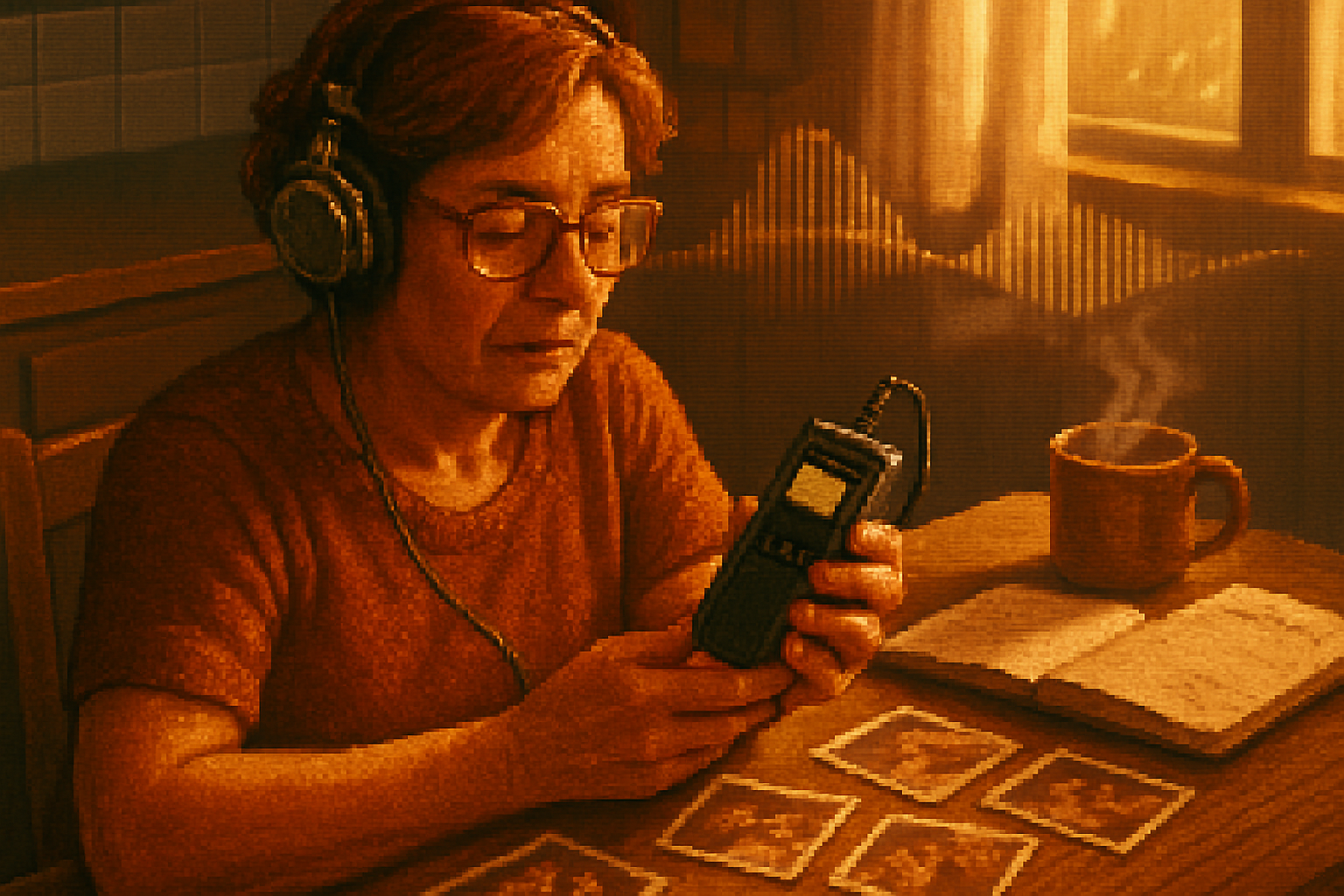
On a rainy Sunday my neighbor pulled out a battered digital recorder and - with the casual reverence of someone opening a letter from a dead relative - pressed play. A woman’s voice filled the kitchen: halting, laughing, naming towns that no longer appear on maps. It was her mother, remembered in the exact pitch and cadence that no transcript could ever capture. For fifteen minutes we sat and listened like burglars who’d broken into time.
That little recorder was less a gadget than a time machine. Small, cheap, and stupidly effective, digital voice recorders have helped revive an old human practice: telling stories aloud to one another, and keeping those stories long enough for the world to learn from them.
Why audio matters: what a waveform knows that print can’t
We have been trying to tame memory since we learned to scratch symbols into stone. But the spoken word carries a freight of feeling - hesitation, laughter, breath, the tug of tears - that type and even video often dilute. A file of raw voice preserves:
- The cadence and accent that reveal where a person grew up.
- Tiny sighs and pauses that betray uncertainty or pain.
- Laughter that rewrites the meaning of a sentence.
In short: context. A transcript is a skeleton. Audio is the pulse.
A brief history: oral tradition, exile, and return
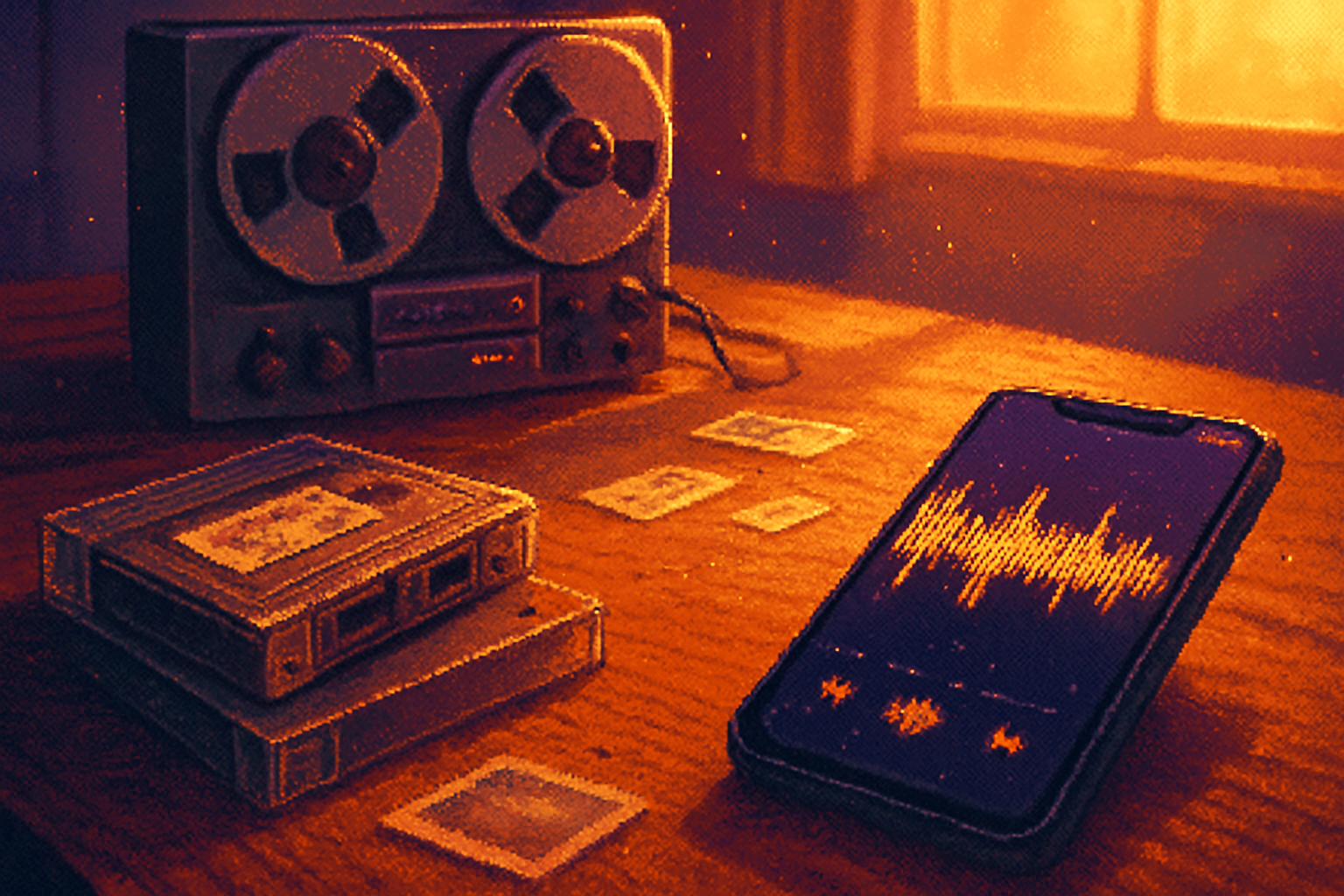
Humans are storytelling animals. For millennia we transmitted law, myth, and family lore by voice alone. The printed word displaced that to some extent; radio and recorded media transformed it. But until recently, high-quality recording required studios or professionals.
Enter compact digital recorders. Affordable and accessible, they reunited memory-keepers with a simple fact: if you can record easily, you will. Institutions noticed. StoryCorps made a project of it, creating an archive of human voices. The Library of Congress American Folklife Center has long preserved such materials. Grassroots communities followed.
Three interviews: voices that show why it matters
Below are condensed interviews with three enthusiasts - not celebrities, just people who decided the sound of memory mattered more than convenience.
Marta González - family archivist, 68
“My mother used to tell stories while she cooked. I used to think I’d remember them. I didn’t. When my son gave me a pocket recorder I started catching the small things: how my mother would say ‘tomorrow’ like it was a secret. After she died, we had an afternoon of her stories to play at the funeral. People cried, but it was honest crying - not the polite kind.”
Marta stores WAV files on a thumb drive and burns the most requested stories to CDs for relatives who still prefer discs.
Theo Park - community archivist, 34
“We started recording at town meetings and at the church potlucks. At first everyone thought it was eccentric; two years later the school uses our files for local history. The best thing is asking people a question they don’t expect and getting a five-minute monologue about some ‘silly’ thing that turns out to explain everything.”
Theo emphasizes consent and metadata. “You can’t just put people’s voices online without asking what it’ll mean years from now.”
Amara Singh - podcast producer, 29
“I like the roughness. You get a truth in the imperfect. I train people to be present, not performative. It shows.”
She keeps interviews short and often records multiple sessions. “Memory is fragile. People surprise themselves in the third sitting.”
Ethics first: consent, ownership, and power
If you care about stories, you must care about the people who tell them. A recorder gives power - sometimes to the storyteller, sometimes to the collector. Follow simple rules:
- Always get informed consent. Explain how the recording will be used and who will access it.
- Discuss ownership and copyright; decide if the interviewee wants a copy and any restrictions.
- Be culturally sensitive. Some traditions resist public circulation; honor that.
- Consider an audio release form. Short and clear works best.
For institutional guidance see the Oral History Association resources.
Choosing gear: you don’t need to bankrupt yourself
You do not need a studio. But a few good choices matter.
- Budget pocket recorders - look for devices from brands like Zoom or Sony. The Zoom H1n or Sony ICD-PX series are common entry points.
- Field recorders - Zoom H4n/H5/H6 offer XLR inputs and better preamps for interviews with external mics.
- Microphones - a simple lavalier for one-on-one interviews, or a stereo shotgun/omnidirectional for roundtables.
- Headphones - always monitor audio with closed-back headphones.
If you prefer your phone, modern phones can be adequate. Use an external microphone (USB-C or Lightning) for higher quality.
Technical basics - settings that keep you out of trouble
- File type - Record in WAV (uncompressed). If storage is a problem, FLAC (lossless compressed) is acceptable.
- Sample rate & bit depth - 44.1 or 48 kHz at 16-bit is the baseline; 24-bit gives a wider dynamic range if you have the storage.
- Gain - Aim for peaks around -12 dB to -6 dB. Avoid clipping (0 dB). If unsure, set conservative gain and record some test clips.
- Backup - Immediately copy files to two locations - local drive and cloud or external backup - before editing.
How to make someone tell a story: technique over trickery
Recording is half tech, half human craft.
- Warm up - Spend 5–10 minutes chatting off-record. It reduces cameras-are-watching tension. People speak differently when relaxed.
- Ask open questions - “Tell me about the first time you…” beats “Did you like…?”
- Use memory joggers - photographs, songs, objects, or scent can unlock detail.
- Let silence live - pauses often hold meaning. Don’t rush to fill them.
- Follow the thread - if someone mentions a small name or place, ask, “Who was that?” and let it breathe.
Sample question starter-bank:
- “What is your earliest memory of home?”
- “Tell me about a meal from your childhood.”
- “Was there a mistake you remember that changed things?”
- “Who was the person you wanted to make proud?”
- “Say something you wish you’d told someone who died.”
Editing: when to cut, when to keep
There is a moral economy to editing oral histories. Heavy-handed edits can reshape meaning. Guidelines:
- Preserve the speaker’s cadence and intent. Trim only for clarity and length if you have to.
- Use music sparingly and transparently. Do not use music to manipulate the emotional truth of the words.
- Create two versions - an archival master (raw, full-length) and an edited public version (polished, shorter).
Software options: Audacity (free), Reaper (cheap with generous trial), Adobe Audition (paid). Always keep the original files.
Metadata and archiving: make it findable and durable
A voice is useless if you can’t find it later. Capture metadata at the time of recording:
- Names (speaker, interviewer), date, location, and consent notes.
- Topics discussed and keywords.
- Technical metadata (file type, sample rate).
Naming convention example: 2025-10-22_Gonzalez_Marta_Interview1.wav
For long-term preservation, consult the Library of Congress preservation guidance. Multiple redundant backups - local and cloud - are essential.
Sharing: platforms and etiquette
Decide your audience and rights before publishing. Options:
- Private family archive - store locally and share copies on drives.
- Community archive - local historical societies often host materials.
- Public podcast or website - requires clear release and possibly anonymization.
If you post clips, include contextual notes so listeners know who is speaking and why it matters.
A tiny field kit checklist
- Recorder (charged) + spare batteries
- Lavalier or handheld mic
- Headphones
- Notebook & pen
- Consent/release forms
- Backup drive or laptop
- Props to jog memory (photos, objects)
The final, human skill: listening
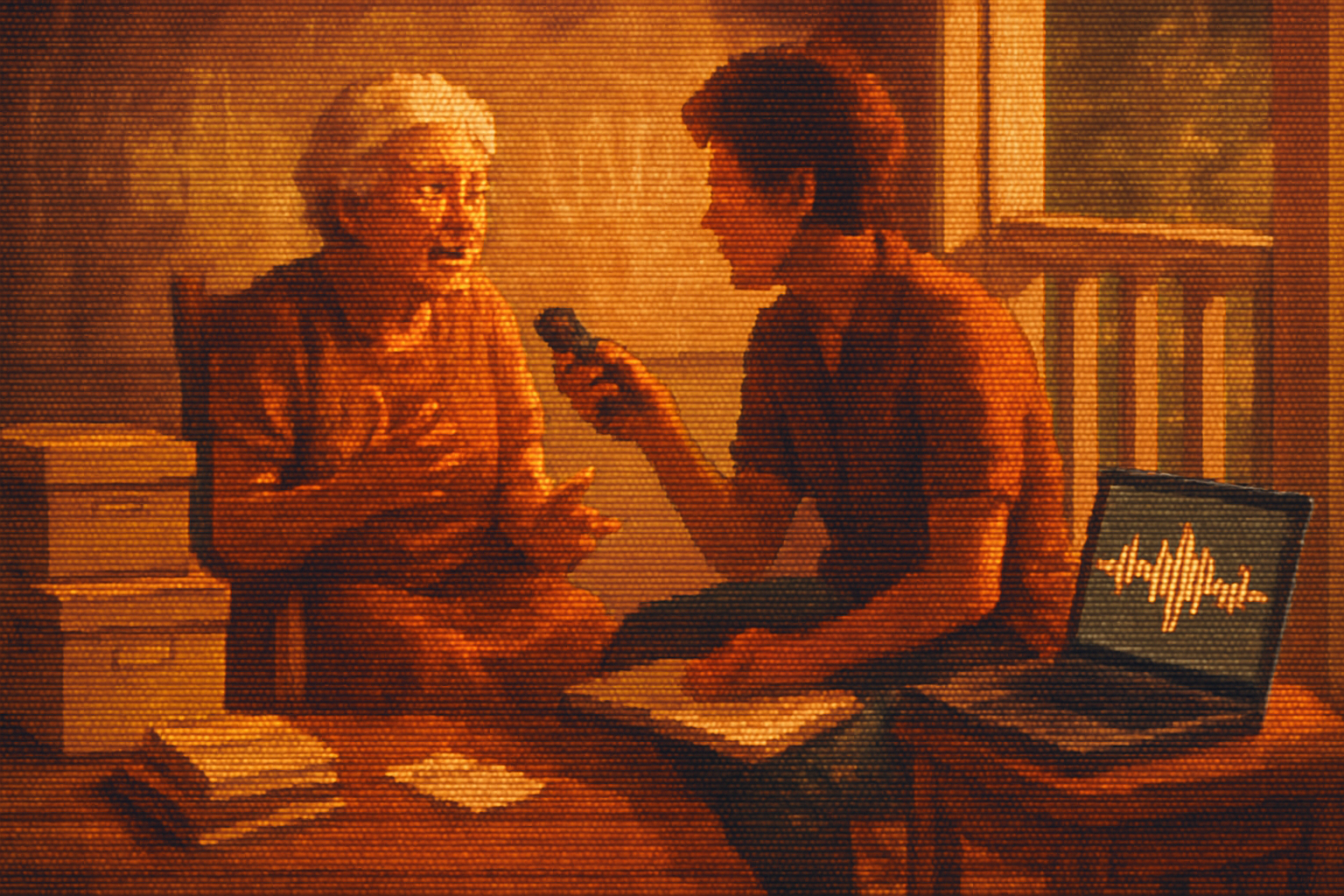
All the tech in the world will fail if you treat an interview like a data-gathering mission. Listening is not waiting for your turn to talk. It is attention; the kind that says: I was made for this moment with you.
Good interviewing is an act of generosity. It asks someone to rearrange their life, for a little while, so their voice can be kept. The recorder is merely the polite courier.
If you want to start: do one short recording today. Ask someone to tell you about a place they loved. Press record. Sit quiet. You will find that the sound of their memory is better company than you expected.
Further reading and resources
- StoryCorps - collect, preserve, share America’s stories: https://storycorps.org
- Library of Congress, American Folklife Center: https://www.loc.gov/folklife/
- Oral History Association: https://www.oralhistory.org/