· culture · 7 min read
Voices of the Past: How Digital Recorders Change Our Relationship with Historical Narratives
Digital voice recorders - and now smartphones - have moved oral history from backstage to center stage. They make memory tangible, messy, and risky. This article explores how democratized recording changes what we call history, the ethics it obliges, and practical steps for doing it responsibly.
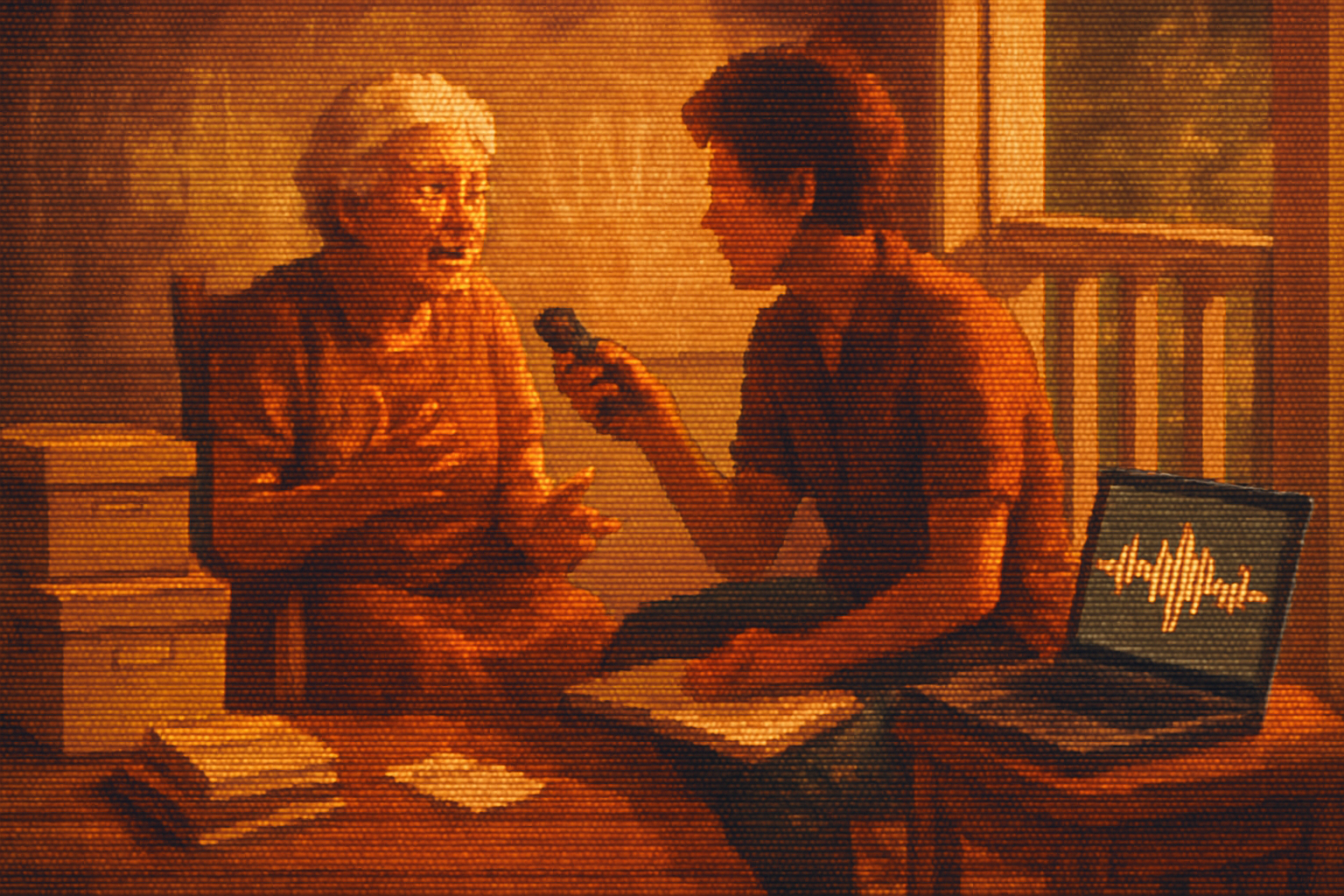
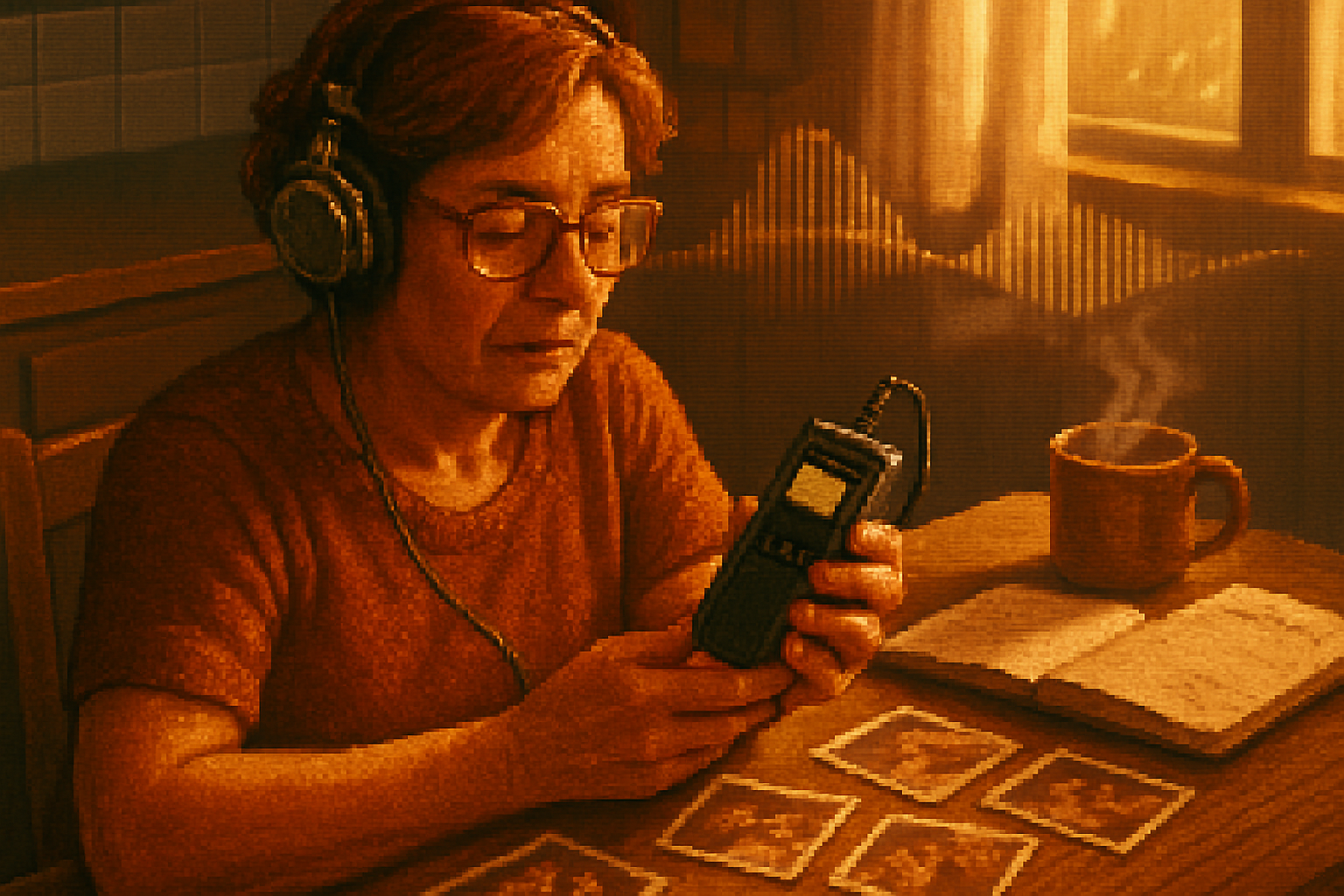
A friend once handed me a battered digital recorder and said, “Press record, and don’t stop asking questions until she runs out of things to say.” The woman we were interviewing lit a cigarette, laughed, and described a flood that washed the wooden floorboards of her childhood home into the river. Thirty minutes later she was talking about a husband who never came back from war. The recorder did not simply capture words. It preserved breath, hesitation, the sudden, rueful chuckle that changes the meaning of a sentence.
That small device - no bigger than a smartphone - is a historian’s scalpel and a moral minefield. It has turned oral testimony from occasional curiosity into a primary method for constructing local histories, folklore, and community memory. But the democratization of recording also forces us to ask hard questions about power, consent, curation, and preservation.
Why the human voice matters
Text transmits facts. Voice transmits context. The difference is not trivial. A written transcript is a map; the audio is the terrain - the pauses, the emphasis, the laughter, the tone that says more than grammar ever could.
Oral testimony is uniquely potent for several reasons:
- Intimacy - Hearing someone’s cadence builds empathy in a way a typed quote rarely does.
- Nuance - Oral accounts contain performance, humor, irony, and affect - all essential to interpretation.
- Access - Many communities have stronger oral than written traditions; voice is often the primary archive.
Historians and folklorists have long known this. Paul Thompson’s classic The Voice of the Past argued that oral sources challenge official records by supplying lived detail and subjective truth. Field collectors like Alan Lomax proved that songs, stories, and dialects live in mouths long after ink has faded. Today the recorder has made that work cheaper and louder.
From wax cylinders to WAV files: technology changed the field - and fast
Recording the past used to be expensive and clumsy. Early fieldwork required heavy gear, special media, and institutional backing. The barrier to entry insulated archives from noise - but it also filtered whose voices were preserved.
Now, anyone with a phone or a tiny handheld device can gather testimony. That is a civilizational shift with several consequences:
- Scale - Thousands of interviews can be collected by communities themselves.
- Speed - Immediate playback allows for corrections and richer follow-up questions.
- Portability - Recordings can be made in kitchens, buses, and cemeteries where memories live.
Democratization is morally refreshing. It also means more material, more responsibility, and more ways for harm to happen.
Case studies that show what’s possible
StoryCorps - an American project founded in 2003 - built a national listening project by making recording booths and training people to ask simple, humane questions. Its partnership with the Library of Congress has put thousands of personal narratives into the public record and taught billions to listen differently. See StoryCorps: https://storycorps.org/
The USC Shoah Foundation demonstrates another use: large-scale, structured testimony to preserve survivor narratives. Their rigorous methodologies and searchable video testimonies shaped how testimony can confront atrocity and support research.
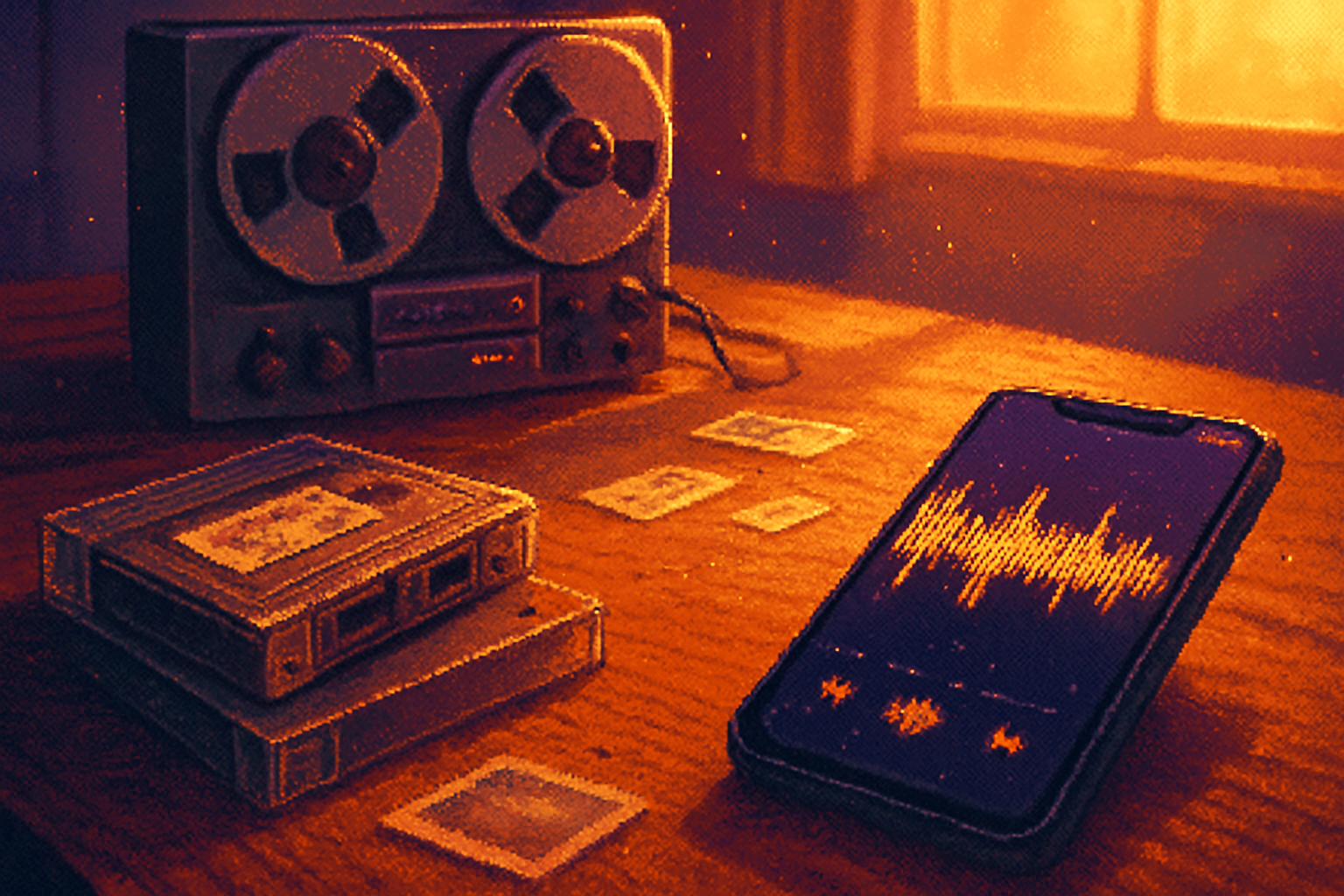
Earlier, the Alan Lomax collections captured folk performance traditions that would otherwise have been marginalized or lost. The contrast between Lomax’s era of heavy reels and today’s pocket recorders shows how technology reshapes what is collectible.
By contrast, the WPA Slave Narratives show limits of text-only interviews: many narratives were filtered through interviewers’ biases and editorial choices-reminding us that recording medium matters.
Ethics: consent, context, and the seductive authority of audio
If an audio file is evidence, it is also an artifact of relationships.
Key ethical issues:
- Informed consent - Did the speaker understand how their voice will be used, where it will be stored, and who will access it? Consent must be explicit and revisited when contexts change.
- Power dynamics - Scholars, funders, and institutions often control the means of distribution. Who benefits from the materials?
- Trauma and re-opening wounds - Testimony about violence can cause harm. Interviewers must be trained in sensitive approaches and provide referrals.
- Ownership and repatriation - Many Indigenous and local communities demand control over their cultural materials. Protocols like
The modern recorder creates an illusion of permanence and truth. But audio is a constructed encounter. Editing, selection, and placement within exhibits or archives can make a story sing or distort it beyond recognition.
For ethical guidance, consult the Oral History Association’s Principles and Best Practices, which lay out duties to interviewees and the public.
Archiving in the digital age: best practices and real risks
An interview that’s not preserved correctly is like a poem written in sand. Digital files decay, formats become obsolete, metadata is lost, and the human context dissolves.
Practical preservation guidelines:
- Capture archival masters in uncompressed formats (e.g., WAV, 24-bit/48 kHz where possible). These are your safety net.
- Create working copies (MP3) for sharing and streaming.
- Store metadata rigorously - who, what, when, where, language, interviewer, transcription status, permissions, and contextual notes. Use standards like
- Use redundant storage strategies (geographically separated backups) and institutional repositories when possible. Learn from digital preservation resources such as the Library of Congress Digital Preservation.
- Maintain chains of custody and clearly documented rights - is access open, restricted, community-only, or embargoed?
One more ugly truth: most institutions are drowning in data and starving for funds. Planning for long-term stewardship is an ethical obligation - not an optional luxury.
How personal accounts change what we call history
Oral history doesn’t replace archives of government memos or census tables; it complicates them.
- Microhistory - Individual testimonies can reveal how structures - war, migration, economic policy - were felt on the ground.
- Counter-narratives - Personal accounts often contradict official records and create space for marginalized truth-telling.
- Memory studies remind us memory is constructed. Two siblings may remember the same event differently, and both accounts are historically valuable for what they tell us about perception, not just fact.
The historian’s job is to triangulate. Use testimony alongside documents, physical artifacts, and other interviews. Treat memory as evidence - not infallible truth.
A short checklist for ethical, effective field recording
- Prepare - research the community; get introductions; learn basic cultural protocols.
- Consent - use clear, written consent forms; explain distribution, archiving, and withdrawal options.
- Equipment - capture masters in WAV; test levels; bring spare batteries and storage.
- Metadata - fill out a standardized form immediately after each interview.
- Care - watch for signs of distress; stop if the interviewee becomes uncomfortable.
- Backup - copy files to at least two different storage devices the same day.
- Community return - deliver copies and translated transcripts back to the participants or local archive.
Toward decolonized, community-centered archives
The most ethical innovation in the field is not the device but the method: handing the recorder to communities and training local archivists. When communities control collection, curation, and access, archives become instruments of empowerment instead of extraction.
Projects that center repatriation, local governance of materials, and culturally appropriate restrictions show a way forward. The future of oral history must be plural: not only preserved by elites, but stored, curated, and interpreted by the people whose voices are recorded.
Conclusion: listening as a public act
Digital recorders have made testimony cheaper and louder. That is a revolution for historians, folklorists, and communities hungry for presence in the historical record. But the device does not absolve us of responsibility. Recording is an ethical act. So is archiving. So is listening.
If history once proceeded from the pulpit and the ledgers, it now arrives from kitchens, porches, and phones. If we want those voices to matter beyond a few poignant moments, we must treat them as fragile - worth meticulous care, clear agreements, and ongoing dialogue with the people who speak.
Listen well. Preserve better. And never, ever publish a story without asking the person who told it if they still want it told.
Further reading and resources
- Oral History Association - Principles and Best Practices: https://www.oralhistory.org/about/principles-and-practices/
- StoryCorps: https://storycorps.org/
- USC Shoah Foundation: https://sfi.usc.edu/
- Library of Congress American Folklife Center & Alan Lomax collections: https://www.loc.gov/folklife/ and https://www.loc.gov/collections/alan-lomax/
- WPA Slave Narratives (1936–1938): https://www.loc.gov/collections/wpa-slave-narratives-from-1936-to-1938/about-this-collection/
- Local Contexts (Indigenous information governance): https://localcontexts.org/
- Digital Preservation resources (Library of Congress): https://www.digitalpreservation.gov/