· retrotech · 7 min read
The Forgotten Music of Our Youth: Revisiting Vinyl and Cassette Collecting in the Digital Age
Why are millennials and Gen Z lining up at record stores and trading mixtapes when a world of infinite playlists sits in their pockets? This is a deep dive into the tactile, noisy, and stubbornly analog pleasures of vinyl and cassette collecting - with voices from collectors and industry insiders explaining the comeback.
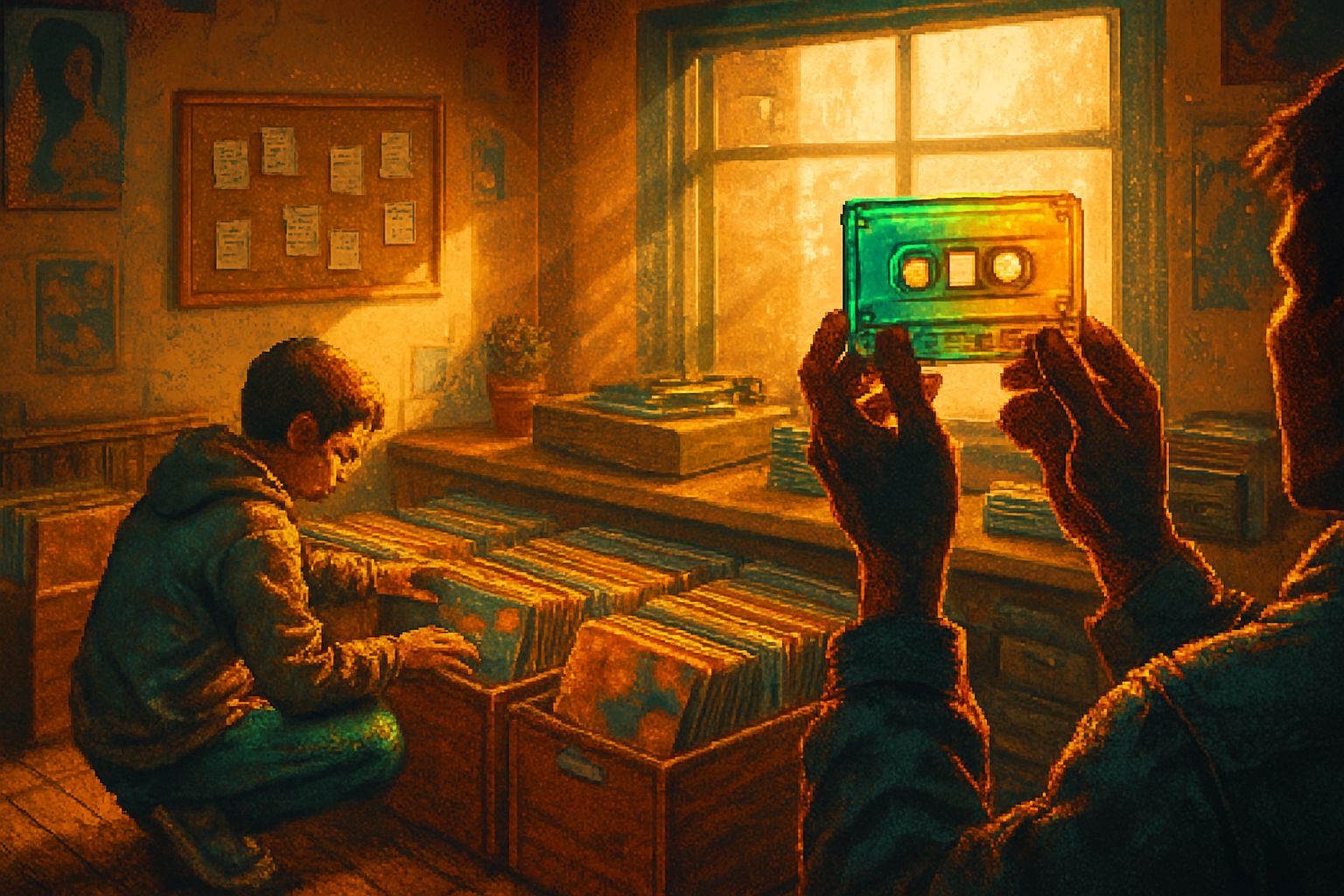
It began in a Sunday flea market, with the same small cruelty that nostalgia often enjoys: a cardboard box of unloved albums priced like they were still worth their youth. I paid a fiver for an old Talking Heads LP and walked away with the smell of dust and lacquer curling into my coat. The cashier - a lanky kid with a hand-stitched denim vest - asked if I wanted it cleaned. I said no. I wanted the fingerprints.
That moment is the thesis of this piece: people are buying objects again, not because streaming has failed us, but because the human part of music - ritual, ownership, story - did not die with the CD.
Why collect when everything is one click away?
Streaming is convenience perfected. It is endless buffet dining in a world of culinary terror: you can have anything, anytime, with the nutritional value of a TV dinner and the emotional depth of a hashtag. So why are millennials and Gen Z gravitating toward vinyl and cassettes?
- Ritual and materiality. Playing a record requires intention. You unwrap, you set the platter, you drop the needle. Cassettes demand an even more intimate choreography - press play, press record, listen back. These acts transform passive listening into an event.
- Provenance and story. Physical media tells stories - of previous owners, of limited runs, of which pressing you have. A first pressing, a sealed copy, a mixtape with scribbled track lists - these are artifacts.
- Sound and perceived authenticity. Many listeners prefer the tactile crackle and harmonic warmth vinyl imparts. Whether it’s objectively “better” is arguable; whether it feels better is not.
- Resistance to algorithmic curation. There’s a small but growing desire to be surprised by music on purpose rather than by math.
- Community and status. Crate-digging is social. Bringing home a rare find is a currency among friends. Vinyl and cassette culture create in-person rituals streaming cannot reproduce.
These forces have real market effects. Vinyl sales have surged in the last decade - even outselling CDs in some years - while cassettes remain niche but surprisingly resilient as a DIY medium and indie collectible Billboard and Statista report.
Voices from the crates: collectors and storeowners
Collector (Seattle, 31): “I grew up with mixtapes from my older sister. When I started buying cassettes again, it felt like reclaiming the version of me that made playlists with a Sharpie. It’s deeply personal.”
Record-store owner (Brooklyn): “Younger customers come in saying streaming is overwhelming. They want a ritual. They want something to show for the money they spent. You can’t hold a playlist.”
Pressing-plant technician (Midwest): “We were swamped in 2018-2021. Plants that closed in the ‘90s are opening again. People forget vinyl takes time - months, sometimes - which is partly why collectors value it more.”
Those voices point to a paradox: scarcity in the age of abundance increases perceived value. Limited edition colored vinyl, cassette runs of 100, Record Store Day exclusives - these are manufactured shortages, yes, but they’re also invitations to belong.
The cassette comeback: cheap, DIY, and stubborn
Cassettes are not trying to be vinyl. They are the scrappy younger sibling: cheap to produce, portable before smartphones made portability moot, and ideal for small labels and solo artists who want a tangible release without a $10,000 pressing bill.
Indie scenes have adopted cassettes as a deliberate aesthetic and economic choice. Labels press short runs, fans swap mixtapes, and DIY culture finds the tape format elastic and forgiving. NPR and several cultural outlets have noted cassettes’ revival among certain subcultures and indie communities NPR on cassette resurgence.
Cassettes also carry a romantic, analogue intimacy: mixtapes made for someone, the hiss between songs serving like a secret handshake.
The economics: pressing backlog, resale, and the secondhand market
Vinyl’s revival has real supply-chain consequences. Pressing plants have limited capacity and the equipment is old. New plants have opened, but demand often outstrips supply, driving lead times and, sometimes, inflated collector prices.
The secondhand market - flea markets, Discogs, local shops - is where many collectors live. The rules here are social and mercantile: condition matters (Mint, Near Mint, VG+ - learn the grades), provenance matters, and timing matters. The internet has made price discovery easier, but it also made flipping records an actual micro-economy.
If you want a new release on vinyl, expect patience. If you want a cassette from an underground band, bring cash and a willingness to trade.
Caring for artifacts: basic preservation
Vinyl and tapes are fragile. They age, warp, and collect grime. That’s part of the charm. But if you want them to survive the next decade:
- Store records vertically and out of direct sunlight. Heat warps vinyl.
- Keep records in inner sleeves (anti-static) and outer jackets to limit dust.
- Clean with a carbon-fiber brush before and after playing; consider a wet-clean for heavily soiled records.
- For tapes, avoid magnetic fields and extreme temperatures; keep them wound and play them occasionally to prevent sticky-shed syndrome.
- Maintain players - replace turntable belts, align cartridges, de-magnetize heads on tape decks.
These are rituals, again. They are small acts of custodianship that feel like love. You don’t have to perform them, but they make the object last.
How to start collecting (without looking like a clown)
- Start with love, not investment. Buy the music that matters to you.
- Learn condition grades and use Discogs for price checks and cataloging (Discogs).
- Bring a small budget for finds; rare pressings are rare for a reason.
- Visit local record stores and crate-digs - you will learn more in three hours among hunched collectors than from ten blog posts.
- If you’re buying gear, don’t overspend on hype. A well-maintained used turntable or deck with proper cartridge alignment will sound better than a flashy new gimmick.
- Beware of counterfeit pressings for hot reissues. Research pressing identifiers for the albums you care about.
The aesthetics and politics: why format choices matter
Buying a physical release is a small political act - a vote for labor-intensive production, for local shops, for tangibility in an increasingly intangible world. It’s not pure. Limited-edition runs are also an artist’s revenue stream and a marketing play. Still, for many collectors the aesthetics are sincere: colored vinyl, hand-numbered sleeves, and zines packaged with cassettes are forms of storytelling.
There’s another political layer: ownership versus access. Streaming gives access; collectibles give ownership. Ownership encourages care, ritual, and conversation. Access encourages swiping and forgetting.
The downsides: snobbery, landfill, and gatekeeping
Let’s be honest: collecting can feel petty and performative. There is snobbery - a fatuous tallying of first pressings and colored variants that sometimes reads like conspicuous taste rather than genuine love. There are environmental costs: vinyl is PVC, a plastic. Cassette shells are plastic too. Commercially produced limited runs can create waste.
The sensible response is not to abandon collecting but to do it thoughtfully: buy used where possible, support labels that use responsible manufacturing practices, and buy music you’ll actually listen to.
What the future sounds like
Vinyl is unlikely to displace streaming, and cassettes will remain niche. But both formats have matured beyond mere nostalgia. They are tools for storytelling, community-building, and meaningful consumption.
Record-store days, local pressing-plant expansions, and small labels’ continued embrace of tape all suggest a durable coexistence: streaming for breadth, analog for depth.
To borrow a line from the collector who kept her mixtapes in a shoebox labeled “Important”: we don’t buy vinyl and cassettes because they are rational. We buy them because we want music to have weight again. In a world that gives us everything and asks for nothing, weight is a form of resistance.
Further reading and resources
- Billboard - Vinyl LP Sales Outsell CDs: https://www.billboard.com/articles/business/9465869/vinyl-lp-sales-outpace-cd-sales-2020/
- NPR - The Resurgence Of Cassette Tapes With A Modern Twist: https://www.npr.org/2019/01/03/681154767/the-resurgence-of-cassette-tapes-with-a-modern-twist
- Discogs - Marketplace & Guides: https://www.discogs.com/
- Statista - Vinyl and Cassettes topic page: https://www.statista.com/topics/1219/vinyl-and-cassettes/