· culture · 8 min read
The Forgotten Gems of 80s/90s Space Operas: Underrated Classics You Need to Revisit
A guided tour through lesser-known 80s and 90s space operas - anime and Western - that shaped modern sci‑fi but now live in the dust of bargain-bin VHS. Story beats, animation choices, cultural influence, and how to find them (yes, legally).
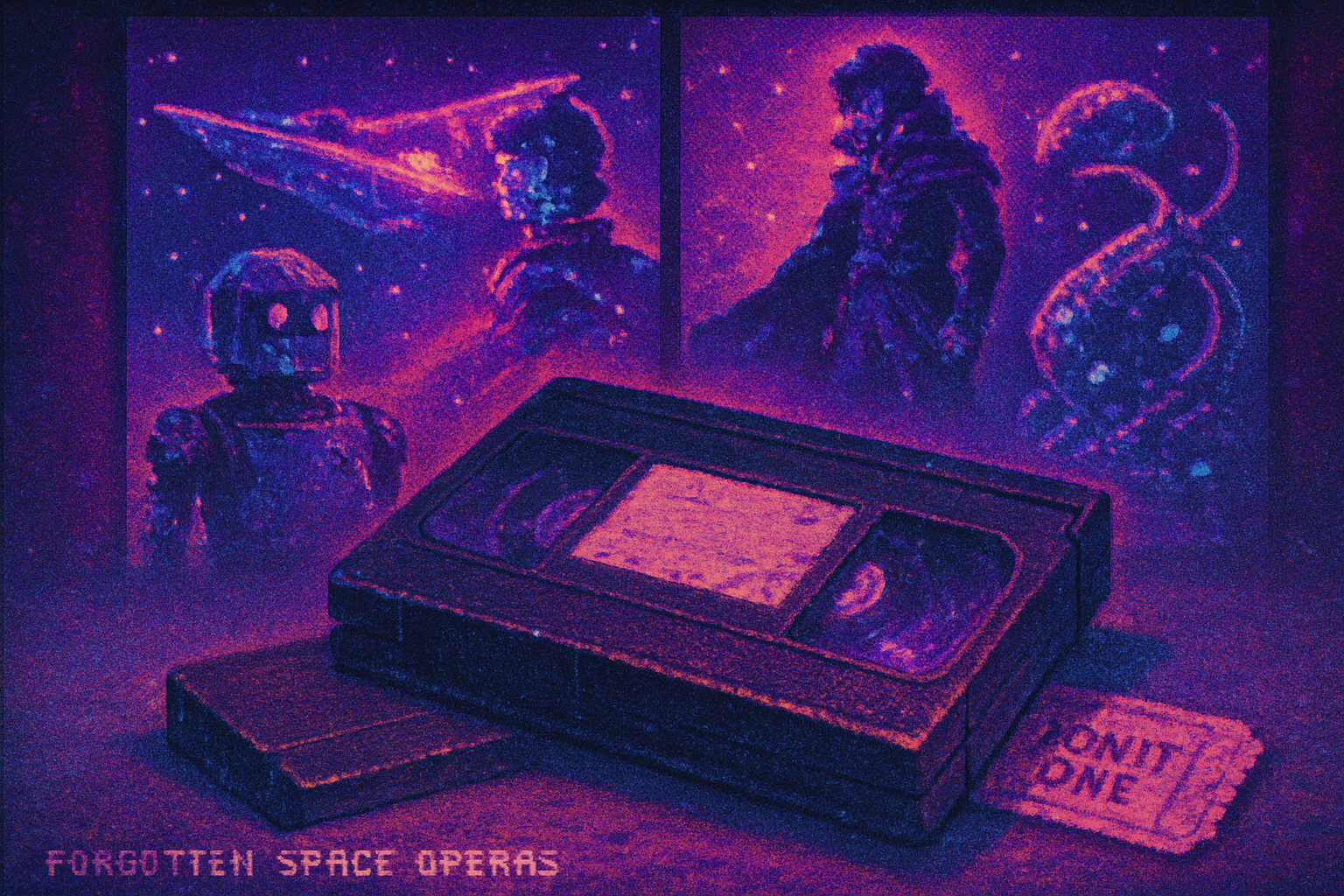
I found it in a cardboard box behind my grandfather’s record player: a tape with a handwritten label, smudged ink, the kind of artifact that promises adventure and smells faintly of lemon furniture polish and regret. One night I popped it into an ancient VCR and watched a ragged crew argue philosophy above a nebula. Halfway through I realized I’d been hoodwinked - not into nostalgia, but into discovery.
That’s what revisiting 80s and 90s space opera is like. These shows and films don’t always glitter the way the Star Wars or Star Trek machine wanted; they’re quieter, stranger, sometimes dissonant. They were experiments in storytelling and style - bold, messy, human. Many of them fell through the cultural cracks. Many shaped things you now take for granted.
Why bother dusting these off?
Because influence is often invisible. The high-concept arcs and moral ambivalence you praise in modern sci‑fi were being sketched in cramped animation studios and low‑budget sets decades ago. These works taught creators how to do political intrigue in space, how to make heroism ambiguous, how to marry operatic stakes to soap‑opera characters.
Also: they’re often weirder than the options on your streaming homepage. We like weird.
What to expect from this list
I’ve pulled together a dozen underseen 80s/90s space operas - a mix of anime, Western cartoons, and short‑lived live‑action experiments. For each: a snapshot of the story, the animation or production flavor, why the show matters now, and a quick tip on where to look (availability moves like a warp core, so use an aggregator such as JustWatch to confirm your region - https://www.justwatch.com).
Ulysses 31 (1981)
- Quick pitch - Classical myth in space - Odysseus reimagined as a starship captain cursed to wander the cosmos.
- Why it’s special - A Franco‑Japanese co‑production with an uncanny mix of European mythic gravitas and anime spectacle. The design is minimalist but expressive; the score is melancholic and theatrical.
- Why revisit - It’s an early example of blending high myth with episodic adventure - a direct ancestor to later genre mashups.
- Read more: https://en.wikipedia.org/wiki/Ulysses_31
- First‑watch - Start with episode 1; the setup is compact and emotionally precise.
Crusher Joe (1983 - OVA and film)
- Quick pitch - A ragtag fixer crew takes impossibly dangerous jobs (think freelance Jayne Cobb with heart).
- Why it’s special - Slick 80s animation, excellent ship and mechanical designs, and a pulp sensibility that respects grit over gloss.
- Why revisit - If you like space crews who are more mercenary than noble and stories that alternate between noir and slapstick, this is your fuel.
- Read more: https://en.wikipedia.org/wiki/Crusher_Joe
- First‑watch - The original film is a tidy gateway; follow with the OVAs if you crave more grit.
Gall Force (mid‑80s OVA series)
- Quick pitch - An all‑female cast embroiled in an interstellar war that slowly reveals cosmic stakes.
- Why it’s special - Ambitious in its scope and surprisingly serious for an OVA series - it tackles fatalism, memory, and the cyclical nature of violence.
- Why revisit - It’s a lesser‑known precursor to modern ensemble sci‑fi that centers on women without pandering.
- Read more: https://en.wikipedia.org/wiki/Gall_Force
- First‑watch - Start with the earliest OVA or the compilation movie for context.
Legend of the Galactic Heroes (1988–1997)
- Quick pitch - Aristocratic empire vs. democratic republic - a sprawling, chessboard politics epic in space.
- Why it’s special - Monumental political storytelling with a huge cast and philosophical dialogues; it reads like Tolstoy in a battlesuit.
- Why revisit - This series taught TV how long‑form political conflict in space could grip an audience without ever needing the third act to be a laser fight.
- Read more: https://en.wikipedia.org/wiki/Legend_of_the_Galactic_Heroes
- First‑watch - The OVA chronology rewards patience. If you want the gist fast, look for abridged summaries or curated episode lists.
Gunbuster (1988)
- Quick pitch - Super‑mecha meets coming‑of‑age tragedy; epics built from adolescence.
- Why it’s special - The animation experiments with time dilation as a narrative device; it’s melodrama elevated to an operatic scale.
- Why revisit - You’ll find direct echoes of emotional mecha beats in later series; it’s less about spectacle, more about consequence.
- Read more: https://en.wikipedia.org/wiki/Gunbuster
- First‑watch - The TV series (6 episodes + epilogue) is concise - watch in one sitting if you can.
The Irresponsible Captain Tylor (1993)
- Quick pitch - A cheerful layabout becomes a starship captain by accident - or by being unbelievably lucky.
- Why it’s special - Satire of military competence and charisma; it critiques hero worship with a smile.
- Why revisit - Its tone (deadpan comedic absurdity blended with serious moments) influenced several modern sci‑fi comedies.
- Read more: https://en.wikipedia.org/wiki/The_Irresponsible_Captain_Tylor
- First‑watch - Episode 1 for the fish‑out‑of‑water setup; then let Tylor do the rest.
Saber Rider and the Star Sheriffs (1987)
- Quick pitch - Cowboy archetypes transplanted to space. Equal parts Western and anime influence.
- Why it’s special - The adaptation by an American company reshaped anime for Western kids and added a distinct pulpy cadence.
- Why revisit - It’s a cultural fossil showing how anime was localized and how genre mashups can produce surprising emotional resonance.
- Read more: https://en.wikipedia.org/wiki/Saber_Rider_and_the_Star_Sheriffs
- First‑watch - Pick episodes that feature the giant robot battles to appreciate the genre-salad.
The Adventures of the Galaxy Rangers (1986)
- Quick pitch - Space cowboys with advanced tech tackling frontier chaos - grim, occasionally dark, often surprisingly moral.
- Why it’s special - Mature themes, serialized arcs, and a soundtrack that knows how to make danger taste heroic.
- Why revisit - It influenced later Western animated sci‑fi and showed American TV could do serialized space drama without talking down to its audience.
- Read more: https://en.wikipedia.org/wiki/The_Adventures_of_the_Galaxy_Rangers
- First‑watch - Episode 1; the pilot sets the tone cleanly.
Space: Above and Beyond (1995)
- Quick pitch - Hard‑knuckled marine drama in space with political context and flawed heroes.
- Why it’s special - Short‑lived but rigorous about military realism and the psychological cost of war.
- Why revisit - It’s a template for how character‑driven military sci‑fi can be made on TV - messy, moral, and not always pat.
- Read more: https://en.wikipedia.org/wiki/Space:_Above_and_Beyond
- First‑watch - The two‑episode pilot gives everything you need: stakes, enemies, and why the series mattered.
Captain Power and the Soldiers of the Future (1987)
- Quick pitch - Live‑action kids’ TV that flirted with dystopia - ambitious, slightly absurd, and full of practical‑effects charm.
- Why it’s special - A rare attempt at serialized live‑action space/sci‑fi on a TV budget that didn’t apologize for its worldbuilding.
- Why revisit - It’s an entertaining study in ambition outpacing resources - and often that tension produces unexpected creativity.
- Read more: https://en.wikipedia.org/wiki/Captain_Power_and_the_Soldiers_of_the_Future
- First‑watch - The pilot episode explains the toy‑friendly framework and the surprisingly bleak world.
Lexx (1997)
- Quick pitch - A bizarre, darkly comic journey on a living ship called the Lexx - part black comedy, part nightmare.
- Why it’s special - Gratuitously weird, unapologetically adult, and visually inventive; it’s a late‑90s experiment in anarchic space opera.
- Why revisit - If you like your space opera with a side of transgressive surrealism, this is the gateway drug.
- Read more: https://en.wikipedia.org/wiki/Lexx
- First‑watch - Episode 1 is enough to tell you whether you’ve entered a fever dream or a masterpiece.
Captain Harlock - Arcadia of My Youth (1982)
- Quick pitch - The noble space pirate as romantic rebel; romanticism and melancholy stitched together with classic animation.
- Why it’s special - Leiji Matsumoto’s design language - melancholy, romantic, nobly doomed - lives here in full bloom.
- Why revisit - Harlock is the spiritual ancestor of the lone, world-weary rebel who travels a beautiful and broken cosmos.
- Read more: https://en.wikipedia.org/wiki/Arcadia_of_My_Youth
- First‑watch - The film is a compact entry into Matsumoto’s broader universe.
Common threads these titles share
- Politics without exposition dumps - Many of these shows trust the viewer to follow complex institutions and motives.
- Moral ambiguity - No one is purely noble; heroism often looks petty and courage frequently looks stupid. That’s the point.
- Design experiments - From European minimalism to gaudy late‑80s mech gilding, the visual language of these works infected later creators.
- Serialization before streaming made it cool - Many of them used long arcs and slow burns when most TV preferred reset buttons.
How these shows shaped modern sci‑fi
- Long‑form political arcs in space TV (think political intrigue in recent prestige sci‑fi) echo the slow-burn of series like Legend of the Galactic Heroes.
- Dark comedy and surrealism in space (the lineage to shows like The Expanse and the oddball fringes of streaming sci‑fi) can be traced through works like Lexx and Tylor.
- Anime’s mature approach to war, time, and consequence - Gunbuster, Gall Force, et al. - fed the mechanized melodrama of later anime and Western shows alike.
Where to find them (practical tips)
- Use search aggregators such as JustWatch (https://www.justwatch.com) to check availability in your country. Streaming rights hop platforms like fleas in a fur coat.
- For older anime, try RetroCrush, Crunchyroll, or the anime catalogues on Prime Video and Netflix. Physical releases (Disc and collector editions) exist for many titles if you want pristine transfers.
- Classic Western cartoons and live‑action series sometimes turn up on free ad‑supported services like Tubi, Pluto TV, or official YouTube channels.
- If a title feels impossible to find, check library DVD collections or second‑hand marketplaces. The hunt is part of the joy.
A final note (about taste and curation)
These shows are inconsistent. They are brilliant in places and clumsy in others. They will offend your expectations of pacing and cheapen some cinematic conventions only to recompense you with a daring idea that appears out of nowhere. That’s their charm.
If you only ever rewatch the familiar blockbusters, you’ll have a lovely time. But if you want to understand the hidden scaffolding behind much of modern sci‑fi - if you want to meet the odd cousins who taught major creators how to tell certain stories - give these forgotten gems a night or two. You might come away with more questions than answers. That’s how discovery is supposed to feel.
Further reading and reference links:
- Ulysses 31 - https://en.wikipedia.org/wiki/Ulysses_31
- Crusher Joe - https://en.wikipedia.org/wiki/Crusher_Joe
- Gall Force - https://en.wikipedia.org/wiki/Gall_Force
- Legend of the Galactic Heroes - https://en.wikipedia.org/wiki/Legend_of_the_Galactic_Heroes
- Gunbuster - https://en.wikipedia.org/wiki/Gunbuster
- The Irresponsible Captain Tylor - https://en.wikipedia.org/wiki/The_Irresponsible_Captain_Tylor
- Saber Rider and the Star Sheriffs - https://en.wikipedia.org/wiki/Saber_Rider_and_the_Star_Sheriffs
- The Adventures of the Galaxy Rangers - https://en.wikipedia.org/wiki/The_Adventures_of_the_Galaxy_Rangers
- Space - Above and Beyond -
- Captain Power and the Soldiers of the Future - https://en.wikipedia.org/wiki/Captain_Power_and_the_Soldiers_of_the_Future
- Lexx - https://en.wikipedia.org/wiki/Lexx
- Arcadia of My Youth (Captain Harlock) - https://en.wikipedia.org/wiki/Arcadia_of_My_Youth
- JustWatch (streaming aggregator) - https://www.justwatch.com