· retrogaming · 6 min read
The Impact of Sega Dreamcast on Indie Game Development Today
The Sega Dreamcast didn't just die early; it seeded a set of practical and aesthetic habits that indie developers still mine today - from playful technical constraints to an appetite for risky experiments. This piece traces the Dreamcast's features and policies that nudged (and occasionally shoved) developers toward the indie-friendly practices we now take for granted.
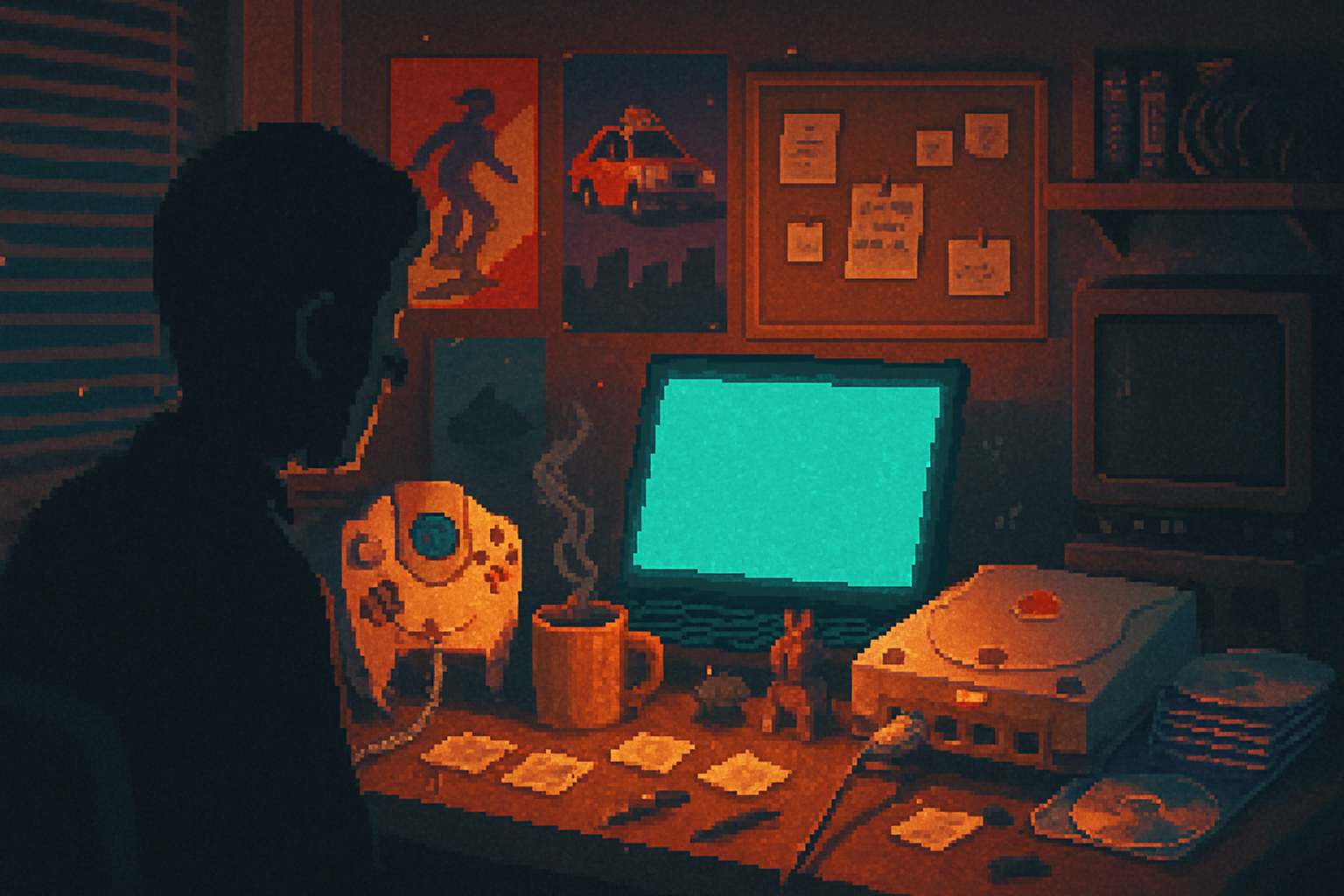
I still remember blowing dust out of a lime-green VMU, slapping it into a Dreamcast controller and waiting as the console chirped like a contraption from a friendlier future. The screen filled with skewed, gutsy 3D - geometry unapologetically low-poly, textures bright as candy - and a feeling that the platform had room for weirdness.
That weirdness mattered. The Dreamcast failed as a mass-market machine, but it succeeded as an incubator. It was one of the first modern consoles to flirt seriously with the internet, with easy development tools and with the idea that small teams could ship polished, idiosyncratic experiences. Those tendencies didn’t vanish when Sega pulled the plug; they leaked into the indie scene and shaped it in ways we still feel.
The Dreamcast’s gift: features that favored experimentation
The Dreamcast was not just a midlife crisis for Sega. Its hardware and policies created affordances that rewarded curiosity.
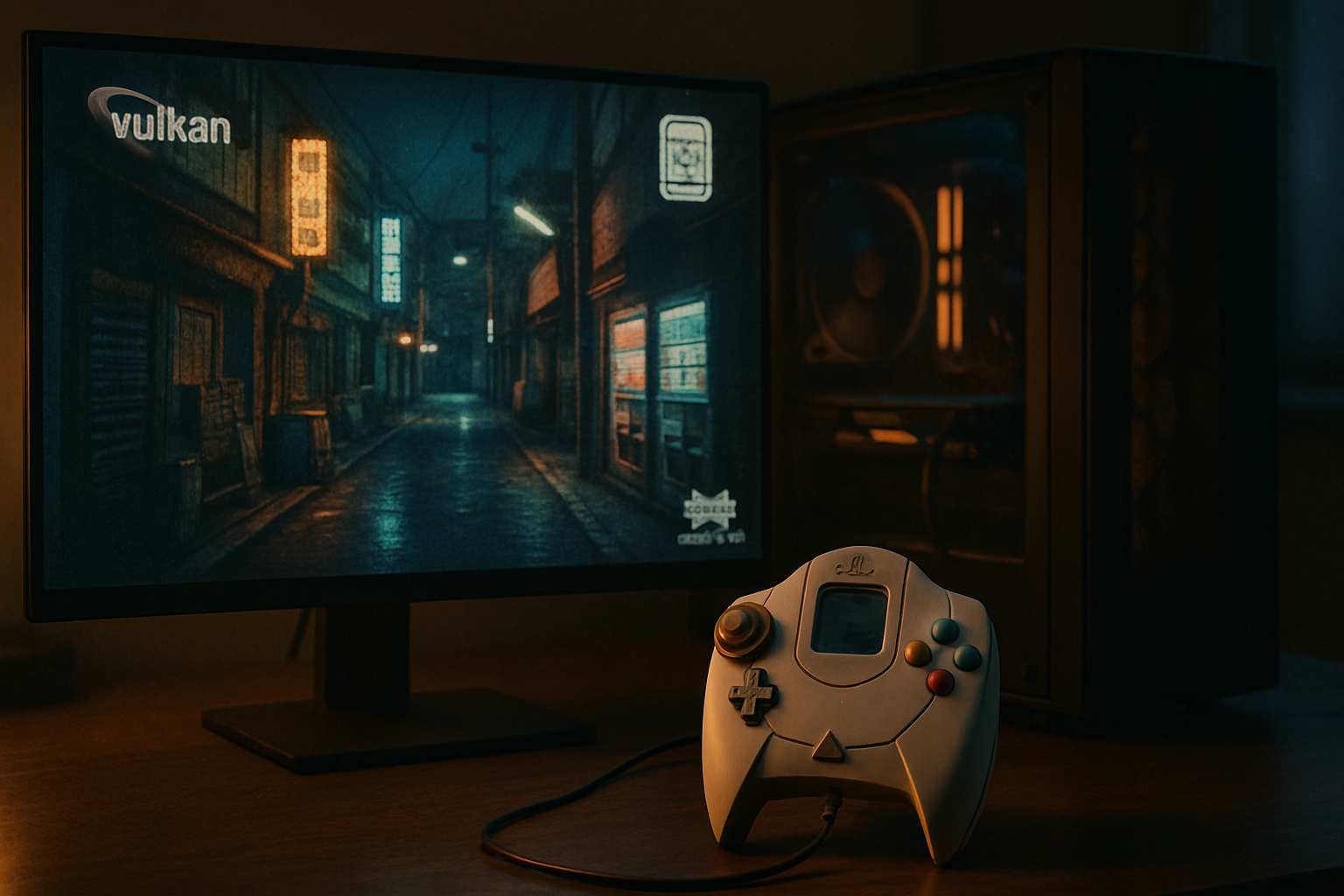
Windows CE support - Dreamcast could run games written for Microsoft’s Windows CE. That lowered the barrier to entry for developers who knew PC tooling and encouraged cross-platform thinking. The result: a console that felt friendlier to small teams who weren’t deep in console-specific toolchains.
Built-in modem and online services - Sega pushed online play and leaderboards before consoles standardized them. Early online functionality primed developers (and players) for connected experiences - lightweight, iterative, and community-driven.
VMU (Visual Memory Unit) - a tiny second-screen device with its own personality. It was a hardware constraint that invited creative uses - minigames, asynchronous info, companion toys - and planted the idea that peripherals could be playful extensions of a game’s design rather than sterile storage.
Hackability and MIL-CD - the Dreamcast was unusually permissive. Early security oversights and the MIL-CD standard made it easier for hobbyists to run unsigned code. That awkwardness catalyzed a homebrew community and a nascent aftermarket of new physical releases years after Sega’s withdrawal.
GD-ROM and disc-based distribution - The physical medium encouraged longer-form, higher-fidelity experiments than the cartridge era, and at the same time left room for small-run presses and collector-focused releases once mainstream publishing dried up.
For a console that lasted less than three years in many territories, these elements were unusually aligned with the needs of creative, risk-tolerant teams.
How those affordances mapped onto indie instincts
If you squint, many of the founding instincts of the modern indie movement are legible through the Dreamcast’s choices:
Tolerance for constraint breeds creativity. The Dreamcast’s quirky hardware produced a distinctive aesthetic - chunky 3D, bold color palettes, immediate mechanical clarity. Indie devs learned to treat limits as style, not handicap.
Small teams, big ideas. The era’s tooling made it easier for hobbyists and bedroom coders to produce consumer-grade discs. That precedent looks a lot like the teams that later crowdfunded and self-published on digital storefronts.
Community-first distribution. The Dreamcast homebrew scene taught developers how to court collector communities with limited physical runs - a tactic many modern indies use today to build buzz and sustain niche audiences.
Experimentation with connectivity. Early online experiments (matchmaking, leaderboards, downloadable content) hinted at the connected loops indie games now exploit - leaderboards, asynchronous social features, and small, persistent ecosystems.
Real echoes: developers and projects that still wear Dreamcast tattoos
There’s the obvious homebrew revival - teams that produce new Dreamcast discs long after the console’s commercial life ended - and a subtler, aesthetic and procedural inheritance in studio practices.
Homebrew and boutique releases - A persistent subculture has kept the Dreamcast alive as a platform. Indies and small studios like NG:DEV.TEAM and Senile Team created and released titles on Dreamcast hardware long after its commercial death, proving there’s still a market for physical, passion-driven games. See NG:DEV.TEAM’s continuing catalog for an example of a studio that straddles retro hardware and modern indie sensibilities (
Duranik and Sturmwind - Sturmwind was developed with Dreamcast releases in mind and later launched on multiple platforms. It’s an example of a project that began in the retro-influenced, small-run physical ecosystem and then broadened to reach modern audiences. More on the title’s history is available on its Wikipedia entry (
Senile Team and Rush Rush Rally Racing - small teams that used Dreamcast releases to connect directly with fans, maintaining a tight loop between developer and audience. That directness presages the way indies now rely on community feedback and collector cultures.
Modern indie teams and the Dreamcast aesthetic - Outside literal Dreamcast releases, many indie developers evoke the console’s aesthetics and design philosophy. You’ll see it in games that favor tactile, immediate 3D movement, boldly saturated palettes, and playful UI flourishes that feel more toy than tool. While few modern studios openly claim a single console as their north star, the Dreamcast’s fingerprints are visible in the playfulness of games that prefer experimentation over polish-mimicry.
(If you want to track the Dreamcast homebrew scene, its long tail of new releases and boutique publishers is well documented in enthusiast sites and retro-news coverage.)
Why the Dreamcast model matters for indies today
The Dreamcast taught - by design and accident - some lessons that remain actionable for contemporary indie teams.
Make hardware a design partner, not an enemy. Constraints can produce recognizable voice. VMU-style second-screens have modern analogues in companion apps and smartwatch integrations.
Ship to your community. Limited physical runs, retro-themed merch, and direct storefronts create a sustainable collector economy that rewards authenticity.
Embrace online as experimentation. Dreamcast-era online features were small, risky, and iterated in public. Indie developers can adopt the same posture - ship rough, learn from real players, refine.
Keep toolchains simple when useful. The Dreamcast’s Windows CE support lowered friction. Today, that lesson translates to choosing engines and technologies that get you to playable prototypes quickly so you can fail fast and iterate.
Practical takeaways for developers who want to borrow Dreamcast’s magic
Design with one charming constraint. Pick a hardware, UI, or aesthetic constraint and make it the game’s North Star - e.g., a single-button input, a small companion display, or a forced perspective.
Consider physical releases as marketing, not only profit. A small run of discs or cartridges builds loyalties and helps your game stand out in a sea of downloads.
Use simple online hooks. A single nightly leaderboard, asynchronous challenge, or a tiny cross-platform stat tracker is often more valuable than fully fledged multiplayer.
Prototype in familiar toolchains. Don’t invent bespoke pipelines unless you must. Dreamcast’s unexpected boon was lowering pipeline friction - modern indies should do the same.
The Dreamcast legacy: not a template, but a temperament
Sega’s console didn’t hand indies a guidebook. It handed them something better: an attitude. The Dreamcast said it was okay to try odd things, to ship with personality, and to talk directly to fans. Those are values - sardonic, stubborn, and a little romantic - that continue to shape how indies make and sell games.
In the end, the Dreamcast’s real gift was example. It proved that a console could be a playground for experiments that didn’t need to please shareholders, only players. If the indie scene has a moral - ship, listen, iterate, repeat - then part of that moral was written in Sega’s short-lived, wildly idealistic machine.
References
- Dreamcast (Wikipedia): https://en.wikipedia.org/wiki/Dreamcast
- Sturmwind (Wikipedia): https://en.wikipedia.org/wiki/Sturmwind
- NG:DEV.TEAM (official): http://www.ngdevteam.com/
- Senile Team (official): http://www.senileteam.com/