· retrogaming · 7 min read
Dreamcast Hidden Gems: 10 Underrated Titles You Need to Play
The Dreamcast’s short life meant more experiments than hits. Here are 10 overlooked Dreamcast games - wild, weird, and wonderfully different from the mainstream classics - with why they matter and how to get the most out of them.
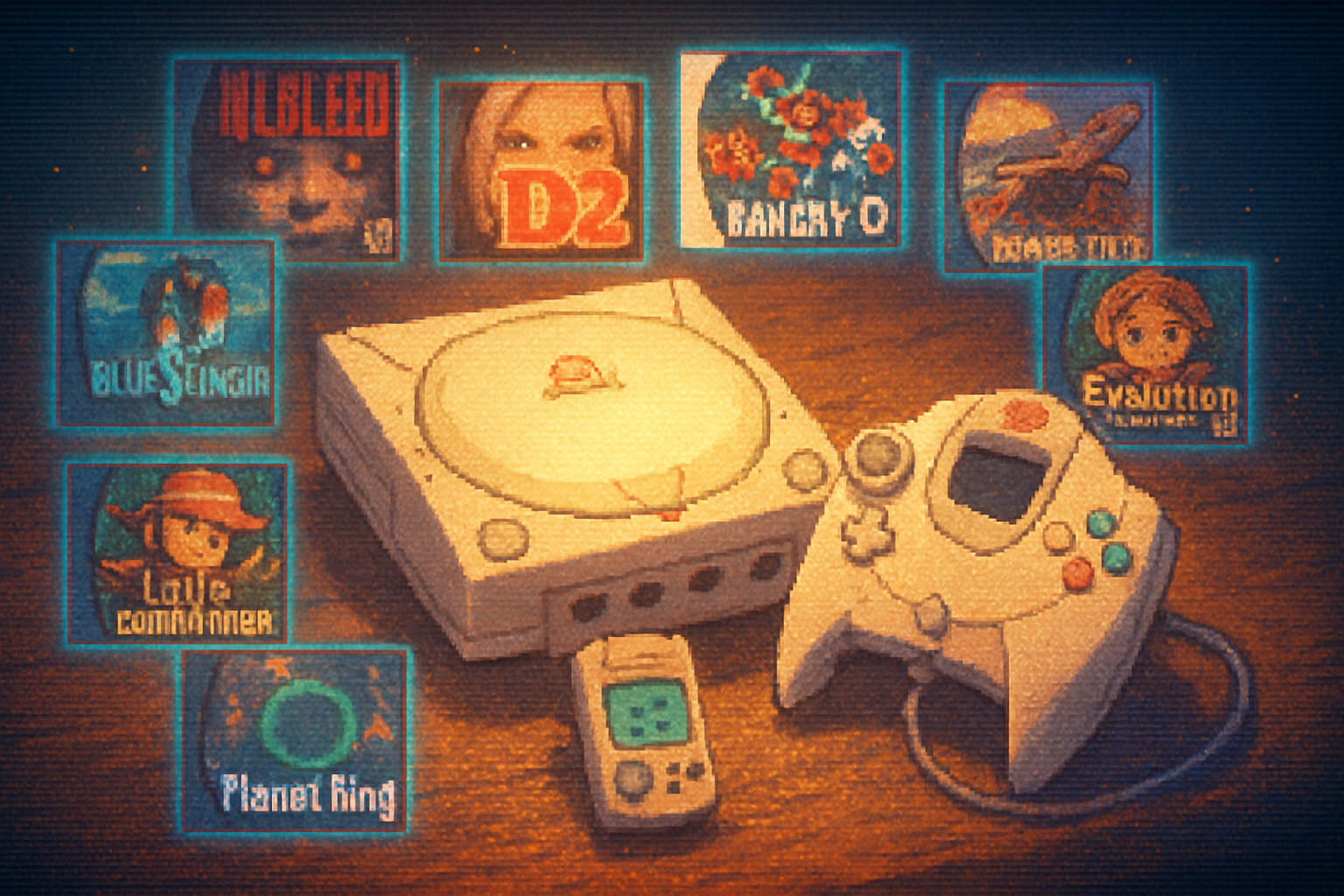
I was eight when I first saw a Dreamcast. A friend’s older brother propped the white console on a beer crate and fed it a steady diet of curious games no one at school talked about. While the rest of the world was crowing about speed and polygons, that cramped living room smelled like two things: cheap pizza and possibility.
Sega’s last hurrah didn’t just make great hits. It became a laboratory for strangeness. When the machine died commercially, it left behind dozens of underappreciated experiments - games that took chances and, in many cases, refused to be respectable.
Below are ten Dreamcast titles that deserve more attention. Not all are flawless; some are glorious trainwrecks. All are interesting. Each entry explains why the game matters, how it’s different from the console’s big-name fare, and practical tips to enjoy it today.
How to read this list
- “Why it matters” - the heart of the game’s design or cultural quirk.
- “What makes it different” - how it stands apart from mainstream Dreamcast fare like Shenmue, Jet Set Radio, or SoulCalibur.
- “Gameplay tips” - concrete advice so you don’t suffer through the first three hours before the charm appears.
1) Illbleed
- Why it matters - A survival-horror carnival freakshow that reads like someone fed a Stephen King novella to a B-movie VHS player.
- What makes it different - Instead of scripted jump scares, Illbleed gamifies fear. Enemies leave sensory cues on a radar; traps are a major design focus. The game is unapologetically cheap and theatrical - a horror-house theme park rather than a polished cinematic nightmare.
- Gameplay tips:
- Use headphones. The audio cues matter.
- Inspect the “sense radar” often; it tells you which kind of hazard is coming.
- Prioritize stamina and defensive items - survival trumps offense here.
- Save whenever you can - Illbleed is mischievous and unforgiving.
2) D2 (by Kenji Eno)
- Why it matters - Kenji Eno’s D2 is a fever-dream survival-adventure with cinematic ambitions and inexplicable detours. It’s an auteur game: sometimes brilliant, sometimes baffling. See
- What makes it different - D2 blends TV-style production values with experimental narrative beats and bizarre pacing. It’s less about traditional mechanics and more about mood, strange setpieces, and atmosphere.
- Gameplay tips:
- Embrace the pacing; the game asks you to watch as much as play.
- Keep multiple saves; some sequences are unforgiving or easily missable.
- Read item descriptions - the story is often buried in the small text.
3) Bangai-O
- Why it matters - Treasure’s Bangai-O is the videogame equivalent of setting a fireworks factory on a moving train. It’s an outrageously fast, physics-friendly shoot-‘em-up with a joyful lack of restraint. Reference:
- What makes it different - Where many shooters pride themselves on precision, Bangai-O embraces chaos: hordes of projectiles, screen-filling explosions, and creative stage hazards.
- Gameplay tips:
- Learn lock-on mechanics and when to use spread vs. focused fire.
- Stage memorization helps, but improvisation lets you survive the ridiculous wave patterns.
- Play cooperative modes when possible - destruction is more satisfying with a friend.
4) Border Down
- Why it matters - Border Down is a late-era 2D shooter that feels like a love letter to arcade craft. It’s one of the Dreamcast’s finest manic shooters, but it slipped under most radars. See
- What makes it different - The game’s core gimmick is the “border system”: taking a hit drops you into alternate versions of the stage, changing enemy patterns and difficulty. It’s an elegant way for a shooter to turn failure into narrative texture.
- Gameplay tips:
- Practice staying in the top “border” - your score and survival are much easier there.
- Learn the shot types and speed; your options determine how well you can manage crowded screens.
- The game rewards precision; patience pays off.
5) Propeller Arena (unreleased in the U.S.)
- Why it matters - An oddity of history:
- What makes it different - It’s not a realist flight sim; it’s arcade-y, whimsical aerial combat with tight controls and weird arenas. The decision to yank its release turned it into a rare collector’s ghost.
- Gameplay tips:
- Treat it like an arena fighter - learn positioning and vertical movement.
- Use boost conservatively; stamina matters.
- If you find an import copy, prioritize local multiplayer - it shines with humans.
6) Evolution: The World of Sacred Device
- Why it matters - A compact, inventive JRPG that feels like a distilled ’90s console RPG without filler.
- What makes it different - Modern players often expect sprawling epics; Evolution is efficient. Combat is tactical but brisk, and the weapon crafting/sociable banter keeps the tone light.
- Gameplay tips:
- Invest in weapon upgrades - they change combat more than levels do.
- Talk to NPCs and replay dungeons for rare materials.
- Save frequently before bosses; the game’s short length punishes missteps.
7) Blue Stinger
- Why it matters - Blue Stinger is what happens when survival horror gets sunburned - a goofy, borderline-derivative action-horror game that’s oddly charming. See
- What makes it different - Its B-movie tone and beach-set aesthetics are unusual for horror. The game alternates between clunky combat and moments of genuine oddness, creating a weird, memorable rhythm.
- Gameplay tips:
- Learn weapon ranges - melee and firearms behave differently.
- Inventory management matters; swap to the right tool for crowd control.
- Don’t expect refined controls; lean into the game’s silliness.
8) PlanetRing
- Why it matters - PlanetRing is less a game and more a sociological artifact: an early attempt to build an online console community. It shipped with chat rooms, mini-games, and an ephemeral player-driven culture. See
- What makes it different - Before Xbox Live or PlayStation Home, PlanetRing tried to graft an MMO-lite onto a console. What interests historians is the social space it attempted to create.
- Gameplay tips:
- If you can find archived servers or fans hosting emulation communities, go for the nostalgia.
- The experience is mostly in meeting others - consider it museum-level curiosity rather than a deep game.
9) Toy Commander
- Why it matters - Toy Commander turns childhood fantasy into a full game: a suburban house becomes a battlefield for remote-control toys. It’s clever level design wrapped in a whimsical premise. See
- What makes it different - The scale of the levels and the sense of playfulness set it apart. It’s less about realism and more about creative problem solving through toys.
- Gameplay tips:
- Experiment with each toy’s unique abilities - the designers expected you to improvise.
- Replay levels for better objectives; the scoring system rewards exploration.
- If controls feel floaty, remember you’re a toy - treat momentum as part of the puzzle.
10) Seaman
- Why it matters - Seaman is the Dreamcast’s most famous oddity: a virtual pet hybrid that uses the VMU/microphone and has a sardonic personality. It’s equal parts charming, creepy, and hilarious. See
- What makes it different - Talking to a fish with a human face and getting back sass was something only the Dreamcast, in its late-era insanity, would attempt. Seaman is less a game than a conversational performance piece.
- Gameplay tips:
- Use a microphone (or an emulated equivalent) for the full experience - the game expects voice input.
- Be patient - Seaman is slow to grow but rewards long-term attention.
- Read fan translations and guides if you’re playing an import; the humor often depends on small conversational cues.
Where to find these games today
- Imports and secondhand markets - eBay, specialized retro stores, and collector forums are the common sources.
- Re-releases and ports - a few Dreamcast favorites have migrated to modern platforms, but many of the obscure titles remain playable only on original hardware or through emulation.
- Emulation - If you go this route, be mindful of regional differences and support legal ownership when possible.
Final thought
Dreamcast’s legacy isn’t just a set of great hits; it’s a record of risk-taking. These ten games show different ways developers tried to bend players’ expectations - whether by turning fear into a minigame, building social spaces before the infrastructure existed, or making a microphone into a gameplay mechanic. They’re uneven. They’re strange. And they’re precisely why the Dreamcast still matters: it was a console that let odd ideas breathe.
(References: linked individually in each entry to their Wikipedia pages.)