· culture · 7 min read
The Dark Side of VHS Collecting: A Cautionary Tale
VHS collecting is romantic - until it isn't. This piece explores counterfeit tapes, obsession with rarity, physical decay, legal risks, and the mental-health pitfalls of nostalgia addiction, with concrete tips to protect your wallet and your sanity.
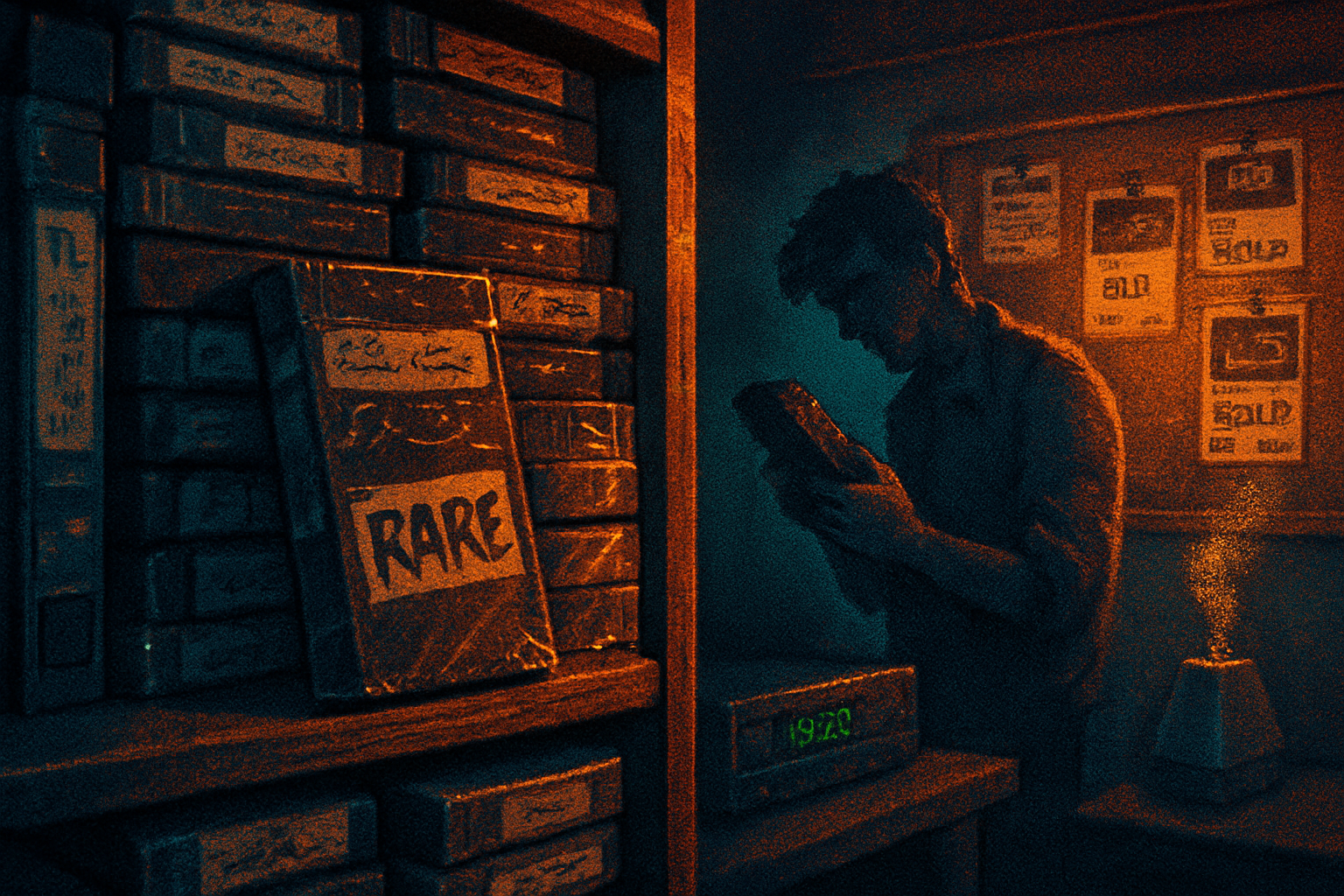
It began with a thrill: the smell of old cardboard, the soft click of a clumsy plastic shell, the dusty thrill of a half-forgotten title that promised to be absolutely unique. A collector I know drove three hours to a flea market to buy a tape advertised as a one-of-a-kind festival cut. He paid twice what he’d intended to spend. When the tape arrived, it played - but only after skipping, warbling, and revealing a bootleg title screen pasted over the original. The “rare” find was a skillful forgery, and the wound it left lasted far longer than the film.
That story is small and silly. But it teaches a larger lesson: collecting VHS is a hobby that masquerades as sentimental tourism. It promises the comfort of memory and the prestige of rarity. It also delivers counterfeits, slow chemical rot, marketplaces of predators, and - less obviously - a way to anchor yourself to the past until the present feels unbearable.
This is a cautionary tale. If you care about tapes - or if you love someone who does - read on.
Why VHS? The romantic veneer and the underlying economics
VHS is more than a physical format. For many, it’s a time machine. The clumsiness of the medium doubles as proof of authenticity: a real feeling of the 80s or 90s held in your hands. That aura drives prices. A genuinely rare release, a factory-sealed tape, or an obscure festival print can sell for hundreds or thousands of dollars.
But where value concentrates, scams and pathology follow:
- Counterfeiters replicate labels, shrink-wrap, and artwork to create fakes that look legitimate.
- Sellers use vague provenance, edited photos, and pressure tactics to close sales before scrutiny.
- The physical medium degrades; a tape’s appearance can be deliberately aged to look desirable while being worthless internally.
Economics makes mythology credible. Rarity is a story you pay for - and sometimes it’s a story someone else got paid to tell.
The counterfeit problem: how a cherished tape becomes a shell game
Counterfeit VHS tapes take several shapes:
- Bootlegs - Unauthorized copies of films, often with altered artwork or amateur dubbing.
- Repackages - Legitimate tapes stripped of original labels and given updated or forged covers.
- Fakes of “collector’s editions” - Factory-sealed tapes that have never been sealed.
Signs of a fake to watch for
- Unclear provenance - No clear seller history, vague “came from my late uncle’s collection” stories.
- Too-good pricing - If the price is dramatically lower than comparable listings, assume the seller knows something.
- Label inconsistencies - Different fonts, misspellings, or labels that sit oddly on the shell.
- Internal evidence - If you can, open the case and look at the spool hubs, tape edges, and any handwritten markings.
The marketplaces aren’t neutral. Online auction sites and social platforms make it easy to hide edits, inflate bids, or sell at scale without physical verification. Community reputation helps - but it isn’t foolproof.
For more on the format and its culture, see the overview on Wikipedia: VHS.
Physical decay: vinegar syndrome and the quiet rot of obsession
VHS is chemical. Tapes suffer from “vinegar syndrome” (a breakdown of the acetate base), mold, magnetic loss, and sticky-shed syndrome. Unlike a tarnished coin or a dog-eared book, a degraded tape is often irretrievable; the film and sound can be lost forever.
Collectors who ignore climate control - cheap shelving in a humid basement, for example - are gambling. With enough neglect, a lifetime of searching buys you a box of ruined memories.
Legality and ethics: what your “rare” tape might also be
The line between legitimate collecting and illicit trade can blur: bootlegs violate copyright, and some rare tapes are the product of unauthorized studio duplicates or private screenings. Buying or selling them can carry legal and moral risks.
If you prize ethical collecting, insist on documentation: proof of original purchase, scans of factory seals, and transparent seller histories.
The psychology - nostalgia as balm and bandage
Nostalgia feels warm. It also has teeth. Psychologists have shown that nostalgia can boost mood, social connectedness, and a sense of meaning. But there’s a flip side: when nostalgia becomes a strategy to avoid present discomfort, it transforms into a compulsion.
Call it nostalgia addiction - a pattern in which people compulsively chase past artifacts or experiences to regulate mood. The behavior looks like this:
- Compulsive searching across auction sites and forums, losing hours or days.
- Emotional volatility tied to acquisitions or rejections (exhilaration when winning, crushing despair when outbid).
- Financial strain - repeated purchases despite negative consequences.
- Using the hobby to avoid relationships or responsibilities.
Researchers such as Clay Routledge have explored nostalgia’s psychological roles; for practical discussions, see resources like Psychology Today on nostalgia and memory.
Nostalgia is not a diagnosis. But when the search for the past replaces engagement with the present, it becomes a problem.
Profiles of harm: how collecting tips into pathology
- The Hoarder - Starts with sentimental buying, ends with a garage stacked floor to ceiling. Social life constricts; the collection becomes a wall.
- The Gambler - Treats rare finds like jackpots, blows budgets on auctions, and rationalizes losses as investment research.
- The Archivist as Denier - Believes every tape is salvageable despite mounting evidence, refusing to digitize or accept professional assessment.
Each pattern has a different therapy: practical limits, financial counseling, and sometimes clinical help for compulsive behaviors.
Practical safeguards: protect your money and your mind
If you love VHS and want to keep it healthy, here’s a checklist:
- Set a clear, written budget. Treat it like an entertainment budget, not an investment vehicle.
- Vet sellers - prefer long-established stores, community-recognized sellers, and platforms with buyer protection.
- Ask for high-resolution photos of labels, spools, factory seals, and any wear. Request video proof of playback if possible.
- Learn the physical signs of age and forgery - label printing, seam glue, and tape edges.
- Keep climate control - cool, dry storage; silica gel; upright shelving; no sunlight.
- Digitize prized tapes. A loss is less permanent when you have a verified digital copy (but note that digital copies don’t magically legalize an illicit transfer).
- Pause before a purchase - wait 48–72 hours on high-cost buys to let impulse fade.
- Talk to someone. If an acquisition becomes the only thing you look forward to, that’s a red flag.
When to walk away - and how to do it with dignity
You don’t need to stop collecting to be healthy. You do need boundaries.
Walk away when:
- The hobby causes regular arguments with people you care about.
- You steal, lie, or hide purchases.
- You borrow money or miss essentials because of buying.
Walking away doesn’t require dramatic gestures. Start small: reduce active bidding, sell a portion of the collection, or volunteer to curate a local film night so your love becomes social and not solitary.
A final note on value: memory is not a market cap
There’s a cruelty in turning memory into margin. Rarity inflates value; demand inflates myth. Meanwhile, what you really want - a connection to a simpler feeling, a sense of yourself - can’t be stored on a shelf.
Collecting can be generous: sharing tapes at a friend’s house, teaching kids how to thread a VCR, or documenting local cinema history. It becomes poisonous when it’s about possession rather than participation.
The tape in my opening anecdote found its way to a buyer who believed the story of rarity and paid full price. My friend learned two lessons: always ask for video proof, and the impulse to win isn’t the same thing as joy. The tape was mediocre; the lesson was expensive and useful.
If you collect, keep the romance. But don’t let romance rent out space where health, relationships, and financial sanity should live.
References
- VHS (format) - Wikipedia: https://en.wikipedia.org/wiki/VHS
- Psychology Today - general resources on nostalgia and memory: https://www.psychologytoday.com/