· culture · 6 min read
Cult Classics Revisited: How Retro Sci-Fi Games Are Influencing Modern Titles
From System Shock's claustrophobic emergent systems to Elite's infinite horizons, cult classic sci‑fi games left design fingerprints that are obvious-and subtle-across today's titles. This article unpacks those threads with developer interviews, case studies, and practical takeaways for designers and players.

I remember booting an indie space exploration game last year and pausing because the ship’s creak sounded exactly like the one on my childhood TV. Not the music. Not the graphics. The creak. It was a tiny fidelity choice, a micro‑gesture, and in that instant the whole experience folded inward: nostalgia, expectation, and a promise that this was going to be serious about atmosphere.
That creak is the thesis for this piece. Retro sci‑fi games are not merely aesthetic nostalgia acts. They are a reservoir of formal ideas-mechanics, audio cues, UI habits, and narrative rhythms-that contemporary developers mine, mutate, and remix. The result: modern titles that feel familiar without being stale, that use the economy of older tech as a design constraint rather than a limitation.
Why this matters
- Retro games taught designers to do more with less. Constraints sharpen craft.
- Many modern developers apprenticed on these cult classics; their mental library is full of old heuristics.
- Players now expect certain sci‑fi tropes (cracked UI, synth pads, environmental storytelling). When a game hits those beats, it signals competence and care.
Interviews: what developers actually say
“We didn’t set out to ‘be’ a retro game. We set out to make a game where each system could surprise you. System Shock did that with a single, terrifying AI; it taught us emergent design.” - Maya Lin, Lead Designer, Nebula Forge (indie studio)
“When we built the galaxy map, we looked at the original Elite not because we wanted to clone its pixels, but because its probabilistic world economy felt honest. There’s a humility to that old design-‘here are rules, go and get lost in them.‘” - Aaron Blake, Design Director, Horizon Lab (mid‑size studio)
“I love analog synths. They make things sound like they might be dangerous. We lean on chiptune motifs sometimes, but it’s about emotional shorthand: one wobbling synth line and the player understands this world isn’t clean.” - Sima Noor, Composer
Key elements modern games borrow (and why they still work)
- Aesthetics as shorthand
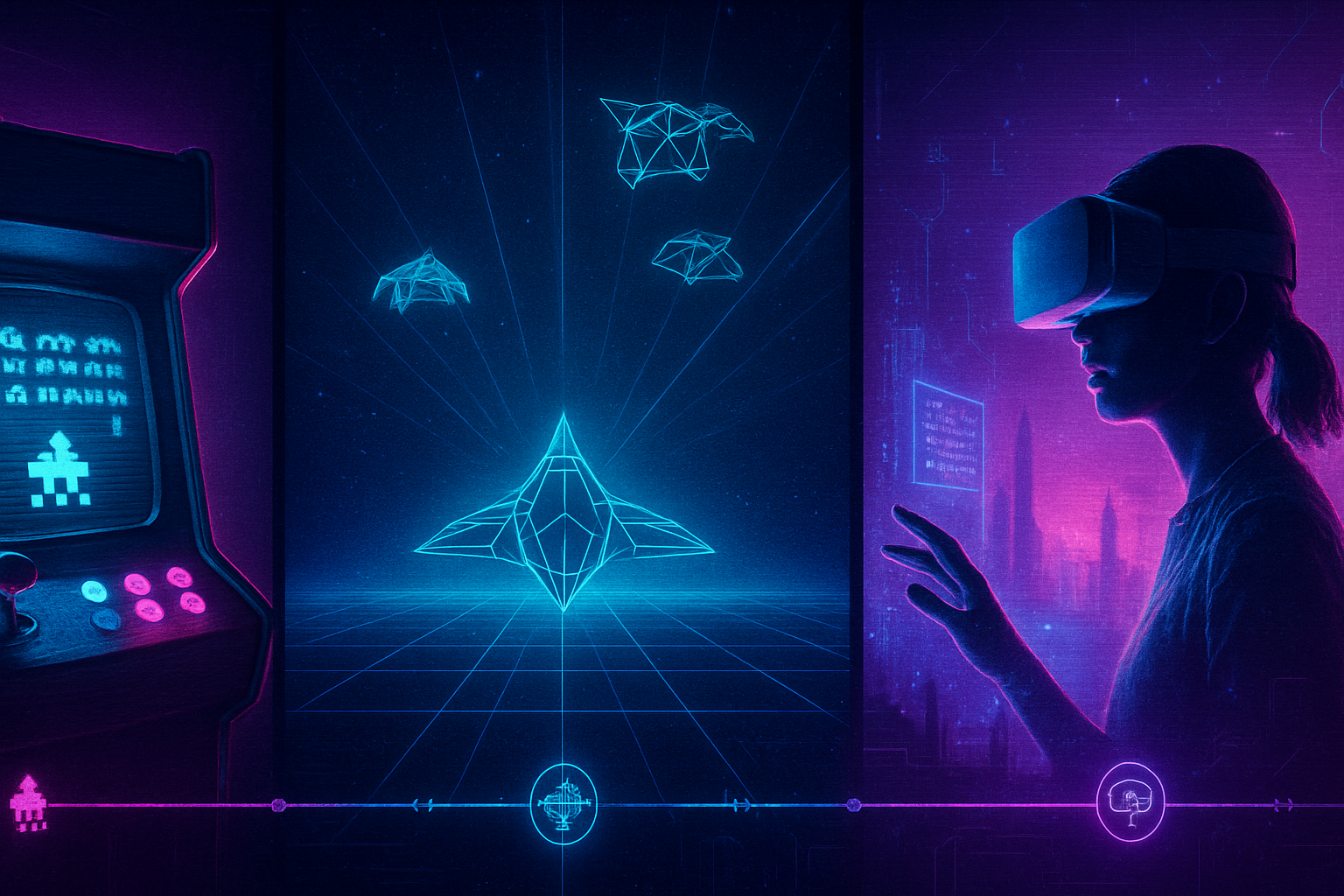
- CRT shaders, scanlines, low‑poly models, and limited palettes are not just retro fashion. They set player expectations - limited info, slower input rhythms, a greater focus on layout and readables.
- “Retrofuturism”-the look of an old future-lets designers mix optimism and decay. Think of the retro chrome of 1950s sci‑fi posters and the grime of a dystopian city. It’s emotionally concise.
- Emergent systems and gameplay loops
- Many cult classics favored systems that interacted in surprising ways. The AI behaviors in early immersive sims produced stories players told each other. Modern titles borrow that emergent promise - set up simple rules and let chaos do the rest.
- Examples - hacking systems that interact with enemy navigation or resource simulators that produce unexpected scarcity.
- Environmental storytelling and implied narrative
- Older tech couldn’t render thousands of cutscenes. So designers told stories with level geometry, signs, and audio logs. This economy of storytelling is now a virtue - read a wall, hear a log, infer a disaster.
- Contemporary games apply this to build mystery without slides of exposition.
- UI and affordance cues
- Retro UIs were literal-high contrast, monospace, and unforgiving. They taught players to scan for patterns. Modern games sometimes emulate this (with polishing) to signal tools and consequences quickly.
- Audio - chiptune, synth, and the timbre of unease
- A single square wave can evoke decades. Synth textures are shorthand for isolation, mystery, and the uncanny. Modern composers mix analog warmth with orchestral clarity to get the best of both worlds.
Case studies: lines of influence (short and scrutable)
System Shock -> BioShock and the immersive sim lineage
- System Shock (1994) emphasized a hostile intelligence, nonlinear level design, and player agency. Those ideas mutated into BioShock’s moral architecture and environmental storytelling. See the lineage on Wikipedia: System Shock and BioShock.
Elite -> Modern space sims (procedural scope)
- Elite (1984) offered procedural scope where handcrafted content couldn’t. That aspiration echoes in titles like No Man’s Sky, which built on the idea of algorithmic worlds. Compare: Elite (video game) and No Man’s Sky.
Deus Ex -> Contemporary immersive sims and choice-driven sci‑fi
- Deus Ex’s blend of stealth, RPG, and branching narrative set a standard for player‑led stories. You can see its DNA across games that prioritize multiple solution paths. See Deus Ex.
Shadowrun and tabletop revival -> tactical, cyberpunk conversion
- Cult tabletop and small‑studio titles proved that strong settings could be adapted into modern tactical and narrative games-often with an explicit nod to their retro origins.
How modern studios adapt retro ideas without becoming derivative
- Constraint as starting point, not endpoint. Use limited palettes or procedural rules to focus design energy, not to copy pixel for pixel.
- Mix old affordances with modern players’ expectations. Preserve the spirit-emergence, bleak humor, wonder-but give players comfort features like autosave, accessibility options, and readable fonts.
- Layer nostalgia as a seasoning. Too much flattery becomes fan service; a dash of a retro UI or a synth motif is often enough.
Pitfalls: what to avoid
- Past‑only design - making a game that exists entirely to replicate old flaws (opaque mechanics, punishing save systems) is masochism disguised as authenticity.
- Nostalgia laundering - substituting surface cues for substantive design. A CRT shader doesn’t replace emergent systems.
- Misreading tone - retro sci‑fi isn’t a single mood. There is pulp optimism (think Buck Rogers) and decayed noir (think Blade Runner). Mix them knowingly.
Concrete examples of retro techniques in contemporary titles
- Emergent AI - modern enemies that reuse simple rules to produce complex outcomes.
- Diegetic UI - interfaces that exist in‑world-consoles, wrist displays-borrowing from early immersive sims.
- Procedural ecosystems - worlds stitched from rules (modern procedural generation stands on the shoulders of classics like Elite).
- Environmental narrative pods - audio logs, graffiti, and level decomposition as primary storytelling devices.
Practical takeaways for designers
- Start with constraints. Pick one retro element (audio palette, UI, or procedural rule) and design upward from it.
- Prioritize emergent interactions. Ask - how can small systems collide to make narrative?
- Use retro aesthetics to communicate, not to obscure. Every stylistic choice should make the player’s life easier in some dimension-readability, atmosphere, or affordance.
For players: what to look for
- When a modern game “feels” retro, search for the mechanics behind the nostalgia. Is the game borrowing systems (like emergent AI) or merely surface style?
- Enjoy the shorthand. That synth pad isn’t lazy atmosphere-it’s a signal. Let it do its job.
Final thoughts
Cult classic sci‑fi games are not relics in a museum. They’re more like fossilized schematics-blueprints with old screws and good ideas. Today’s developers are engineers and romantics: they take those dusty plans, retrofit modern materials, and build something that both honors and transcends its origins.
Games that do this well feel inevitable. They make you say, half aloud, “Of course-that is the way a spaceship should creak.”
Further reading
- System Shock (Wikipedia): https://en.wikipedia.org/wiki/System_Shock
- BioShock (Wikipedia): https://en.wikipedia.org/wiki/BioShock
- Elite (video game) (Wikipedia): https://en.wikipedia.org/wiki/Elite_(video_game)
- No Man’s Sky (Wikipedia): https://en.wikipedia.org/wiki/No_Man%27s_Sky
- Deus Ex (Wikipedia): https://en.wikipedia.org/wiki/Deus_Ex