· retrogaming · 6 min read
The Controversial Legacy of the 3DO: Was It Ahead of Its Time or Oversold?
The 3DO arrived in 1993 as a promise: a multimedia, 32-bit future for gaming. It left behind a trail of high prices, fumbled marketing, and a baffled customer base. This essay untangles whether the 3DO was visionary or simply a spectacular lesson in how not to launch a platform.
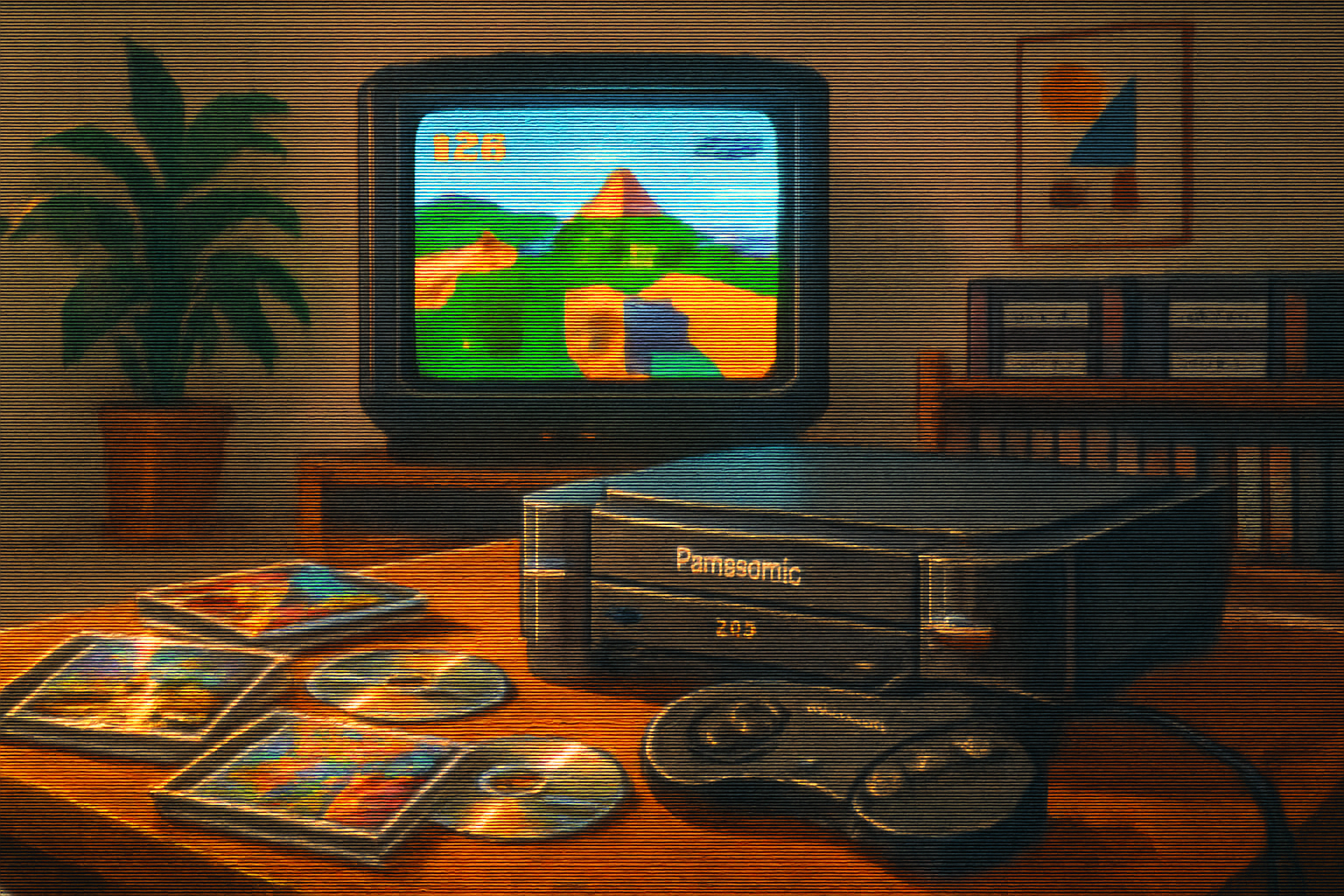
It begins, as many tech tragedies do, with a dinner party.
Trip Hawkins-founder of Electronic Arts-arrives at a Hollywood gathering and describes the future: a standardized, high-end multimedia console that would make cartridges obsolete, render cruder machines quaint, and turn video games into interactive cinema. The pitch was intoxicating. The reality, delivered in late 1993 with a $699 price tag and a stack of shiny CDs, was less so.
This is the story of the 3DO: a machine that looked forward and tripped on its own shoelaces.
The promise: multimedia, openness, and 32 bits of bravado
In the early 1990s, the world smelled of two things: CDs and possibility. CD-ROMs suddenly gave developers mass storage for audio, full-motion video (FMV), and sprawling levels. The 3DO Company, led by Trip Hawkins, stepped into that smell with a simple thesis:
- Build a reference design for a next-generation multimedia console.
- License the design to electronics manufacturers (Panasonic, Goldstar/LG, Sanyo), rather than sell hardware directly.
- Create a platform where third-party publishers could flourish without being bound to a single hardware manufacturer.
That business model was radical for consoles, which until then had been vertically integrated affairs: Nintendo or Sega designed hardware and curated software ecosystems. The 3DO promised a modular era, an “open” console much like the concept of a PC but with a common standard and the cachet of a premium device.
Technically, the 3DO was no slouch for its day: CD-based, 32-bit architecture, hardware-assisted graphics and decent audio capabilities. In press materials it read like a manifesto - not just a games console but a multimedia hub.
(If you want the basic history and timeline, see the overview on Wikipedia.) [https://en.wikipedia.org/wiki/3DO_Interactive_Multiplayer]
The first big mistake: pricing the dream out of reach
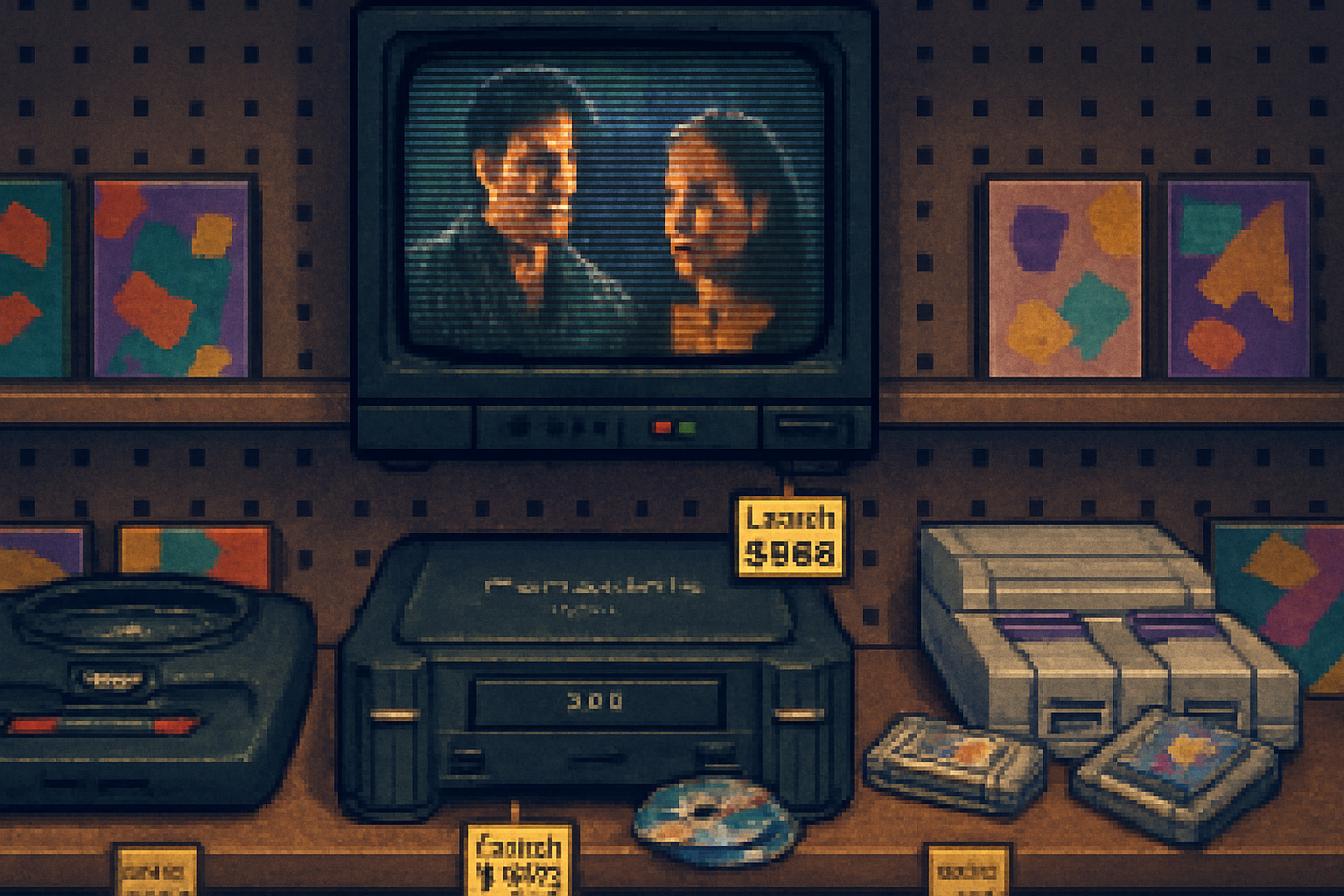
This is where rhetoric meets reality. The 3DO launched at an MSRP of $699 in 1993 - roughly equivalent to well over $1,300 today when adjusted for inflation. To call that steep is to call a blizzard a light dusting.
Why so expensive?
- The licensing model meant hardware manufacturers had to pay royalties and manufacturing costs without the benefit of absorbing losses on a subsidized unit price (the classic console tactic - sell hardware at a loss to sell software at a profit).
- The machine was marketed as a premium appliance.
The result: a console that looked like luxury and priced like one, but offered software that often felt experimental rather than essential. Consumers are willing to pay top-dollar for status and killer experiences. The 3DO had neither reliably.
The second mistake: hype without a killer app
Consoles rise and fall on titles. The NES had Mario. PlayStation would shortly have Final Fantasy VII and a better third-party relationship. The 3DO had some interesting ports and a handful of original projects, but no system-defining franchise. Much of its early software leaned on FMV - flashy, but often shallow - and ports that showcased the CD’s audio/visual capacity without solving gameplay or design problems.
A platform can survive bad marketing, bad timing, or mediocre hardware if it has a franchise that compels purchases. The 3DO had impressive demos and creative experiments, but nothing that made consumers prioritize this system over cheaper carts or even their PC.
The third mistake: a confused identity and fractured distribution
Open license was a good idea on paper. In practice, multiple manufacturers meant multiple SKUs, inconsistent retail support, and muddled messaging. Was the 3DO a Panasonic premium stereo accessory? A dedicated game machine? Retailers and consumers were unsure.
Compare with Sony a few years later: Sony controlled the box, the price strategy, and - crucially - the developer relations. PlayStation launched with a clearer identity and a better real-world incentive system for publishers.
Was the hardware actually ahead of its time?
Short answer: partly.
Longer answer: the 3DO anticipated many trends that later consoles made successful:
- CD-ROM as primary medium (Sony’s PlayStation and Sega’s later hardware doubled down on CDs).
- Emphasis on multimedia and FMV (a trend that proved ephemeral in game design, but technologically prescient).
- 32-bit/console polygonal graphics and richer audio than cartridge-era systems.
Where the 3DO fell short technically was not raw ambition but ecosystem engineering: developer tools, clear performance thresholds, and a robust first-party pipeline. Vision without the scaffolding that helps third parties thrive is just a beautiful building that collapses on opening day.
The marketing problem: selling a future that hadn’t arrived
Marketing the 3DO felt like trying to sell a gourmet tasting menu to a person who came hungry and only had $20 in their pocket. The company sold the idea of an interactive multimedia revolution - and then asked the customer to fund the revolution.
Two specific marketing sins:
- Overpromising. The 3DO was billed as the watershed, next-gen device in breathless terms that invited comparison to tomorrow’s standards, not today’s realities.
- Technical puffery. The era loved “bits” as a shorthand for power (16-bit vs. 32-bit). The 3DO’s marketing leaned into those claims while many games still relied on design craft rather than raw silicon.
When marketing outpaces deliverables, disappointment is inevitable.
What it did well (and why some people still love it)
- It pushed the industry toward CD-based multimedia faster. That transition reshaped games across the 1990s.
- It fostered some experimental game design - titles that wouldn’t have existed on cartridge-only systems.
- For collectors and historians, the 3DO is a beautiful artifact of an industry in transition - a bold attempt to reinvent the console model.
Verdict: Ahead of its time - but oversold and under-delivered
The 3DO was both visionary and naive.
- Visionary because it recognized the coming dominance of CD media, multimedia experiences, and the value of an open-ish standard.
- Naive because it underestimated how much console success depends on price strategy, a coherent retail identity, first-party investment, and developer incentives.
It’s tempting to condescend to the 3DO as merely a business-school case study in hubris. But that’s too easy. The console didn’t fail purely because it was expensive or because its hardware wasn’t good - it failed because its entire business architecture was misaligned with how people buy games and how publishers decide to invest.
If the 3DO had launched $200 cheaper with stronger exclusive content or been funded by a manufacturer willing to subsidize adoption, history might read differently. As it is, the 3DO is an elegant counterfactual: a plausible alternate path for the 1990s gaming landscape that stumbled on human incentives rather than silicon.
Lessons for today (and the next “open console”)
- Pricing matters. Consumers still vote with wallets, and early adopters are price-sensitive when the killer-app library is thin.
- Control matters. If you want a robust platform, either own it end-to-end or build ironclad incentives for developers and retailers.
- Hype must be earned. Promise the future sparingly; deliver immediate value first.
- Radical business models need radical patience. The PC model (open hardware, many vendors) works because a massive ecosystem and standardization efforts preceded consumer buy-in.
Closing image
The 3DO remains a peculiarly 1990s relic: glossy, confident, a touch theatrical, and ultimately undone by the friction between marketing utopia and commercial reality. It demonstrates a truth that’s always worth repeating: ambition is not a substitute for product-market fit.
If you want to dig into the timeline and specs, start with the public overview here: 3DO Interactive Multiplayer - Wikipedia.