· retrogaming · 6 min read
3DO vs. the Competition: How it Stood Up Against SEGA and Nintendo
A close look at the 3DO Interactive Multiplayer: what it did differently, which exclusives it offered, and why it ultimately lost ground to Sega and Nintendo despite technical promise and early hits.
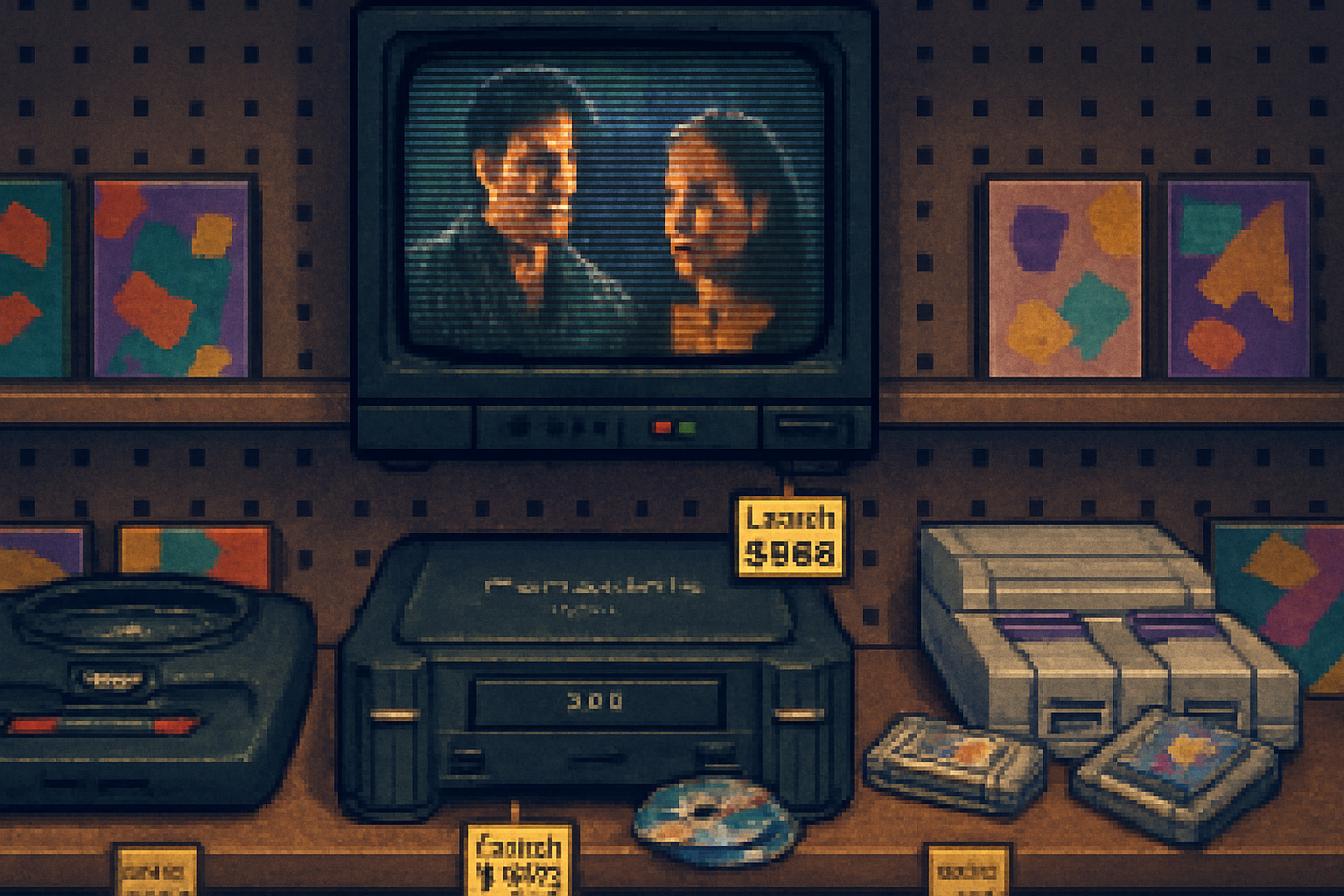
In the summer of 1993 a curious thing happened in electronics stores: a shiny, futuristic box sat on a shelf, priced like a small used car and promising the future of games as “multimedia entertainment.” It was the 3DO Interactive Multiplayer. People stared, pocket calculators came out, and most quietly went back to the comforting, cheaper worlds of Mario and Sonic.
Why did a machine that looked-and sometimes performed-like the future stumble so badly against Sega and Nintendo? Because the story of the 3DO is less a technical tragedy and more a business-school cautionary tale with a soundtrack of FMV clips and CD audio.
The opening move: what the 3DO actually was
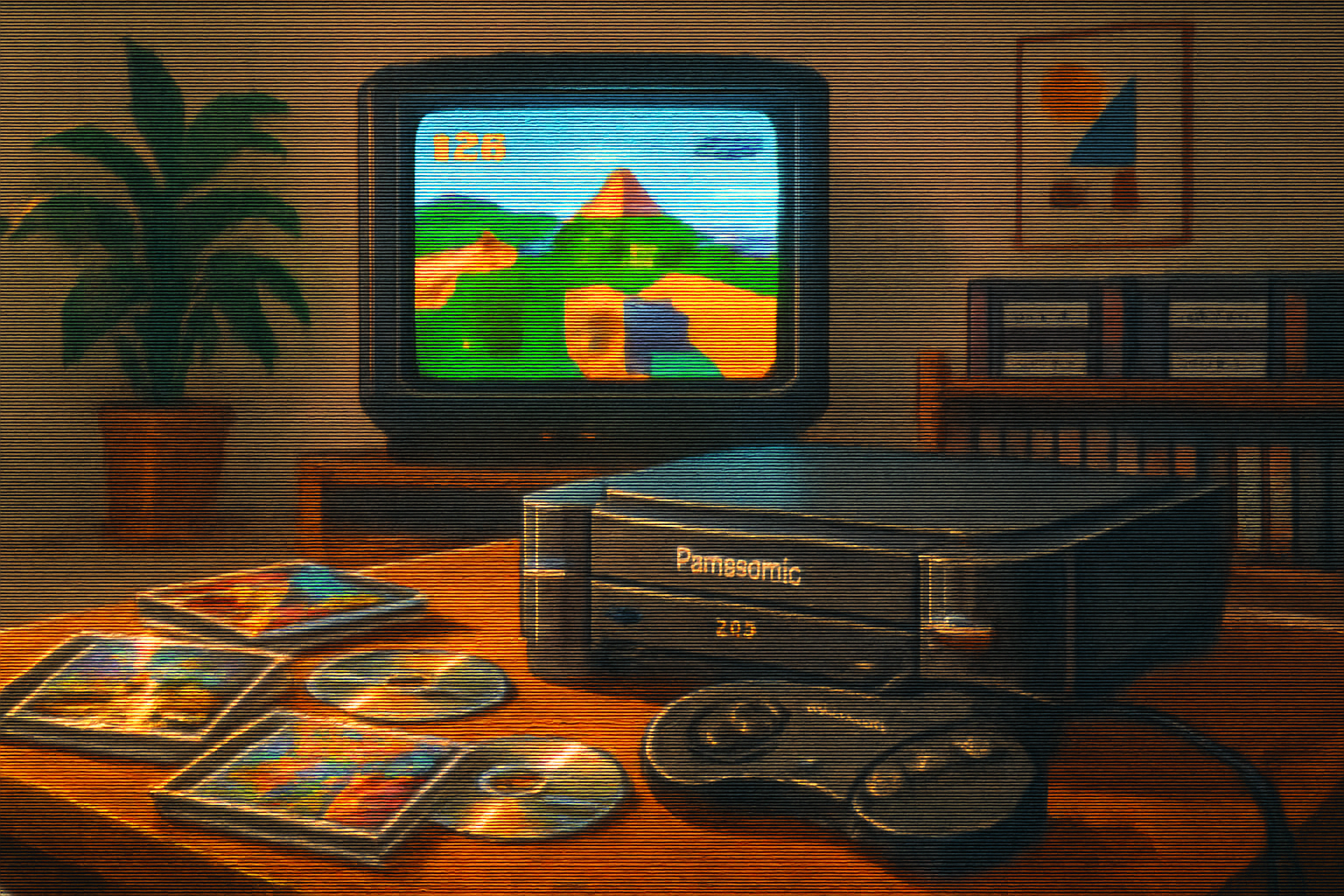
The 3DO wasn’t a console made by one of the big platform holders. It was a specification: a 32-bit, CD-ROM-based multimedia platform that companies like Panasonic, GoldStar (LG) and Sanyo licensed and manufactured. That curious license-first model meant the hardware was powerful for its time and very variable across manufacturers, but it also produced a fatal side-effect: an expensive retail price tag and confused positioning.
- Official overview and hardware history: 3DO Interactive Multiplayer
Sega and Nintendo, by contrast, were vertically integrated. They built hardware, funded first-party games, and controlled the marketing narrative. That mattered.
Unique features the 3DO brought to the table
The 3DO was built around a then-modern CD-driven multimedia vision. That brought some genuinely attractive features:
- CD-quality audio and much larger storage compared with cartridges, allowing for long voice tracks, Red Book audio, and full-motion video (FMV) sequences.
- A 32-bit RISC-oriented architecture that made polygonal 3D and upscale visuals approachable earlier than many cartridge systems.
- A multimedia-first developer pitch that attracted PC-style publishers used to CD development.
These features allowed a handful of games to feel cinematic in a way most cartridge consoles could not yet match.
Notable 3DO-first or flagship titles (and what they showed)
The 3DO’s library was never short on ambition. A few standout titles demonstrate both its promise and its limits:
The Need for Speed - EA’s racer debuted on the 3DO in 1994 and showcased the system’s ability to render fast, smooth pseudo-3D roadscapes and play CD-quality music and narration. It proved the 3DO could be a strong platform for mainstream, high-production-value publishing. (The Need for Speed)
Gex - A cheeky, media-savvy platformer built by Crystal Dynamics that first appeared on the 3DO before being ported to other systems. Gex showed the 3DO could support colorful, personality-driven characters, but the game’s later appearances on cheaper consoles undercut any long-term hardware exclusivity. (Gex)
The 7th Guest - An FMV-heavy puzzle/horror experience that made sense on CD and was emblematic of the 3DO era’s fascination with video and cinematic production. (The 7th Guest)
Star Control II - A sprawling space-opera RPG with a devoted PC following; the 3DO port offered enhanced audio and presentation, demonstrating the console was a place to port ambitious PC work when developers wanted richer audiovisuals. (Star Control II)
For many 3DO titles, being first or best-on-3DO didn’t mean permanent exclusivity. Many of these games were later ported to PlayStation, Saturn, PC, SNES, or Genesis hardware, which diluted the 3DO’s catalog value.
How Sega and Nintendo countered - the simple weapon: first-party characters
Sega and Nintendo didn’t need to make a spreadsheet to win; they had mascots, manufacture economies of scale, and an existing install base:
Nintendo - Mario, Zelda, Donkey Kong - characters with decades of design iteration, precise gameplay, and enormous loyalty. Nintendo’s mastery was not just in hardware but in crafting systems that accentuated their first-party teams’ strengths. (
Sega - Sonic turned Genesis into a cultural rallying point. Sega marketed aggressively and positioned itself as the edgier alternative to Nintendo, a strategy that worked in the early-to-mid ’90s. (
Those first-party lineups guaranteed must-have exclusives and consistent software pipelines. 3DO had neither a Mario nor a Sonic.
The business model that hobble-footed the 3DO
Three big mistakes, all interlocking:
- License-first hardware meant the device launched at an extremely high price (about $699 at launch from some manufacturers). Sega and Nintendo sold consoles at low margins or losses and recouped through software-3DO’s partners didn’t.
- No first-party studio to bankroll or curate a steady stream of killer exclusives.
- The CD revolution that was supposed to lock gamers in actually made porting to cheaper platforms easier. Once a big game got traction, ports followed-and customers who cared about price could simply buy the later PlayStation/Saturn versions.
The combination: expensive hardware, spotty exclusive content, and aggressive, well-funded competition.
Tactical strengths and where they mattered
- Multimedia and FMV - The 3DO made FMV and voice-driven experiences feel legitimate in a living-room setting. Titles like The 7th Guest and cinematic ports of PC classics benefited.
- Early 3D/32-bit performance - For some racing and simulation titles (like The Need for Speed), the 3DO delivered an impressive experience before PlayStation and Saturn were fully entrenched.
- Third-party friendliness - EA and other major publishers were comfortable shipping high-production titles-on the condition that the platform could generate sales.
But technical prowess alone doesn’t convince a family to pick a $699 machine over a $199 system with more Mario.
Where the 3DO fundamentally lost to Sega and Nintendo
- Lack of a killer-ecosystem of exclusive IP - Nintendo and Sega owned characters and genres. 3DO had novelty and a few standout games-but not a stable of system sellers.
- Price and marketing confusion - Multiple manufacturers meant competing price points and no single marketing voice.
- Timing and the PlayStation factor - Sony’s PlayStation arrived with aggressive first-party and third-party support on a CD format, but crucially with better pricing and marketing execution. Once PlayStation and Saturn gained real traction, 3DO’s niche appeal shrank further. (
If the 3DO had to be summed up in one sentence
It was an elegant mausoleum: technically interesting and forward-looking, full of cinematic experiments, but ultimately unable to translate craftsmanship into the cultural stickiness that Nintendo and Sega created with characters, price discipline, and platform stewardship.
Legacy - what the 3DO taught the industry
- CD-ROM as a default - The 3DO was one of several platforms that proved CD-based consoles were viable; it helped normalize the media and the idea that games could be cinematic.
- Licensing vs. platform control - The 3DO’s licensing experiment warned that hardware licensing without a platform owner’s marketing muscle becomes a commodity race where the consumer wins the choice but the platform loses the narrative.
- The value of first-party IP - The triumph of Nintendo and Sega in the era reinforced that owning beloved characters and curated first-party studios is a defensible moat.
The 3DO didn’t die quietly; it was nudged out by a better-funded and better-positioned wave. It left behind some beautiful-sounding games and a reminder: in consoles, technical novelty without a cultural story rarely wins.
Further reading and sources
- 3DO Interactive Multiplayer - https://en.wikipedia.org/wiki/3DO_Interactive_Multiplayer
- The Need for Speed - https://en.wikipedia.org/wiki/The_Need_for_Speed
- Gex - https://en.wikipedia.org/wiki/Gex
- The 7th Guest - https://en.wikipedia.org/wiki/The_7th_Guest
- Star Control II - https://en.wikipedia.org/wiki/Star_Control_II
- Sega Genesis - https://en.wikipedia.org/wiki/Sega_Genesis
- Super Nintendo Entertainment System - https://en.wikipedia.org/wiki/Super_Nintendo_Entertainment_System
- PlayStation - https://en.wikipedia.org/wiki/PlayStation
- Sega Saturn - https://en.wikipedia.org/wiki/Sega_Saturn