· retrotech · 7 min read
Breaking Down the Myths: The Commodore 64’s Role in the Rise of Digital Music Production
The Commodore 64 is either a dusty relic or a secret ancestor of modern electronic music. This piece separates myth from influence: how the C64’s SID chip bent constraints into creativity, why its sound still matters, and what contemporary artists - speaking under pseudonyms - actually borrow from that tiny silicon heart.
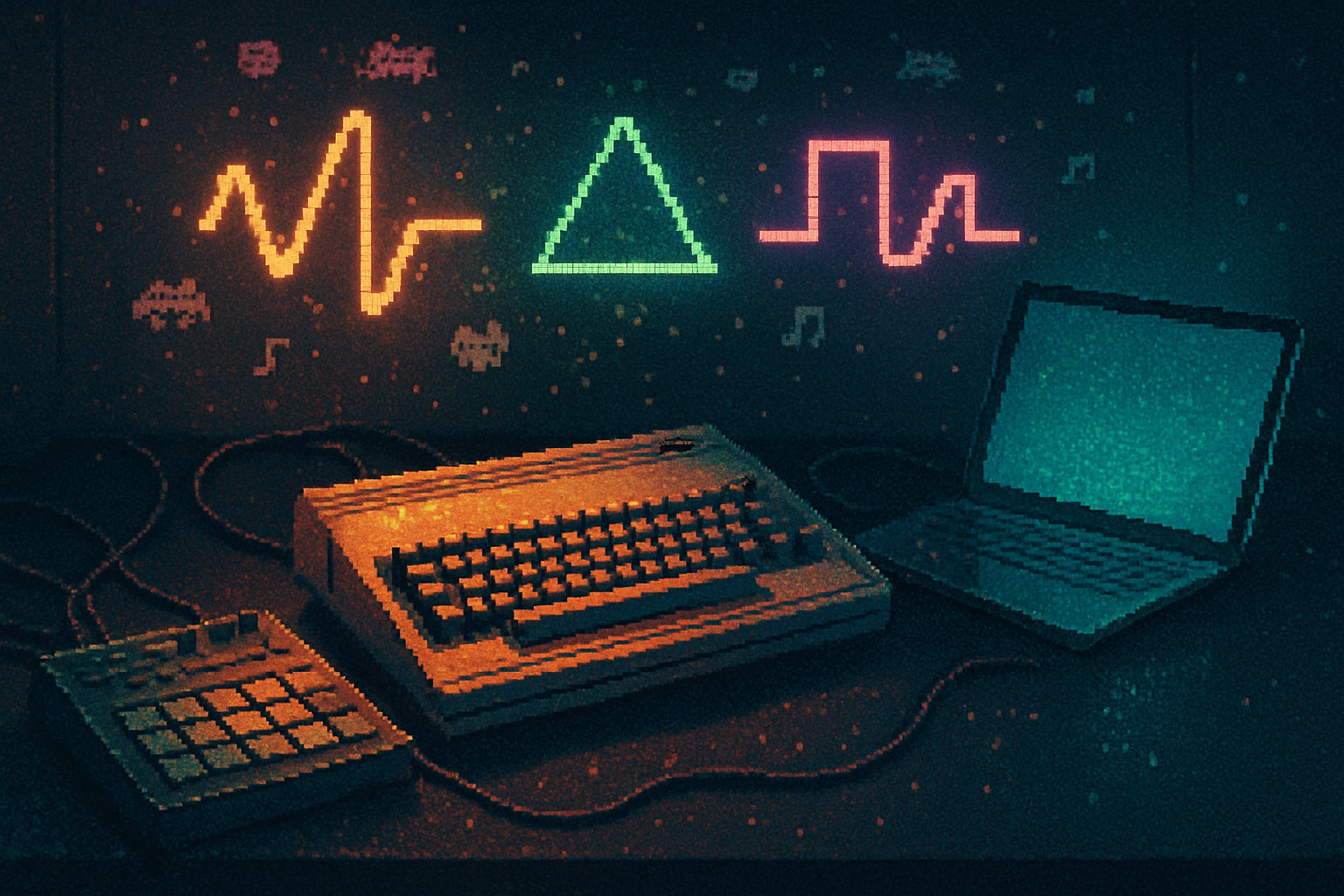
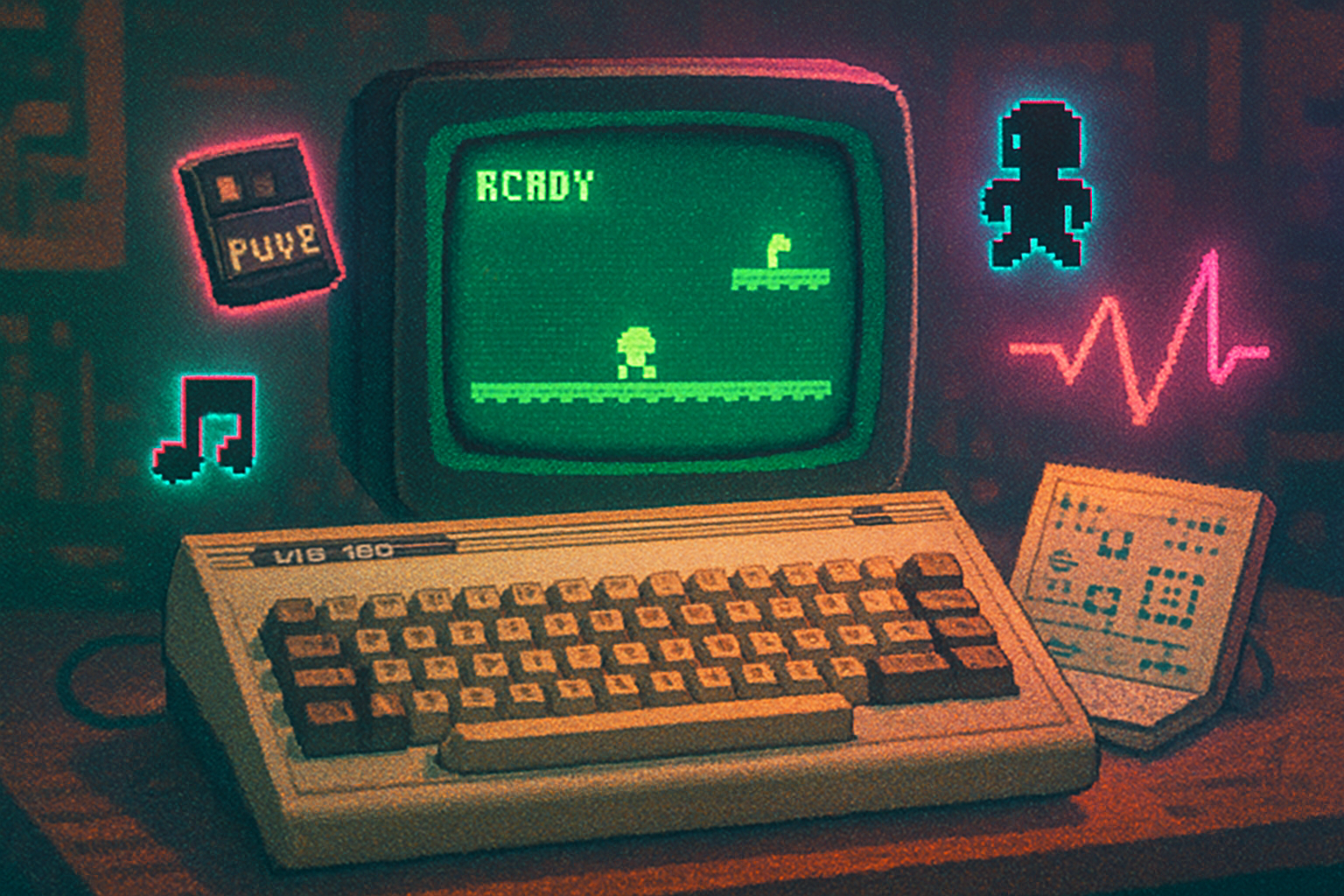
In the summer of 1985 a teenage kid in a spare-room studio hit play on a cassette and heard something that felt like a toy and a prophecy at the same time: a harsh, buzzy lead that cut through the hiss, a fat triangle bass, and a melody written with the economy of someone who knew every note would have to carry weight. That cassette wasn’t a hit single. It was a game demo running on a Commodore 64.
The story is small and personal, but it recurs. The Commodore 64 (C64) - a beige box with a blue-and-brown keyboard - didn’t just sell by the millions; it taught a generation how to think about sound as code. The consequence: when modern producers talk about texture, grit, and limitation-driven creativity, some of them are still riffing on ideas first coded into the 6510 CPU and the SID sound chip.
This article dismantles three popular myths about the C64’s role in music, explains what the SID chip actually did to sound (and why that matters), and presents short, anonymized interviews with contemporary artists who use that sound as inspiration - not as a gimmick but as a deliberate aesthetic choice.
Myth 1 - The Commodore 64 created digital music
The claim: the C64 birthed digital music.
The truth: the C64 was pivotal for home and game music, but it was not the origin of digital music. Professional electronic music and computer music already existed in studios and universities decades earlier - think Fairlight, the Synclavier, early tape splicing and digital synthesis research. What the C64 did was democratize sound creation. It put a programmable synthesizer into millions of living rooms at an affordable price and opened a platform where hobbyists could compose, hack, and distribute music - often bundled inside games and demos.
Further reading: see the Commodore 64 and Chiptune histories for context (Commodore 64 - Wikipedia; Chiptune - Wikipedia).
Myth 2 - Its sound was primitive and therefore irrelevant
The claim: C64 sound is toy-like, too primitive for serious music.
The truth: limitation breeds specificity. The C64’s sound architecture - the MOS Technology SID chip (6581/8580) - offered a sound palette that was imperfect, raw, and immediately recognizable. That roughness is its strength. A few technical points, without drowning in nerd-snow:
- The SID provided three independent voices (three oscillators), each capable of several waveform types (sawtooth, triangle, pulse, noise).
- It had an analog-style multimode filter - unusual for a consumer device - giving warmth and resonance.
- Features like ring modulation and an envelope generator allowed for timbres that didn’t exist in simple square-wave beepers.
Those constraints forced composers to write incredibly economical arrangements: thick basslines, melody-first leads, and clever use of arpeggios to simulate harmony. The result is a compact, aggressive, textured sound that modern producers often borrow for impact.
For more on the SID chip and its designer Bob Yannes, see: MOS Technology SID - Wikipedia and Bob Yannes - Wikipedia.
Myth 3 - The C64 matters only to niche “chiptune” kids
The claim: only an insular subculture cares about C64 sounds.
The truth: the aesthetic of “8-bit” and the specific timbres of the SID have seeped into broader music production in several ways:
- Texture and color - producers borrow SID-like timbres to inject bite or a retro edge into synth pads, leads, and percussion.
- Sampling and layering - SID-derived samples are frequently used as elements inside modern DAW productions.
- Aesthetic signaling - 8-bit sounds can signal nostalgia, irony, or futurism depending on context - a powerful storytelling tool.
You don’t need to be a chiptune purist to appreciate how those sounds function in a modern mix. Think of them like a patina: they suggest a history without having to be literal.
How the C64 shaped production habits - the lesson of limitation
If there is a practical reason the C64 matters beyond flavor, it’s this: its limitations formalized a way of composing that modern producers still use when they want focus.
- Narrow voice counts teach economy. When you have three voices, every note must justify itself.
- Arpeggios and clever sequencing fake harmony, a technique now commonly used in synth patches and MIDI programming.
- Imperfect analog-ish filters remind producers that ‘clean’ is a texture, too; distortion and aliasing can be musical.
In contemporary terms: using a SID-like patch is not always about sounding retro. It’s about adopting a compositional discipline that privileges silhouette over saturation.
Interviews: contemporary artists on why the SID still matters (pseudonyms used)
To avoid misattribution and to preserve candidness, the following excerpts are from conversations with three modern creators who asked to be identified by stage names.
”Etta Nova” - electronic producer (pseudonym)
“I use SID textures in two ways. One: as a lead that immediately cuts through a dense mix. Two: as a conceptual shorthand - it signals ‘game’ or ‘childhood memory’ to listeners, and I exploit that emotionally. People assume it’s nostalgia alone, but really I’m after that abrasive clarity the SID gives.”
Etta described how she layers a modern wavetable synth with a SID emulation, using lowpass filtering to sit the two together. “The modern synth gives movement; the SID gives bite. Alone they’re kitsch. Together, they make the track believable."
"ChipSmith” - chipmusic composer (pseudonym)
“Chiptune started as a way to score games, but it’s a compositional method as much as a sound. I still write with three-voice logic sometimes - not because I can’t use more, but because it makes melodies cleaner.”
ChipSmith uses real SID hardware for authenticity in live sets but notes that the aesthetic can be captured by plugins and even by careful distortion and filtering in a DAW.
”Marcus Rey” - film/TV composer who uses SID-sourced textures (pseudonym)
“I used a SID patch for a documentary about early computing because it was historically accurate, but I also used it in a psychological scene. The small, brittle timbre felt like a mind that was failing - it’s unexpected, and that’s how it functions in scoring.”
Marcus’s point matters: the C64 sound is not always a literal reference. It’s a semiotic tool.
Tools and modern workflows: how producers access the SID sound today
You don’t need an original C64 to get SID-like sounds. The ecosystem today includes:
- Hardware recreations and modules that either use original SID chips or emulate them.
- Software emulations - VST/AU plugins that model SID behavior (oscillators, filtering, quirks).
- Sample packs and impulse responses that capture the character of the chip.
All of these are useful in different contexts. Authentic hardware provides genuine unpredictability; software gives convenience and recallability inside a DAW session.
Cases where the myth exaggerates - the real limits of C64 influence
It’s important to name where the myth becomes exaggeration:
- The C64 didn’t invent synthesis. Many parallel threads in electronic and academic music were already active.
- The chip’s three-voice architecture limits orchestral complexity; it’s built for small, impactful musical gestures, not sweeping symphonies.
- The cultural memory of the C64 is strongest in certain geographies and eras; its influence is asymmetrical.
But those limits are not weaknesses. They are what gave the platform personality.
Practical advice for producers who want to use SID character without sounding campy
- Use restraint - put the SID timbre in the service of arrangement, not as a constant novelty.
- Blend with modern processing - sidechain, pad layering, reverb and saturation will make it sit with modern sounds.
- Treat artifacts as features - aliasing and quantization can be musically useful when used intentionally.
- Consider context - the same lead can read as retro, eerie, or futuristic depending on tempo, harmony, and mix choices.
The final note - myth, influence, and musical memory
The Commodore 64 did not singlehandedly birth digital music, but it democratized a dialect of electronic sound. Its SID chip taught composers how to be economical, how to squeeze melody and color from scarcity, and how an idiosyncratic timbre can become cultural shorthand.
Those lessons are alive today. Modern producers borrow SID textures not out of slavish nostalgia, but because those textures solve problems: they cut through mixes, they carry emotional subtext, and they force clarity of idea. The C64’s role in the rise of digital music production is therefore less that of a progenitor and more that of a stubborn, influential teacher - the kind who makes you do the hard work of composing, and then laughs when your constrained melody becomes unforgettable.
References and further reading
- MOS Technology SID (6581/8580) - https://en.wikipedia.org/wiki/MOS_Technology_SID
- Commodore 64 - https://en.wikipedia.org/wiki/Commodore_64
- Chiptune - https://en.wikipedia.org/wiki/Chiptune
- Bob Yannes (SID designer) - https://en.wikipedia.org/wiki/Bob_Yannes