· culture · 7 min read
Beyond the Floppy: The Unseen Heroes of Data Storage in the 80s and 90s
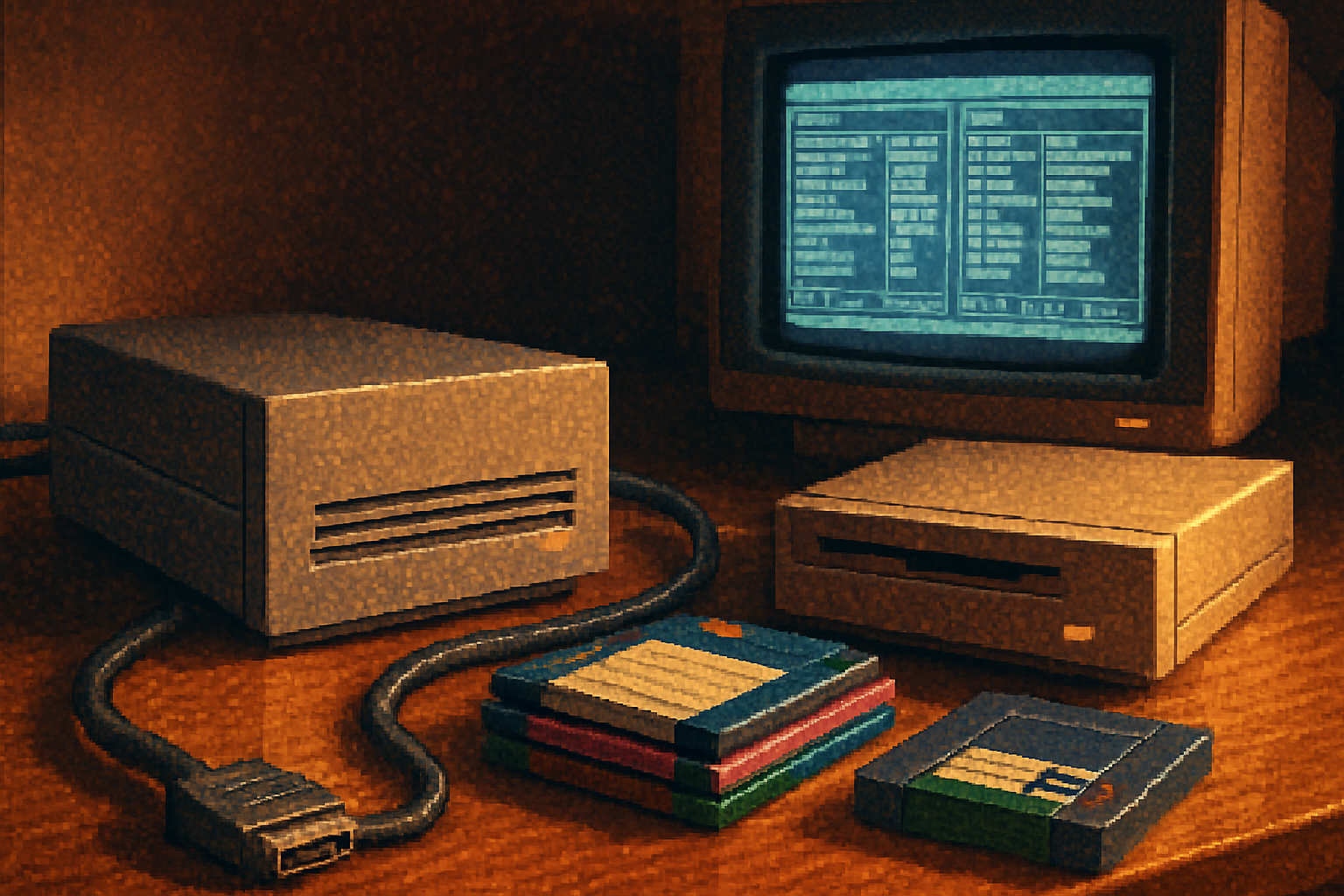
Before USB thumb drives and cloud buckets, a ragged army of removable hard drives and external SCSI boxes quietly kept studios, labs, and offices functioning. This piece rescues a few of those forgotten models - the Bernoulli Box, SyQuest cartridges, Zip and Jaz drives, and the SCSI externals - catalogs their virtues and vices, and explains why they still matter to preservationists.
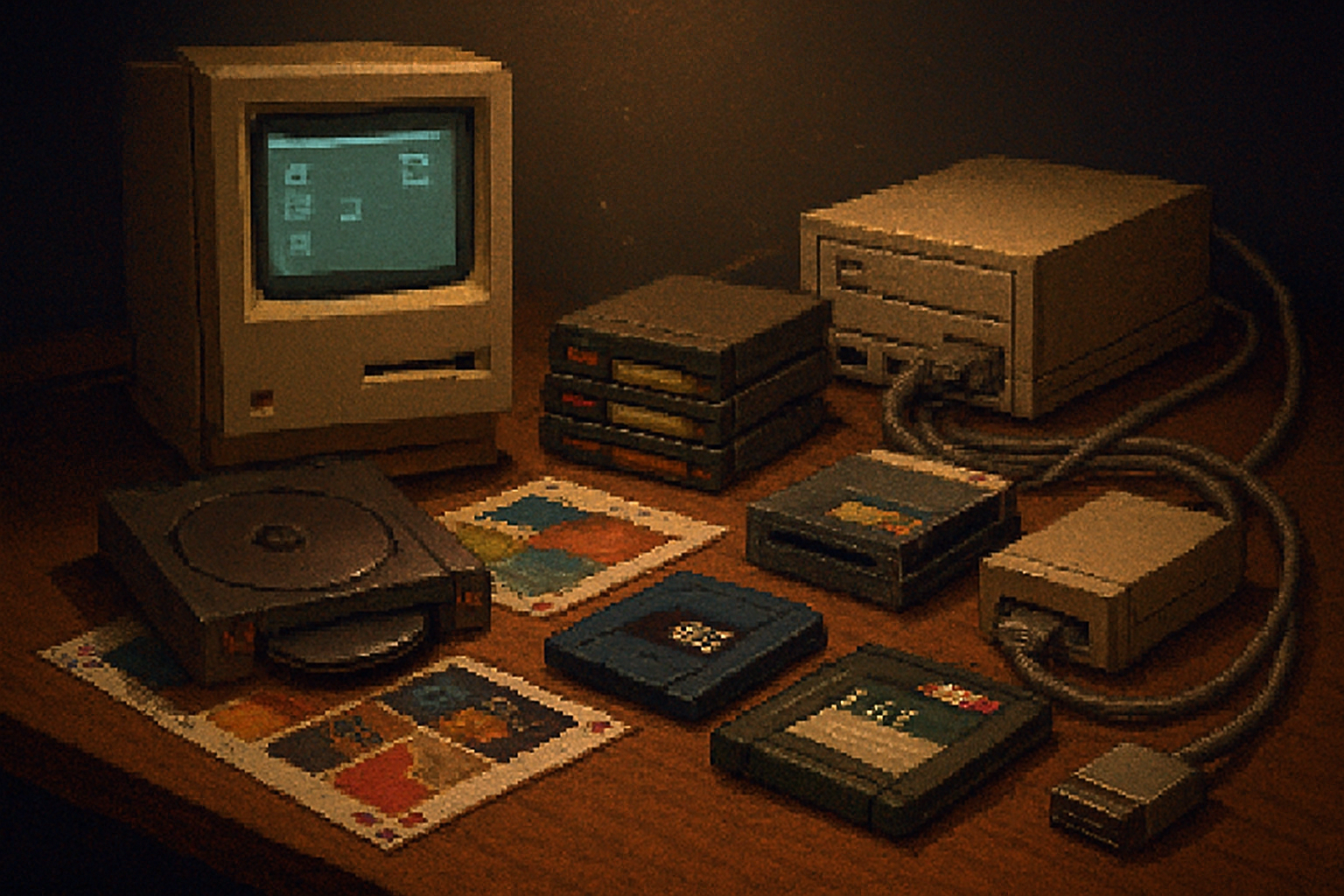
I remember the smell of toner and ozone, a Macintosh SE winking at me from under a stack of glossy magazines, and a drawer full of shiny, puckish cartridges - each promising salvation for a terrified designer five minutes before a deadline. The floppy was the public face of portable storage, but behind the scenes was a different cast: heavier, louder, and infinitely more decisive. These were the external drives that let creatives move gigs of data before the word “gigabyte” had settled into the public lexicon.
Why the market needed more than floppies
Floppies were charming and fragile; they held 360KB or - if you lived dangerously - 1.44MB. Meanwhile, desktop publishing and digital imaging exploded file sizes. Phototypesetters and image scanners demanded real storage. Networks were rare or slow. The solution, for many, was physical: removable cartridges, external SCSI boxes, and dedicated portable hard drives. They were the original sneakernet.
Think of early external drives as suitcases for your work: bulky, engineered to protect the contents, and sometimes awkward to carry. But when the courier of your career was a van full of film, these suitcases mattered.
The unsung stars
Below are a few machines that mattered but rarely make it into nostalgia lists.
Bernoulli Box - engineering theater meets practical genius
Iomega’s Bernoulli Box (often just “Bernoulli drive”) used a clever bit of physics: airflow would stabilize the disk platter away from the head, reducing contact and shock sensitivity. That wasn’t marketing puff - Bernoulli systems were notably tolerant of bumps and became favorites where data integrity mattered.
- Typical use - Mac desktop publishing shops, medical imaging, and environments where removable media and shock tolerance were priorities.
- Strengths - robust removable cartridges, relatively reliable heads, and a reputation for surviving real-world abuse.
- Weaknesses - bulky and expensive compared with later solutions.
(See the Bernoulli Box history: https://en.wikipedia.org/wiki/Bernoulli_Box)
SyQuest cartridge drives - the choice of graphic arts
SyQuest’s removable-cartridge hard drives were everywhere in prepress and early desktop publishing. Designers moving multi-megabyte images from studio to printer didn’t email files; they carried SyQuest cartridges.
- Popular models - desktop and 3.5” cartridge lines (SyQuest’s family had several capacities and form factors).
- Strengths - high sustained throughput for the era, large removable capacities compared with floppies.
- Weaknesses - mechanical complexity meant that abused cartridges or drives could fail; SyQuest’s market collapsed as alternatives and networked workflows matured.
(Background on SyQuest: https://en.wikipedia.org/wiki/SyQuest_Technology)
Iomega Zip - ubiquitous, lovable, then notorious
The Zip drive is the device everyone remembers. Launched mid-90s, Zip disks (100MB initially) sold by millions and became the de facto “better floppy.” They lived in offices, dorm rooms, and car glove boxes.
- Strengths - widely available, inexpensive per disk for the time, easy to use and supported by many OSes.
- Weaknesses - the infamous “click of death” and cartridge reliability problems that stranded users - a reminder that widespread adoption amplifies both virtues and faults.
(Zip drive history: https://en.wikipedia.org/wiki/Zip_drive)
Iomega Jaz - ambitions larger than reliability
Jaz cartridges promised 1GB of removable storage when 100MB Zip disks felt like a revolution. For a moment, Jaz looked like the future for serious media professionals. But higher capacity came with higher risk.
- Strengths - massive capacity for the time and reasonable performance.
- Weaknesses - mechanical and media failures, and the market’s unwillingness to tolerate inconsistent reliability at that price point.
(See: https://en.wikipedia.org/wiki/Jaz_drive)
External SCSI boxes and the age of adapter hell
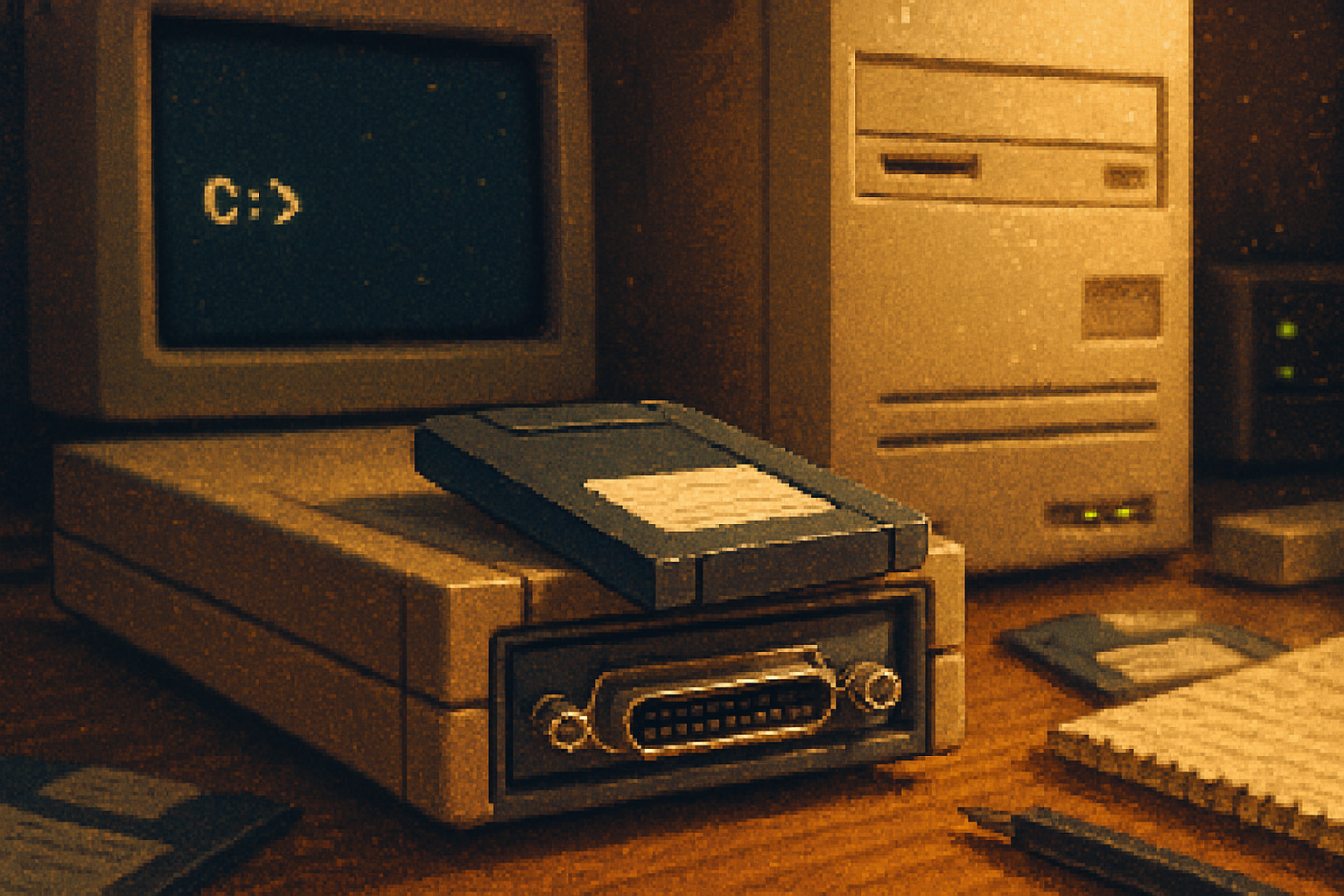
For pros the interface du jour was SCSI: fast for the era, flexible, and hot-pluggable in many implementations. External SCSI boxes - often from large HDD vendors or Apple - let shops connect full-sized hard drives externally. They were simple, no-frills, and crucial.
- Pros - higher throughput than parallel ports or serial connections, direct disk access, and multi-device chains.
- Cons - cabling quirks, termination nightmares, and the eventual obsolescence of SCSI controllers on consumer machines.
(Overview of SCSI: https://en.wikipedia.org/wiki/SCSI)
Small tales of triumph and tragedy
A friend in a 1994 design studio once saved an ad campaign on a SyQuest cartridge after the typesetter’s Mac suffered a catastrophic system disk failure. The SyQuest saved the day - and a week’s worth of billable work.
Conversely, a photography student lost graduation images to a jammed Jaz cartridge. The drive refused to eject and the local shop couldn’t recover the media. He learned the hard lesson - redundant copies matter.
Those stories are not unique. The era produced many near-mythical anecdotes: the last-minute data rescue, the cartridge found in a bag of laundry, and the boss who refused to believe there was anything larger than a floppy.
Rare models and collector notes
If you like hardware archaeology, there are a few rarities worth mentioning:
- Early Bernoulli units and their proprietary cartridges - heavier, with unique connectors.
- SyQuest desktop units with 88MB–200MB cartridges that predate the EZ135 (artists and prepress people treasure these for nostalgia and, occasionally, practical use).
- Obscure SCSI enclosures from boutique vendors - some had built-in fans and ports for daisy-chaining specific to workstation environments.
Collectors prize working drives and clean cartridges. But remember: a working enclosure is only half the battle; interfaces are the other half. SCSI-to-USB bridges exist but are finicky; sometimes the only reliable path is an era-appropriate SCSI card in an older machine.
How these devices compare to today’s storage
Standing today with multi-terabyte SSDs and cloud repositories, the contrast is stark. But capacity isn’t the only axis.
Capacity per device
- Then - tens to hundreds of megabytes, then gigabytes (Jaz).
- Now - terabytes. A phone holds more than professional drives of the early 90s.
Speed
- Then - adequate for the workload; physical seek times and interface limits were real bottlenecks.
- Now - NVMe SSDs and gigabit networks make local spinning rust feel quaint.
Reliability model
- Then - mechanical complexity and removable media introduced new failure modes. The tradeoff was transportability.
- Now - cheap redundancy (RAID, cloud replication) and solid state reduce many mechanical failure modes - but introduce dependency on network providers.
Portability and security
- Then - removable cartridges were the easiest way to physically transport large datasets - and to keep a private offline copy.
- Now - encryption and cloud access change the threat model. Sneakernet lives on, but with encrypted SSDs.
Summary: modern storage wins by every raw metric. But it also collapses more trust into fewer hands (cloud providers, data center operators). The 80s/90s approach dispersed that trust physically.
Reading old media today - practical tips
If you’ve inherited a box of cartridges and floppies, here’s a short workflow:
- Identify interfaces (SCSI, proprietary Iomega connectors, IDE, early USB).
- Locate a working drive - check enthusiast forums and auction sites.
- Use a vintage machine if necessary - older Macs and PCs often support SCSI natively.
- For degraded media, consult a professional data recovery lab; don’t keep powering a failing drive.
Useful resources: the Computer History Museum and the Internet Archive occasionally publish guides and run media rescue projects: https://computerhistory.org and https://archive.org
Why these quiet workhorses still matter
They were not glamorous. They were heavy, mechanically noisy, and occasionally cruel. But they enabled industries: graphic design, GIS, early digital photography, and scientific computing. They turned immovable film workflows into shippable bits.
If you’re tempted to condescend to the Bernoulli Box or sneer at the Zip, remember this: each was an answer to a real problem. They are artifacts of engineering trade-offs in an era when storage was scarce and outrageously valuable. They deserve better than being footnotes in a nostalgic listicle.
And if you find a drawer of cartridges in your attic, don’t discard them. One person’s antique is another person’s rescue mission.
References and further reading
- Bernoulli Box - https://en.wikipedia.org/wiki/Bernoulli_Box
- SyQuest Technology - https://en.wikipedia.org/wiki/SyQuest_Technology
- Zip drive - https://en.wikipedia.org/wiki/Zip_drive
- Jaz drive - https://en.wikipedia.org/wiki/Jaz_drive
- SCSI - https://en.wikipedia.org/wiki/SCSI
- Computer History Museum - https://computerhistory.org
- Internet Archive - https://archive.org