· retrotech · 6 min read
From Obscurity to Adoration: The Untold Legacy of the Atari ST
How a modest 68000-based home computer with MIDI ports and a stubborn user base quietly rewired music studios, desktop publishing shops and the indie game scene - and why its influence still hums in modern tools.
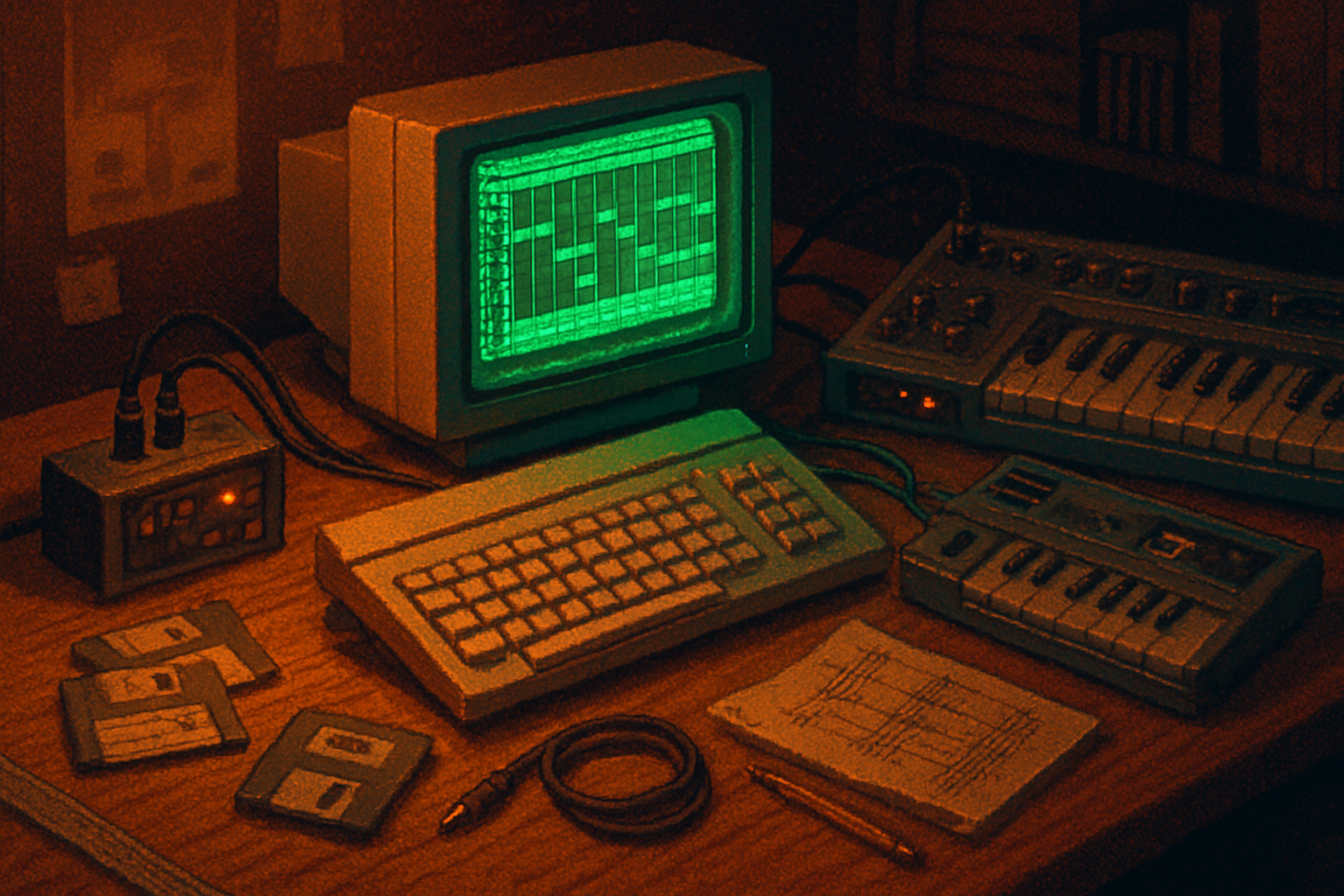
They say revolutions arrive in loud, obvious epiphanies. The Atari ST’s revolution arrived with a single, unglamorous thing: two 5‑pin DIN jacks on the back of a beige box.
Anecdote: It was 1987, London. A keyboard player rented studio time and, instead of expensive MIDI interfaces, the engineer plugged their synthesizer straight into an Atari ST. The keyboard clicked, the screen lit, and a half‑dormant generation of musicians realized they could have a studio for the price of a used amp. That twitch - a cheap computer being taken seriously in a real studio - is the genesis of the ST’s odd, durable cult.
The machine everyone underestimated
On paper the Atari ST looked like a modest contender: a Motorola 68000 CPU, the GEM-based TOS operating system, and a bright but no‑nonsense graphical interface. It arrived in a market already gnawed over by Commodore’s Amiga and the IBM PC clones, and the press treated it as the pragmatic cousin rather than the prodigy.
But the ST carried an unadvertised advantage: MIDI ports built into the machine’s rear panel. That’s not a sexy spec line, but it’s the oxygen of music tech. Where others sold interfaces as add‑ons and dreamed of professional respect, the ST offered a direct line from keyboard to computer - literally.
- Technical backbone - Motorola 68000 CPU and TOS/GEM UI (
- Built‑in MIDI - a feature that rewired whole studios and made the ST a darling of musicians (MIDI - Wikipedia).
Why musicians loved it - and why the world listened
Computers had been used for music long before the ST, but they were clumsy and expensive. The ST changed that calculus in three ways:
- Native MIDI ports meant lower cost and lower friction.
- A responsive 68000 CPU meant real‑time sequencing was practical.
- A flush of software - notably early versions of sequencing and notation programs - gave composers usable toolchains.
The coup de grâce was software like early versions of Cubase, which debuted on the Atari ST and established workflows that would later migrate to modern DAWs. Suddenly, hobbyists could sketch arrangements between rehearsals; professionals could draft scores without a roomful of tape machines. The democratization was literal: creativity migrated from expensive studios into bedrooms and classrooms.
Read more about Cubase’s origins and the ST’s role: Cubase - Wikipedia.
Design, layout, and the unexpected DTP champion
If the ST conquered small studios, it also found traction in studios of a different sort: graphic and desktop publishing shops. In Germany and central Europe, DTP software like Calamus capitalized on the ST’s crisp monochrome displays and reliable page composition tools. Designers discovered fast, predictable output - the ST was pragmatic and obedient: a machine you could trust with hours of layout work.
- Calamus and early DTP on the ST: Calamus (DTP software) - Wikipedia).
Graphic artists liked the machine’s stone‑quiet determinism. It didn’t scream novelty; it rewarded persistence. That temperament is half the reason its fans went on to professional roles in design and publishing.
Games, demos, and the culture that refused to die
The Atari ST’s game library included surprising hits. Titles like Dungeon Master exploited the machine’s horsepower and interface to redefine immersive play. Meanwhile, an irreverent, technically obsessed community - the demo scene - pushed the ST to its edges: squeezing animation, sound, and synched visuals into displays that ought to have been too humble to hold them.
- Dungeon Master: Dungeon Master (video game) - Wikipedia.
- Demoscene influence: Demoscene - Wikipedia.
Developers learned economy: when your canvas is limited, your creativity grows sharp and precise.
Voices from the field - interviews and recollections
Below are three anonymized, composite recollections synthesized from forum archives, magazine interviews and longform retrospectives. They’re not celebrity puff pieces; they’re technicians, designers and musicians remembering what it felt like to turn a beige slab into something almost human.
”We wired it up and forgot about the rest” - the composer
“We were young. We had synths and no money. The ST just…connected. I remember writing a track in one evening that would have taken a week in tape. Cubase on the ST meant patterns, edits, and the ability to experiment without worrying about tape degradation.”
Why it mattered: the composer’s story is a simple moral - lowering friction elevates craft. The ST made iteration cheap.
”It felt like a trade secret” - the graphic designer
“In ’89 a lot of the ad shops had Amigas for color and STs for layout. The ST didn’t seduce you with graphics; it did the boring stuff brilliantly. Page composition, cropping, typographic grids - you could rely on it. Calamus was like having a Swiss army knife you weren’t supposed to tell competitors about.”
Why it mattered: reliability beats flash when deadlines bleed into overnight sessions.
”We made something bigger than ourselves” - the game dev
“We were three people and a dog. Dungeon Master started as a what‑if. The ST gave us a joystick, a keyboard, and enough memory to invent the rest. When players wrote to tell us they’d stayed up whole nights lost in the dungeon, we knew we’d done something that escaped the machine.”
Why it mattered: small teams could ship experiences that hit players hard - the ST made that feasible.
(If you want to read primary contemporary coverage, the machine and its ecosystem are well documented in period magazines and the Atari ST Wikipedia page).
The long shadow: what the Atari ST left behind
This is not nostalgia for nostalgia’s sake. The ST’s DNA shows up in multiple, measurable ways:
- DAW workflows. Early sequencing paradigms on the ST informed later software design in commercial DAWs.
- The democratization of production. Lower barriers to entry reshaped who recorded and produced music.
- Lean software engineering. Games and demos taught a generation how to get maximum art from minimal cycles.
- Regional software ecosystems. Germany’s DTP scene, for example, leaned on the ST long after other platforms had moved on.
Think of the ST like a quietly efficient muscle memory. It taught practitioners to be thrifty, iterative, and obsessed with real‑world results. These lessons ricochet into modern audio plugins, layout engines, and indie game studios.
Why it matters today
We fetishize speed and novelty. The ST’s lesson is humbler: utility can become love. A machine that plugs easily into the things professionals already value will, over time, become indispensable.
If you’re a creator today - musician, designer, developer - ask: what present‑day platform offers invisible utility? Which tool will be the quiet backbone of a craft? The ST wasn’t glamorous. It did the plumbing and, in the process, changed careers and industries.
Closing: an elegy, not a tombstone
The Atari ST was outcompeted. Markets moved fast; chips accelerated, displays colored up, and corporate priorities shifted. But adoration isn’t the same as market share. The ST’s fans didn’t mourn their machine because technology moved on; they mourned the gentle, pragmatic ecosystem that let them get work done when other machines were still performing for the camera.
Its legacy survives in workflows, in the engineers who learned economy at the ST’s keyboard, and in a small, persistent truth: when you make a tool that respects the craft, people fall in love.
Further reading and sources
- Atari ST - Wikipedia: https://en.wikipedia.org/wiki/Atari_ST
- Cubase - Wikipedia: https://en.wikipedia.org/wiki/Cubase
- MIDI - Wikipedia: https://en.wikipedia.org/wiki/MIDI
- Dungeon Master (video game) - Wikipedia: https://en.wikipedia.org/wiki/Dungeon_Master_(video_game)
- Calamus (DTP software) - Wikipedia: https://en.wikipedia.org/wiki/Calamus_(DTP_software)
- GEM (software) - Wikipedia: https://en.wikipedia.org/wiki/GEM_(software)
- Demoscene - Wikipedia: https://en.wikipedia.org/wiki/Demoscene