· retrotech · 7 min read
Amiga 1200 vs. Modern Gaming Consoles: A Comparative Analysis of Technology and Nostalgia
A deep, affectionate look at how the Amiga 1200’s modest but ingenious hardware compares to today’s gaming giants - and why the machine still matters to a stubborn, joyful subculture.
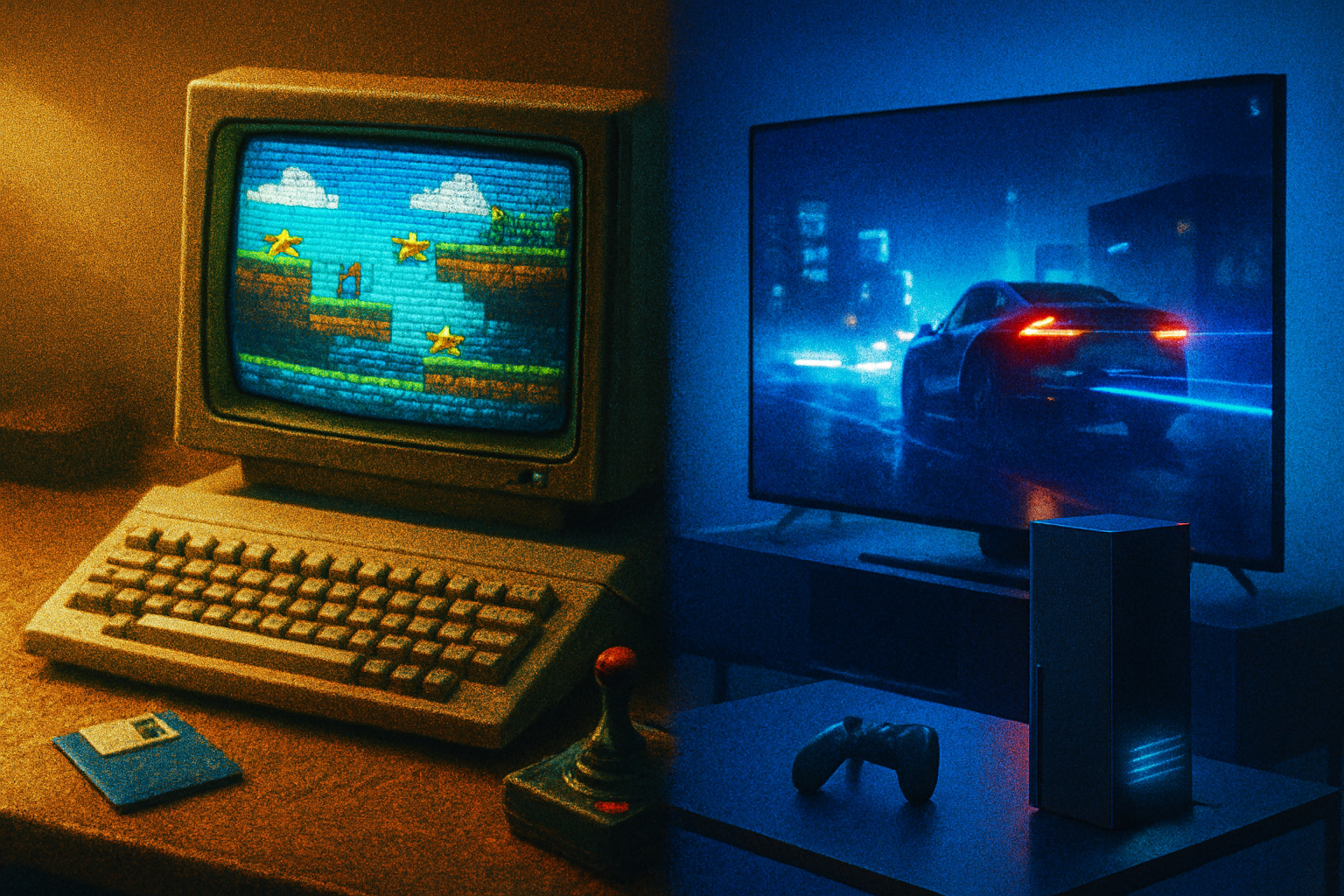
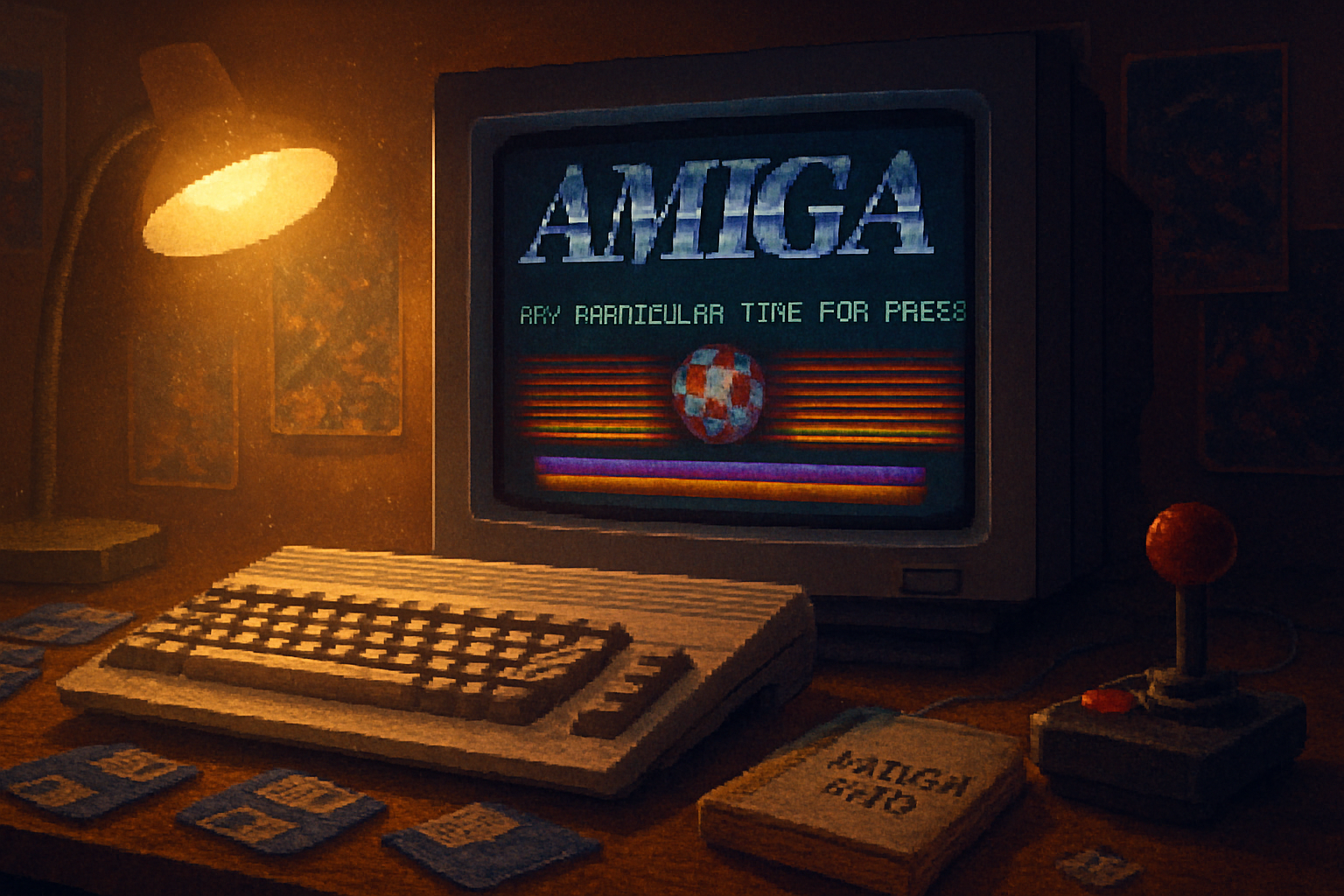
Once, in a smoky bedroom lit by a green CRT, someone loaded a floppy, the screen flickered, and sprites galloped across a palette that felt impossibly rich. For a decade that glow was permission: to tinker, to pirate, to demo, to become. That machine was the Amiga 1200. Today, the living room altar is an 8‑teraflop box with a 1,000‑dollar SSD and a design brief that reads “do not open.” Both deliver games. Both make people gather. But they arrive from different planets.
The blunt comparison: specs on paper (and why paper lies)
Numbers are comforting. They allow us to say plainly that one thing is bigger/faster/louder. But a spec sheet is an argument, not the truth.
- Amiga 1200 - Motorola 68EC020 CPU at about 14 MHz, the Advanced Graphics Architecture (AGA) chipset, AmigaOS 3.0 Kickstart, standard RAM 2–8 MB (expandable), floppy drive and IDE hard drive options.
- PlayStation 5 - AMD Zen 2 CPU (8 cores), custom RDNA2 GPU with ~10.28 TFLOPs, 16 GB GDDR6, and an ultra‑fast custom NVMe SSD.
- Xbox Series X - AMD Zen 2 CPU (8 cores), RDNA2 GPU ~12 TFLOPs, 16 GB GDDR6, 1 TB NVMe SSD.
- Nintendo Switch - NVIDIA Tegra X1 custom SoC, roughly 4 GB RAM, portable hybrid form factor - sacrifices raw horsepower for flexibility.
Those modern consoles are orders of magnitude faster on paper. But the Amiga’s architecture was clever where it mattered: custom chips (Denise, Paula, Agnus) handled graphics, audio, and DMA so the CPU didn’t have to babysit every byte. The result? Very efficient, very immediate experiences from humble silicon.
Graphics: palettes, tricks, and the illusion of richness
The Amiga’s AGA expanded the color palette dramatically compared with earlier Amigas, letting artists push creative limits with 256‑color screens or special modes that simulated many more colors. Developers used clever tricks - copper lists, bitplanes, and HAM modes - to wring out visuals that felt larger than the hardware.
Modern consoles produce photorealism and complex shaders easily. They brute‑force resolution, lighting, and physics in ways the Amiga could never approach. But the important point is how developers used limitations: the Amiga forced artistry. Look at the pixel compositions of classics like Sensible Soccer or the lush parallax in many 16‑bit era platformers - designers framed, animated, and timed everything to feel right.
Concrete example: the Amiga demo and demo‑like games used subtle palette cycling to create motion with tiny resources. Modern consoles would call that decorative; on the Amiga, it was storytelling.
Sound: copper tubes vs. Dolby Atmos
The Paula chip produced four DMA sound channels at exceptional quality for its time (sample‑based sound rather than primitive PSG tones). The result: crunchy drums, enormous bass, and sample‑driven music that gave games a character.
Today’s consoles can render multi‑channel, physics‑driven audio with head‑related transfer functions, but again - the constraint breeds personality. Tracker music (MOD files) on the Amiga is still adored because composers wrote hooks and textures that don’t get lost in reverb. The Amiga’s sound is a signature; modern audio is an effect.
Input, UX, and the tyranny of polish
The Amiga UI was malleable. AmigaOS gave you a desktop, but users frequently altered everything: tools, shells, scripts, hardware add‑ons. The console model is the opposite - curated, locked, sealed. That brings benefits: stability, easier multiplayer matchmaking, consistent performance - and costs: no screwdriver allowed.
Controllers also tell a story. Amiga joysticks were basic, analog‑adjacent at best. Modern controllers are exquisitely measured, with haptics, adaptive triggers, and gyros. But when was a burnt thumb more emotionally resonant than a rumble motor? The Amiga’s tactile limitations made every twitch a deliberate design choice.
Storage, load times, and the romance of waiting
Floppy disk load screens forced patience and ritual. You learned to accept multi‑disk rules and memorize when to swap to avoid a break in immersion. That slow cadence shaped play habits.
Modern consoles invented the SSD ritual of instant gratification. Fast travel and near‑instant resumes. The consequence: less ritual, fewer small rituals to latch onto. Convenience won; atmosphere lost little pieces along the way.
If you think about it as a metaphor: the Amiga’s floppy is like hand‑written letters. Modern SSDs are emails on speed. Both communicate; one is a keepsake.
Development and hacking: openness vs walled gardens
The Amiga was a platform for tinkerers. You could write directly to hardware, ship demos on floppies, distribute games via photocopied magazines, and mod code without asking permission. That fed scenes like the demoscene - a furious, creative subculture that still exists and traces deep roots to Amiga hardware. Source: Wikipedia - Demoscene
Modern consoles lock down hardware and software with SDKs, proprietary dev kits, and strict certification. That means better quality control, but also fewer surprises. Indies thrive on PC and some consoles now via curated stores, but the barrier to becoming a visible creator is higher.
Concrete artifacts: WHDLoad made it easier to run and distribute Amiga games from hard drives, helping preserve titles outside of floppies. Source: Wikipedia - WHDLoad
Emulation (WinUAE and others) preserves the Amiga experience and enables modern conveniences like save states. But emulation also flavors the experience - pixel scaling, frame timing differences, audio interpolation - so purists will still sometimes prefer original hardware. Source: WinUAE
Community and culture: why the Amiga still matters
The modern console market is huge, but homogenized. It is optimized for mass appeal and quarterly earnings. The Amiga community is small, opinionated, and stubbornly joyful. That difference matters:
- The Amiga community built the tools the machine needed.
- They documented and preserved software that corporations abandoned.
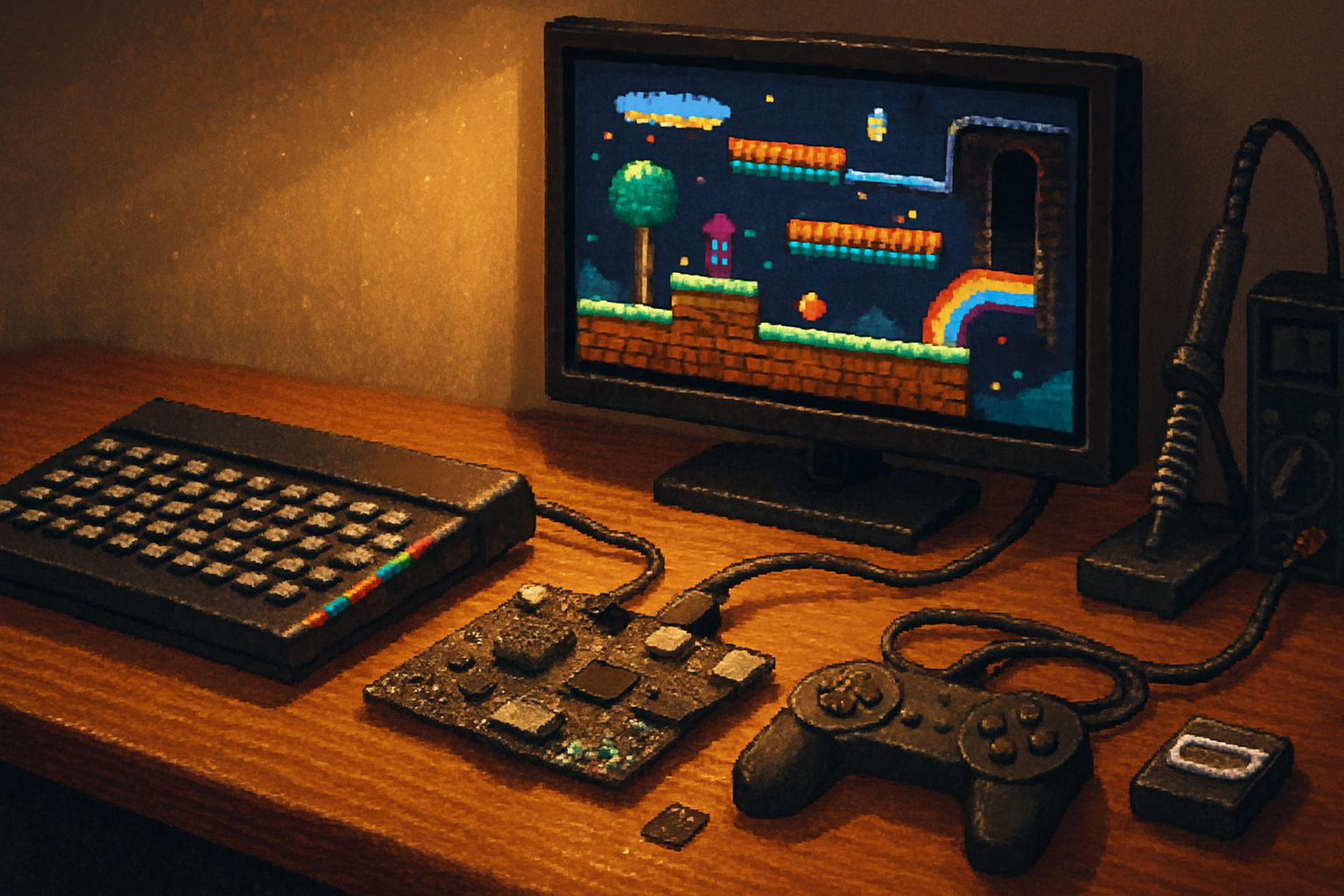
- They created new hardware adapters, accelerators, and FPGA recreations (like MiSTer) to keep the platform alive. Source: MiSTer project wiki
There is an ethic in the Amiga scene: ownership, repair, and creativity over consumption. Modern console ecosystems increasingly nudge players toward subscription models, cloud saves locked to accounts, and DRM. That tradeoff - convenience for control - is a cultural choice, not a technical inevitability.
Nostalgia: why pixel dust still glows
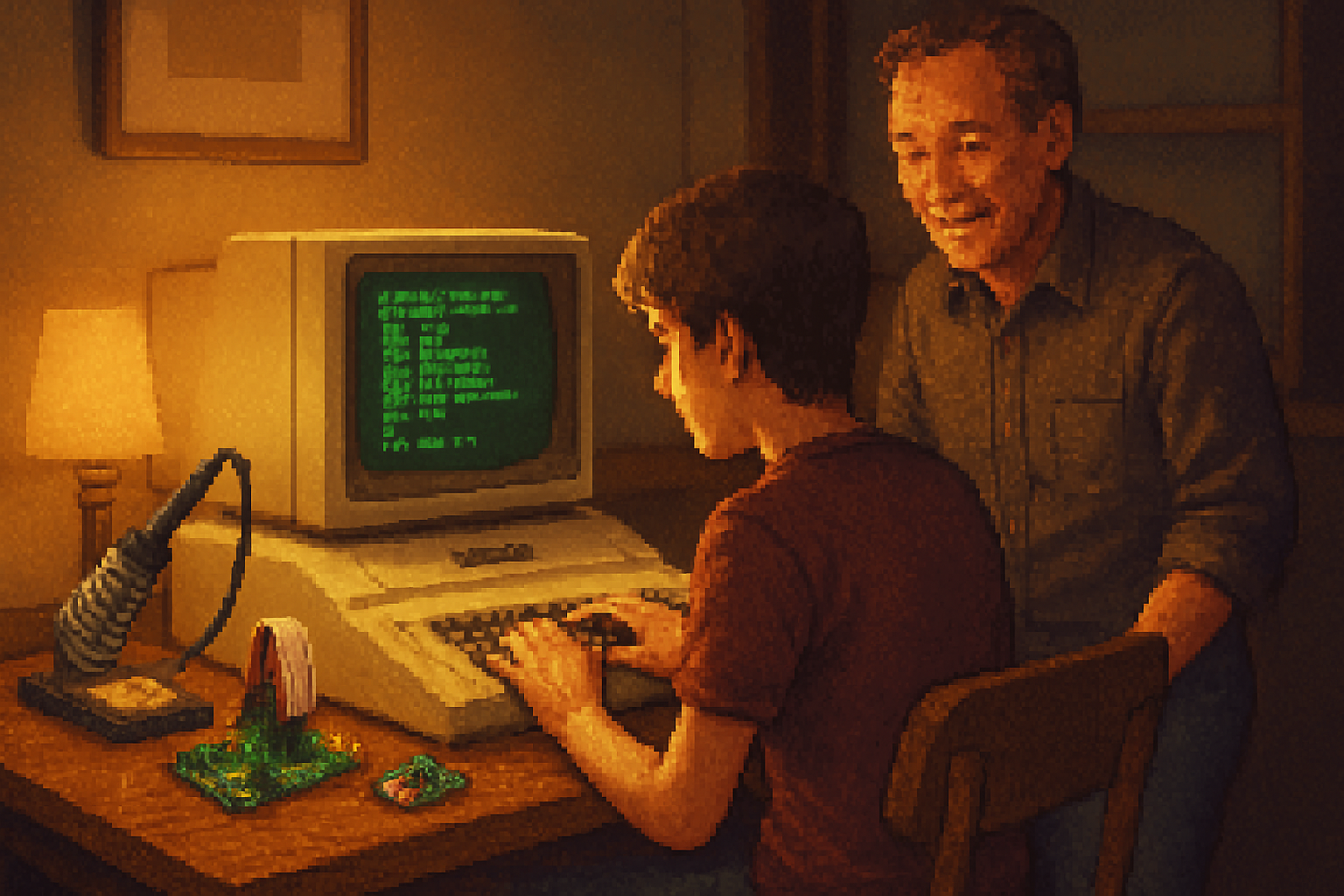
Nostalgia is not just memory. It’s a social glue. For many, the Amiga is the first machine that answered back: you could type, change, and see results in minutes. That immediacy formed confidence and identity.
Nostalgia also acts like an editorializing lens. We forgive the Amiga’s low framerate or disk thunks because the experience felt human. That human quality is hard to quantify, and easy to mock - but it keeps people refurbishing boards, trading floppies, and writing new demos in old formats.
What modern consoles could learn from the Amiga
- Openness breeds ecosystem longevity. Documentation, mod support, and hobbyist engagement create communities that care for a platform long after commercial support ends.
- Resource constraints encourage iconic game design. Tight budgets force decisions that reveal core mechanics and aesthetics.
- Repairability and upgrade paths extend life and meaning.
Verdict: apples, oranges - and a fruit salad
If you want photorealism, instant matchmaking, and AAA spectacle - modern consoles win flatly. They are technologically superior in every benchmark-minded way.
If you want a machine that invites you to open it, to learn from it, to make something idiosyncratic and lasting - the Amiga 1200 still offers a unique bargain. It is not about raw horsepower; it is about agency.
For collectors and tinkerers, the Amiga is a living archive of computational creativity. For the mainstream player, modern consoles are tools optimized for scale and polish. Both matter. Both teach different lessons about what games can be.
Quick reference: pros and cons
Amiga 1200
- Pros - openness, charming audio/pixel aesthetic, strong community, historically influential demoscene.
- Cons - tiny RAM/CPU by modern standards, slow media, hardware aging and scarcity.
Modern Consoles
- Pros - raw performance, stability, polished experiences, modern online ecosystems.
- Cons - closed ecosystems, limited hardware tinkering, cultural homogenization.
Closing thought
Technology advances; taste is more stubborn. The Amiga 1200 will never compete in teraflops, but it still outranks many modern products in one metric that matters: the ability to make someone stay up until 3 a.m. learning how the machine works because they want to. That is a kind of power-less measurable than GPU cycles, more consequential.
References
- Amiga 1200 (Wikipedia): https://en.wikipedia.org/wiki/Amiga_1200
- Advanced Graphics Architecture (AGA) (Wikipedia): https://en.wikipedia.org/wiki/Advanced_Graphics_Architecture
- PlayStation 5 (Wikipedia): https://en.wikipedia.org/wiki/PlayStation_5
- Xbox Series X (Wikipedia): https://en.wikipedia.org/wiki/Xbox_Series_X
- Nintendo Switch (Wikipedia): https://en.wikipedia.org/wiki/Nintendo_Switch
- Demoscene (Wikipedia): https://en.wikipedia.org/wiki/Demoscene
- WHDLoad (Wikipedia): https://en.wikipedia.org/wiki/WHDLoad
- WinUAE: https://www.winuae.net/
- MiSTer project wiki: https://github.com/MiSTer-devel/Main_MiSTer/wiki