· culture · 6 min read
The Dark Side of Pocket Calculators: Myth and Reality
Pocket calculators provoked panic, policy fights, and a generation of confiscated devices - but did they deserve the reputation? This article dismantles common myths about calculators replacing mathematics or rotting kids' brains, and shows how, used well, pocket calculators enrich understanding, accessibility, and problem-solving.

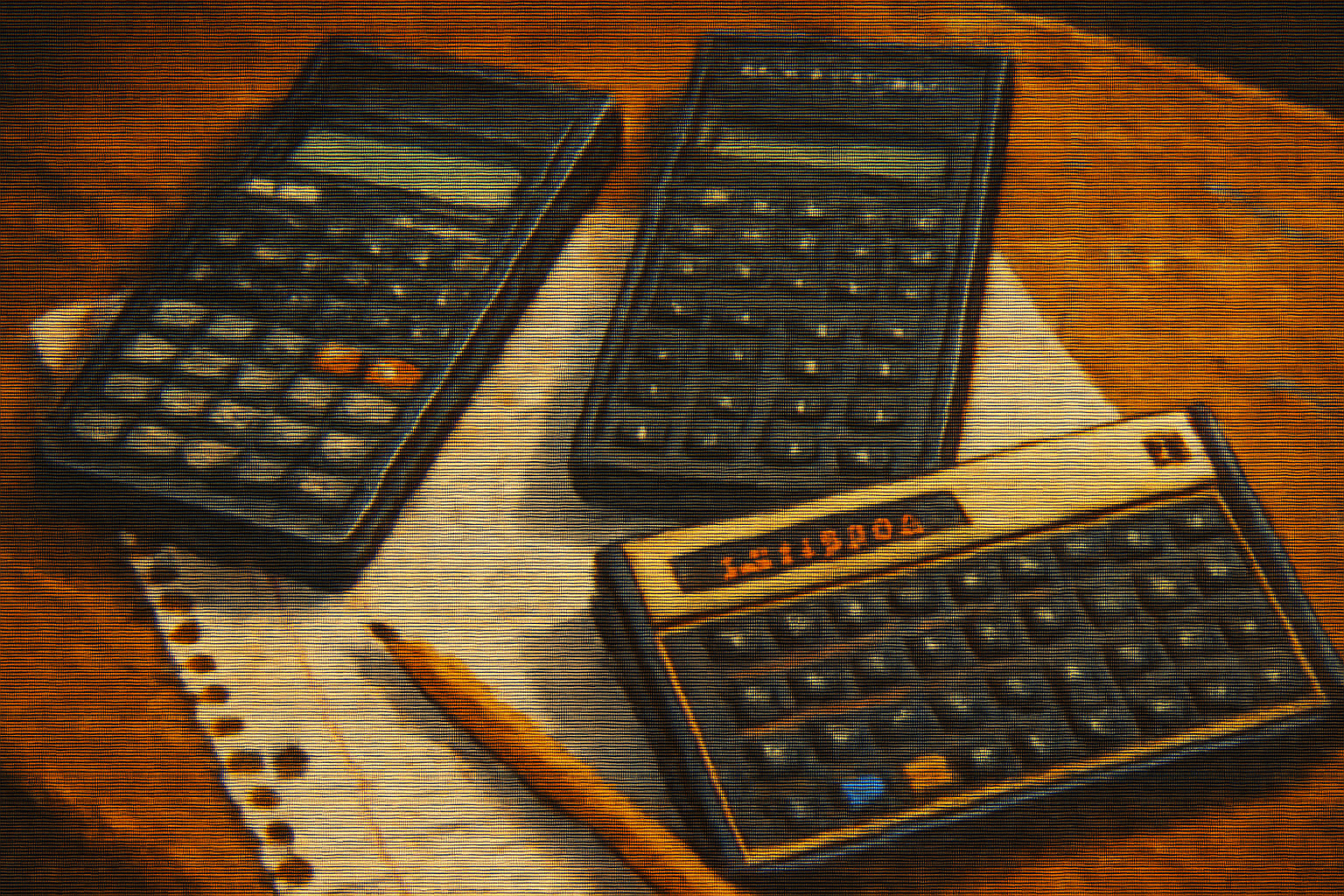
A kid in the front row taps a tiny metallic rectangle with the same furtive joy most of us reserve for sneaking a candy bar. The teacher sees it, the room freezes, and the calculator - the instrument of arithmetic liberation since the 1970s - is whisked away. Everyone nods: discipline preserved, learning saved.
Except that story hides a stubborn truth: the panicked confiscation of pocket calculators has always been as much ritual theatre as sound pedagogy. Schools have treated calculators like contraband, moral hazard, and cultural threat. That moral panic deserves an examination.
Myth 1 - Calculators are banned because they replace real math
The claim: Allow calculators and students will never learn arithmetic, algebra, or the beautiful cruelty of long division.
The simple reality: whether calculators replace understanding depends on how they are used, not whether they exist. Decades of classroom research show that calculators are tools: blunt in the hands of poor tasks, transformative in the hands of careful teachers. A review of research on calculator use collected by educational researchers found no consistent evidence that calculator access reduces students’ ability to learn basic computation when instruction is sound ERIC review.
Think of calculators like microscopes. You can stare through one without seeing anything, or you can use it to discover cells you couldn’t otherwise observe. The device doesn’t teach the science - the teacher and the tasks do.
Myth 2 - Calculators will replace pure mathematics
Fears of replacement are melodrama. Calculators do arithmetic; mathematics is far broader. Mathematicians will still prove things, construct arguments, and enjoy problems that require imagination, not keystrokes.
Calculators change the mix of classroom activity. Tasks that once consumed class time - repetitive arithmetic - can be offloaded, letting students wrestle with structure, modeling, and reasoning. That shift is not the death of mathematics; it’s the liberation of time for higher-order thinking.
Myth 3 - Calculators make students lazy and dependent
This is the modern version of blaming television for being too entertaining. Yes, calculators can be used lazily. But they also enable complex explorations impossible with pencil-and-paper arithmetic.
Good evidence suggests that when calculator use is integrated with conceptual instruction, students develop stronger number sense and problem-solving skills. The crucial variable is pedagogy: random calculator access tends to produce shallow behavior; planned use produces deeper learning.
Myth 4 - Calculators create unfair advantages or inequality
There is a grain of truth here: if some students have access to sophisticated tools and others don’t, inequity widens. But this is a policy problem, not a pedagogical verdict against calculators.
A better approach is to make appropriate calculators available to all students, and to teach their responsible use. Many standardized exam policies already attempt this balance by specifying allowed devices and sections where calculators are permitted or prohibited (policies vary across exams) see general exam calculator policies.
The real benefits - what calculators actually do for learning
- Conceptual focus - Calculators let students test conjectures, explore patterns, and visualize numerical relationships without getting bogged down by tediously repetitive arithmetic.
- Access and inclusion - For students with disabilities or processing differences, calculators can equalize access to mathematical reasoning and problem solving.
- Modeling and real-world math - Many real problems are messy and calculation-heavy. Calculators allow learners to pursue modeling, interpretation, and critique rather than arithmetic slog.
- Faster feedback loops - Students who can compute quickly with calculators can iterate on ideas, learn from immediate results, and build intuition.
If that sounds abstract, consider an example: asking students to explore exponential growth. With hand computation they can do two or three examples; with calculators they can chart growth across dozens of inputs, notice thresholds, and connect to real-world contexts (population growth, compound interest, viral spread). The mathematics-interpretation, pattern recognition, and reasoning-becomes the lesson, not the arithmetic.
History and context: why calculators scared people
Pocket calculators arrived en masse in the 1970s. For the first time, children could carry devices that performed complex arithmetic instantaneously. Schools feared a cultural shift: that students who hadn’t memorized multiplication tables would lack moral fiber or educational rigor.
Those anxieties had political and institutional roots: exams, curricula, and teacher preparation all needed time to adapt. The panic resembled earlier technophobic moments - consider the reaction to computers, to television, and to smartphones - where the technology becomes a scapegoat for deeper questions about pedagogy and assessment.
For a concise overview of calculators as a technology, see the historical summary at Britannica: Calculator - history and development.
What research actually recommends
A careful synthesis of research suggests a few stable points:
- Calculators do not automatically hinder basic skills when they are introduced as part of informed instruction.
- Students taught with opportunities to use calculators for exploration often show comparable or better conceptual understanding.
- Policy and assessment design matter - blanket bans or indiscriminate use are both problems. The middle path - purposeful integration - performs best (
Practical guidance for teachers and schools
If you manage a classroom or write school policy, don’t treat calculators as either demon or panacea. Aim for clarity and intention.
- Define purpose - set clear goals for calculator use. Is it for checking, exploration, modelling, or speed?
- Teach technique - show students how calculators can mislead (rounding issues, order of operations, function keys) so they use them critically.
- Preserve mental math - build estimation, number sense, and algorithmic fluency through dedicated tasks. Calculators supplement, not supplant, these skills.
- Design assessments thoughtfully - create problems that reward reasoning and understanding rather than only complex computation. Use sections with and without calculators where appropriate.
- Equity first - ensure all students have access to the same class of calculators during instruction and assessments to avoid introducing advantage.
Sample activities that use calculators well
- Number sense lab - give students a growth function, ask them to estimate outputs, then use calculators to test and refine estimations.
- Error hunting - provide calculator outputs with subtle operator-entry errors. Students must find and correct the mistakes.
- Modeling project - real-data tasks (interest rates, population, climate proxies) where students use calculators to run scenarios and critique results.
A closing diagnosis
The moral panic over pocket calculators says more about anxiety over changing classrooms and assessment systems than it does about the devices themselves. Calculators are not a siren song luring students away from truth; they are a tool. Like any tool, their educational value depends on how thoughtfully they’re used.
If your instinct is to confiscate, ask yourself: what are you trying to protect? If it’s conceptual thinking and disciplined reasoning, calculators are allies. If it’s an outdated ritual that conflates memorization with understanding, then removing calculators only preserves the illusion, not the learning.
In short: calculators won’t replace mathematics. They will, if used well, make it less boring and more honest. If used badly, they’ll make math class marginally quicker and significantly stupider. Choose wisely.
References
- Research review on calculators - ERIC - “A Review of Research on the Effects of Calculator Use on Students’ Achievement”
- Historical context and development of calculators - Britannica - “Calculator”
- Example of exam and policy considerations - College Board - Exam policies (calculator rules vary by exam)