· retrogaming · 7 min read
Sega Genesis Multiplayer: The Best Co-op and Competitive Games
A nostalgic deep-dive into the Sega Genesis’s finest multiplayer moments-co-op and competitive games that created lifelong friendships, furious rivalries, and an enduring couch culture.
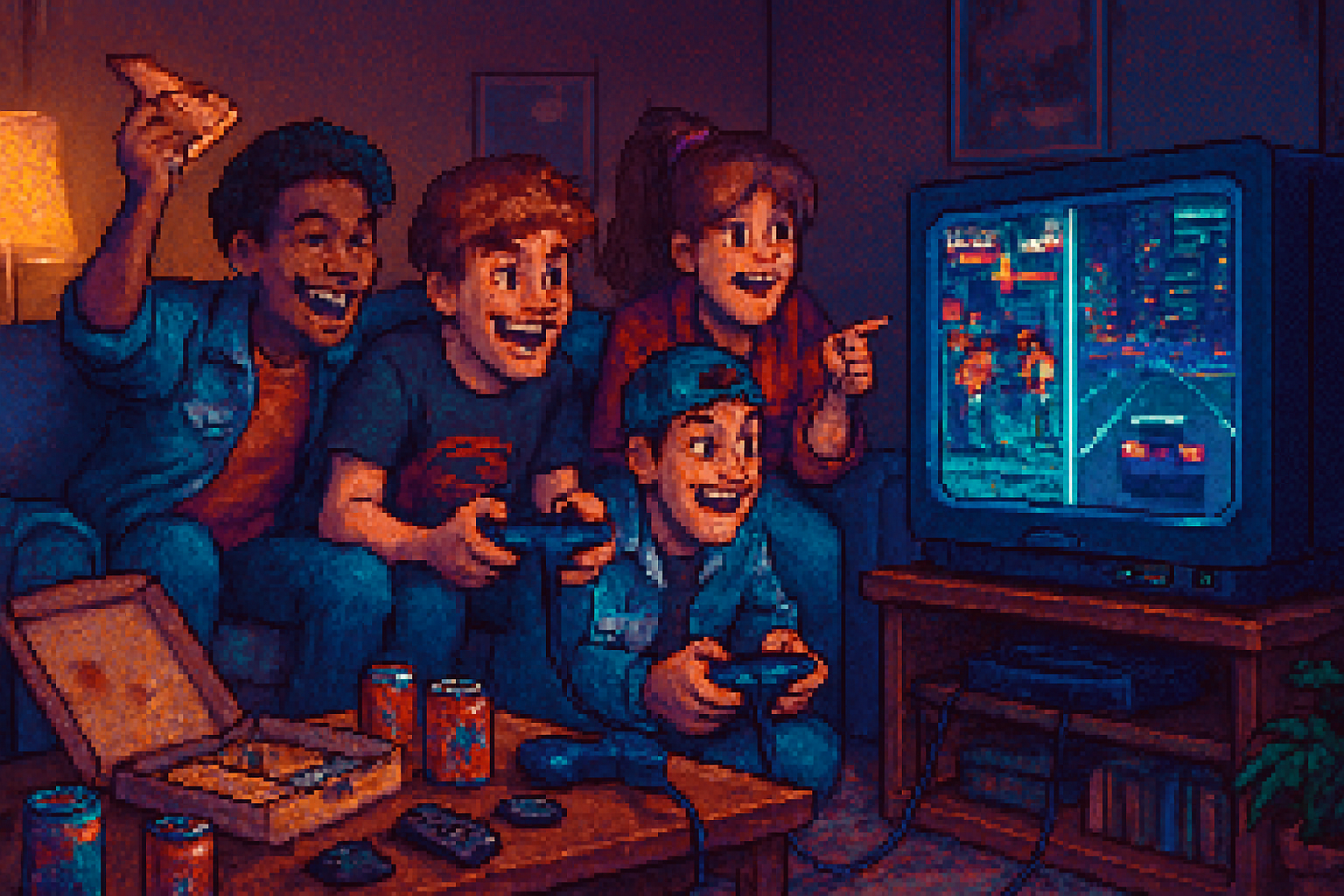
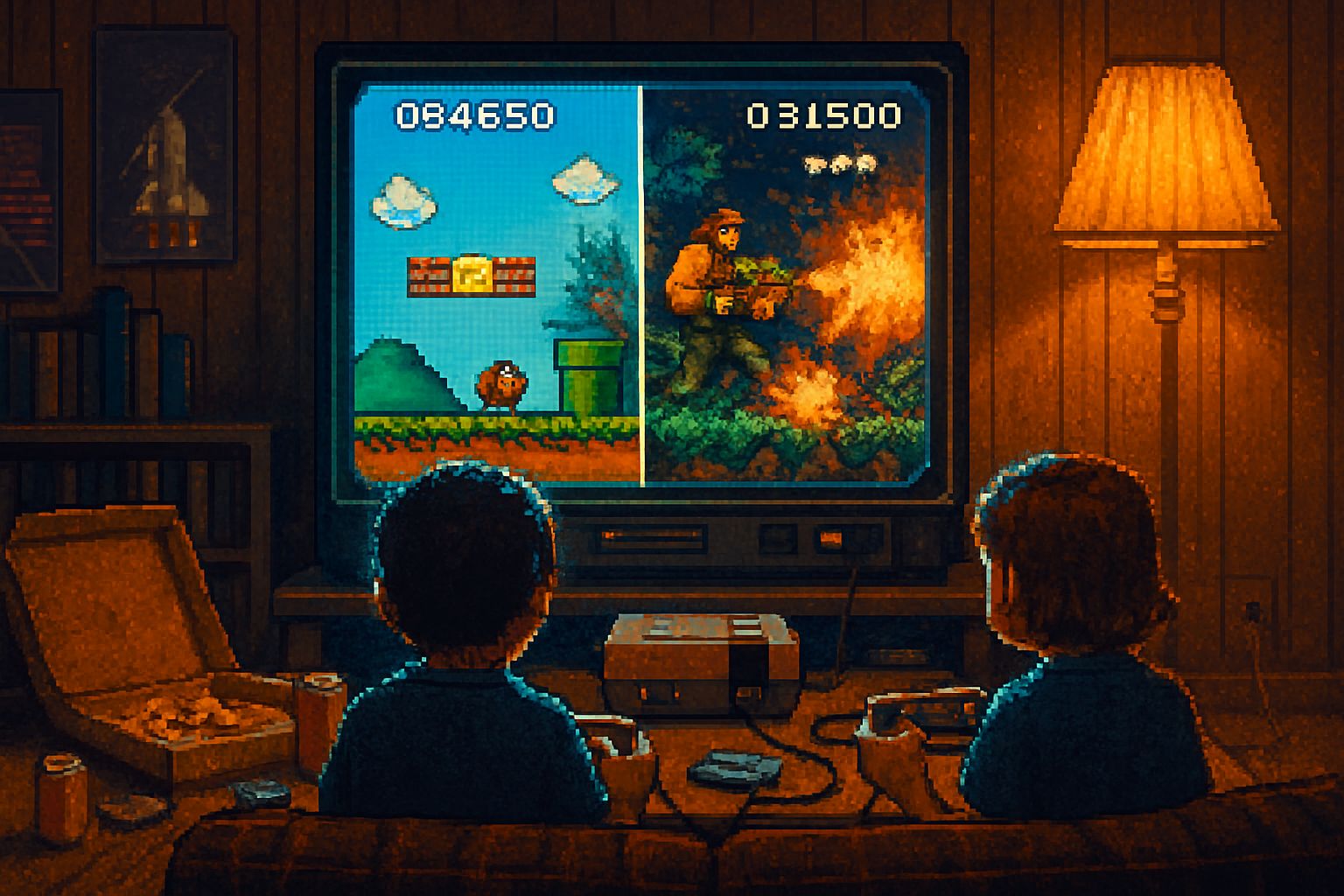
I still remember the smell: cheap pizza, cigarette smoke (someone’s uncle), and the electrical tang of a CRT warming up. The TV flickered, the cartridge clicked into the slot, and five friends squeezed onto a battered couch as if skin-tight proximity could improve our skills. One controller would inevitably die after someone dropped it in a panic. Someone always called “no fair” in a voice that meant “rematch.”
That was multiplayer on the Sega Genesis - messy, immediate, and immortal. It was less about pixels than about proximity. These games were social engines: they turned living rooms into gladiatorial arenas and into cooperative sanctuaries. They taught us how to celebrate a shared combo and how to forgive a friend who just stole the last life.
Why the Genesis excelled at multiplayer
The console had several accidental advantages for social play:
- Hardware accessibility - cheap cartridges, instant boot, no patching. Plug in and play.
- Controller evolution - the standard 3-button pad plus the later 6-button option made fighting games and action titles feel responsive.
- Expandability - third-party multitaps and creative cartridge designs like Codemasters’ J‑Cart allowed more than two players without expensive add-ons.
Read more about the system’s history and hardware here: Sega Genesis / Mega Drive (Wikipedia).
The rules I used picking the best multiplayer titles
I focused on games that achieved two things: 1) they produced memorable social moments (trash talk, teamwork, betrayal), and 2) they still hold up - mechanically or emotionally - when you boot them today. Here are the best co-op and competitive experiences the Genesis offered.
Best Co-op Games
These are the titles you invited someone over for. They demanded coordination, improvisation, and an appetite for shared failure.
Gunstar Heroes (Treasure) - manic, beautiful cooperation
Gunstar Heroes is the textbook example of run‑and‑gun perfection. Two players blasting through surreal stages, swapping weapon combinations and improvising mayhem. Treasure’s design crams variety into every screen: bosses that feel alive, weapon combos that make your partner either indispensable or tragic.
Why it still matters: the pacing is perfect. Nothing feels wasted, and the co‑op doubles the chaos in the best possible way. See more: Gunstar Heroes (Wikipedia).
Streets of Rage 2 - the ragged poetry of beating up goons with friends
If a beat ’em up is a communal ritual, Streets of Rage 2 is its catechism. Two players could experiment with move sets, pile on a plastic chair, or save each other from death by throwing them a health pickup at the last second. The soundtrack by Yuzo Koshiro didn’t just support the action - it begged you to move.
Social payoff: shared comebacks. That last-player save felt like a cameo from fate. More: Streets of Rage 2 (Wikipedia).
Contra: Hard Corps - co-op with teeth
Contra is unforgiving, and Hard Corps is its muscle-bound cousin. Two players coordinated runs, memorized projectile patterns, and blamed each other when a cheap screen‑clearing death happened. It was thrilling and merciless.
Legacy: contrived difficulty makes cooperation mandatory and deeply satisfying when you clear a brutal level. See: Contra: Hard Corps (Wikipedia).
ToeJam & Earl - co-op with cosmic humor
Shoestring budgets and absurd charm made ToeJam & Earl a warm antidote to arcade-scorched aggression. The two-player mode turned the game’s procedurally assembled levels into shared misadventures: finding funky presents, falling into traps, and debating whether Santa Claus is suspicious.
Why it endures: it’s cooperative exploration with personality. Link: ToeJam & Earl (Wikipedia).
Best Competitive Games
These are the cartridges you argued about. They made rivalries real and petty grudges last decades.
Mortal Kombat II - gore, bravado, and the power of a shameful victory
Few franchises created as much living‑room drama as Mortal Kombat. The Genesis version was notorious for being censored compared to the arcade (a factual sore spot among purists), but it still delivered brutal one-on-one matches, fatality theatrics, and moments of genuinely cartoonish savagery.
Social mechanics: taunts, stage hazards, and the thrill of a last-frame reversal. Mortal Kombat II (Wikipedia).
NBA Jam - the arcade basketball that made physics a suggestion
“Boomshakalaka!” - nobody called that phrase without meaning it. NBA Jam’s exaggerated dunks and impossible comebacks were tailor-made for two‑player rivalry and four‑player chaos. The game encouraged trash talk and miraculous buzzer-beaters.
Why it’s timeless: simple rules, huge spectacle, and the perfect blend of cooperative teamplay and personal heroics. NBA Jam (Wikipedia).
Micro Machines 2: Turbo Tournament - may the smallest car win
Compact cars. Tiny tracks. Big egos. Micro Machines on the Genesis was a study in tiny, violent track design. Codemasters’ J‑Cart innovation even added extra controller ports to the cartridge so more players could join without buying a multitap. The result: cramped kitchen-table races and that one friend who always found a shortcut.
Multiplayer quirk: the camera and collision rules encouraged creative griefing and ruthless lane‑hogging. Micro Machines 2 (Wikipedia) and J‑Cart (Wikipedia).
NHL ’94 - the hockey game that defined competitiveness
NHL ’94 on Genesis is still used as a baseline for arcade sports feel. Fast, responsive, and full of momentum-based comebacks, it created rivalries that survived Christmas break. Two players battling in overtime felt like medieval combat.
See: NHL ‘94 (Wikipedia).
How these games built camaraderie and rivalry
Multiplayer on the Genesis distilled friendship into repeatable rituals:
- Ritualized rematches. “One more” was the social glue of the era.
- Role specialization. One player became the tactician, another the reckless star; teams formed by personality.
- Shared memory anchors. A particular boss wipe, a flawless run, or an epic rage‑quit created stories you told for years.
Camaraderie came from shared failure and collective triumph. Rivalry came from small slights - stealing powerups, hogging controllers, or executing an illegal but spectacular move. The social systems in these games were low‑bandwidth but high‑emotion: visuals and sound channeled feelings directly, with no online chatter to dilute the moment.
Why they still matter today
These aren’t dusty relics. They affect game design and social gaming now:
- The rise of indie local co‑op titles (Overcooked, Cuphead, Streets of Rage remakes) owes a debt to Genesis-era design language.
- Speedrunning and retro communities keep these games alive through challenges and leaderboards.
- Official re-releases and compilations (like the Sega Genesis Mini and retro collections) make them accessible to new players.
Older design constraints - short sessions, clear rules, immediate feedback - are exactly the qualities modern designers revive when they want to make games social again.
How to play these classics today (without uprooting your living room)
- Original hardware - buy a Model 1/Model 2 Genesis and real cartridges for authenticity. Use an upscaler or a modern CRT if you can.
- Reissues and mini consoles - the Sega Genesis Mini includes many built‑ins and HDMI output for convenience. See:
- Collections and digital stores - “Sega Genesis Classics” on modern platforms bundles many titles with save states and netplay for some games.
- Emulation - RetroArch, Genesis Plus GX, and other emulators reproduce the experience; be mindful of ROM legality - own the game if you emulate it.
- Controller adapters and multitaps - if you want four players, get a quality multitap or a cartridge-based J‑Cart title like Micro Machines for built-in ports.
Practical tip: if you want authentic latency and feel, a wired USB controller modeled on the 6‑button pad is the sweet spot for most players.
Final round: a quick recommended playlist
- Co-op essentials - Gunstar Heroes, Streets of Rage 2, Contra: Hard Corps, ToeJam & Earl
- Competitive staples - Mortal Kombat II, NBA Jam, Micro Machines 2, NHL ’94
These selections are not merely games; they’re social rituals encoded on silicon and ROM. They made us better at trash talk, worse at sharing controllers, and deeply nostalgic for evenings where winning was an immediate, scalding thrill.
The Sega Genesis promised speed, style, and attitude. Its multiplayer offerings delivered something more human: proximity, conflict, and the comfort of a shared, flickering screen.