· retrotech · 6 min read
The Rise and Fall of Netscape Navigator: Lessons for Modern Tech Startups
Netscape's Navigator rewired the world - and then lost it. This post traces the rapid ascent from 1994 breakout to 1998 decline, analyzes the strategic errors that handed the crown to Internet Explorer, and extracts practical lessons every modern startup should memorize.
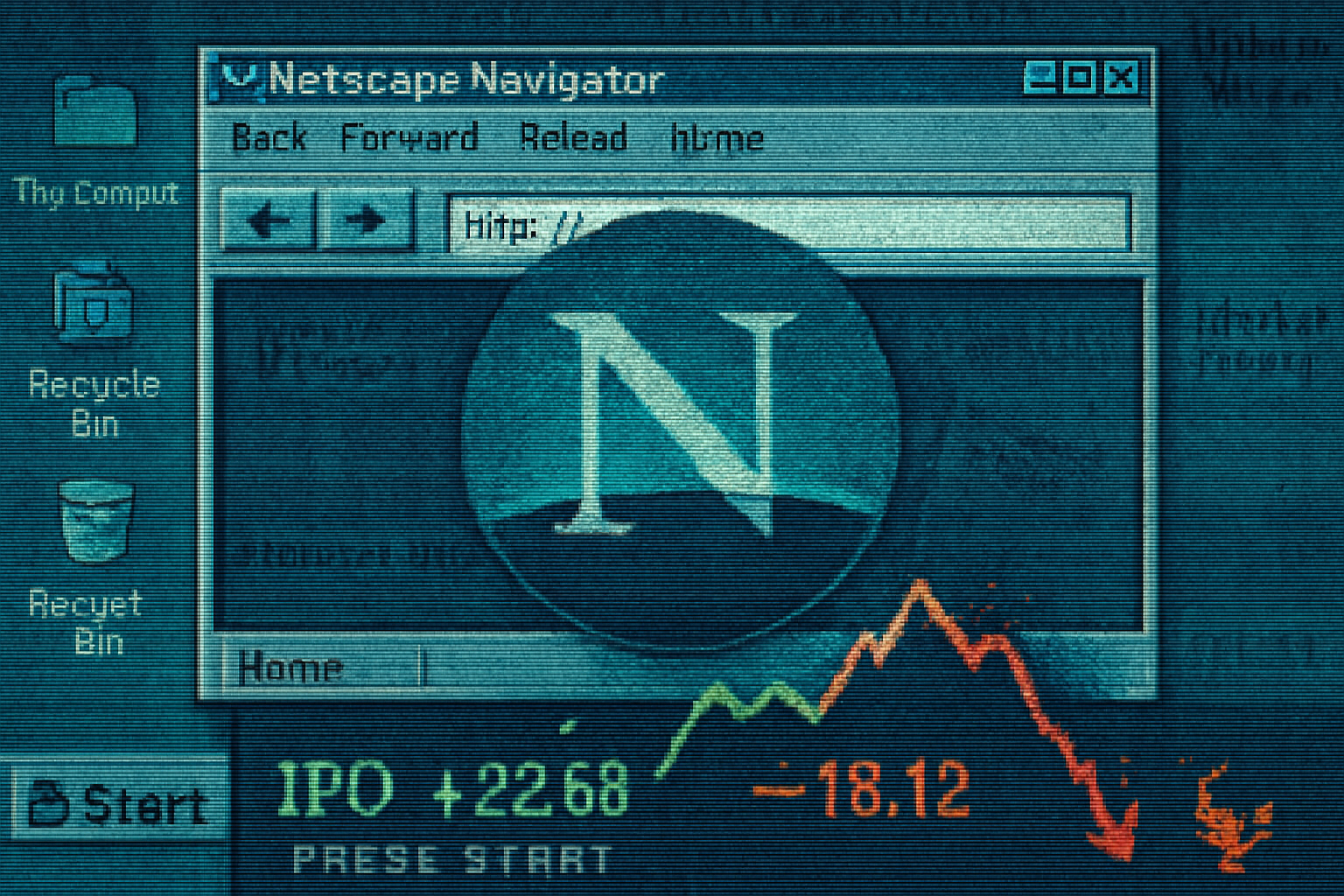
On August 9, 1995, Netscape’s IPO turned the tech world into a circus. The stock opened at $28 and closed at $58.25 - a vaporous, ecstatic doubling that announced to Wall Street, the Valley and anyone who still used dial-up that the World Wide Web was both real and valuable. For a few years after, Netscape Navigator was synonymous with the Web. Then Microsoft barbecued its rival, and the browser that had once felt inevitable flickered and died.
This is not a nostalgia trip. It’s a case study in what happens when product genius collides with naive strategy, ruthless competition, and corporate distraction. If you run - or plan to found - a startup, read this as a parable.
How Netscape won the first round
The origin story is crisp and familiar: Marc Andreessen and Jim Clark took the graphical Mosaic browser (from the NCSA) and reimagined it for a commercial, consumer-ready audience. Netscape Navigator launched in late 1994 and smashed expectations. Why?
- Product-market fit - Navigator made a previously technical, confusing internet approachable for ordinary people. Browsing went from “geek labor” to “household activity.” (See the Netscape overview.)[
- First-mover speed - Netscape iterated quickly, shipping features and improvements faster than clunky incumbents in other software categories could respond.
- Cultural moment and distribution - The Web was new, hungry for a default client, and Netscape seized mindshare while Microsoft was still thinking of Windows as the operating system for Office.
Netscape’s IPO amplified all of this into myth. For a brief moment, Netscape was the definition of the future.
Microsoft’s blunt instrument: distribution over innovation
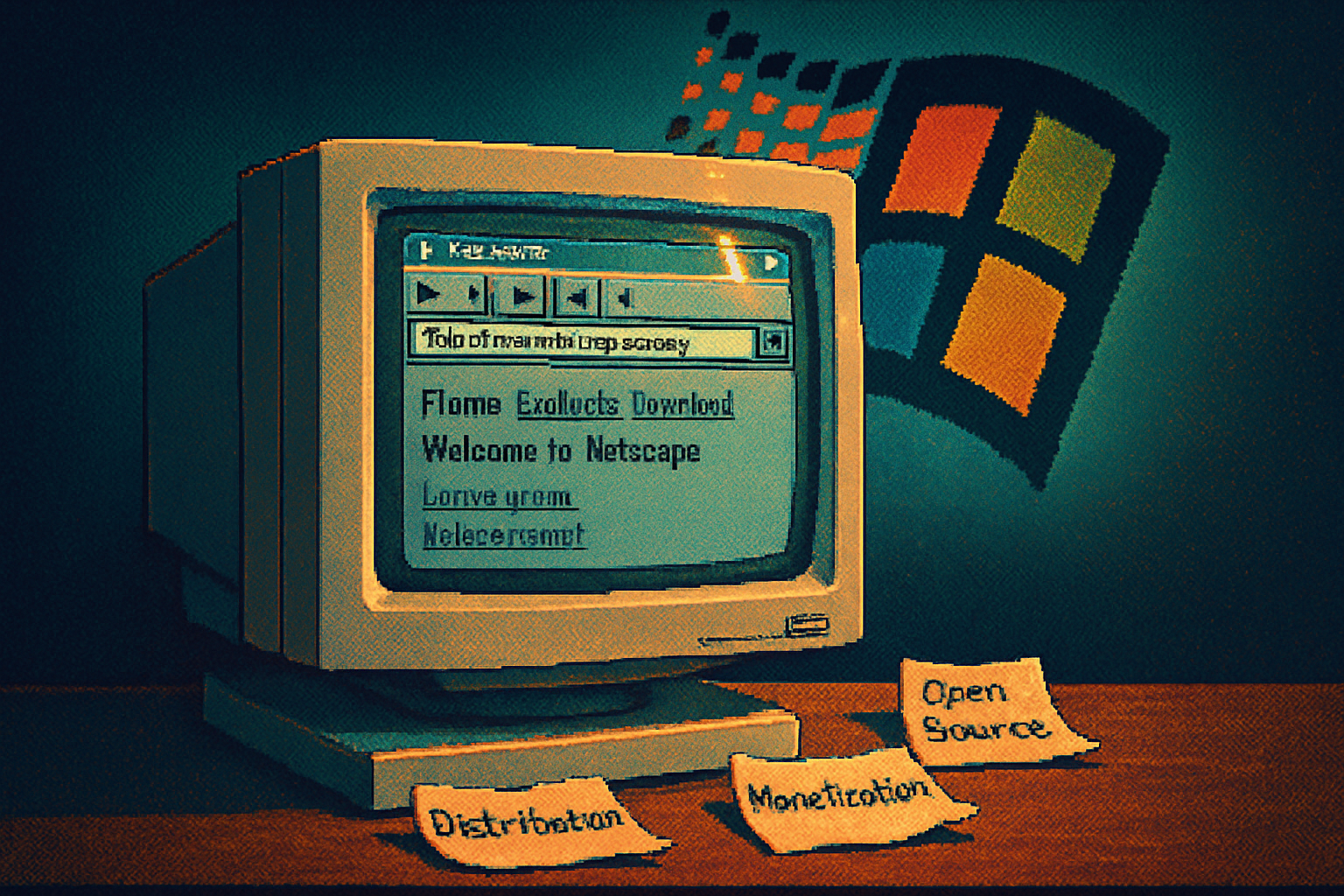
Microsoft didn’t lose the browser battle because its engineers were romantic geniuses. They won because they controlled the operating system - the ultimate choke point for distribution.
Key facts:
- Microsoft licensed some browser tech from Spyglass and launched Internet Explorer in 1995.[https://en.wikipedia.org/wiki/Internet_Explorer]
- Instead of competing on price or isolated features, Microsoft bundled Internet Explorer into Windows, ensuring the browser arrived pre-installed on the majority of new PCs and reached enterprise customers by default.
- When distribution is free, immediate and ubiquitous, even a technically inferior product can become the de facto standard.
Microsoft’s conduct triggered the antitrust case [United States v. Microsoft], which later concluded the company had used its Windows monopoly to crush competition in adjacent markets. But legal hearings don’t reverse market realities: the damage to Netscape’s install base and developer ecosystem was already done.[https://en.wikipedia.org/wiki/United_States_v._Microsoft_Corp.]
Where Netscape’s strategy misfired
Netscape had brilliant tech and tremendous mindshare. It also made several strategic errors - errors that are painfully familiar because they’re the ones founders keep making.
- Confused monetization
Netscape’s browser was free to users early on, and the company expected to make money from server software and licensing. That bet hinged on the idea of parallel revenues, which never scaled as expected. Once Microsoft decided the browser was a strategic battleground, Netscape lacked a direct, durable revenue model tied to its dominant product.
- Underestimating distribution as a battleground
Netscape treated product quality and features as the primary determinants of market share. That was true - until Windows began shipping with IE. Netscape didn’t match Microsoft’s ability to make the browser a default, frictionless install for millions.
- Slow, messy transition to open source
In 1998 Netscape open-sourced its browser code and created the Mozilla project [https://en.wikipedia.org/wiki/Mozilla]. The move was defensible - but it came late and with code that was not ready for rapid community-driven development. The resulting rearchitecture took years.
- Getting distracted - portal fantasies and corporate changes
Netscape’s leadership drifted toward building a web portal and an advertising/content business (think: trying to become the AOL of the Web). That strategic pivot absorbed attention and resources away from the core product at a time when iteration speed and defensive focus were critical. The AOL acquisition in 1999 further diluted focus and accelerated cultural conflict.[https://en.wikipedia.org/wiki/Netscape#AOL_acquisition]
- Leadership and execution gaps
Founders are great at product vision; they are often less great at the blunt, boring work of coordinating high-velocity release cycles and ruthless distribution plays. Netscape’s engineering and release cadence slowed at the moment when velocity mattered most.
The technical and cultural aftermath: Mozilla, AOL, and the long tail
Open-sourcing the browser seeded what would become the Mozilla Foundation and later Firefox. But Mozilla’s development and Netscape’s product releases were slow and politically fraught. Netscape 6, the first product based largely on the Mozilla codebase, shipped late and buggy - a strategic self-inflicted wound that handed more advantage to Internet Explorer.
Meanwhile, AOL bought Netscape in 1999 for about $4.2 billion, turning an entrepreneurial sprint into a corporate sidecar. Corporate acquisition muffled the startup’s urgency. By the early 2000s Netscape’s market share had collapsed; the browser that once felt like the Web’s default was reduced to a nostalgic footnote.[https://en.wikipedia.org/wiki/Netscape]
The myths worth discarding
- Myth - Great technology always wins. Reality: Distribution and platform control often beat superior tech.
- Myth - Open source is a magic shield. Reality: Open-sourcing a brittle codebase can be a runway to nowhere if your community and governance structures aren’t ready.
- Myth - Antitrust will save you. Reality: Legal remedies are slow; they come after markets have moved on.
Practical lessons for modern startups
- Treat distribution as product
If a platform can control how your product reaches users, you need a distribution strategy that doesn’t assume benevolence. Consider partnerships, pre-installs, browser extensions, mobile app agreements, carrier deals, or viral hooks - whichever removes friction.
- Nail monetization early (and directly)
If your flagship is free, have a credible plan to monetize the user base that doesn’t depend on vague future upsells. Relying on adjacent revenue lines that can’t scale with user adoption is risky.
- Move at startup speed even when you’re successful
Market leadership is fragile. Institutions slow down; competitors don’t. Preserve product velocity and ruthless prioritization until you’re unambiguously secure.
- Don’t hand distribution to someone who will weaponize it
If your product sits on someone else’s platform, accept that they can - and may - prioritize their own offerings. Prepare contingency plans and build cross-platform strategies.
- Open source intentionally, not tactically
Open-sourcing is powerful when you have a clear road map for community building, governance, and continuous integration. Doing it as a defensive PR move - without the infrastructure to support a thriving community - wastes time.
- Keep focus during success
The temptation to expand into adjacent, high-margin markets is real and often irresistible. But expansion is cheap only when your core product is bulletproof. If the moat is distribution or rapid iteration, defend it first.
- Remember regulatory remedies are slow and messy
Antitrust is a blunt instrument and a long-term project. Don’t plan to be rescued by regulators - plan to be competitive on your own merits while the lawyers fight.
A final moral
Netscape’s story is simultaneously triumphant and tragic: it rewired how people accessed information, created whole industries (including web advertising and client-side scripting - hello, JavaScript), and birthed an open-source community that ultimately returned the browser to life in new form. It also demonstrates that early victories can be ephemeral when the opponent controls the pipes.
If there’s a single sentence to carry forward, it’s this: build a product that people love, yes - but also build a distribution strategy, a durable monetization model, and the organizational discipline to move faster than the behemoth that will try to eat you.
Recommended reading and sources
- Netscape - Wikipedia: https://en.wikipedia.org/wiki/Netscape
- Internet Explorer - Wikipedia: https://en.wikipedia.org/wiki/Internet_Explorer
- United States v. Microsoft Corp. - Wikipedia: https://en.wikipedia.org/wiki/United_States_v._Microsoft_Corp.
- Mozilla history - https://www.mozilla.org/en-US/history/
- Netscape IPO (1995) coverage - New York Times: https://www.nytimes.com/1995/08/10/business/netscape-s-ipo-is-instant-success.html