· culture · 6 min read
Revisiting the Newton: A Hacker's Guide to Understanding Its Legacy
The Apple Newton was more than a famously fallible PDA - it became a fertile playground for hackers. This piece unpacks the open-source and homebrew community that grew around the Newton MessagePad, the technical and social lessons it leaves for modern developers, and a practical path to getting hands-on with Newton-era hacking today.
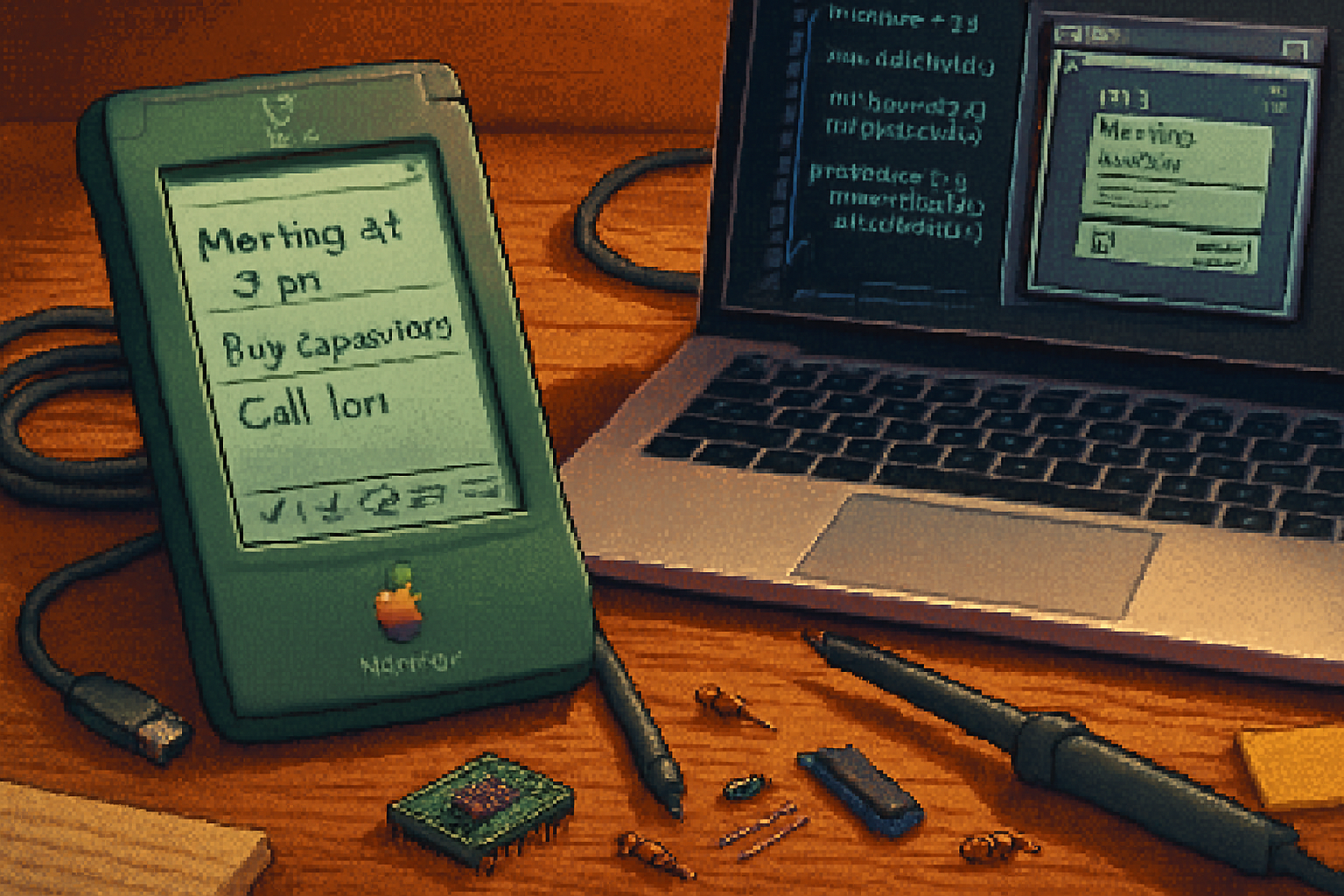
A Thursday evening in 1994. The living room smelled faintly of takeout pizza; a friend-already the sort of person who collected gadgets the way others collect stamps-tapped a stylus at a slab of plastic and watched the device dutifully transcribe “Hello.” Then it reliably turned that into “He11o.”
The Newton shipped with promises. It failed, spectacularly, in the court of mass-market opinion. It succeeded, quietly and magnificently, as an object of affection for a cadre of tinkerers who turned it into a crucible for experimentation. That’s the story I want to tell: how a product derided for its quirks became a canonical example of how open-source curiosity and hacker culture extend the life and value of hardware and software.
Why the Newton still matters
The Newton MessagePad is often remembered as a public-relations embarrassment or as an early attempt at personal computing that arrived before the infrastructure was ready. Those are true, and boring. What’s interesting is how the Newton incubated a style of engineering that matters now.
- It shipped with an unusual language, NewtonScript, designed for a constrained device but expressive enough to build surprisingly sophisticated apps.
- Its community reverse-engineered protocols, wrote alternate OS tools, built emulators, and patched hardware limitations with crafty peripherals.
- The Newton’s lifecycle - from glossy launch to commercial failure to cult object - mirrors the arc many modern platforms take - early promise, public skepticism, and then slow renaissance via community-driven development.
If you want to understand how resilient ecosystems form around technology, look less at the flashy launch day and more at the people who refuse to let it die.
The hacker ecosystem: what actually happened
The Newton’s open-source-esque afterlife wasn’t about code donated by Apple. It was grassroots: enthusiasts sharing documentation, dissecting ROMs, building tools, and reimplementing missing features. Key activities included:
- Documentation and knowledge-sharing - Users collected and preserved Apple’s developer notes, reverse-engineered file formats, and wrote FAQs and guides. Those communal documents are the scaffolding that made later projects possible.
- Emulation and tooling - Developers built emulators so you didn’t need the original hardware to test software. Emulators let the next generation run Newton apps on modern machines and study internals without risking antique electronics.
- Homebrew apps and ports - From simple utilities to full-blown applications, hobbyists extended Newton capabilities in ways Apple hadn’t imagined.
- Hardware hacks - Serial adapters, infrared networking tweaks, and creative use of docking stations extended the Newton’s connectivity.
These activities are familiar to anyone who’s watched an old device gain a second life on GitHub. The Newton community is a template for how distributed enthusiasts bootstrap a platform into continued relevance.
For technical background on the platform and its language, see Apple Newton (MessagePad) and NewtonScript on Wikipedia.12
Concrete hacker projects (archetypes, not myths)
Rather than mythologize, consider a few archetypal projects that the Newton community pursued. You don’t need to find the exact names-these are practical patterns you can copy today.
- Reimplementation - Recreate a system component (e.g., syncing protocol) in a modern language so you can use contemporary infrastructure with the Newton. This is reverse-engineering with a useful payoff.
- Emulation - Build or improve an emulator to trace code, run test suites, and prototype features without hardware constraints.
- Toolchain modernization - Wrap legacy compilers, cross-assemblers, or build systems in modern automation (CI, containers) so new contributors can get started in minutes.
- Hardware bridging - Create USB-to-serial or Wi‑Fi bridge devices so vintage hardware can speak modern networks.
These projects are modest, but each teaches a lesson: the value of reproducible tooling, the power of emulation for safe experimentation, and the outsized payoff of forging contemporary interfaces to legacy systems.
Lessons for today’s developers
If you’re a modern engineer-building mobile apps, embedded devices, or cloud services-here’s what the Newton saga offers you, distilled and sharpened.
- Constraints breed craft.
Rust, Go, and other modern languages get praised for safety. But constrained devices-tiny RAM, intermittent power-force you to be intellectually disciplined. Newton developers learned to trade generality for predictability and clarity.
- Open documentation beats closed brilliance.
The Newton community didn’t resurrect the device because of a secret SDK. They did it because people documented everything. Public, searchable, and editable documentation is more valuable than any proprietary advantage.
- Tooling lowers the bar to entry.
A decent emulator and a single-command build system will attract ten contributors where a proprietary SDK will attract zero. Accessibility is a multiplier.
- Reverse-engineering is a learning accelerator.
Reading legacy binary formats or tracing old IPC reveals design choices - both brilliant and embarrassing. Those lessons are portable.
- Community is the actual product.
A platform’s resilience depends on the network of people who care about it. Focus on fostering that network: be generous with time, curate a welcoming onboarding path, and celebrate small wins.
Getting hands-on: a practical starter path
Want to hack on a Newton (or use the Newton as a training platform for modern skills)? Here’s a practical checklist.
- Read the primers:
- Find emulators and ROMs:
- Use emulators to avoid hunting for fragile hardware. Emulators let you experiment safely; respect legal constraints on ROM distribution.
- Pick a small project:
- Examples - implement a JSON-based sync bridge, port a simple modern CLI tool to NewtonScript, or write an app that exposes a REST-like interface over serial.
- Modernize the toolchain:
- Containerize the build environment. Add tests that run in an emulator. Put the whole thing on GitHub so others can fork and improve.
- Share documentation:
- Write a short tutorial showing how to build, run, and test your project. That single doc is the seed of a community.
This is deliberately low-friction. The goal is to lower the activation energy: tiny wins produce momentum.
A short manifesto for platform caretakers
If you’re shipping hardware or a developer platform now, borrow these rules from the Newton’s afterlife:
- Document aggressively. Write for the reader who will arrive in three years with caffeine and curiosity.
- Provide emulation or sandboxed testbeds to remove hardware dependency.
- Accept the inevitability of forks and mods. Make it easier by providing stable file formats and hooks.
- Treat community contributions as product features - give them visibility and credit.
Companies that do this create ecosystems that outlive marketing campaigns.
Why nostalgia isn’t the point
This isn’t a paean to old plastics and monochrome screens. It’s an argument about durability. The Newton’s legacy is not a museum piece; it’s a method. It shows how constrained environments invite unexpected creativity, how volunteer communities extend product lifetimes, and how careful documentation and accessible tooling are the real intellectual property.
If you want a quick test of your skills as an engineer, try to make a Newton do something modern: synchronize notes over HTTPS, or expose a tiny web UI. You’ll be surprised how much you learn about protocols, UX compromises, and the value of tidy documentation.
Where to read more and find people
- Start on the Newton Wikipedia page and the NewtonScript page to orient yourself.12
- Browse retrocomputing communities and tags for project leads and people who still tinker with MessagePads - retrocomputing forums and Stack Exchange hosts active threads and projects.
The Newton’s community didn’t save the product from market reality. It did something better: it turned a commercial failure into a perpetual classroom. That’s a better fate than most tech ever gets.