· retrotech · 7 min read
Revisiting the MP3.com Model: Could It Work Today?
MP3.com can feel like a relic or a prophecy. This article revisits what MP3.com got right and wrong, explains why its fatal legal mistake would be fatal today too, and outlines practical, modern adaptations that could restore its promise: fairer artist pay, real user ownership, and a healthier discovery funnel.
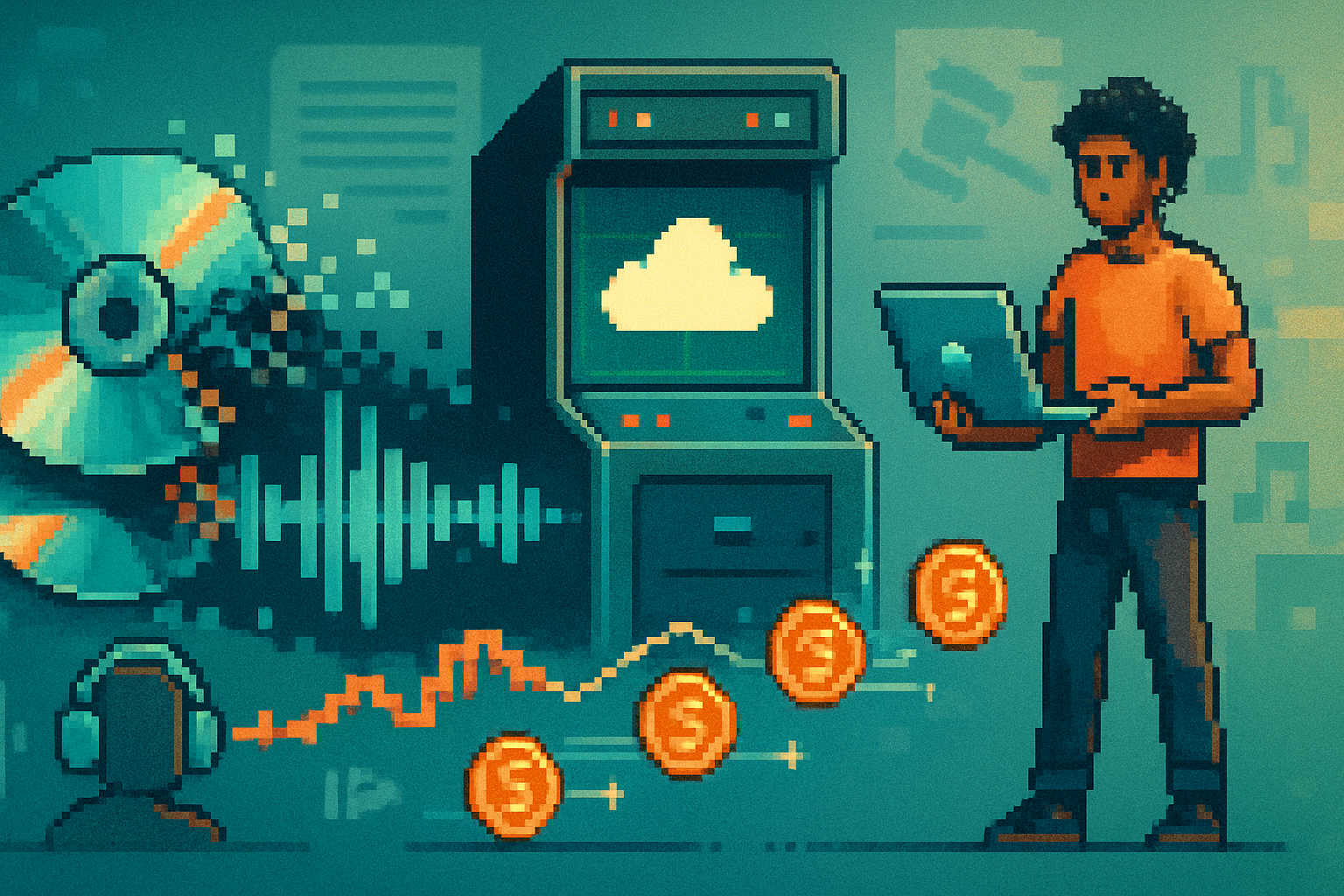
It was the late 1990s. You’d burn a CD, slip it into a cheap plastic player and press play while pretending to be a DJ. Then came MP3.com: messy, thrilling, democratic. For a moment the web felt like a level playing field - unsigned bands uploaded tracks, fans discovered rare gems, and some artists actually earned money from plays.
That rush didn’t last. MP3.com burned bright and then imploded under a pile of lawsuits and bad legal strategy. But the appetite that gave MP3.com its oxygen - listeners wanting access, artists wanting visibility and fair pay - hasn’t gone away. If anything, it’s louder and more impatient.
This is an interrogation: what parts of the MP3.com model were salvageable, which parts were catastrophic, and could a modern reincarnation address streaming’s worst abuses while still surviving the music business’s legal sharks?
What MP3.com actually did (and why people still talk about it)
- MP3.com (founded 1997) built a platform where artists could upload music and listeners could discover it, often for free or via subscription. It became a magnet for independent musicians and curious listeners.
- The company also launched My.MP3.com - a service that let users access songs they ‘‘owned’’ from a web locker. MP3.com copied CDs to its servers and streamed those copies to users.
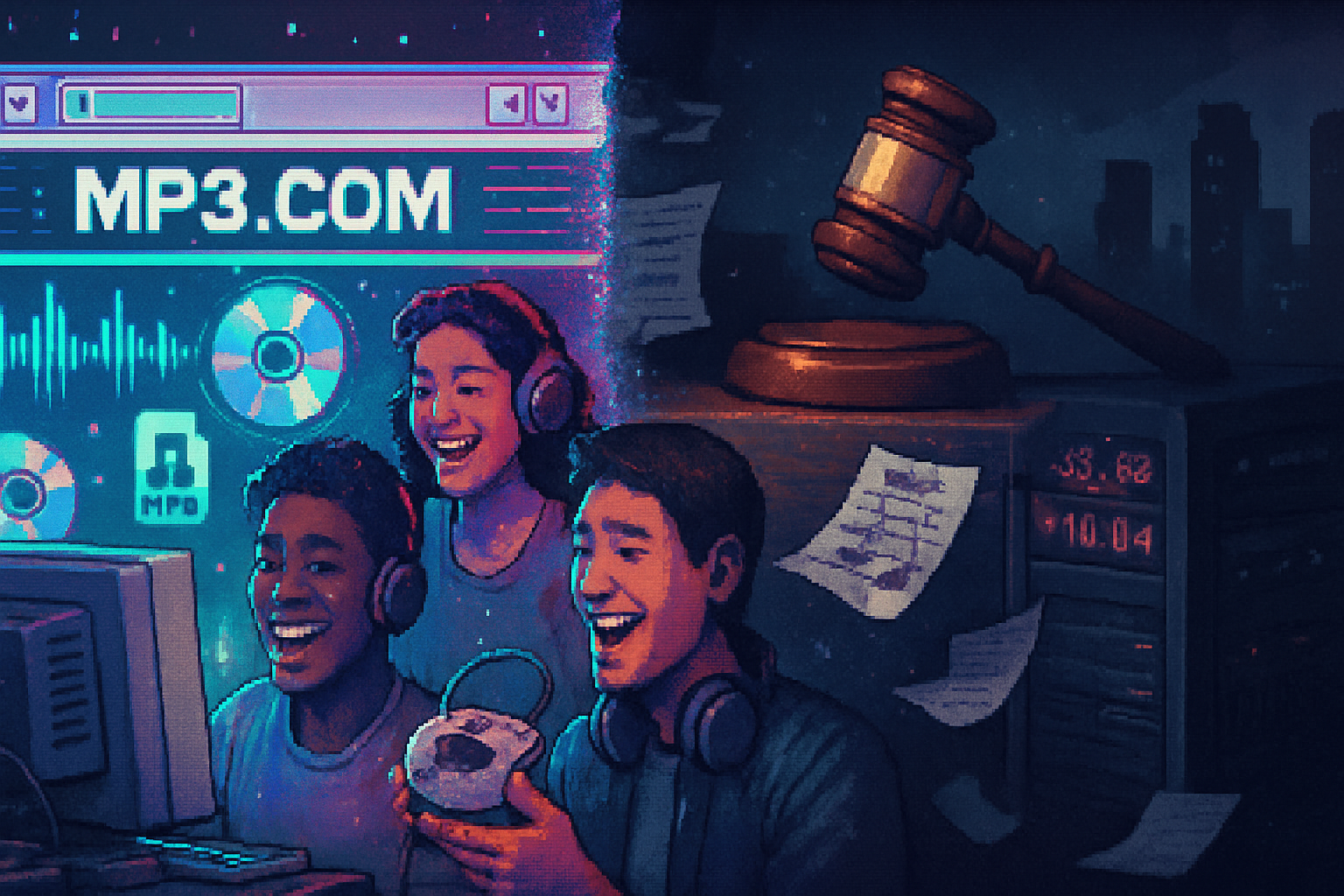
The trouble was legal. The company argued its locker system was a legitimate form of “space shifting” - taking your legally owned music and listening to it elsewhere. The court disagreed. In the case UMG Recordings, Inc. v. MP3.com, Inc., MP3.com lost, setting an ugly precedent for services that reproduce and stream copies without explicit licenses. The service folded, and MP3.com’s early promise turned into a cautionary tale.
Sources: MP3.com - Wikipedia, UMG Recordings, Inc. v. MP3.com - Wikipedia
The parts that worked - and why they mattered
- Direct uploads and discovery
- MP3.com was a discovery engine for unheard-of artists. That mattered because discovery is the oxygen of any creative economy.
- Artist-facing revenue experiments
- MP3.com experimented with sharing revenue and paying unsigned artists whose tracks got traction. The idea - route some subscription/ad money directly to creators, not only to label middlemen.
- Community and curation
- Fans could find hard-to-locate tracks and rare bootlegs. The long tail of music finally had a home.
Why this matters now: discovery has fractured (algorithms favor big catalogues). Artist compensation is still outrageously skewed toward a tiny elite. Platforms that combine discovery with fair economics remain urgent.
The fatal flaw (and why an exact replay is impossible)
My.MP3.com’s legal theory - that a cloud copy of a CD is simply the user’s private copy shifted to the internet - failed in court. The ruling made clear that reproducing copyrighted works on a server for streaming is not magically private.
Practical consequence: any modern service that wants to reproduce and stream songs (even if a user “owns” them) must secure the right licenses. You can’t sidestep the labels and publishers with legal sleight-of-hand.
Could a revived MP3.com model work today? Short answer: yes - but only with three conditions
- Ironclad licensing or a different legal framing
- Transparent, higher-per-listen economics for artists
- Modern tech that reduces costs and provides provenance without inviting litigation
Below are practical, implementable variants and their tradeoffs.
Four modern blueprints inspired by MP3.com
“Verified Locker” + Blanket Licenses (legal but expensive)
- What - A cloud locker where users upload music (or have it matched), but the service pays labels/publishers through a negotiated blanket license or compulsory-mechanism equivalent.
- Why it could work - Clears the biggest legal problem. It mirrors past services (Apple’s iTunes Match / Google Play Music had locker/match features) but makes the licensing explicit.
- Tradeoffs - Labels will demand meaningful fees and control. Costs are high. The user experience will be hostage to licensing deals.
Cooperative, Attention-Weighted Subscriptions (artist-first economics)
- What - Subscribers pay into a pool; coins are distributed to artists based on verified listener attention (time listened, direct follows, explicit tips).
- Why it could work - Moves payout calculus away from per-stream pennies to a community-weighted allocation model. It’s similar in spirit to some public-radio underwriting and systems like Bandcamp’s direct revenue splits.
- Tradeoffs - Needs radical transparency and audits to avoid manipulation. Still needs mechanical and performance licenses for some repertoire.
- Example of artist-friendly platform: Bandcamp - selling and payouts
Decentralized / P2P Discovery with Micro-payments
- What - Use distributed storage (content-addressed systems like IPFS) and micro-payments over fast payment rails (Lightning Network, Web Monetization) so listener attention automatically pays the artist at fractions of a cent.
- Why it could work - Lowers hosting costs and removes a single central point that labels can sue. It rewards granular attention.
- Tradeoffs - Legal exposure remains if copyrighted works are shared without permission. Decentralization complicates takedown and licensing compliance.
- Example of modern decentralization experiment: Audius
Bundled Rights + Direct-to-Fan Storefronts
- What - Platform combines streaming/discovery with direct sales (high-margin downloads, merch, tickets), giving artists a share of subscription discovery money plus direct revenue.
- Why it could work - Diversity of revenue streams reduces reliance on low per-stream payouts; artists actually earn meaningful dollars from superfans.
- Tradeoffs - Discovery-to-purchase conversion remains the hard metric. You need a strong UX for fans to buy beyond streaming.
Tech and legal ingredients any revival must include
- Watermarking & provenance - make every file traceable to prevent fraud and to prove licensed distribution.
- Match-and-substitute technology - where a user’s upload matches a licensed master, serve the licensed master and account for royalties rather than hosting unlicensed copies.
- Transparent reporting - artists must be able to see plays, revenue sources, and allocation formulas in real time.
- Better contracts - smaller, non-exclusive windows for indie-friendly distribution, or tiered licenses with different economics.
- Hard audits and anti-fraud - listen farms and bot plays ruin attention-based schemes unless you can filter them.
Market realities and the political economy
- Labels and publishers still hold enormous leverage. Any platform that ignores them invites lengthy litigation.
- Artists are divided - some prefer exposure on large platforms (Spotify), others prefer the richer economics of Bandcamp or direct sales.
- Consumers resist heavy new fees. Any new service must balance a fair split with a price point users will accept.
Why Bandcamp and Audius matter as modern test cases
- Bandcamp demonstrates that fans will pay directly for music and merch when the value proposition is clear and the payouts are fair.
- Audius shows decentralization can bootstrap communities and give artists governance - but it’s still figuring out mainstream licensing and sustainability.
Sources: Bandcamp Help - Selling, Audius
A concrete, realistic proposal: “MP3.Coop”
- Organize as a musician cooperative to get credibility and lock in ethical defaults.
- Offer a free discovery tier supported by a modest subscription that fans can allocate via attention + tips.
- Negotiate blanket licenses with an artist-first floor for payouts (e.g., minimum per-minute payout higher than current averages), plus transparency dashboards.
- Use match-serve tech to avoid making illegal server copies; if the user owns a track, enable a cost-offset so that the platform still pays the right holders rather than trying to pretend no license is required.
- Allow direct commerce (downloads, merch, tickets) with favorable split to artists.
Why cooperative? Because it changes bargaining posture. A platform owned in part by artists can credibly ask for different economics and market goodwill. It’s not a silver bullet, but it’s harder to dismiss as another rent-extracting middleman.
Final verdict
You cannot resurrect MP3.com by repeating its mistakes. The legal environment has matured and the labels learned their lessons. But the core impulses that made MP3.com dazzling - direct artist access, better discovery for rare music, and experiments in paying creators - remain urgently needed. A modern incarnation has to be licensed, transparent, and diversified in revenue.
There is no single magic fix. But piecing MP3.com’s best instincts (artist-first distribution and discovery) together with modern tech (match-and-serve, decentralization where useful) and credible licensing gives you something that might survive - and more importantly, that might pay artists a living wage.
The old MP3.com was a two-part lesson: the internet can democratize attention, but it can’t ignore law and economics. A new attempt must be both rebellious and bureaucratically competent. It’s a dull recipe. It’s also the only one that stands a chance.