· retrogaming · 6 min read
The Hidden Gems of Neo Geo AES: Underrated Titles That Deserve Your Attention
Beyond 'Metal Slug' and 'Samurai Shodown' there’s a trove of Neo Geo AES cartridges that reward curiosity: tight designs, oddball mechanics and audacious visuals. Here are the best overlooked titles you should play.
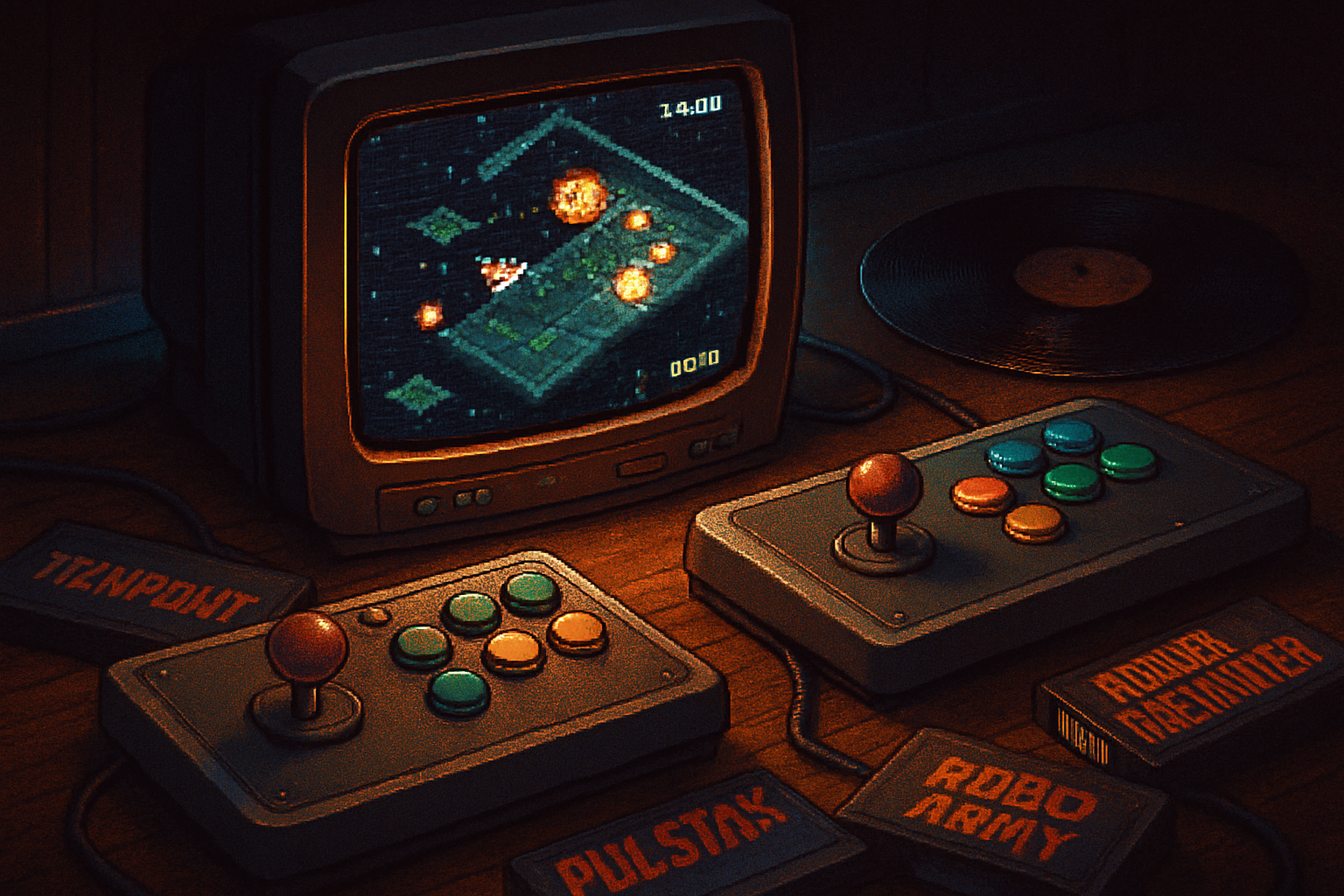
I remember blowing dust off a battered Neo Geo cartridge at a flea market, slotting it into a friend’s console and expecting the usual - big sprites, loud drums, familiar arcade bravado. Instead the screen tilted into an off-kilter, isometric battlefield and the soundtrack sounded like a haunted pinball machine remixed by a jazz trio. I had stumbled into Viewpoint, and for thirty minutes it rewired everything I thought I knew about shooters.
That’s the itch these lesser-known AES games scratch: they surprise you. They’re not necessarily better than the canonized SNK hits. They’re stranger, more particular, sometimes maddening - and frequently more interesting.
Why bother with AES oddities?
Because “classic” in retro gaming usually means the crowd-funded greatest-hits playlist: the usual suspects star in coffee-table retrospectives. But the Neo Geo AES was an arcade in a box. Publishers used it to experiment with scale, with sound, with sprite budgets that would make modern indies blush. The following titles prove that charm, innovation and plain eccentricity were part of the cartridge catalog too.
Below are eight underrated AES games that deserve a second look, with what makes each unique and how they still reward play today.
Viewpoint (1992) - The isometric shooter that feels like an optical illusion
- What it is - A dazzling isometric shoot-’em-up with immaculate sprite work and a synthy score that doubles as psychological warfare.
- Why it’s special - The isometric perspective turns enemy patterns into spatial puzzles. Bullets feel like they live in a different dimension. The soundtrack and art direction build a tense, off-kilter mood most vertical shooters never attempt.
- The downside - It’s brutally difficult and the isometric angle can mess with hit perception.
- Play it if you like - Visual design that forces you to rethink movement, and unforgiving bullet-dodging.
References: Viewpoint - Wikipedia, Viewpoint - MobyGames
Pulstar (1995) - The pre-rendered sprite spectacle that bit too hard
- What it is - A classic, slow-burn shooter from Irem with pre-rendered sprites and a baroque difficulty curve.
- Why it’s special - Pulstar nails atmosphere - heavy visuals, metallic sound design, and a methodical pace that rewards patience and memorization. It’s often described as the Neo Geo’s answer to DonPachi-era bombarding shooters, but with a distinct, oppressive aesthetic.
- The downside - It’s notorious for being one of the hardest console shooters on the system and can feel sluggish compared to faster contemporaries.
- Play it if you like - Gothic sci-fi visuals and methodical, high-stakes play.
References: Pulstar - Wikipedia, Pulstar - MobyGames
Blazing Star (1998) - What Pulstar wanted to be when it grew up
- What it is - The spiritual successor to Pulstar that trades heaviness for speed, responsiveness and visual clarity.
- Why it’s special - Blazing Star keeps the high production values but improves the feel enormously. It’s fast, ferocious and fairer. Where Pulstar is a dark cathedral of difficulty, Blazing Star is a neon sprint - more immediate and endlessly replayable.
- The downside - Still a shooter niche; won’t convert someone who hates bullet-hell or precision-based score-chasing.
- Play it if you like - High-score sprinting with responsive controls and a sense of momentum.
References: Blazing Star - Wikipedia, Blazing Star - MobyGames
Kizuna Encounter: Super Tag Battle (1996) - The tag-team fighter that feels like a loophole in the rules
- What it is - A frantic two-on-two fighting game from SNK with tag mechanics, wild movement and a surprisingly generous comeback design.
- Why it’s special - Kizuna trades the stiffer SNK template for a looser, kinetic rhythm. Tag-ins can be sloppy and chaotic - and that’s the point. It encourages creative combos between characters and frequently produces unexpected finishes.
- The downside - Lacks the polish and competitive depth of The King of Fighters series; character balance is eclectic.
- Play it if you like - Madcap, high-energy fighting where improvisation beats rote pattern play.
References: Kizuna Encounter - Wikipedia, Kizuna Encounter - MobyGames
Robo Army (1991) - Giant robots, tight co-op, surprising variety
- What it is - A side-scrolling beat ’em up where you pilot hulking mech suits and punch your way through industrial stages.
- Why it’s special - Robo Army’s punchy, mechanical combat and destructible environments feel like a concentrated arcade beat-’em-up riff. Two-player co-op is genuinely fun; the mechs give a satisfying weight to every hit.
- The downside - It’s short and can feel a bit repetitive, but the spectacle carries you through.
- Play it if you like - Simple, chunky co-op beat ’em ups with a mechanical theme.
References: Robo Army - Wikipedia, Robo Army - MobyGames
Crossed Swords (1991) - The action-RPG that looks like a medieval arcade demo
- What it is - An isometric, action-RPG/beat-’em-up hybrid with a knightly veneer and light RPG progression.
- Why it’s special - It blends swordplay, equipment progression and branching stage choices into an arcade format. The isometric camera and strategic blocking/parrying create a tactile sword combat feel you don’t often find in Neo Geo’s library.
- The downside - Limited character depth by modern standards and a dated pacing loop.
- Play it if you like - Old-school action-RPG experiments and co-op adventures with medieval flair.
References: Crossed Swords - Wikipedia, Crossed Swords - MobyGames
Cyber-Lip (1990) - A brutal, early SNK run-and-gun with strange pacing
- What it is - A side-scrolling run-and-gun shooter from SNK with a gritty sci-fi backdrop.
- Why it’s special - Cyber-Lip’s pacing and level set pieces feel experimental - alternating between heavy platform segments and sudden explosions of enemy density. It’s an early AES title that shows SNK trying to graft arcade spectacle onto a home format.
- The downside - Uneven; some stages drag, and it’s not as refined as Capcom’s genre leaders.
- Play it if you like - Historical curiosity and raw, sometimes awkward design that still surprises.
References: Cyber-Lip - Wikipedia, Cyber-Lip - MobyGames
Breakers (1996) - The scrappy fighter with character and oddball systems
- What it is - A colorful fighting game by Visco that’s been overshadowed by SNK’s roster-heavy franchises.
- Why it’s special - Breakers offers snappy animation, quirky characters and a game engine that rewards momentum and read-based play over perfection. It’s a fighter with personality where a well-timed throw feels devastating.
- The downside - Minimal community and limited tournament life, so finding high-level play resources is difficult.
- Play it if you like - Underdog fighters with charm and unusual mechanics.
References: Breakers - Wikipedia, Breakers - MobyGames
How to play these games today (without bankrupting your retro cred)
- AES cartridges are beautiful and precious, but they’re also expensive. If you want the authentic cartridge heft, budget accordingly.
- Neo Geo CD and later re-releases - many of these games received Neo Geo CD or digital releases. Check official SNK collections and modern digital storefronts for reissues.
- Emulation - MAME and other emulators reproduce the experience on modern hardware. Legalities aside, emulation remains the most practical way to sample dozens of AES titles quickly.
- Digital ports and compilations - Hamster’s ACA NeoGeo series and SNK’s collections on modern consoles periodically bring these titles back. Availability rotates, so watch sales.
Final word - Why these are worth your time
Fans revere marquee Neo Geo titles for a reason: they’re polished powerhouses. But the AES’s true pleasure comes from curiosities and half-formed experiments that would never have seen shelf space on a mainstream console. These games are the system’s eccentric cousins - sometimes awkward, often ingenious, and frequently more memorable for their ambition than their consensus appeal.
Play them for the ideas. Play them for the odd textures of 2D art that still surprise. Play them because, once in a while, a buried cartridge will tilt the screen and rewrite your sense of what a “retro” game can do.