· culture · 6 min read
From Pixels to Pocket: The Unseen Influence of LCD Games on Modern Gaming
How cheap, flickering LCD toys - Game & Watch, Tiger handhelds and the Microvision - quietly taught designers the language of snackable mechanics, one-button brilliance, and suggestion-driven storytelling that defines many modern hits.
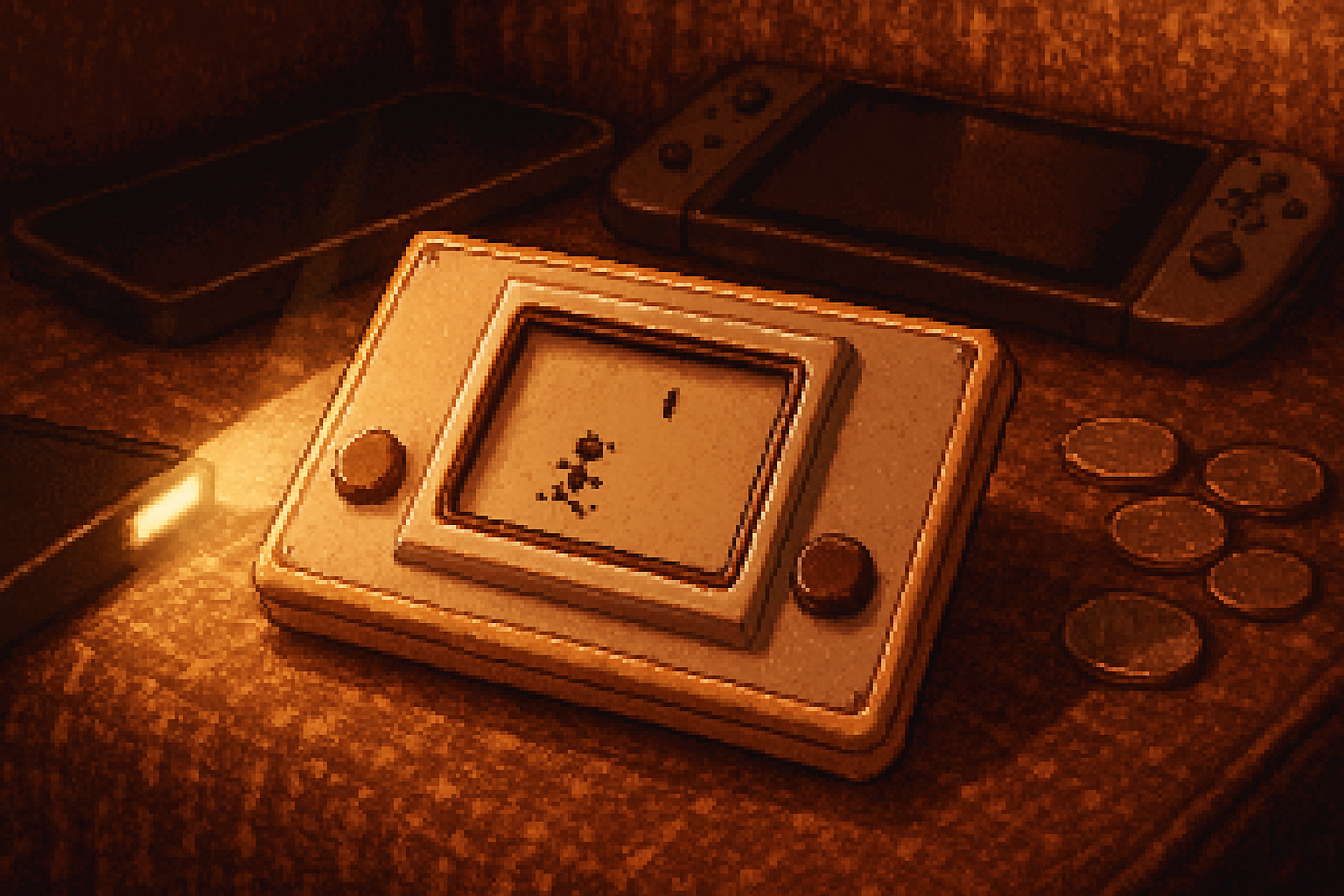
An old man on a bus once told me he learned to make a game fun with eighty pixels and three beeps. He had been playing a Game & Watch for thirty years; he still could beat the high score. That little machine - black plastic, a tiny LCD tableau of immovable sprites, and a merciless clock - taught him something most modern development teams relearn the hard way: constraints are not a prison. They are a lens.
The pocket-sized stage: what were LCD games?
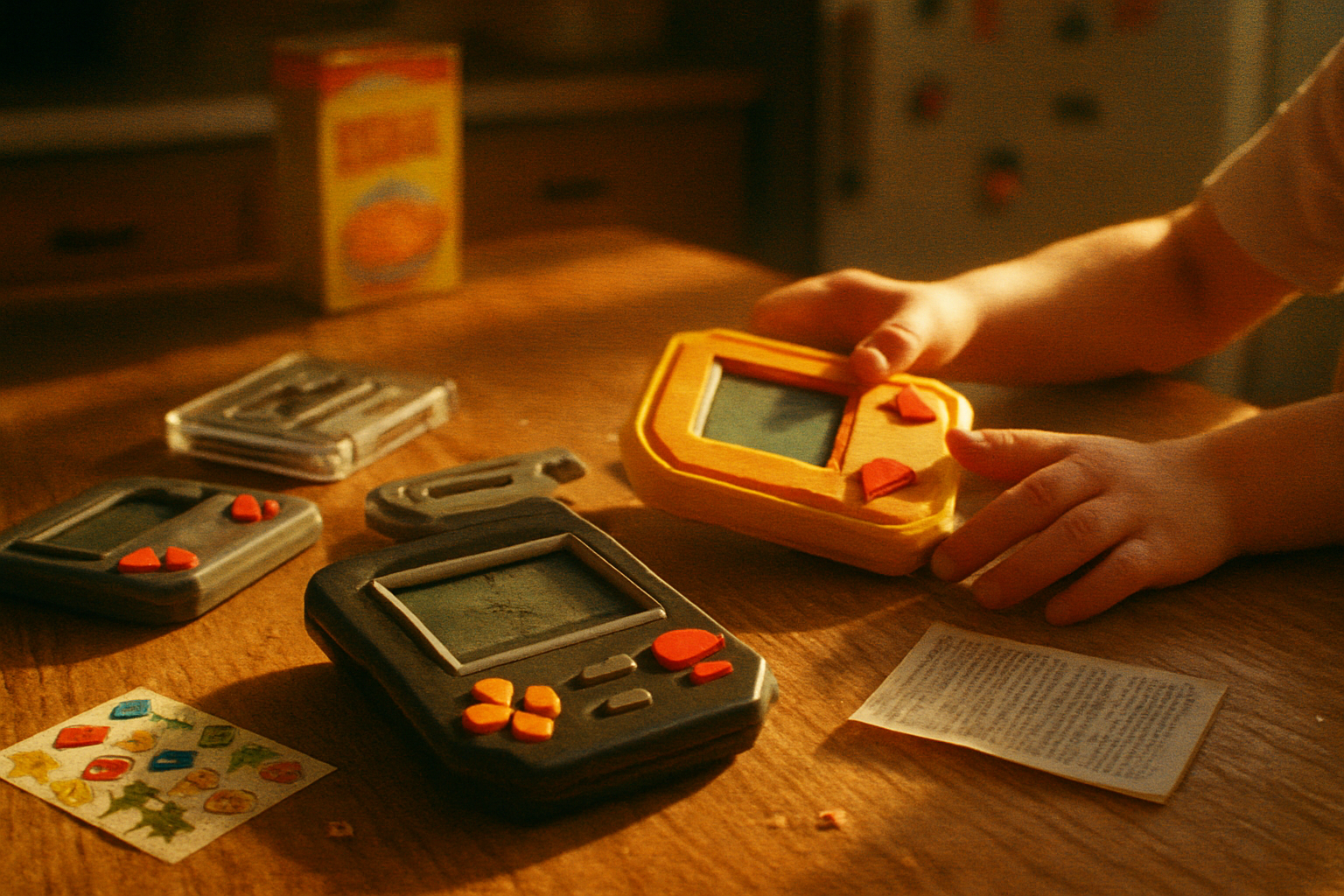
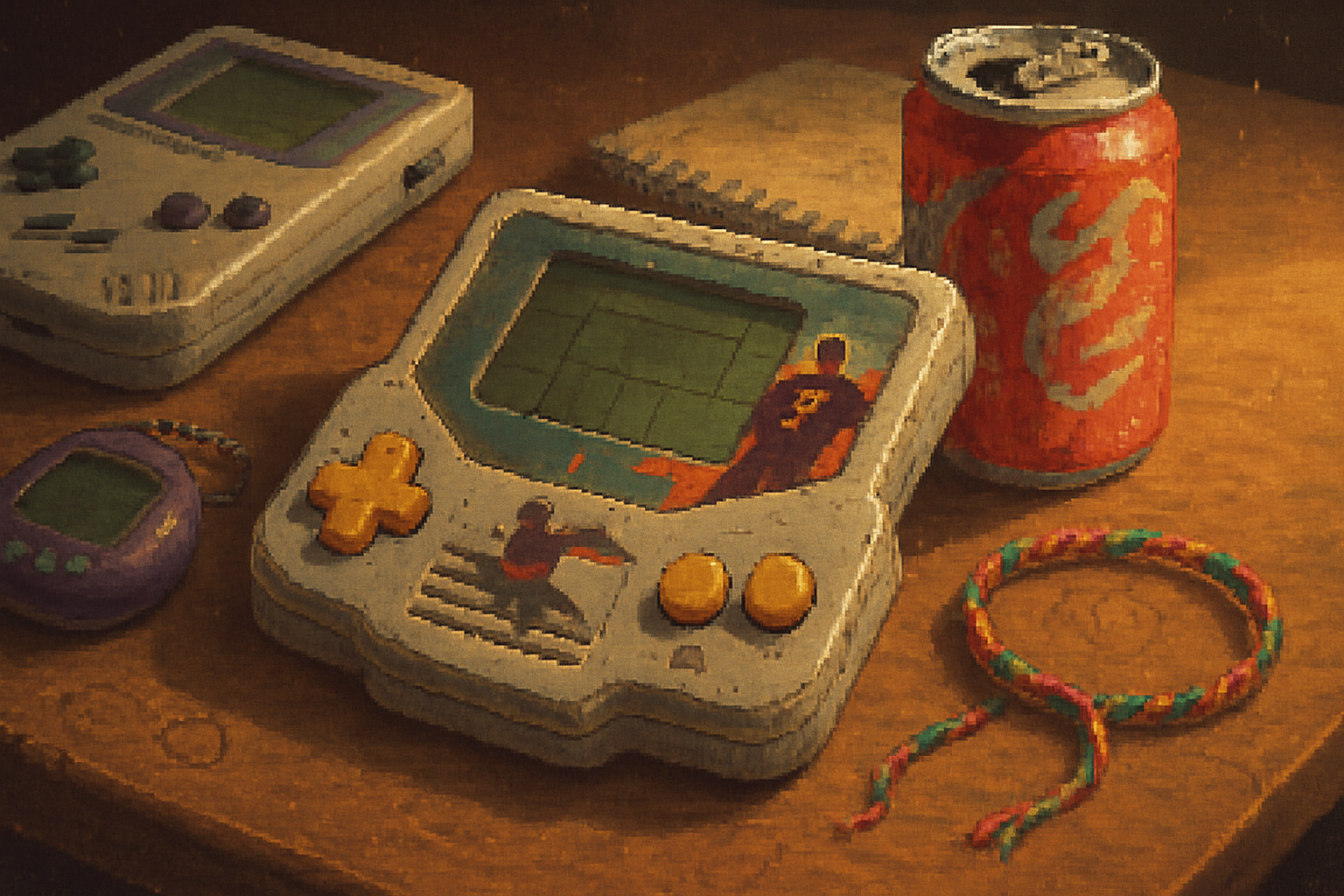
Before the glow of LCD touchscreens, before smartphones mined our attention, there were handhelds whose entire worlds were a handful of static shapes that appeared and vanished on command. These were not early Game Boys; they were machines of suggestion: Nintendo’s Game & Watch (1980–), Milton Bradley’s Microvision (1979), Mattel’s handhelds, and the flood of licensed devices in the ’90s from Tiger Electronics. They were cheap, often one-mechanic artifacts, sold at toy stores and gas stations rather than in glossy boutiques.
- Game & Watch - an intentional school of design built by Gunpei Yokoi and team; single-screen ‘games’ that taught players through relentless repetition and escalating difficulty. (
- Microvision - the first cartridge-based handheld - a primitive, fragile ancestor demonstrating that portability and interchangeability can coexist. (
- Tiger Electronics - the ’90s middleman that put licensed characters in your palm and accustomed a generation to franchise portability. (
These devices were not made to impress the masses with fidelity. They were made to be bought, carried, and played between stops. They taught lessons about tempo, attention, and story that are still reenacted in game design today.
The controversial claim: LCD toys taught modern games their grammar
Say the word “grammar” and designers think of MVCs and events. I mean the grammar of play: loops, feedback, and suggestion. Here’s the contentious thesis: many modern conventions in mainstream and indie games trace - intellectually, not genetically - to the hard, elegant constraints of LCD handhelds.
Why controversial? Because it is easier to worship polygonal realism and forget the small things that actually make a game playable on a bus. But the small things are exactly what handheld LCDs perfected.
1) Mechanics compressed to their essence
LCD titles typically offered one core mechanic - catch, dodge, time, tap. That constraint forced a single-minded focus on the loop: introduce, escalate, reward, repeat. The result is a tightness of feel. Modern phenomena like one-button platformers and countless mobile hypercasual hits recycle the same concept: a single clear action that scales in difficulty.
- Example lineage - Game & Watch’s simple jump-and-dodge logic -> one-button indie games (e.g., Canabalt) -> mobile hits like Flappy Bird. (
2) Snackable session design
LCD games were made for minutes, not hours. Their loops respected interruptions. This is the ancestor of modern mobile session design: short, satisfying loops that don’t demand large time investments. The idea that a player can “pick up, play, and put down” without cognitive overhead is not new; LCD games formalized it.
3) Minimal UI and immediate feedback
Those devices could not clutter the screen. Designers learned to convey state with icons, simple counters, and sound beeps. The discipline produced absolute clarity: the UI told you exactly what mattered. Modern HUD-minimalism and icon-driven interfaces in indie games and AR overlays follow the same grammar: reduce noise until signal is legible at a glance.
4) Suggestion-driven storytelling
LCD displays could not animate a hero running a 30-second cutscene. So they suggested: a silhouette, a repeated blink, a shifting background. The player’s imagination did the rest. This economy of narration - implication instead of explicit exposition - maps onto contemporary environmental storytelling and minimalist narrative games (where you experience story by interacting with symbols more than listening to long monologues).
5) Iterative difficulty and non-committal players
LCD titles almost always looped: the game would escalate until failure and then ask you to try again. That “try again” economy prefigured modern roguelites, endless runners, and many live-service systems that rely on repeated short attempts rather than a single long investment.
Case studies: tiny machines, big echoes
Nintendo’s evolution - The people who made Game & Watch wrote the playbooks that guided the Game Boy and beyond. Gunpei Yokoi’s famous philosophy - “lateral thinking with withered technology” - is a direct argument for choosing cheap tools and making them sing. (
Tiger Electronics’ licensed LCDs - They taught entire IP owners the value of portable, low-price, high-volume experiences. That comfort with portable franchising is visible in how big companies now ship mini consoles and nostalgia-priced handhelds.
Microvision and modularity - The idea of swapping games in a tiny cartridge is a through-line to every portable system that followed. Even Nintendo’s modern nods - like the 2020 Game & Watch: Super Mario Bros. tribute - publicly admit the lineage. (
The ugly, true controversy
Some modern critics call LCD games a dead end: infantile, crude, not worthy of study. They point to the obvious: no storytelling depth, no advanced systems, no tech. Fair. But the point is not that LCDs were complete games; it’s that they refined first principles. If you toss away those principles in favor of interface opulence you end up with spectacle and friction.
There is a moral to this: restraint is an ethical decision in design. Choosing to reduce friction means choosing to respect a player’s limited time and attention. Choosing self-indulgent complexity often means you are building for yourself, not for the user.
Concrete design takeaways for today’s teams
- Audit mechanics for a single meaningful action - if your core loop can be described in a single sentence, it’s probably clearer.
- Design for interruption - assume players will be tapped out of the session at any second.
- Use suggestion over exposition - let a few well-chosen symbols tell the story.
- Embrace one-button prototypes - they expose whether your idea is mechanically interesting without fuss.
- Remember feedback economy - clear, immediate cues beat elaborate animations when clarity matters.
No, they didn’t invent everything - but they taught the alphabet
LCD games were not the endgame of design. They were a grammar school. They taught generations to understand timing, to recognize patterns, to respect player time, and to let imagination fill the blanks. The modern world of games - from hypercasual mobile darlings to terse indies and even AAA titles that adopt minimalist HUDs - still rehearses those lessons.
So next time you scoff at a humble pixel or a blinking icon, remember: the people who polished those tiny toys learned how to make play crystalline. They gave us rules we still break and re-discover. If you are making a game, you can do worse than to spend an afternoon with an old LCD device. It will be cheaper than a focus group and crueller, which often gets you the truth faster.
References
- Game & Watch - https://en.wikipedia.org/wiki/Game_%26_Watch
- Gunpei Yokoi - https://en.wikipedia.org/wiki/Gunpei_Yokoi
- Microvision - https://en.wikipedia.org/wiki/Microvision
- Tiger Electronics - https://en.wikipedia.org/wiki/Tiger_Electronics
- Canabalt - https://en.wikipedia.org/wiki/Canabalt
- Flappy Bird - https://en.wikipedia.org/wiki/Flappy_Bird
- Nintendo and modern Game & Watch tributes - https://www.nintendo.com