· culture · 5 min read
Floppy Disk Drives vs. SSDs: A Tech Showdown With a Historical Twist
A lively, slightly sardonic comparison of floppy disk drives and modern SSDs - not just who’s faster, but who changed how we think about computing, distribution and culture. Cast your vote: nostalgia or inevitability?
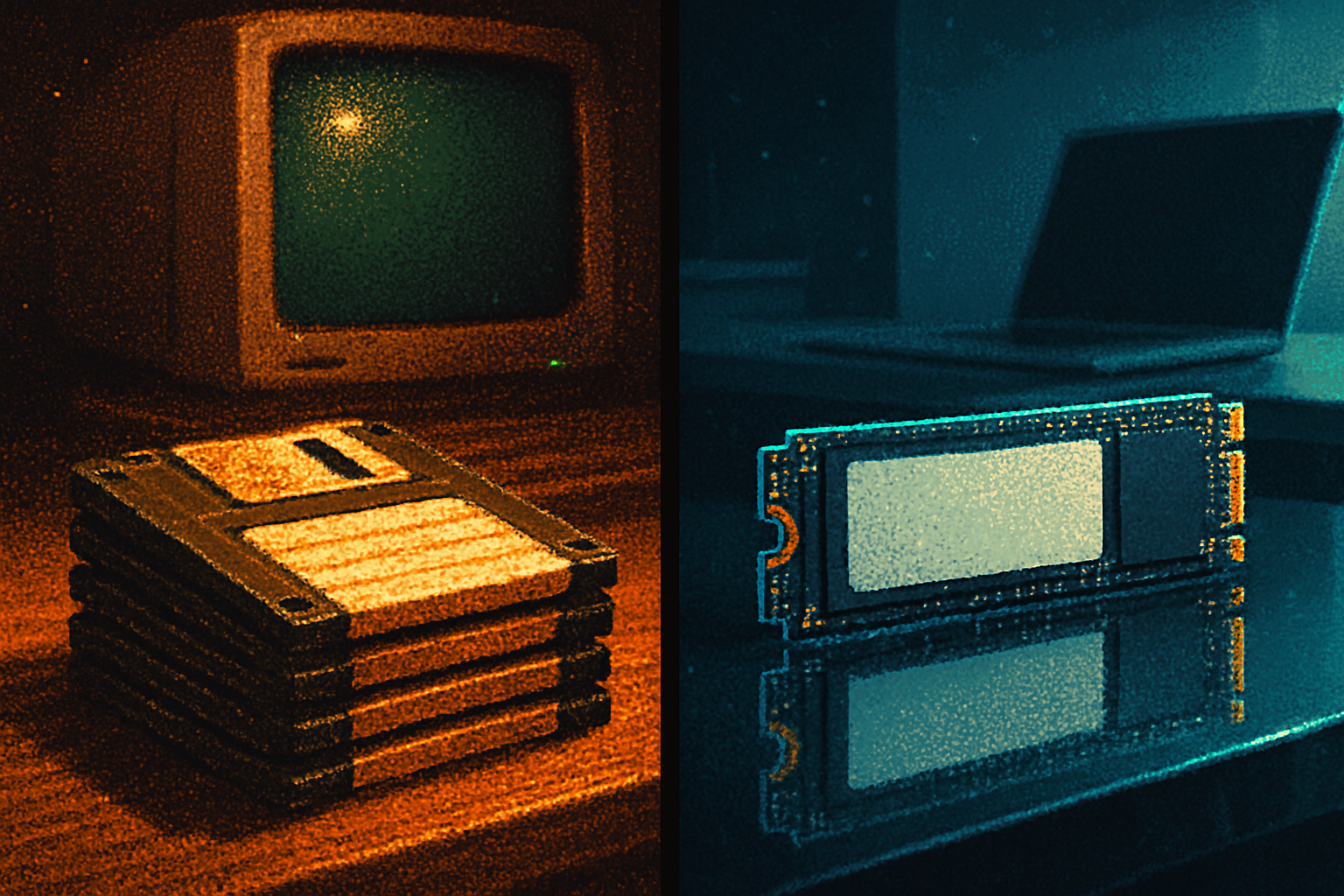
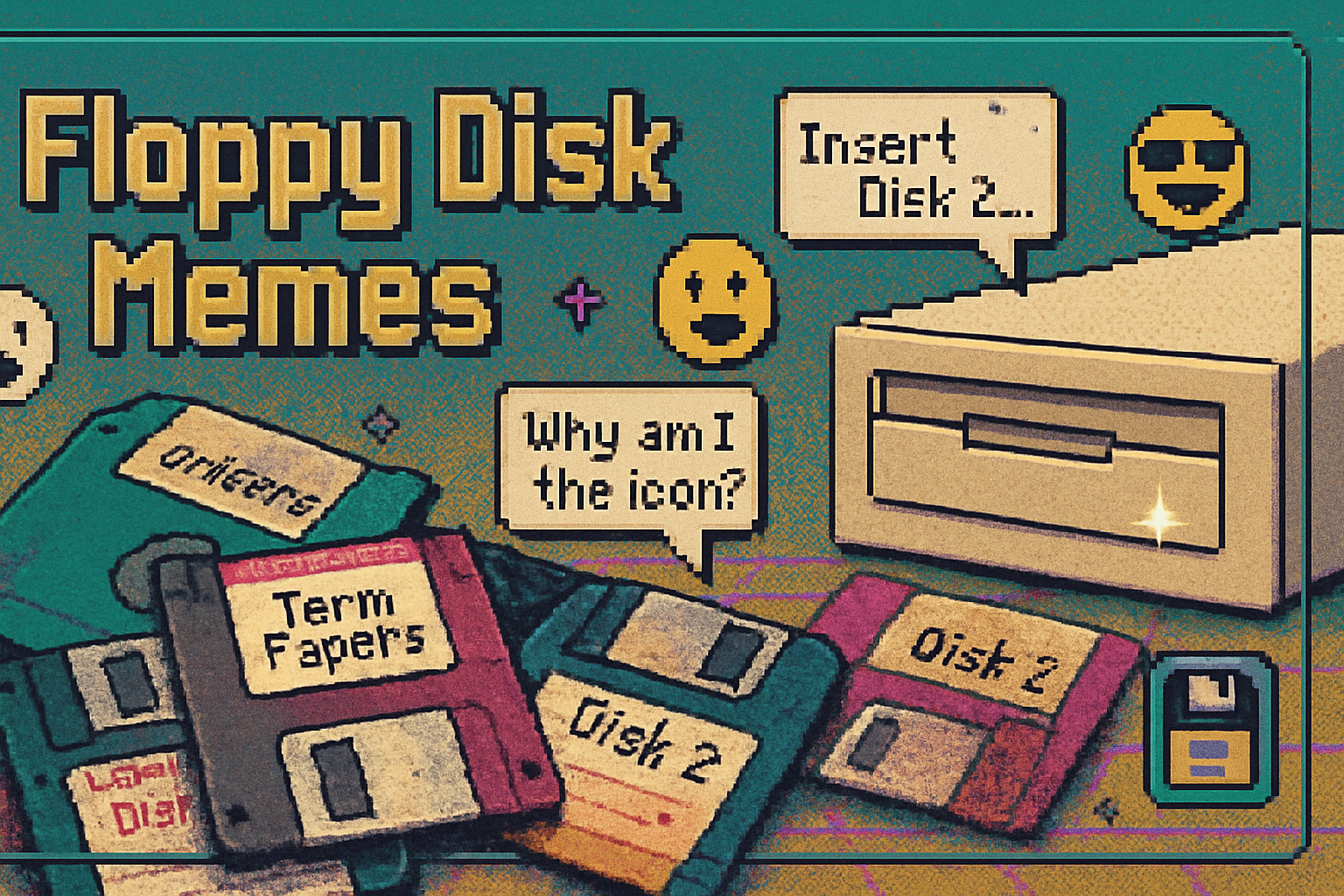
When my grandfather dug an old box out of his attic and held up a stack of 3.5-inch floppies like relics from a vanished religion, I felt two emotions at once: amusement at their fragility, and a sudden pang of respect. Those little plastic squares carried family photos, term papers and pirate‑era demos. They were small monasteries of data.
Fast forward to a friend opening his laptop and watching the SSD deliver a desktop in twelve seconds flat. No cassette hiss. No mechanical clack. No praying to the BIOS.
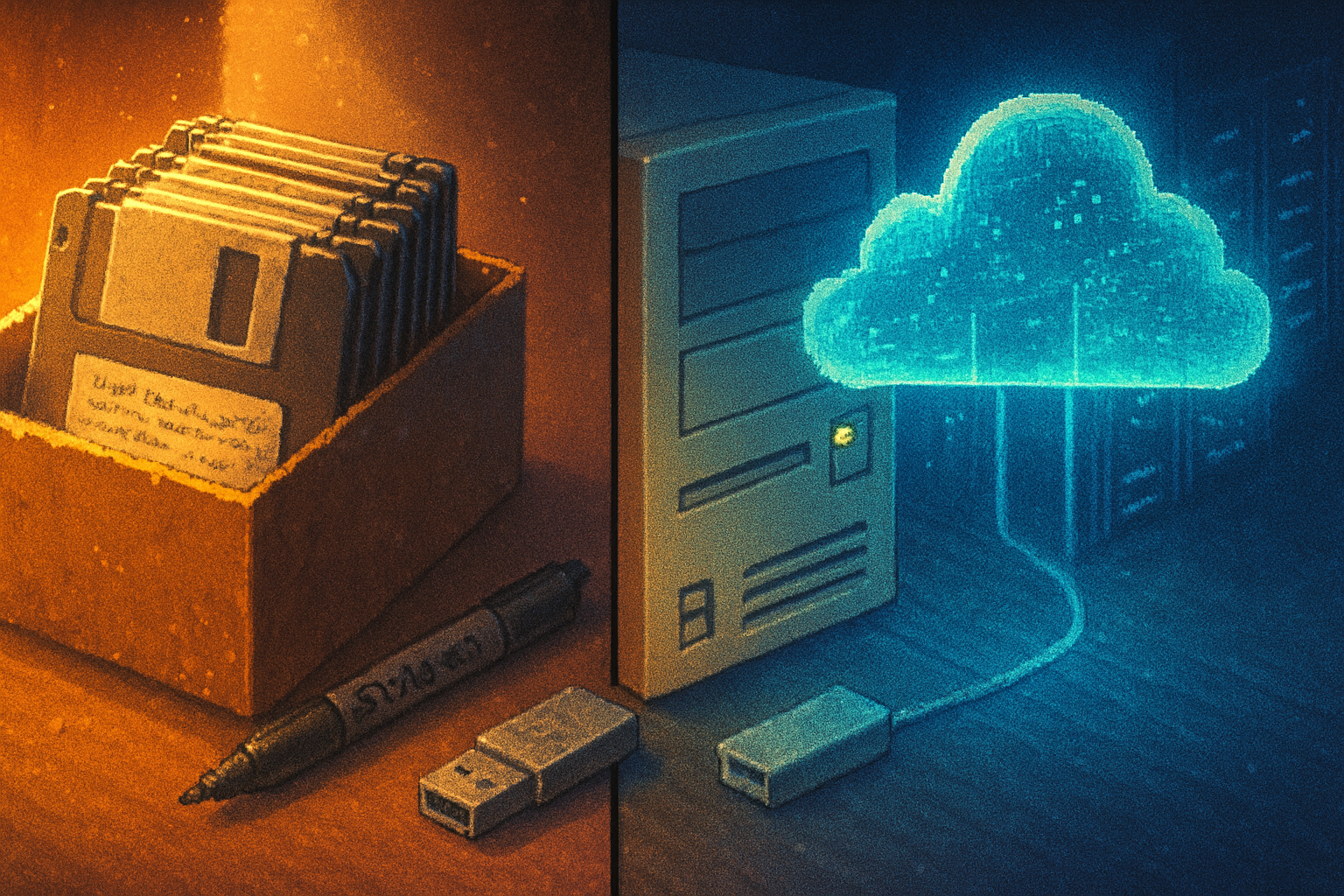
This is a story about both objects: one sentimental, creaky, and formative; the other clean, ruthless, and transformative. Which mattered more? That’s the showdown.
Quick referee’s call: what we’re comparing
- The Floppy Disk Drive (FDD) - dominated personal computing for decades - from the 8‑inch IBM original to the ubiquitous 3.5‑inch Sony format that meant “put it in the sleeve” and “don’t bend it.”
- The Solid‑State Drive (SSD) - modern non‑volatile storage using flash memory that eliminated spinning platters and mechanical heads, enabling mobile devices, instant boot, and the data center revolution.
Both reshaped computing. But they did it in very different registers: one social, low‑bandwidth, tactile; the other infrastructural, high‑performance, invisible.
A short, contrarian history
The floppy emerged from practical need. IBM introduced the 8‑inch floppy in the early 1970s as a removable medium for boot and program shipping - literal physical portability before networks were a thing. Over time the format shrank: 5.25‑inch, then Sony’s 3.5‑inch became the de facto industry standard in the late 1980s and 1990s. The floppy wasn’t pretty. It was magical. It let you carry a program across town on a square of plastic. Floppy disk - Wikipedia
Flash memory, the fundamental technology behind SSDs, was invented by Fujio Masuoka at Toshiba in the early 1980s. It took decades for the technology and price points to mature; early SSDs were niche and expensive. By the late 2000s and 2010s, manufacturing scale and the rise of mobile devices pushed SSDs into the mainstream. They didn’t just replace disks; they rewired expectations about speed and reliability. Fujio Masuoka - Wikipedia
A cultural punctuation mark: when Apple released the iMac in 1998 without a floppy drive, the removal provoked outrage and also symbolized a broader moment - the floppy’s exile. Apple’s action accelerated the floppy’s decline while demonstrating that hardware makers could court controversy and win. iMac (1998) - Wikipedia
Raw numbers (because numbers are delicious and merciless)
| Characteristic | Typical 3.5” Floppy (1.44 MB) | Typical Modern SATA SSD (consumer) |
|---|---|---|
| Capacity | 1.44 MB | 256 GB – 4 TB |
| Sequential read/write | ~0.1 – 1 MB/s | 500 MB/s (SATA) – 7,000+ MB/s (NVMe) |
| Latency | Tens of milliseconds (mechanical seek) | Tens to hundreds of microseconds |
| Durability | Very sensitive to dust, magnets, bending | Limited write cycles but robust in normal use |
| Power | Passive medium, powered by drive motors | Low idle power; efficient active power |
| Price/GB (relative) | Extremely high in modern terms | Very low (trend downward every year) |
Numbers win arguments. SSDs destroy floppies like a sprinter next to a tortoise - but the tortoise used to carry the kingdom.
The cultural payload: why floppies mattered
- Democratized software distribution - share a disk, pass a program. Before ubiquitous broadband, floppy disks were the postal service of software. They enabled shareware, early indie devs and the demoscene.
- Physical metaphors - the floppy icon for “Save” survives long after most people have never touched one. That tiny half‑memory is now pure semiotic residue.
- Repair, tinker, swap culture - swapping disks at school, trading games at a corner store - these rituals built communities and habits. They were the social glue of late 20th‑century computing.
- Bootability and rescue - a single floppy often meant survival - boot disks saved systems when everything else failed.
Floppies taught people that data could be moved, shared, hidden, stolen. They made software portable in the pre‑network era.
The infrastructural revolution: what SSDs changed
- Instant gratification - SSDs turned “boot” into a one‑breath experience. That matters. Fluid interfaces and impatient users demanded it.
- Mobile computing and thin devices - SSDs’ compactness and low power enabled laptops, tablets and phones we now take for granted.
- Data center metamorphosis - SSDs and later NVMe drives remade server design, enabling fast databases, virtualization, and modern cloud performance.
- New software patterns - instant snapshots, container layers, and high‑IOPS applications rely on SSD characteristics that HDDs could never economically match.
SSDs didn’t just make things faster; they rewired what kinds of software people decided were feasible.
The sad gray area: failures, costs, and environmental math
- Floppies - fragile, ephemeral, produced mountains of plastic and magnetic waste. Their short life cycle was environmentally stupid by today’s standards.
- SSDs - while more durable, they depend on rare metals and complex fabrication. NAND flash dies; data retention and write endurance are real issues. Manufacturing and e‑waste are nontrivial.
Neither option is an environmental saint, but SSDs unlock efficiencies (less energy, longer useful life) that often tilt the ledger in their favor for modern workloads.
Who deserves the crown - nostalgia or inevitability?
If you judge by cultural footprint: the floppy is a heavyweight. It shaped social practices, metaphors and early software economies. The floppy is the Agora where early software culture convened.
If you judge by systemic, long‑term technological impact: SSDs are monarchs. They changed hardware design, software architecture, data center economics and even user expectations about speed.
They both left fingerprints on different strata of history. The floppy altered how people behaved; the SSD altered what machines could do.
Verdict (a small, provocative one)
The floppy is the glorious, fatuous teacher: sentimental, awkward, essential to growing up. The SSD is the competent adult who cleans up, reorganizes, and remakes the house economy. You need both to tell the full story - but only one keeps the lights on in a modern data center.
So here’s the cheeky, inciting question for you: which left the deeper, longer impact - the tactile, communal floppy, or the infrastructural, game‑changing SSD?
Vote with a comment or a click:
- Team Floppy - cultural force, metaphor-maker, community builder.
- Team SSD - infrastructural revolution, performance, enabling modern computing.
Cast your vote below. Be merciless, be sentimental, be right.
References
- Floppy disk - Wikipedia: https://en.wikipedia.org/wiki/Floppy_disk
- Solid‑state drive - Wikipedia: https://en.wikipedia.org/wiki/Solid-state_drive
- Fujio Masuoka (flash inventor) - Wikipedia: https://en.wikipedia.org/wiki/Fujio_Masuoka
- iMac (1998) - Wikipedia: https://en.wikipedia.org/wiki/IMac_(1998)