· retrogaming · 6 min read
Game Boy Color: A Palette for Innovation - How Early Titles Influenced Modern Gameplay
A close reading of how Game Boy Color games-through clever technical workarounds, bold design choices, and social mechanics-pioneered features that are now standard in modern games: real-time systems, persistent multiplayer hooks, compact UX, and handheld-friendly Metroidvania design.
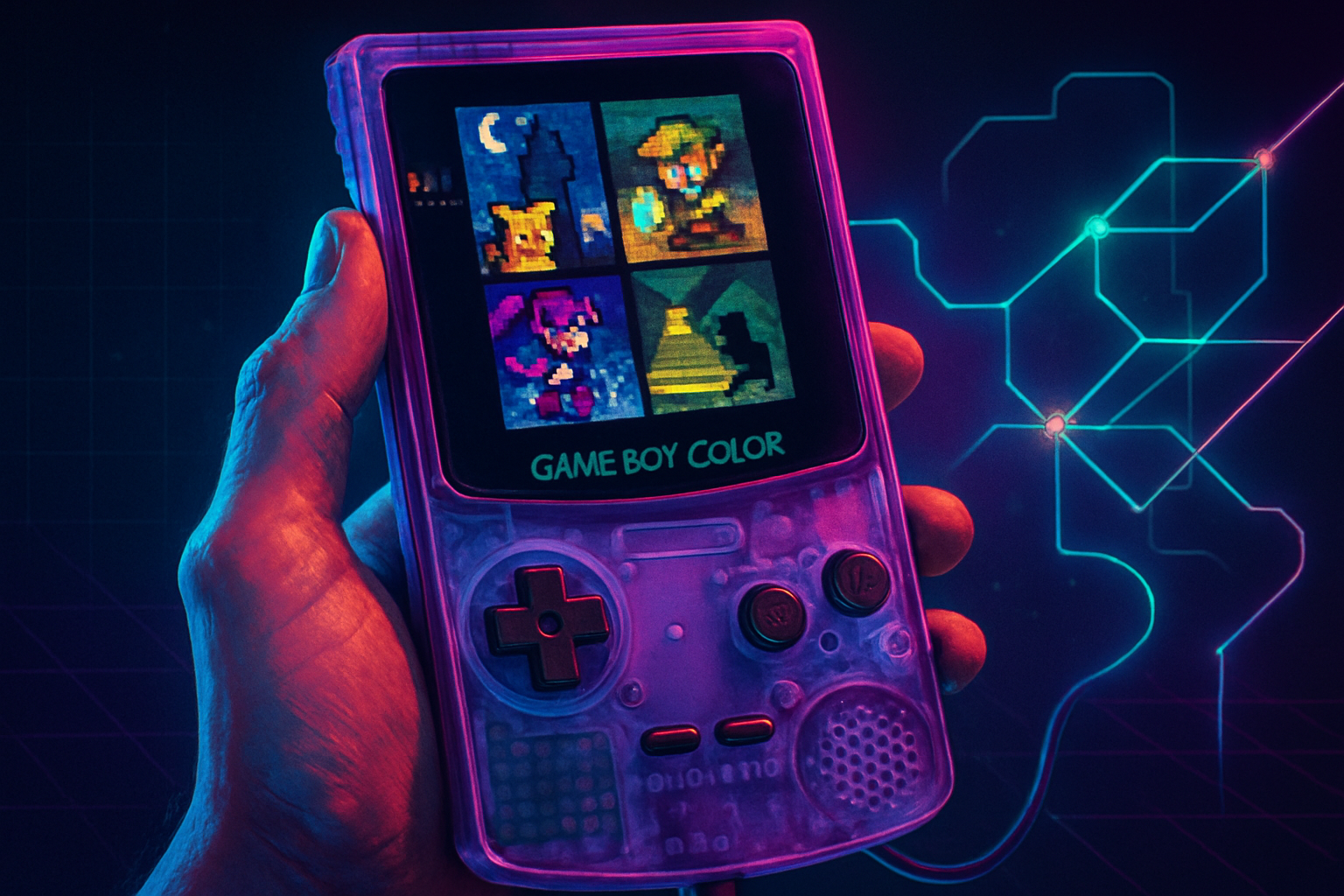
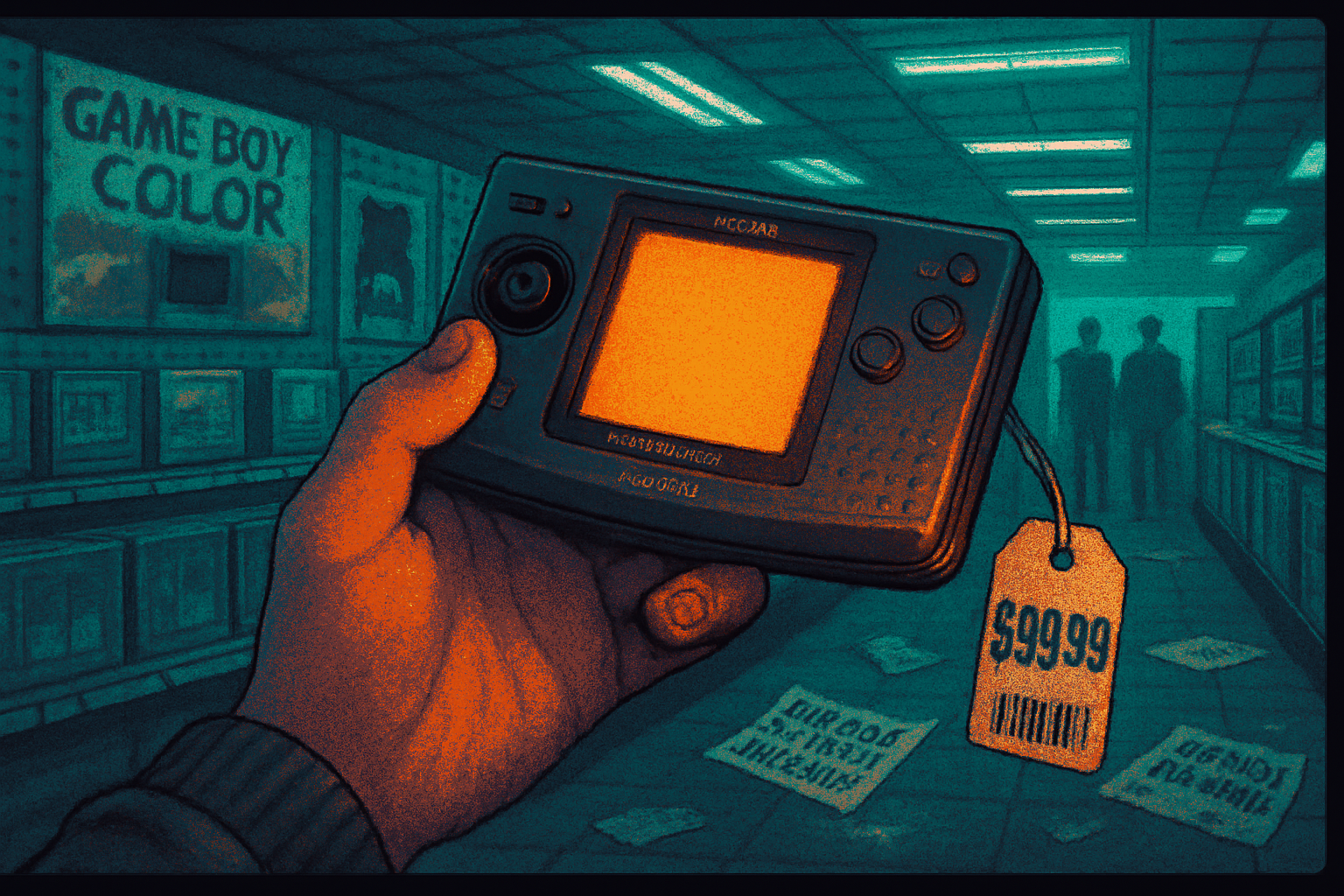
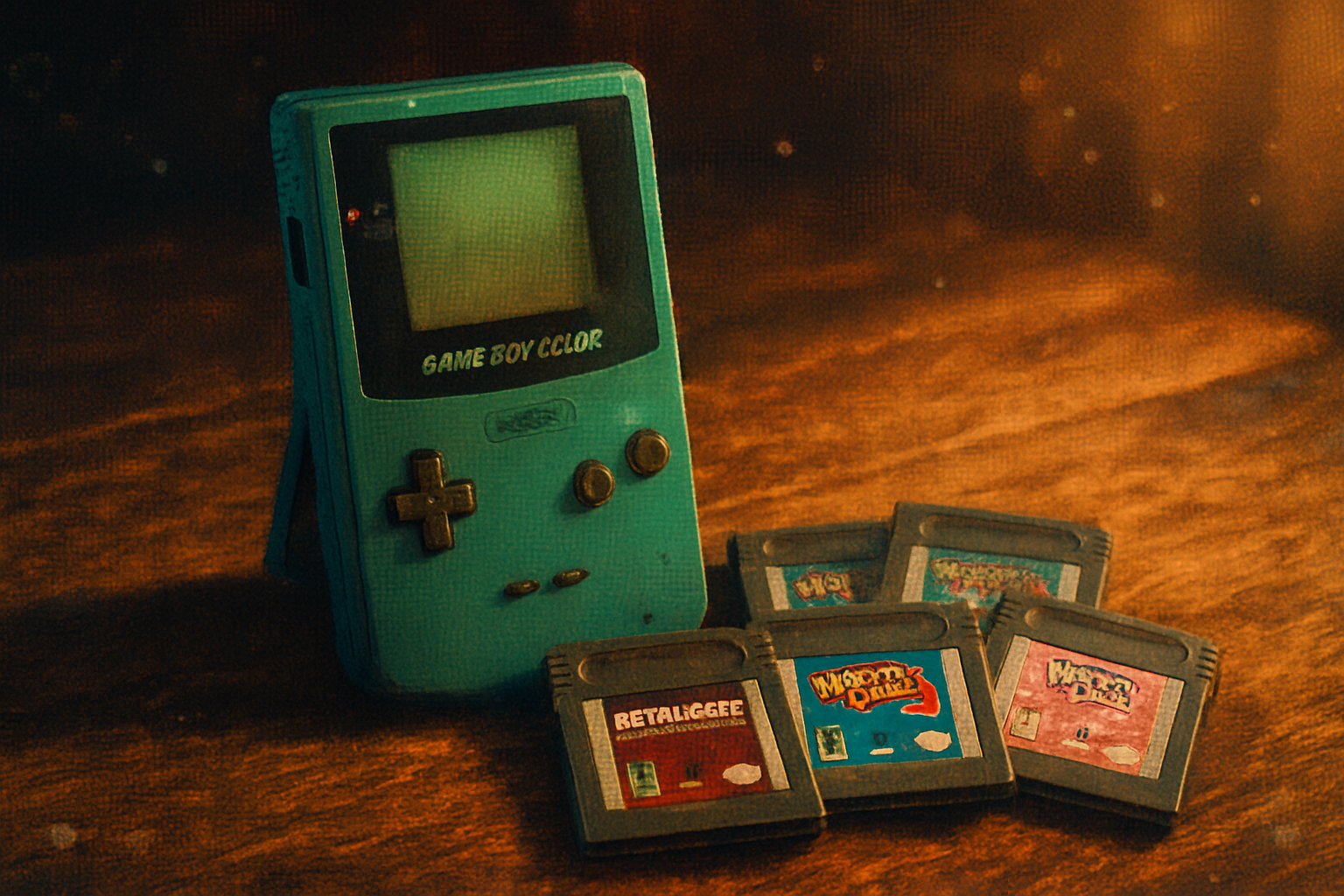
I still remember burying a Game Boy Color beneath a hoodie to keep the screen readable under fluorescent gym lights, clutching a link cable like contraband. We weren’t just trading Pikachu; we were inventing micro-societies around a handful of pixels and a stubbornly slow serial port.
What feels quaint now-plunking down in a playground to swap monsters or waiting until night in your bedroom to catch an elusive creature-wasn’t mere nostalgia. It was prototyping. The Game Boy Color (GBC) era compressed constraints until designers had no choice but to invent clean systems, social hooks, and player-centric interfaces. Many of those inventions quietly became the scaffolding for modern design.
Why the Game Boy Color mattered (not just because it was tiny)
The GBC was not a powerful machine. Its CPU, palette, and memory budgets were laughable next to home consoles. But that scarcity forced two beneficial behaviors:
- Plastic optimization - designers had to make mechanics that were meaningful even when everything else was minimal.
- Social-first thinking - the easiest way to extend play was to let players extend it for one another (cars and cables beat server racks back then).
Those constraints produced several practices we now take for granted: persistent time mechanics, wearable player identity, linked economies, and compact UI languages. Below are the case studies-specific titles and their mechanics-that trace a direct line from tiny cartridges to massive ecosystems.
Pokémon Gold & Silver / Crystal: Real-time worlds, breeding, and social economies
Few GBC titles had a cultural impact like Pokémon Gold and Silver and their refinement in Pokémon Crystal.
What they introduced (or popularized) on handhelds:
- Real-time clock and day/night cycles. The cartridge’s internal clock made time a gameplay element. Some Pokemon only appeared at night. NPCs kept schedules. This made handheld play persistent-your game world kept breathing even when you didn’t.
- Breeding and inherited traits. Breeding mechanics introduced genetics-like systems for creating desirable creatures, an ancestor of today’s meta-focused progression loops.
- Trading and link cable economies. The simple act of swapping creatures created localized economies, social bonds, and drama-the precursors to trading platforms and social features in modern multiplayer games.
- Cosmetic identity and player choice. Pokémon Crystal let you choose a female protagonist and added animated sprites, nudging games toward player expression and presentation.
Why it matters today: Persistent time events are everywhere-from live-service daily quests to social sims like Animal Crossing. Breeding and trait systems foreshadowed the meta-driven progression loops that underpin competitive collecting games and gacha economies.
Zelda on GBC: Compact puzzles, branching saves, and linked adventures
Nintendo’s handheld Zeldas-especially Link’s Awakening DX (the color re-release) and the linked pair Oracle of Ages and Oracle of Seasons-show how designers used limitations to deepen design.
Key lessons:
- Puzzle layering in small spaces. With less map real estate, designers made puzzles interlock tightly. That economy of design is a hallmark of the best modern handheld and mobile puzzle-adventure games.
- Cross-title progression. Oracle of Ages/Seasons used a linked-password system so players could carry progress between games. That idea-cross-title continuity and meta-unlocks-anticipates modern DLC, account-wide unlocks, and franchise-spanning events.
- Color as gameplay signal. The DX edition didn’t just add prettier sprites; it used color to explain puzzles and state changes-a practice that now looks obvious in UX design but was novel on such constrained displays.
Castlevania: Circle of the Moon and the handheld Metroidvania codex
Castlevania: Circle of the Moon is one of the earliest GBC titles to transplant complex RPG and action systems to a handheld without feeling bloated.
Contributions:
- Hybrid progression systems. The Dual Set System (DSS) let players combine cards to change abilities. It’s an early example of emergent combinatorics-mix-and-match subsystems that have become a staple in ARPGs and action titles.
- Handheld-friendly metroidvania design. Tight maps, meaningful shortcuts, and strong moment-to-moment combat made exploration feel good in a low-power package. That template is the backbone of modern indie Metroidvanias on Switch and mobile.
Shantae and the birth of portable Metroidvania charm
Shantae shipped late in the GBC lifecycle but left an outsized legacy. Its non-linear exploration, transformation-based traversal, and compact map design are a direct ancestor of the ‘portable Metroidvania’ subgenre that indie developers still mine.
The lesson: You don’t need a sprawling HD world to deliver a sense of discovery-only well-crafted gating and memorable traversal mechanics.
Metal Gear: Ghost Babel - stealth distilled for a pocket
Metal Gear: Ghost Babel translated Kojima’s stealth DNA into a tiny screen without diluting its core tension.
What it taught designers:
- Mechanical clarity under constraint. Limited sightlines and simple AI states required designers to distill stealth down to readable cues and predictable behavior-skills that modern stealth and tactical games still rely on.
- Tactical granularity. The title showed that tactical stealth could be meaningful even without high-fidelity AI-if your systems are consistent and your feedback is crisp.
Interface, palettes, and the tyranny of silhouette
The GBC’s 32,768-color palette (but tiny effective on-screen palette per sprite) forced artists and UI designers to favor silhouette, contrast, and instantly readable icons. Those constraints are pedagogical for any designer building for small screens today.
Practical takeaways that echo in modern design:
- Minimalist icons beat ornate ones on small devices.
- Color should communicate, not decorate. Use palette shifts to show state changes-damaged, powered-up, stealthy.
- Economy of feedback - short, unmistakable animations trump long, pretty ones when players are on the move.
Indie pixel renaissance? The lessons are obvious in how contemporary pixel-art games borrow GBC-era clarity to solve modern problems: accessibility, localization, and instant comprehension.
Social hardware → social software
The link cable was literal: it connected devices. But its conceptual legacy is bigger. Local trading and battling taught players the joy of asynchronous, neighborly interaction. That hunger for direct player-to-player exchange is what later became online marketplaces, cross-platform friend systems, and the social hooks of live-service titles.
A few examples of lineage:
- Link cable trades → modern player-driven economies and item trading systems.
- Local multiplayer sessions → today’s social game loops (think - short-session games built for commuting and pockets).
- Cross-title unlocks (see Oracle pair) → account-wide DLC and franchise progression.
What modern designers still steal from the GBC
- Make every byte count. The GBC taught ruthless pruning-remove anything that doesn’t teach the player to play.
- Build social affordances early. Even a single two-player feature (trading, linking) can reshape a game’s lifespan.
- Use persistent time thoughtfully. Real-time events create attachment-but they must respect players’ time, not exploit it.
- Design for silhouette and context. If a sprite reads at 2 cm on a screen, it matters more than a 4K texture.
A small machine with big lessons
The Game Boy Color is often sentimentalized as a youth toy. That’s fair-there’s nostalgia in that hoodie-and-link-cable image. But beneath the nostalgia is hard craft. Designers, forced to be elegant by necessity, invented social systems, portability-first design patterns, and interface languages that still govern modern handheld and mobile games.
If you play a modern indie that nails exploration on a phone or find yourself logging into a live-service game because of a daily reward, you’re feeling an echo of the GBC era: systems designed to be played in pockets, around schedules, and across friendships.
The GBC didn’t predict cloud servers or microtransactions. It taught the industry something else-the brutal, humane art of making small spaces feel like worlds.
Further reading
- Game Boy Color overview: https://en.wikipedia.org/wiki/Game_Boy_Color
- Pokémon Gold and Silver: https://en.wikipedia.org/wiki/Pok%C3%A9mon_Gold_and_Silver
- Pokémon Crystal: https://en.wikipedia.org/wiki/Pok%C3%A9mon_Crystal
- The Legend of Zelda series pages: https://en.wikipedia.org/wiki/The_Legend_of_Zelda:_Link%27s_Awakening, https://en.wikipedia.org/wiki/The_Legend_of_Zelda:_Oracle_of_Ages, https://en.wikipedia.org/wiki/The_Legend_of_Zelda:_Oracle_of_Seasons
- Castlevania - Circle of the Moon:
- Shantae: https://en.wikipedia.org/wiki/Shantae_(video_game)
- Metal Gear - Ghost Babel:
- Metroidvania genre: https://en.wikipedia.org/wiki/Metroidvania